
How to Safely Remove a French Manicure at Home
Identify what is on your nails first, then use the removal method designed for that product—without peeling, prying or over-filing the natural nail.
Removing a French manicure safely depends on the product underneath the design. Regular polish, soak-off gel, Gel-X, builder gel, hard gel and acrylic do not all remove the same way. The safest rule is simple: identify the system, follow its manufacturer instructions and never force product from the nail plate just because an edge has started to lift.
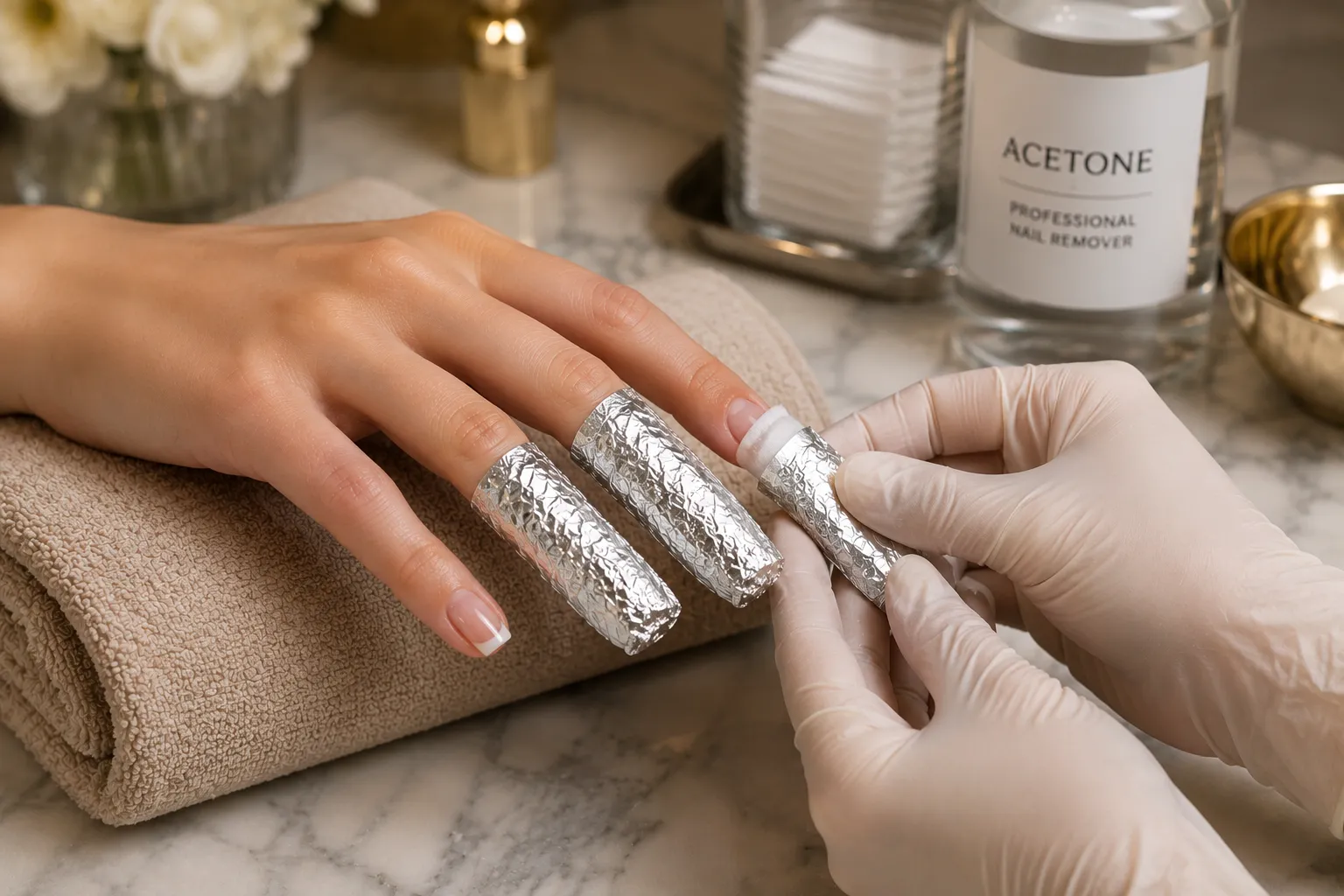
Before You Remove Anything, Know What Is on Your Nails
“French manicure” describes the design, not the enhancement material. The same white, red or chrome French tip can sit over ordinary lacquer, gel polish, a full-cover soft-gel extension, builder gel or an acrylic enhancement. Removal therefore starts with the underlying system—not the appearance of the French tip.
If you do not know what product was used, ask the salon or technician who applied it. If you cannot identify the system, do not guess by repeatedly soaking, scraping or filing.
| What You Are Wearing | Typical Removal Route | DIY? |
|---|---|---|
| Regular nail polish | Compatible polish remover | Usually straightforward |
| Soak-off gel polish | Break surface seal if instructed, then acetone soak/wrap | Possible when manufacturer directions are known |
| Gel-X / soft-gel tips | Reduce product as instructed, then acetone wrap/soak | Possible with the correct system instructions |
| Builder gel / BIAB | Formula dependent: some soak off, others file off | Only when you know the exact formula and method |
| Hard gel | Generally file-off | Professional removal preferred |
| Acrylic | Often bulk-reduced and/or soaked according to the system | Professional removal preferred for thick, long or unfamiliar sets |
This distinction matters particularly with builder gels. The GelBottle currently lists both soak-off and file-off BIAB formulas, so “BIAB” alone does not tell you how a set should be removed. See its official BIAB removal guidance for an example of product-specific instructions.
If you are unsure how Gel-X, builder gel and acrylic differ structurally, read our Gel X vs Acrylic vs BIAB comparison before attempting removal.
Why You Should Not Peel or Pry Enhancements Off
The natural nail plate is made from layers of keratinized cells. Enhancement products are designed to adhere to the prepared nail surface. When bonded product is peeled or pried away before it has released, superficial layers of the nail plate can come away with it, leaving the surface rough, thin or tender.
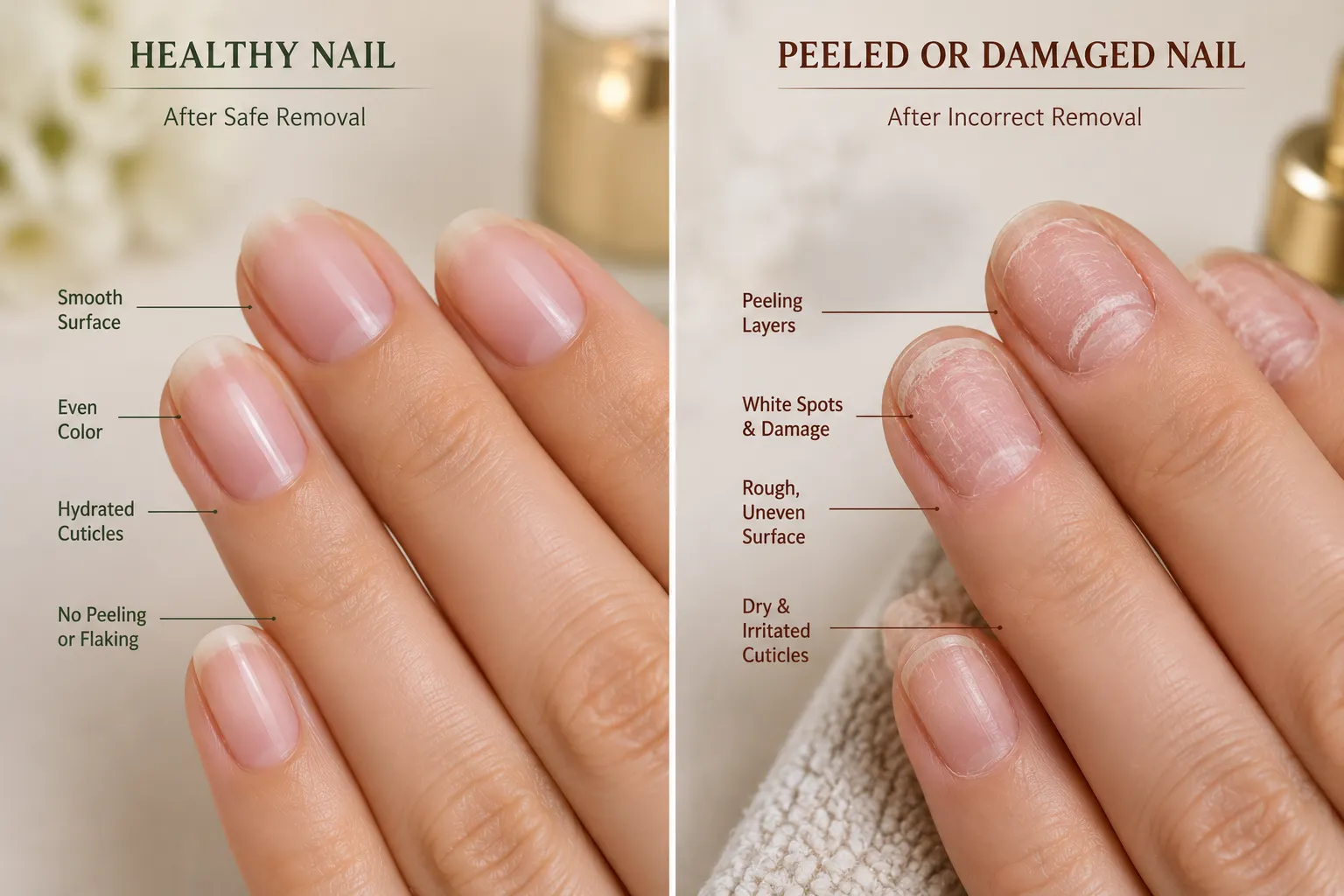
Lifting at one corner does not mean the entire enhancement is ready to peel away. If product remains firmly attached, continue the correct removal process or have it professionally removed.
How to Remove a Confirmed Soak-Off System
The following is a conservative framework for products whose manufacturer specifically permits acetone removal. Exact filing, soak time and finishing steps vary, so the instructions for your product take priority.
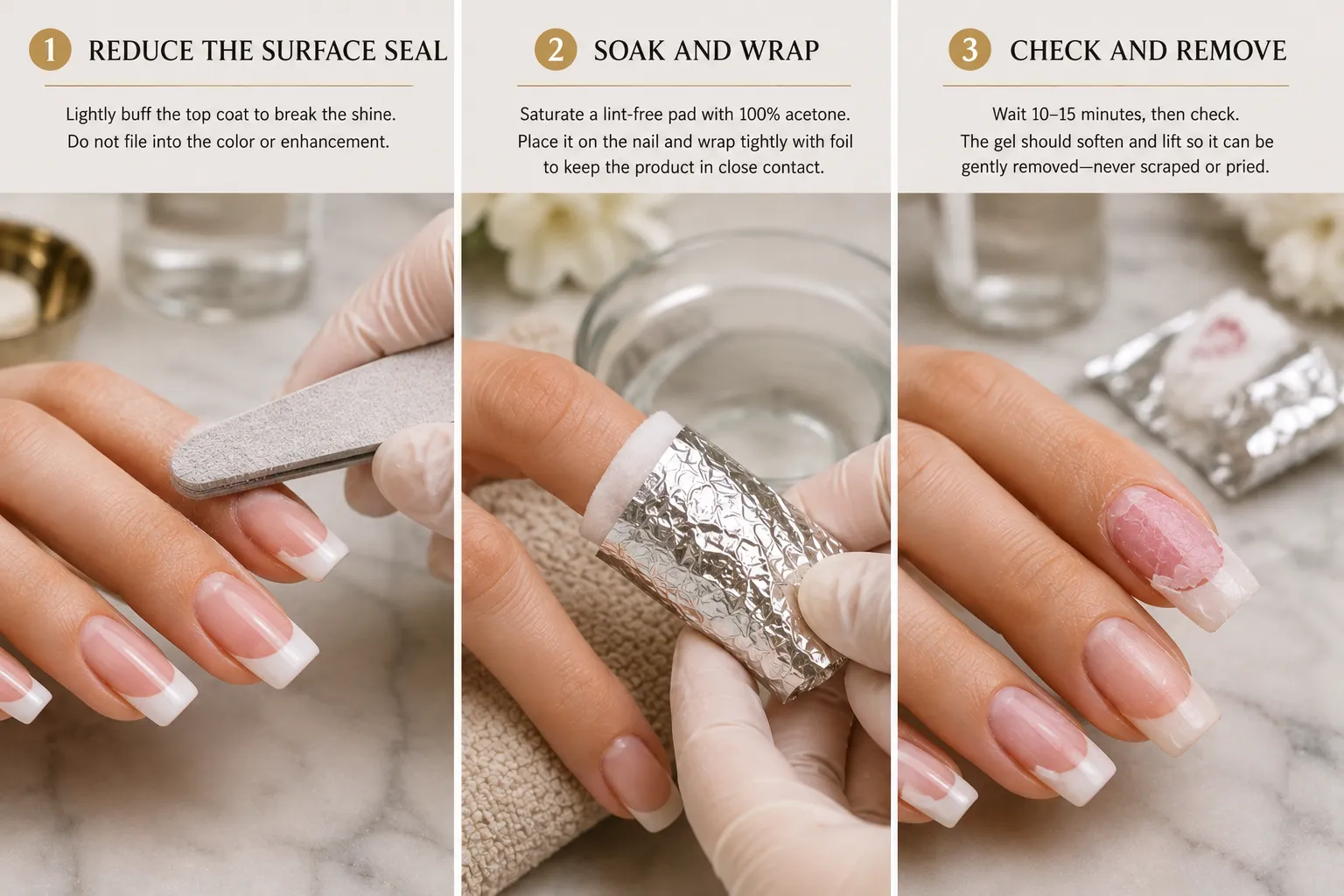
Read the Product Instructions
Confirm that the coating is designed to soak off and note any required surface reduction, soak time and removal tools.
Reduce the Surface Only as Directed
If the instructions require breaking or reducing the top seal, file only the coating. Do not chase the product down toward the natural nail.
Apply Acetone With Close Contact
For a foil method, saturate an appropriate pad with acetone, place it over the coating and wrap it securely so the remover remains in contact with the nail.
Wait the Specified Time
Do not treat one universal number as correct for every system. Allow the product the time stated by its manufacturer before checking it.
Test One Nail
Softened product may look swollen, cracked or flaky. Remove only material that releases with minimal pressure. If it remains hard, rewrap or follow the product-specific next step.
Wash and Recondition
After removal, wash your hands and apply cuticle oil and hand cream. Avoid unnecessary filing or aggressive buffing of the exposed natural nail.
Aprés currently instructs users to leave acetone foil wraps on Gel-X for about 15–20 minutes. The GelBottle describes an initial 10–15 minute soak for soak-off BIAB, with another five minutes if needed. Those are examples—not universal timing rules. See the Aprés Gel-X removal instructions.
What You Need for an Acetone Removal
Basic Supply Checklist
Use acetone in a well-ventilated area and keep it away from heat, sparks, flames and smoking materials. Read and follow the warnings on the product label. Do not intentionally heat acetone to speed removal.
The FDA’s nail-care product guidance advises consumers to follow nail-product label directions and warning statements and to use good ventilation. It also notes that infections and allergic reactions can occur with some nail products.
When Professional Removal Is the Better Choice
Do not assume a clear or nude enhancement is soak-off simply because it resembles gel.
Hard gel and file-off builder products require controlled reduction rather than an endless acetone soak.
Bulk reduction can be slow and increases the chance of accidental natural-nail filing when done without appropriate skill.
Do not simply cover or aggressively remove an abnormal nail. A nail professional can assess the service, while persistent or concerning nail or skin symptoms may require medical evaluation.
6 Removal Mistakes That Can Damage the Natural Nail
Peeling or Prying
Bonded product can take superficial nail-plate layers with it when forced away.
Assuming Every Builder Gel Soaks Off
Builder-gel formulas differ. Confirm the exact product before choosing acetone or filing.
Over-Filing
Once you lose track of where enhancement ends and natural nail begins, continued filing can thin the nail plate.
Scraping Resistant Product
If a soak-off coating is still hard, more force is not the answer. Rewrap it or reassess the material.
Heating Acetone
Acetone is highly flammable. Do not use flames, microwaves or improvised direct-heating methods to accelerate removal.
Ignoring Product Instructions
Brand-specific chemistry and structure determine whether a product soaks, files or uses a combined removal procedure.
Does the French Tip Design Change the Removal Method?
Usually, no. A classic French tip, red French tip or chrome French tip does not determine whether the manicure soaks off. The base/enhancement system underneath the art does.
Heavy layered nail art may require more surface reduction when the manufacturer permits it, but that still does not turn a file-off product into a soak-off one. When choosing your next design, browse the complete French Manicure Styles & Nail Design Guide.
The Safest DIY Removal Rule
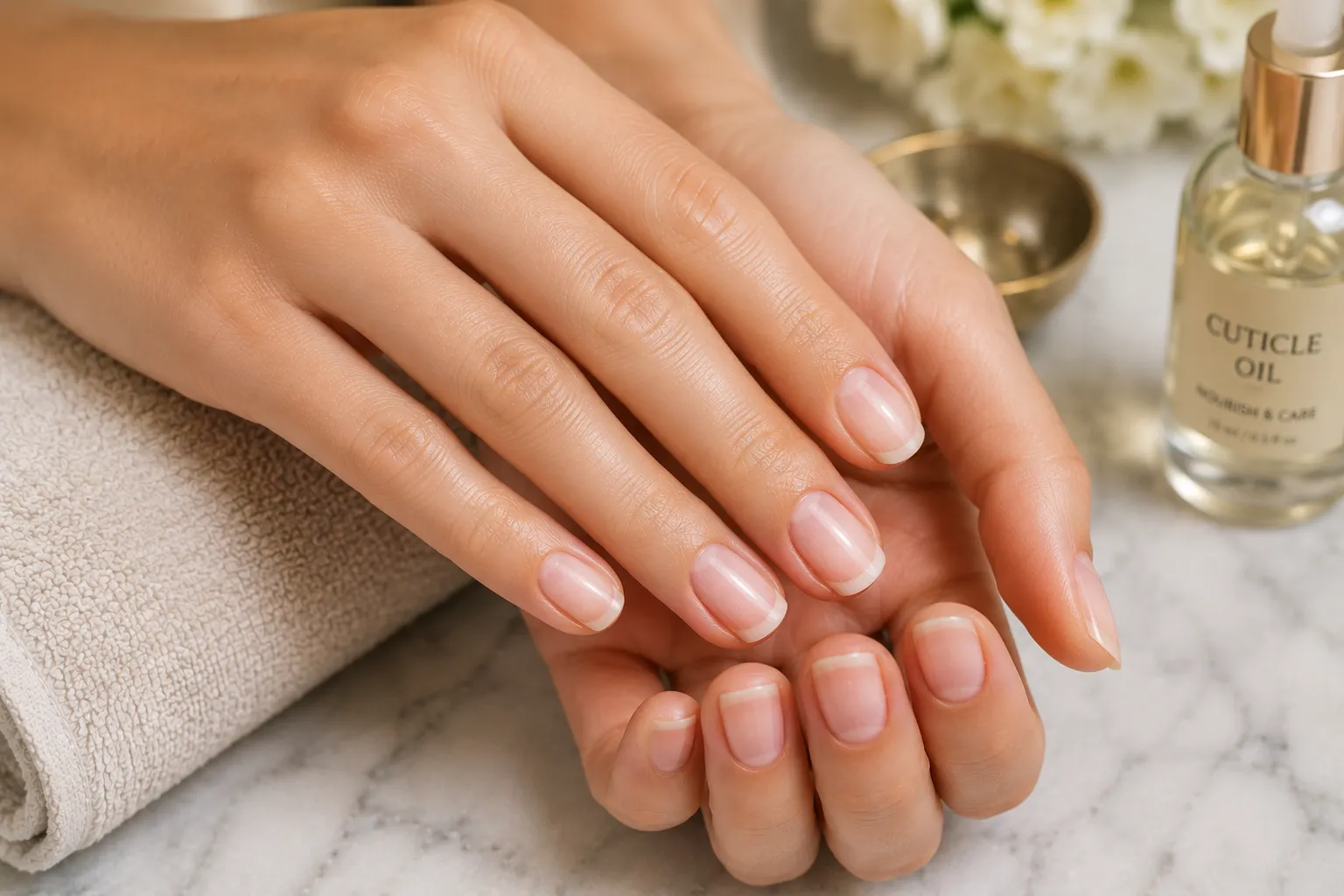
Home removal is reasonable when you know exactly what product is on the nail and its manufacturer provides a consumer-appropriate removal procedure you can follow. For soak-off systems, patience matters more than scraping force. If the product does not respond as expected, stop and reassess it rather than escalating the filing or prying.
Unknown products, file-off systems, substantial enhancement length and abnormal nail or skin symptoms are good reasons to involve a professional. Once you are ready for another manicure, correct application and proper free-edge finishing can help create a cleaner next set.
Removal instructions vary by product chemistry and manufacturer. Examples in this guide illustrate why universal soak times and blanket rules for “gel” or “BIAB” are unreliable. When product-specific instructions conflict with general advice, follow the manufacturer or an appropriately trained nail professional.
French Manicure Removal FAQs
How long should I soak my nails?
There is no universal soak time. Follow the manufacturer instructions for the exact product. As examples, Aprés instructs about 15–20 minutes for Gel-X foil removal, while The GelBottle describes an initial 10–15 minute soak for soak-off BIAB followed by another five minutes if needed.
Can I use a nail drill at home to speed up removal?
An e-file can remove product quickly, but incorrect pressure, angle, speed or bit choice can damage the natural nail. Unless you are trained to use one, follow the product manufacturer’s consumer removal method or book professional removal.
Why do my nails and skin feel dry after acetone removal?
Acetone can leave the nail surface and surrounding skin feeling dry. After removal, wash your hands and use cuticle oil and hand cream. Avoid aggressively buffing a freshly exposed natural nail.
What should I do if the product will not soften in acetone?
Stop scraping or prying. The product may be a file-off hard gel or builder gel, or it may simply require a different product-specific removal procedure. If you cannot identify the system or it remains resistant, professional removal is the safer option.
Can acrylic be removed with acetone?
Many acrylic systems can be reduced and soaked with acetone, so acrylic should not be described as universally requiring an e-file. Thick, long or unfamiliar enhancements are usually better handled professionally because removal can be lengthy and aggressive filing can damage the natural nail.