
Red French Tip Nails: 25 Best Ideas, Shades & Styles
A visual guide to crisp red smile lines, flattering shades, modern finishes, and salon-quality execution.
Red French tip nails keep the recognizable structure of a classic French manicure but replace the white free edge with a more expressive color. The result can look minimal, polished, romantic, dramatic, or editorial depending on the red shade, smile-line depth, nail shape, base color, and finish.
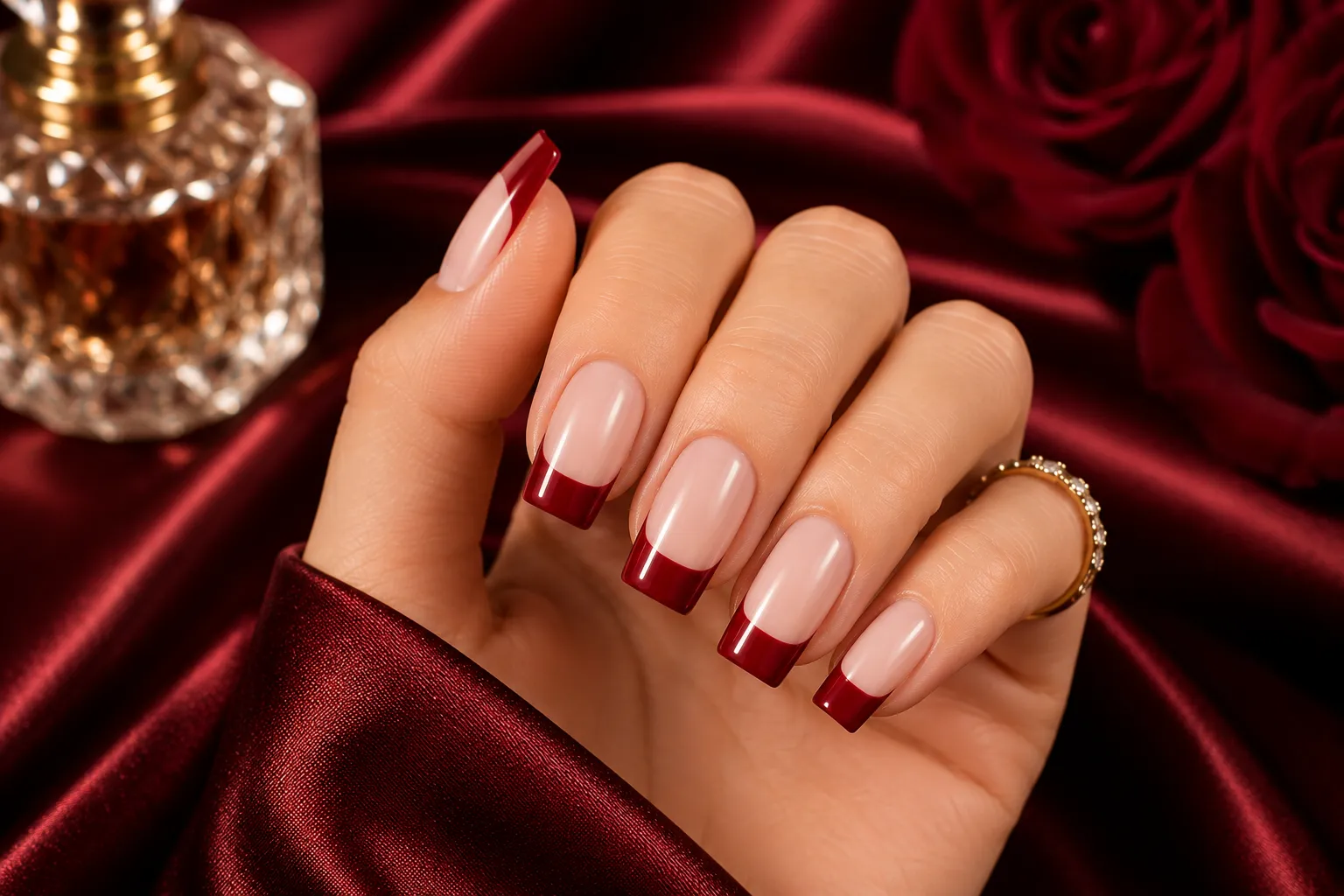
Red French Tips at a Glance
Six decisions shape the final look before you choose a specific shade or finish.
Signature
A sheer or softly milky base finished with a crisp red free edge.
Best proportion
Thin red lines on short nails; wider or deeper tips on medium and long shapes.
Most versatile shapes
Almond, square, squoval, coffin, and short micro-French.
Shade language
Cherry feels polished; scarlet energetic; wine and burgundy quieter; oxblood editorial.
Finish options
Gloss, jelly, matte, chrome, velvet, or restrained cat-eye reflection.
Quality test
Equal smile-line depth, even opacity, clean sidewalls, and no raised pigment ridge.
Choose Your Red French Look
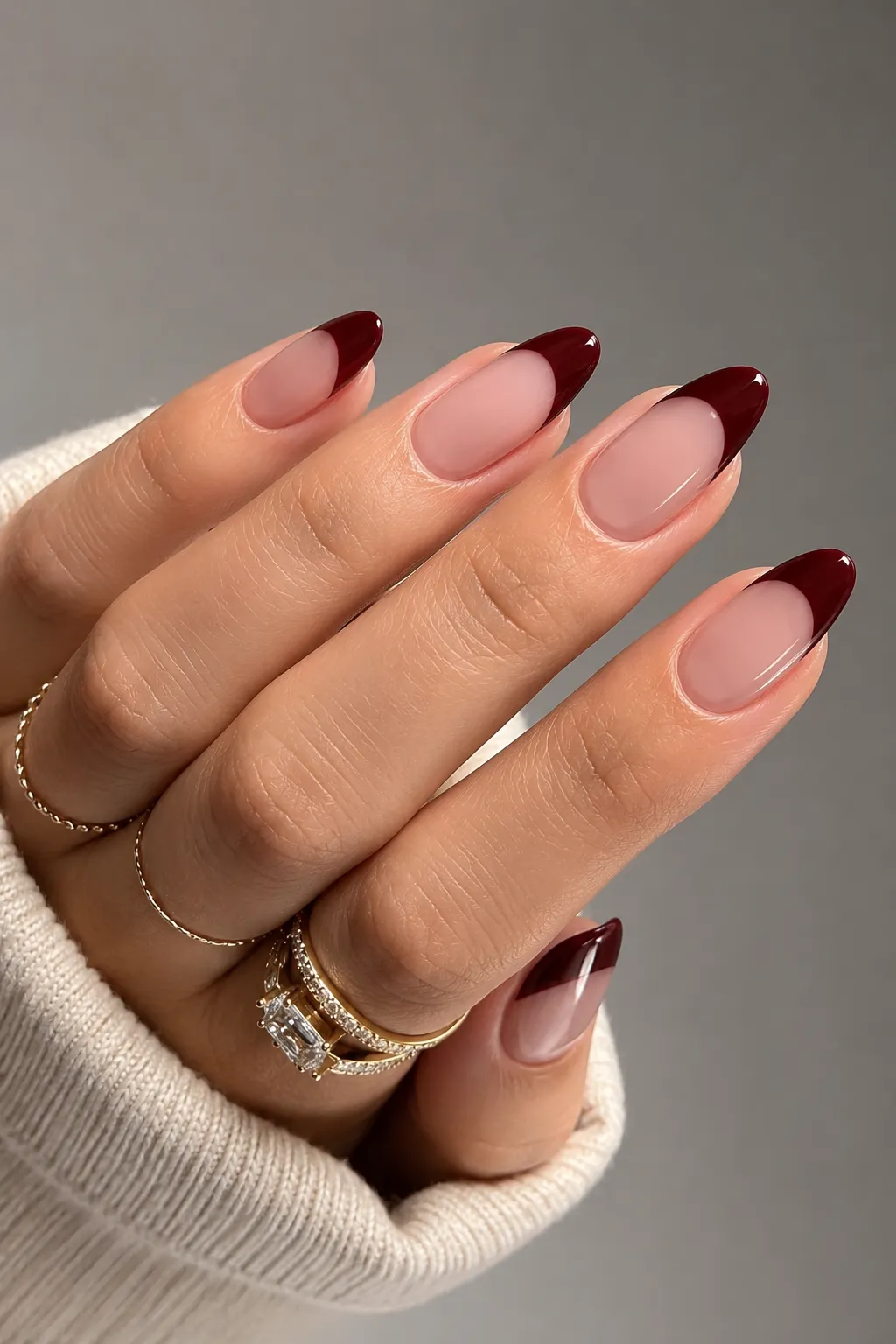
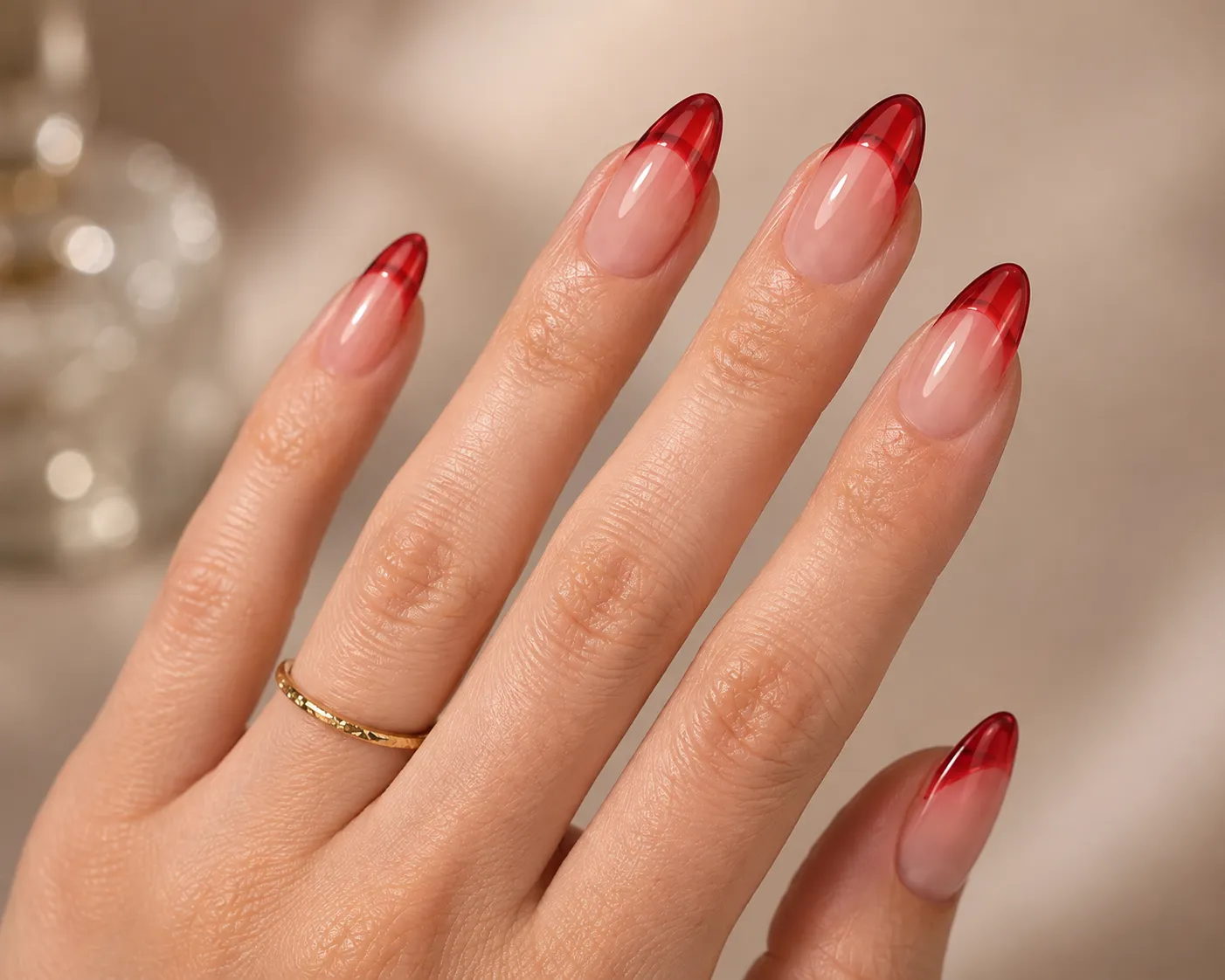
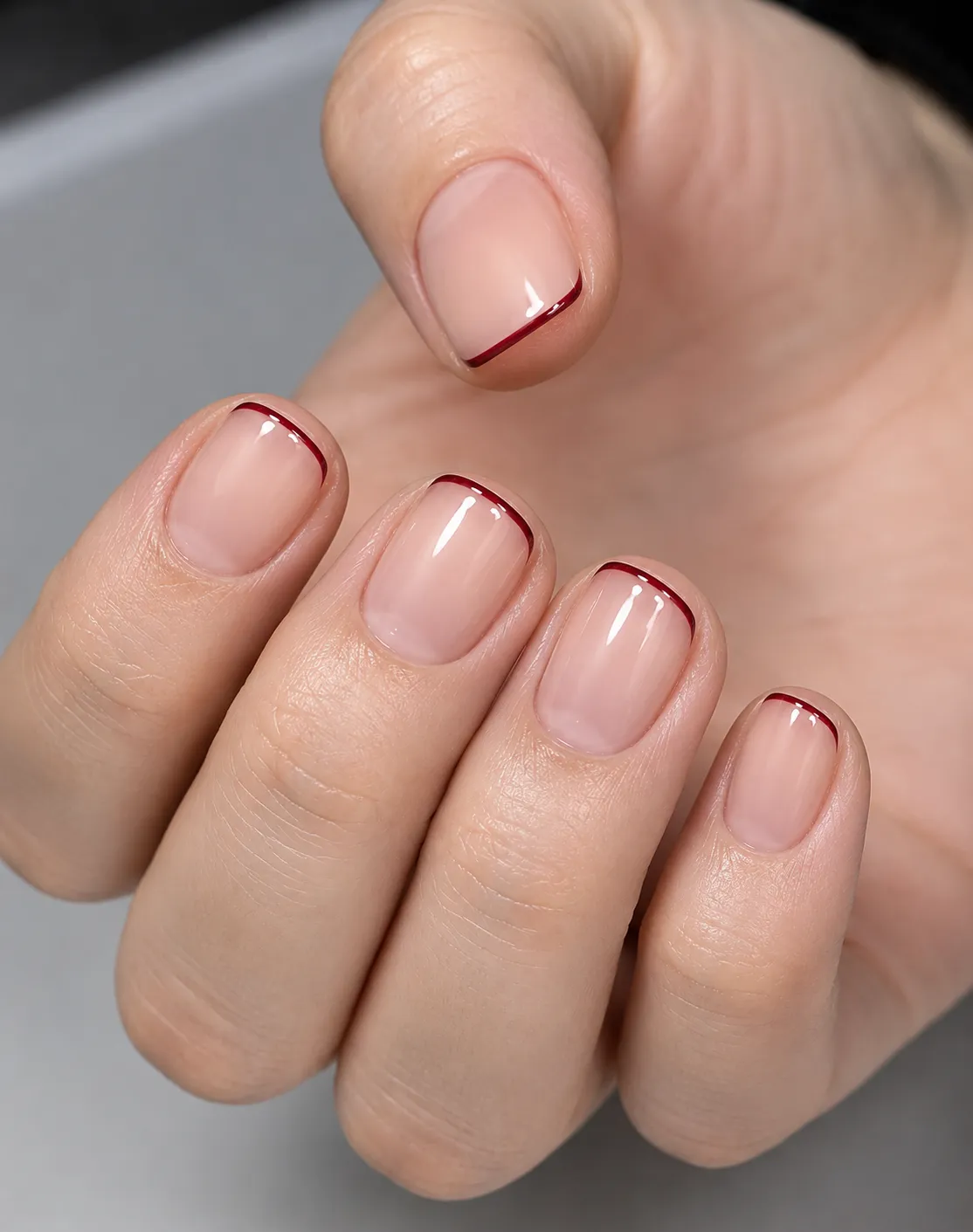
The strongest red French designs preserve the underlying French structure. The shade may change, but the free edge still needs deliberate width, a clean smile line, and consistent placement across the set.
7 More Red French Manicure Ideas
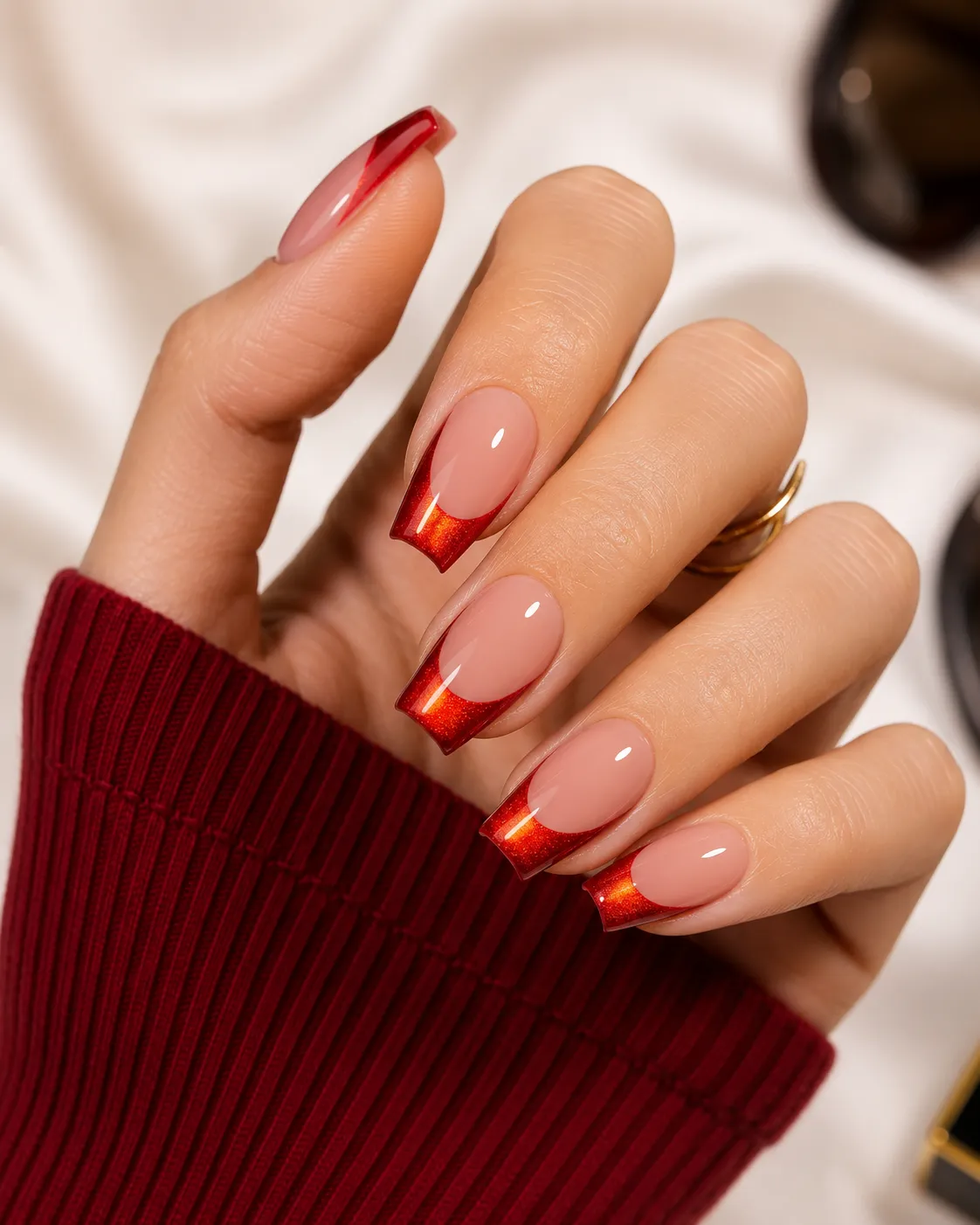
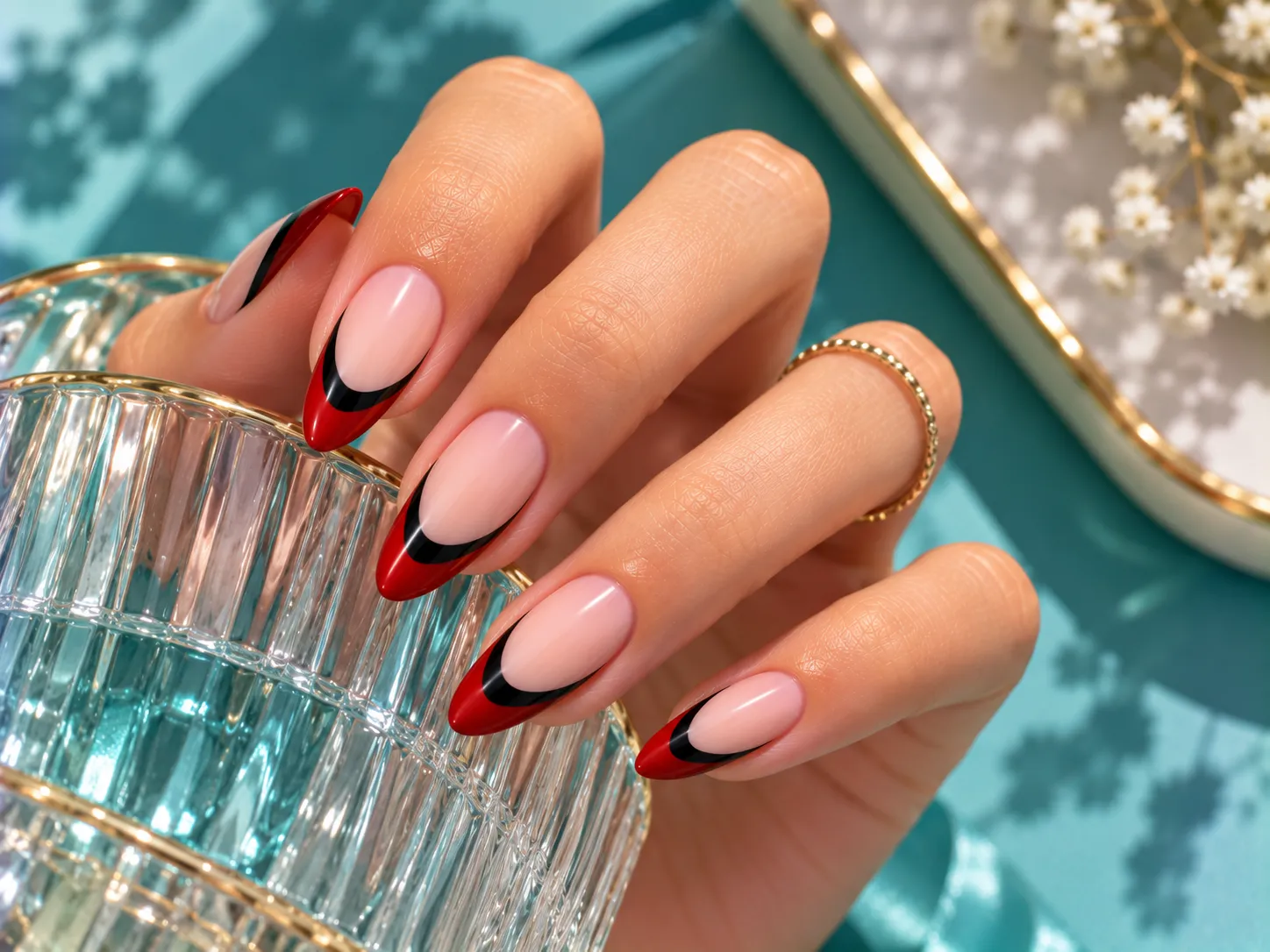
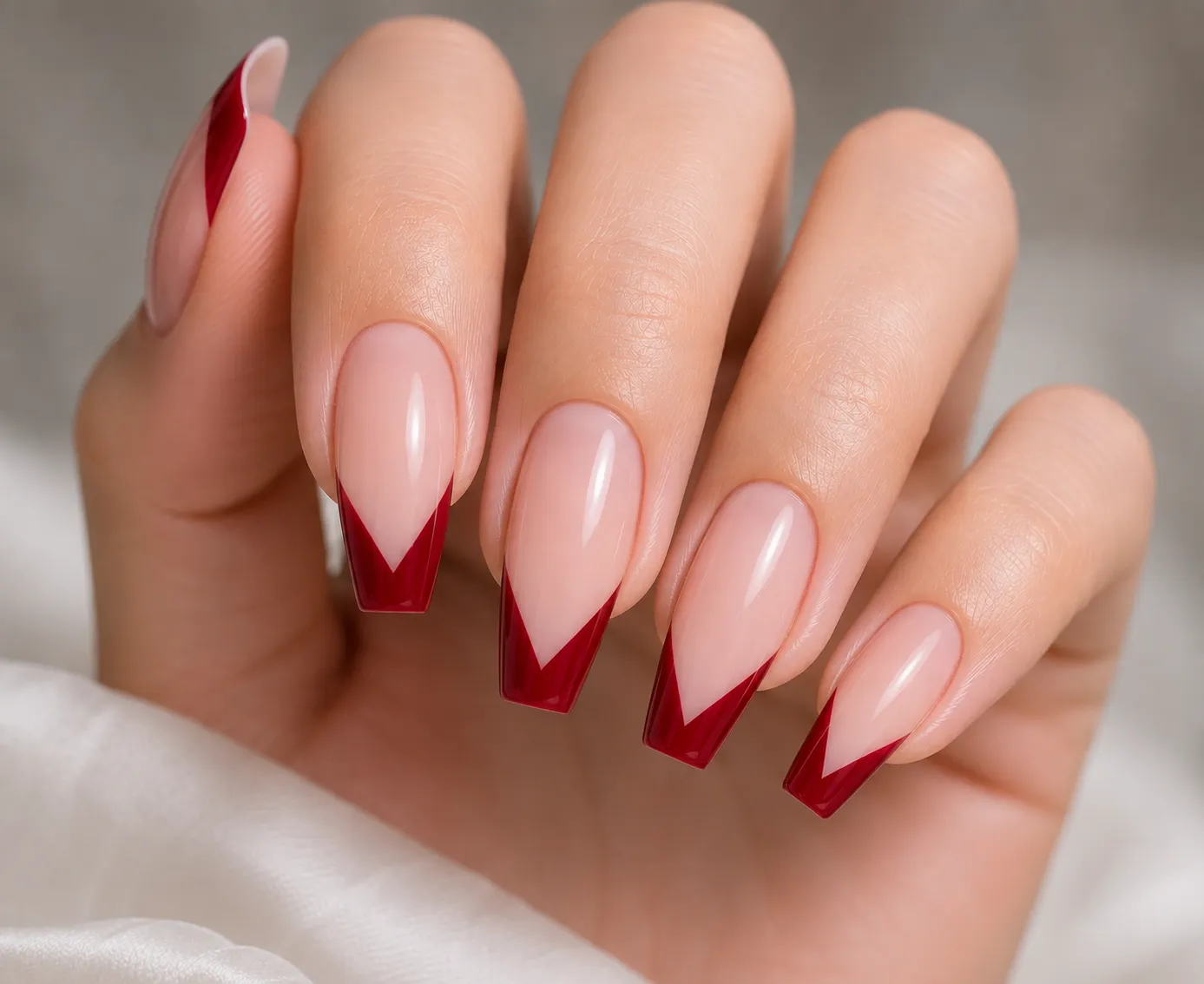
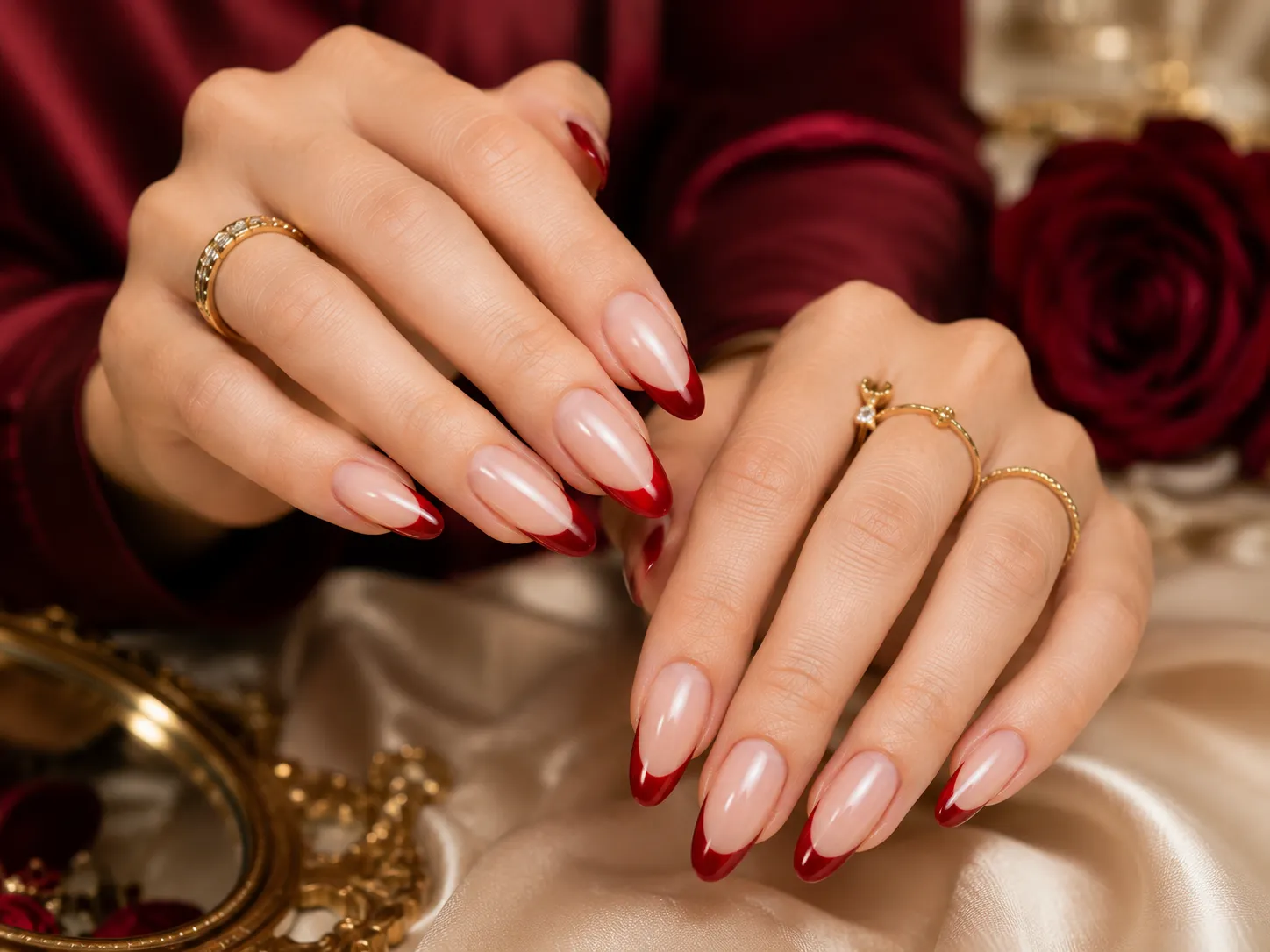
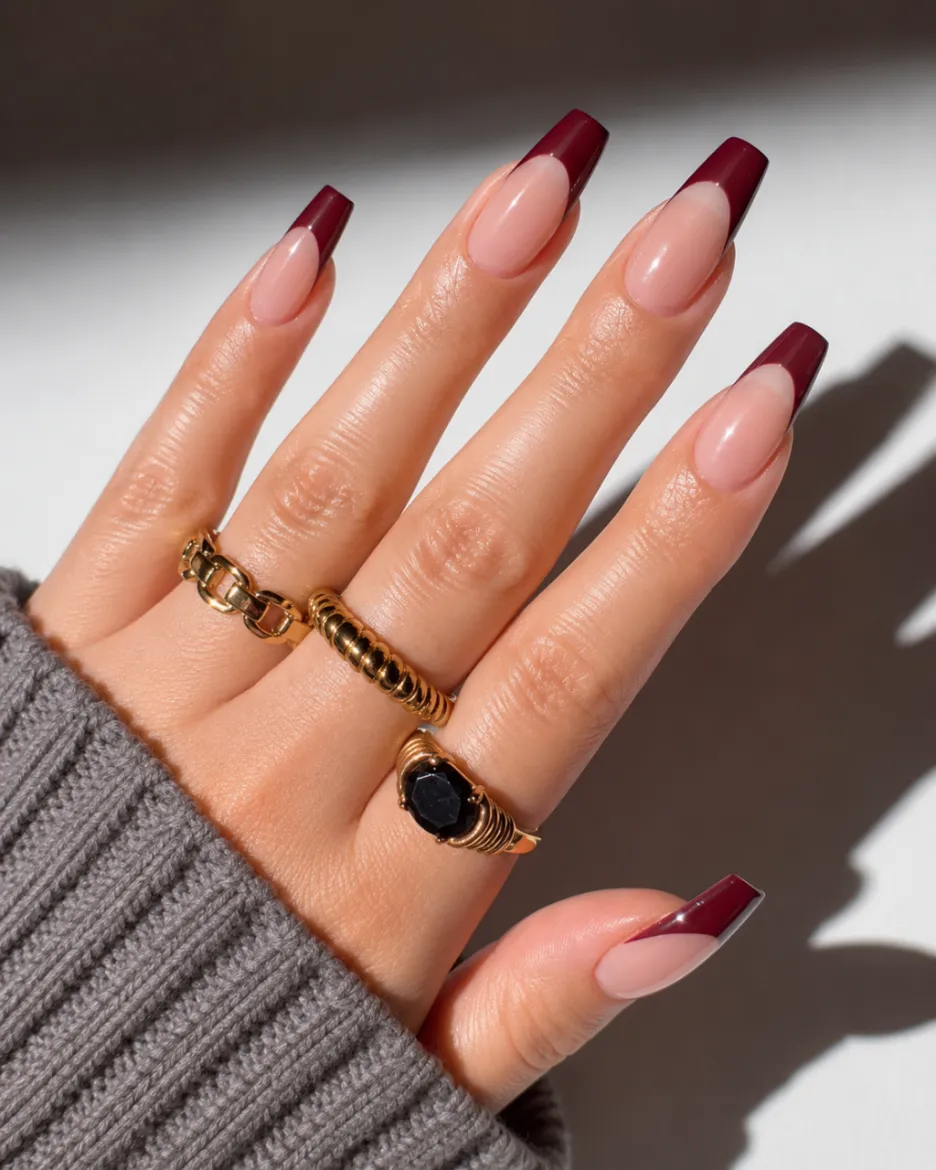
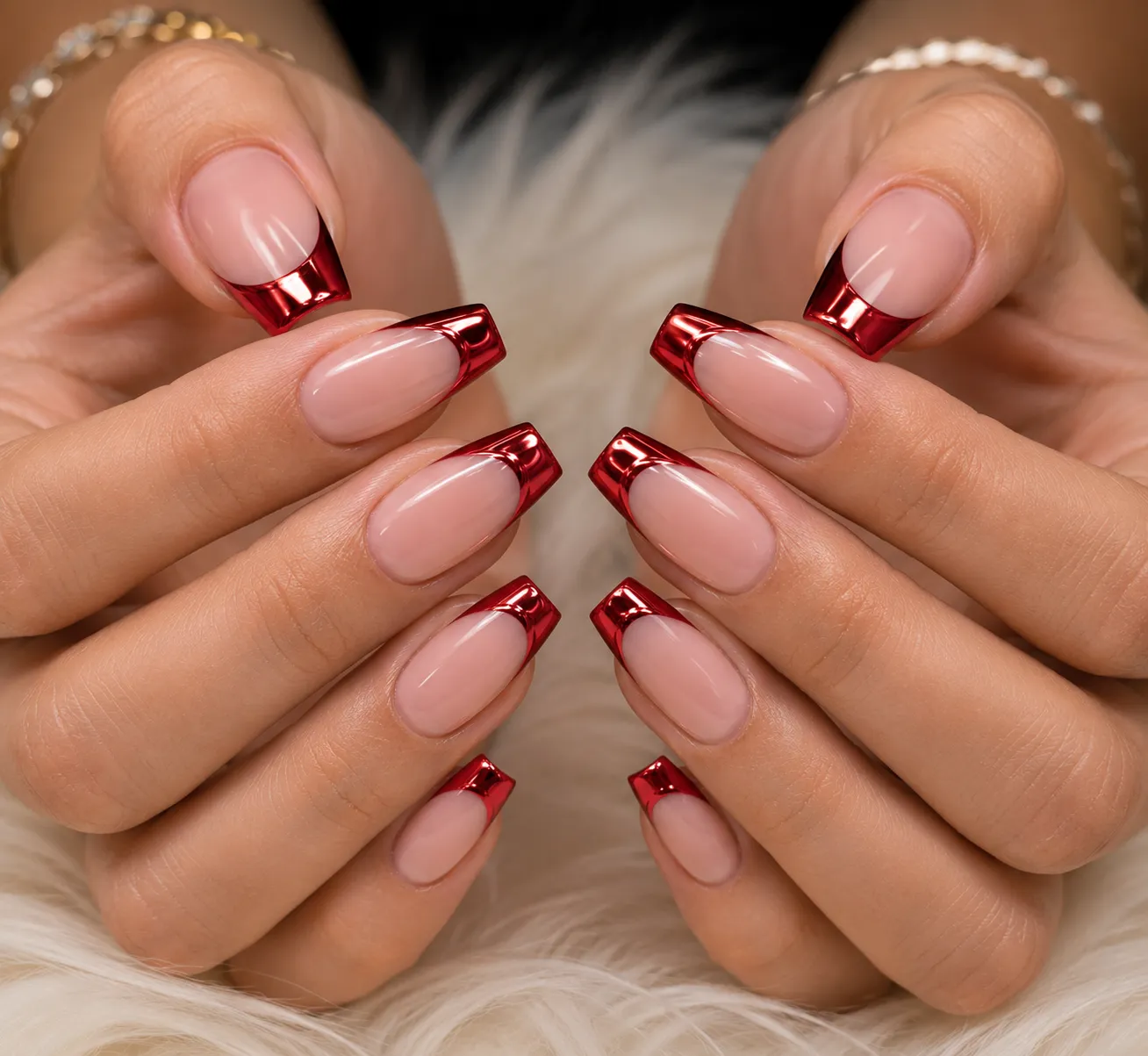
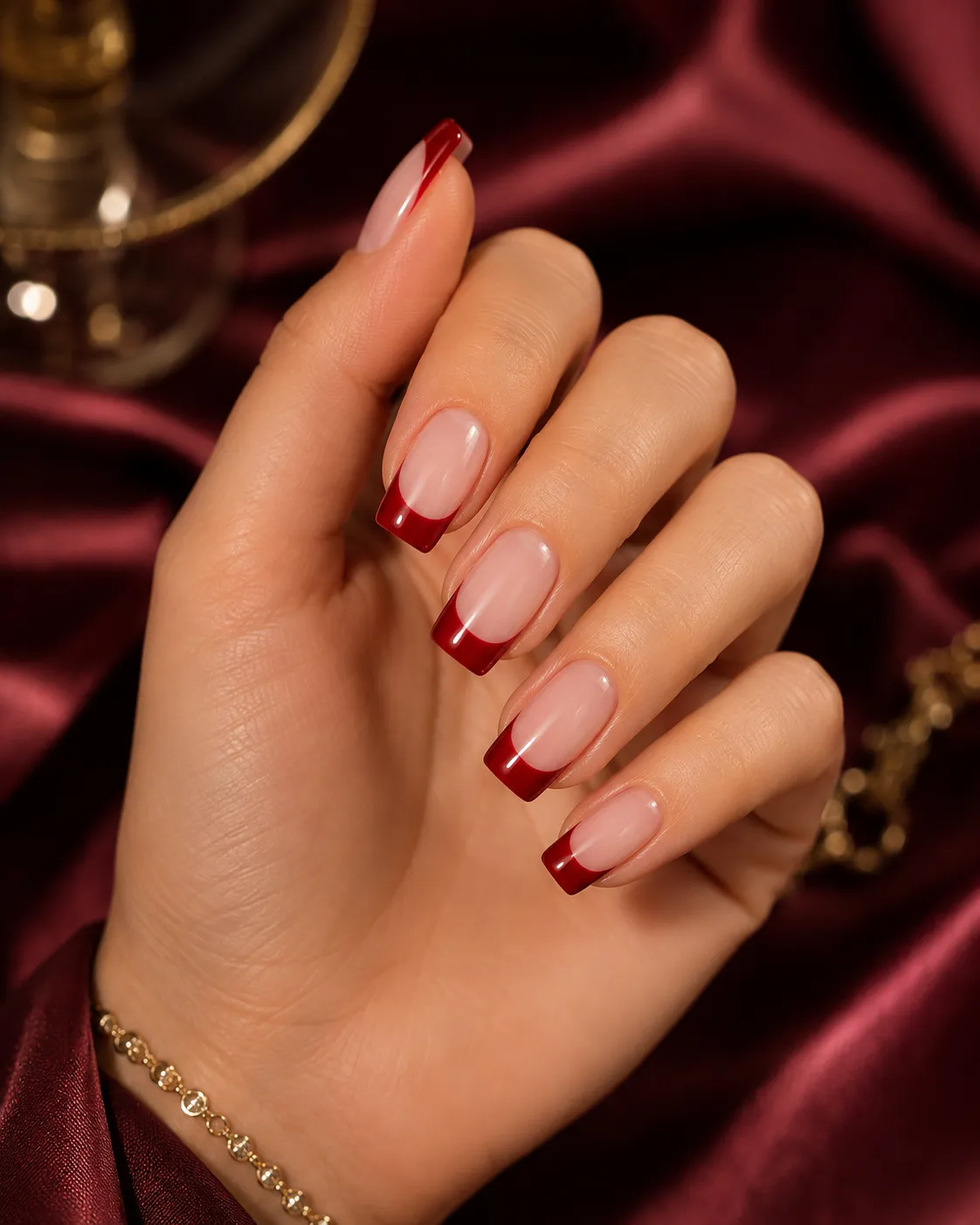
Looking for red French manicure ideas beyond a classic cherry tip? These designs add glitter, chrome, graphic lines and darker shades while keeping the clean French structure.
Why Red French Tips Are Harder to Apply Than White
The main technical challenge is opacity. Some white gels cover evenly in one controlled coat, while cherry, wine, burgundy, and jelly reds may need multiple thin layers before the color looks uniform. When those layers are rushed or applied too heavily, the free edge can become raised, streaky, or visually bulky.
A skilled technician builds the pigment gradually, keeps each coat thin, and refines the smile line with a detail brush before curing. The topcoat should smooth the finished surface, not camouflage a thick ridge.
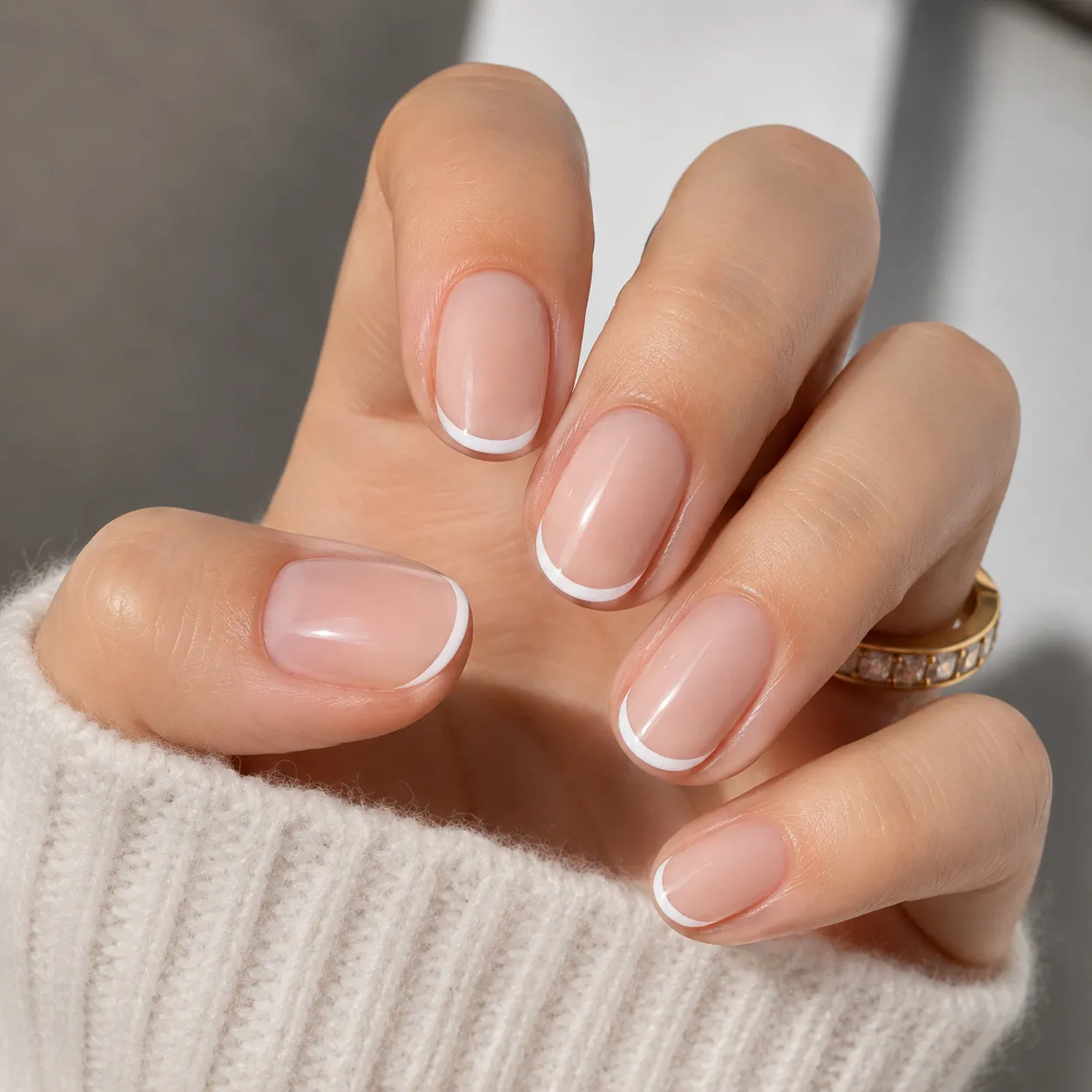
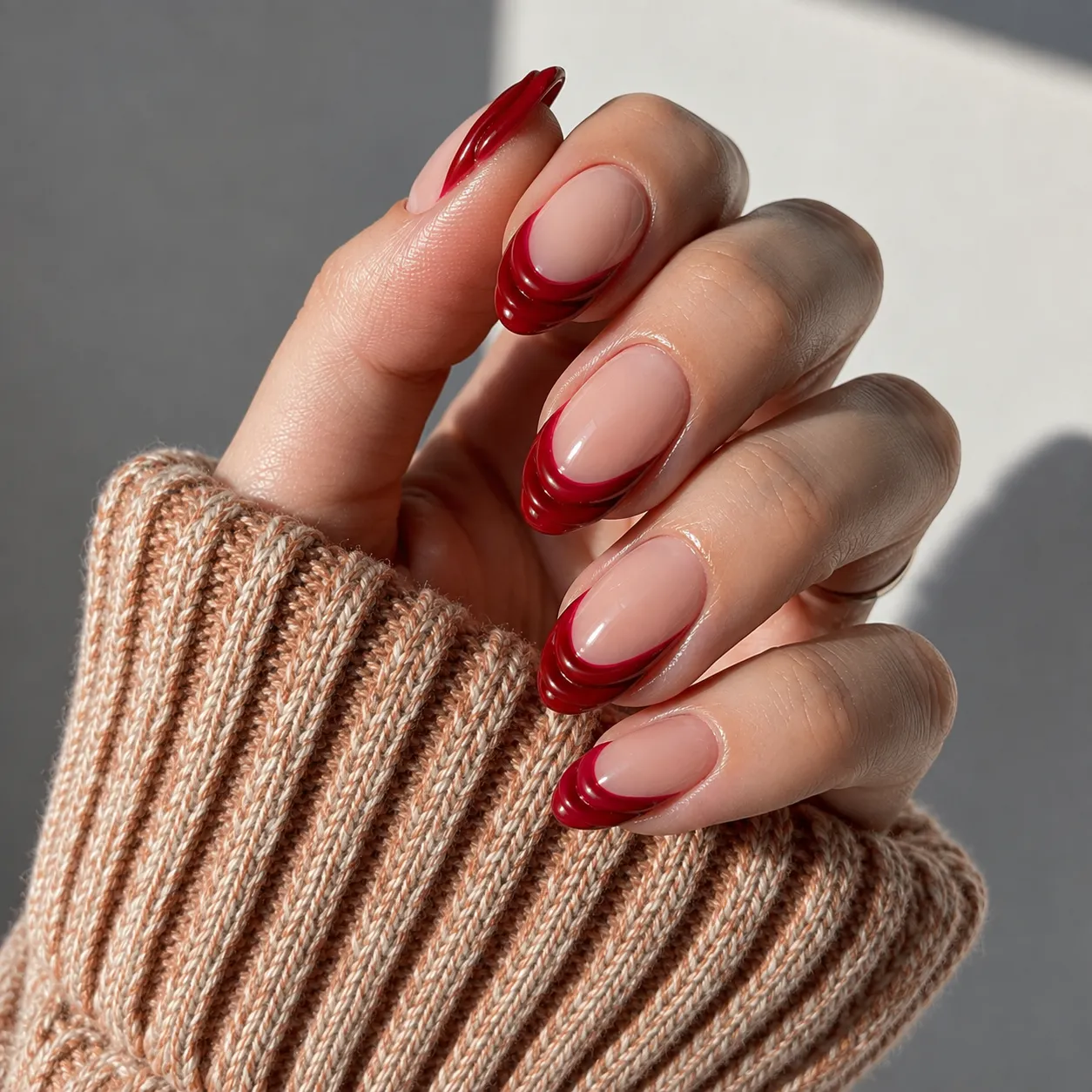
Ask for thin, separate color layers rather than one heavy coat. A smooth topcoat cannot fully correct bulky pigment underneath.
The Anatomy of a Clean Red French Tip
A red French tip should be judged as a complete structure rather than as a colored strip. The base, smile line, sidewalls, opacity, free-edge depth, and topcoat all affect whether the result appears refined.
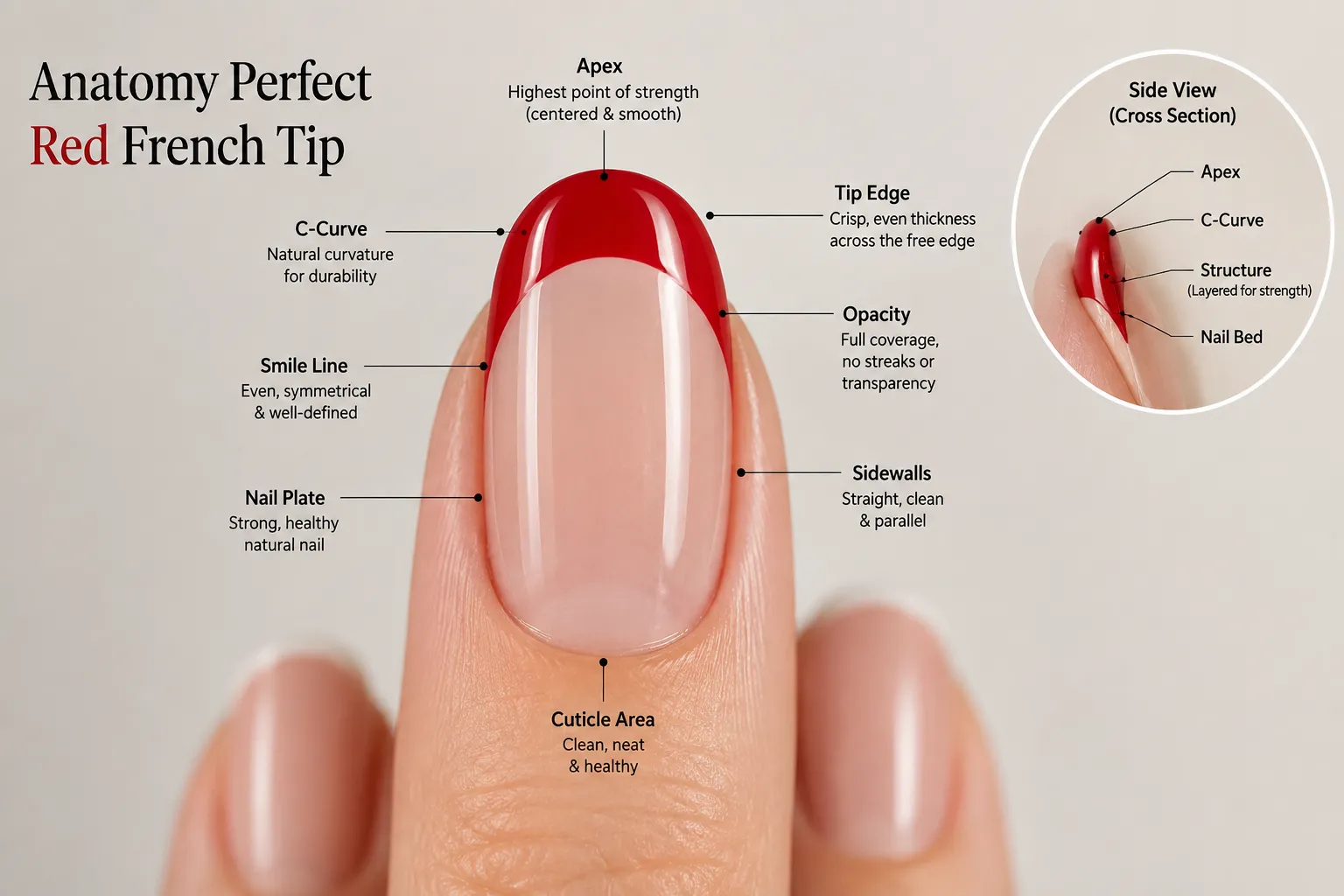
| Zone | What good work looks like | Common failure |
|---|---|---|
| Base color | Sheer, even, and harmonious with the skin | Patchy, overly opaque, grey, orange, or disconnected |
| Smile line | Symmetrical and proportionate to nail length | Crooked, too deep, or inconsistent across fingers |
| Red opacity | Solid color with thin, even layers | Streaks, bald spots, or bulky pigment |
| Sidewalls | Color reaches the edge cleanly without flooding | Missing pigment, bleeding, or uneven borders |
| Free-edge depth | Balanced width repeated across the set | One nail carrying much more red than another |
| Topcoat | Smooth reflected light with no ridge | Uneven gloss lines revealing bumps or excess thickness |
Red French Tips vs. Classic White French Tips
| Feature | Red French Tips | Classic White Tips |
|---|---|---|
| Overall effect | Bold, polished, expressive, and shade-dependent | Clean, timeless, and understated |
| Application | May require several thin coats and more cleanup | Often reaches opacity more quickly |
| Best proportion | Thin on short nails; wider on medium and long nails | Adaptable across most lengths |
| Visual maintenance | Chips and scratches are highly visible | Wear is visible but often less color-heavy |
| Styling range | Varies from cherry and scarlet to wine, oxblood, matte, and chrome | Primarily controlled through base shade, tip width, and shape |
Eight Nail Shapes, Eight Different Results
Red carries more visual weight than white. Nail shape determines how much red the eye sees, how deep the smile line can be, and whether the manicure feels soft, graphic, practical, or dramatic.
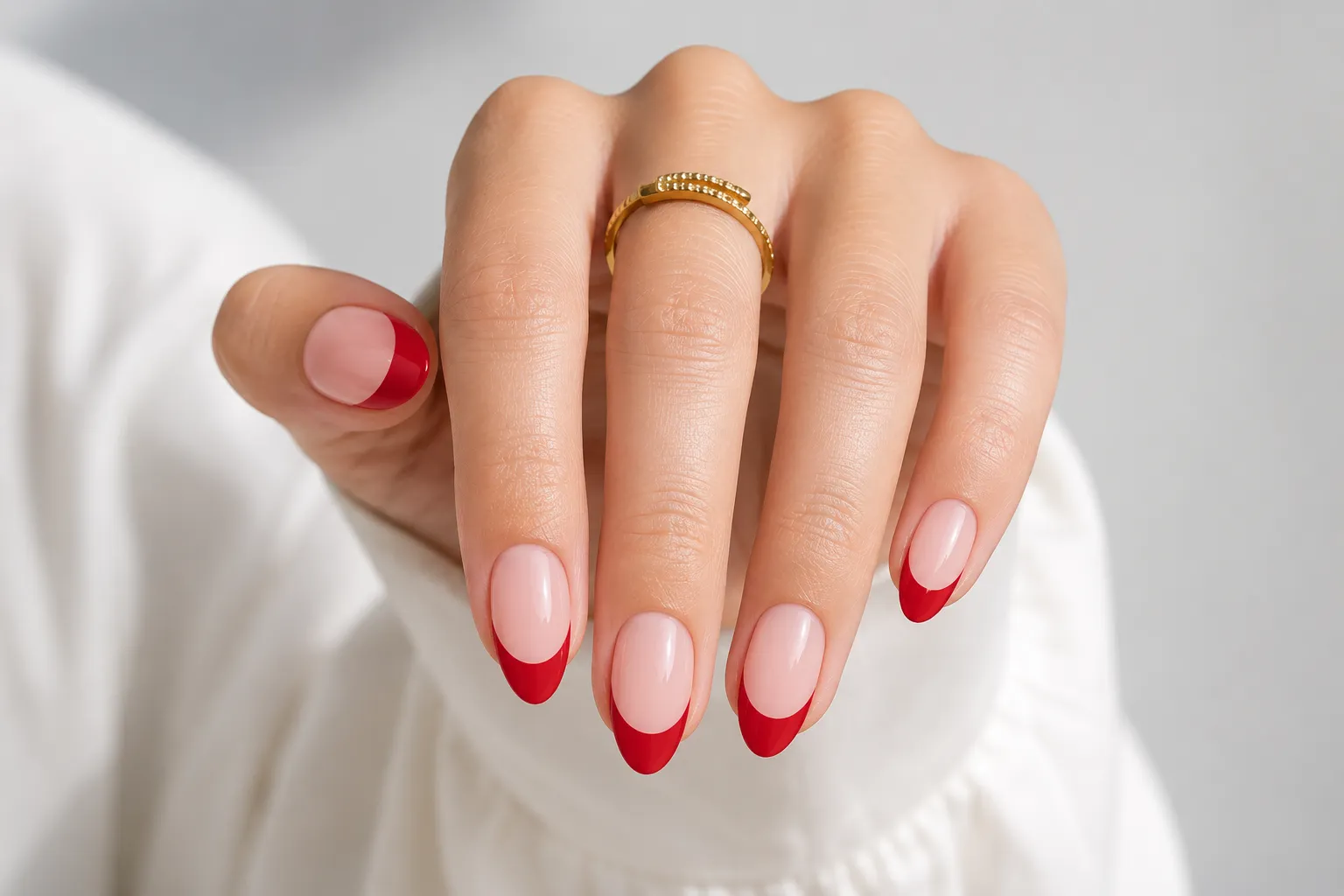
Almond
The tapered silhouette offsets the visual density of red and keeps the smile line elegant.
Explore almond French tips →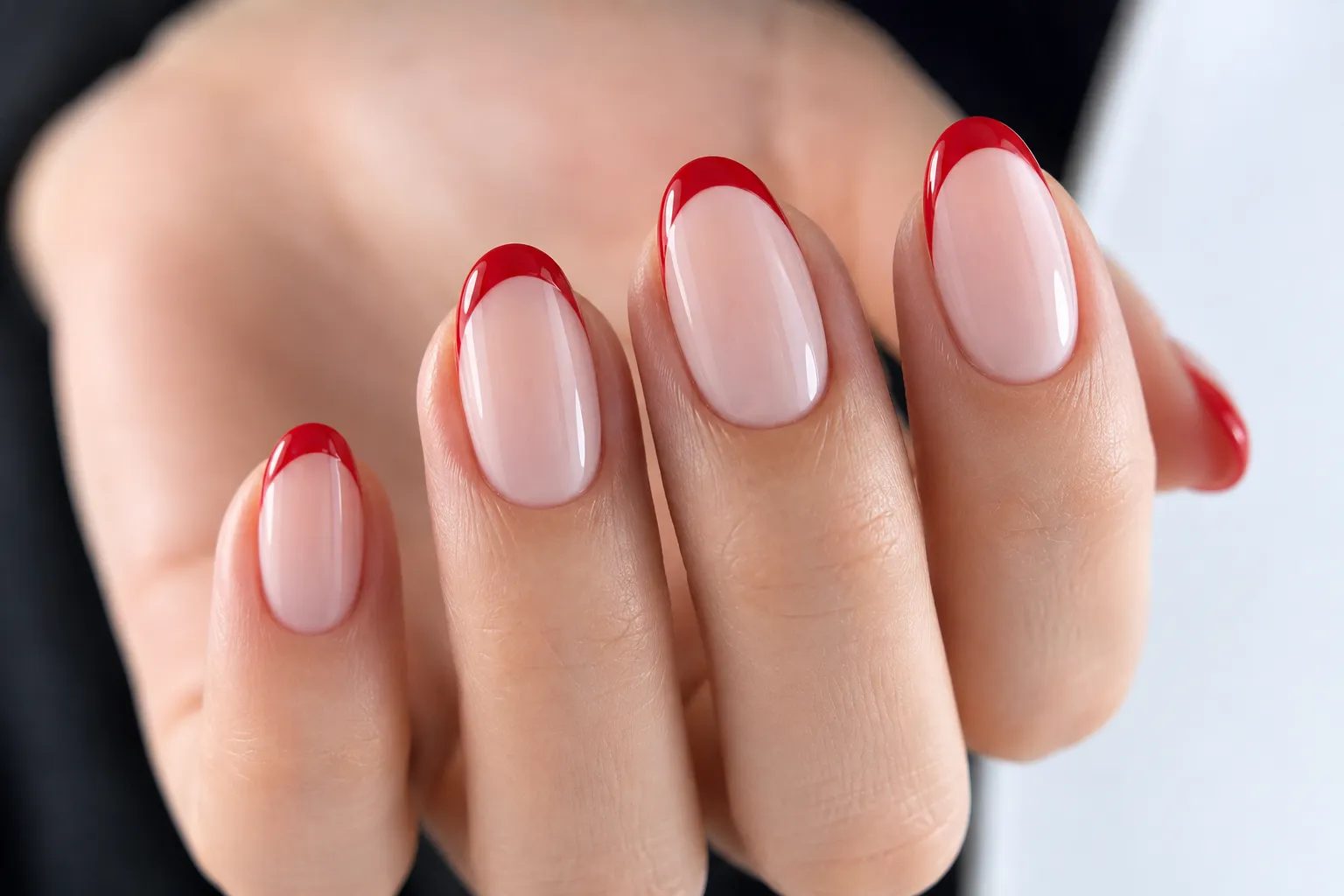
Oval
Rounded sides make bright red feel less severe while preserving visible nail-bed length.
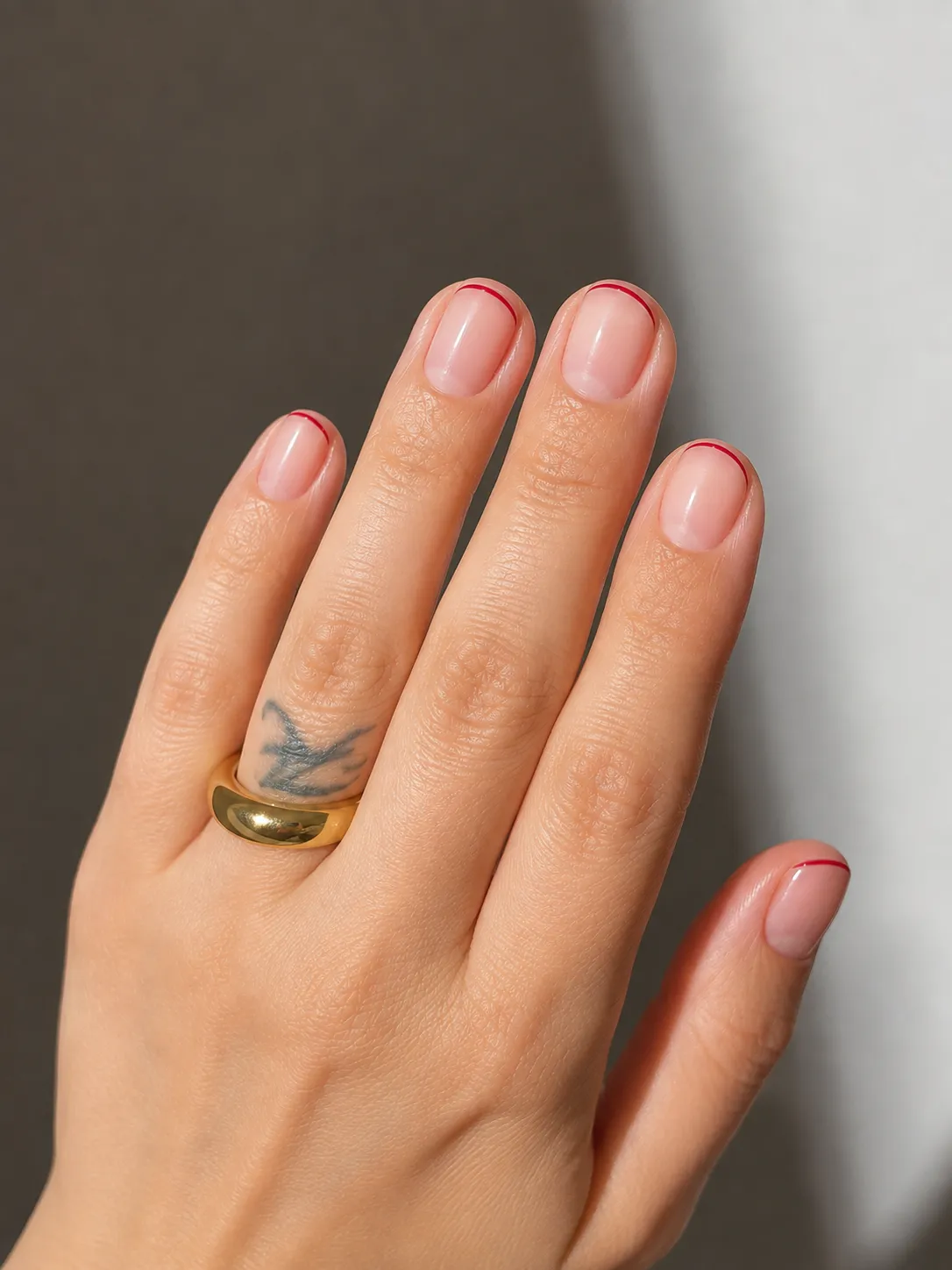
Round
A compact micro-French line adds color without visually shortening the natural nail.
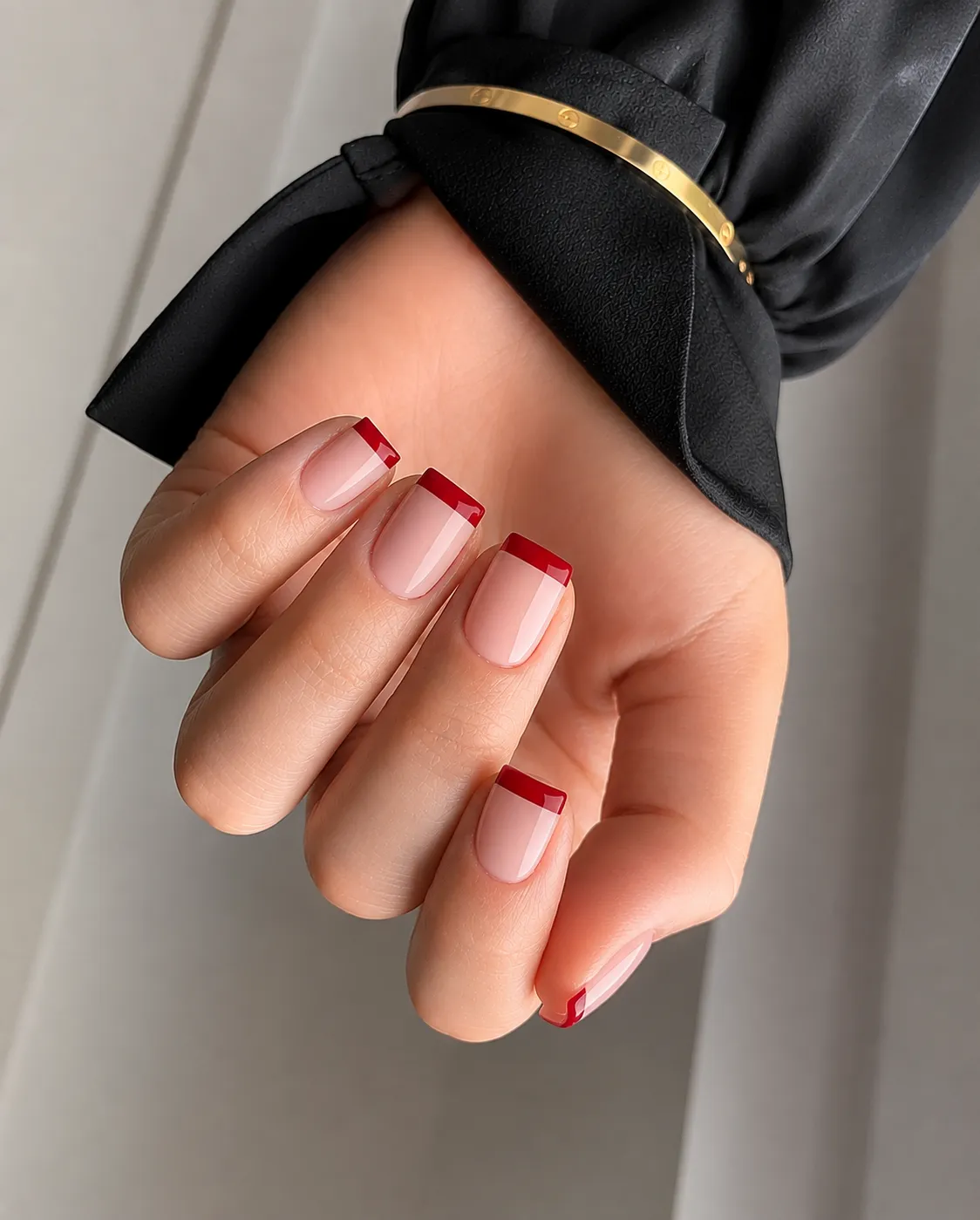
Square
The flat edge gives red a strong architectural boundary and suits classic or deep smile lines.
Compare square French tips →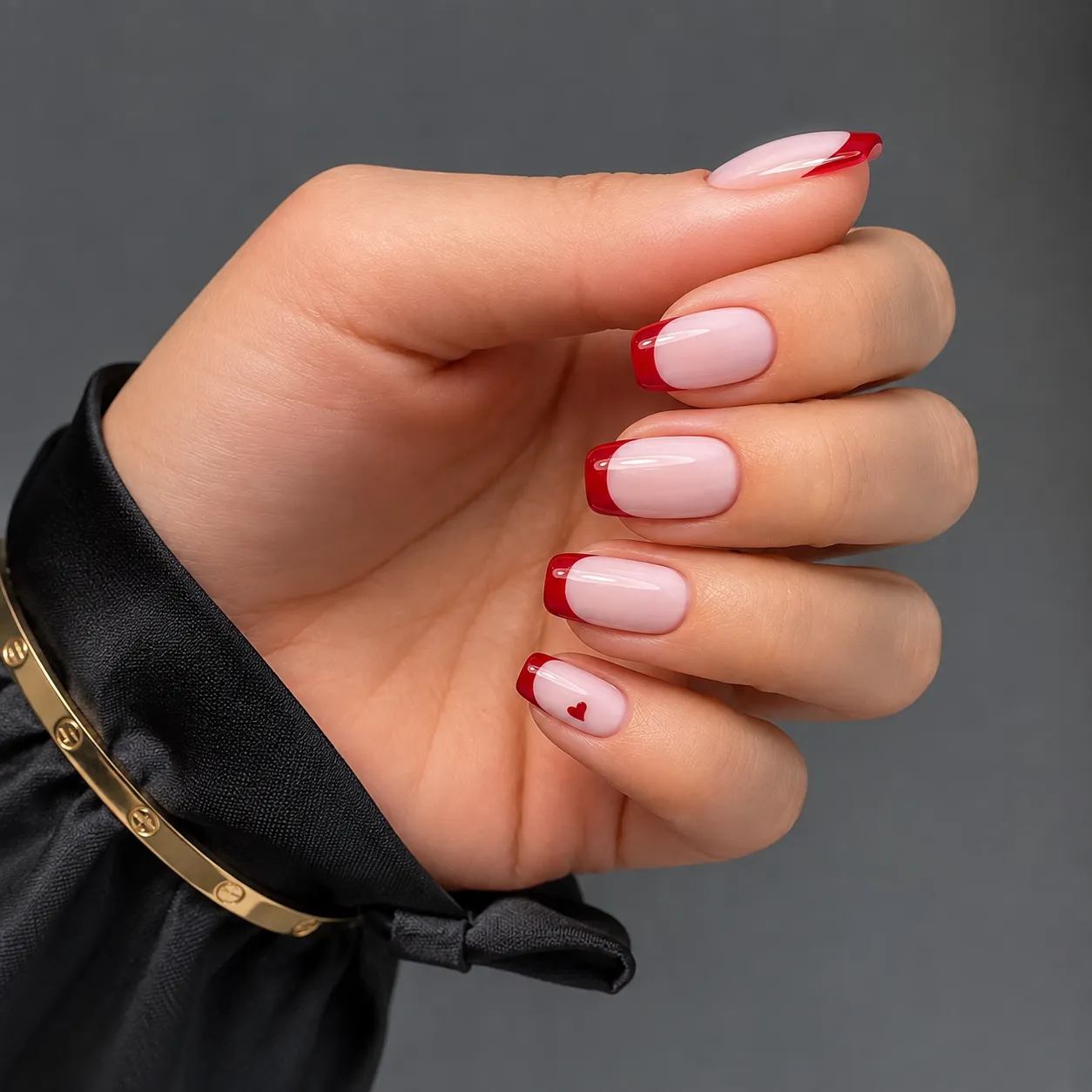
Squoval
A flatter free edge keeps the red visible while softened corners make the shape easier to wear.
See the squoval guide →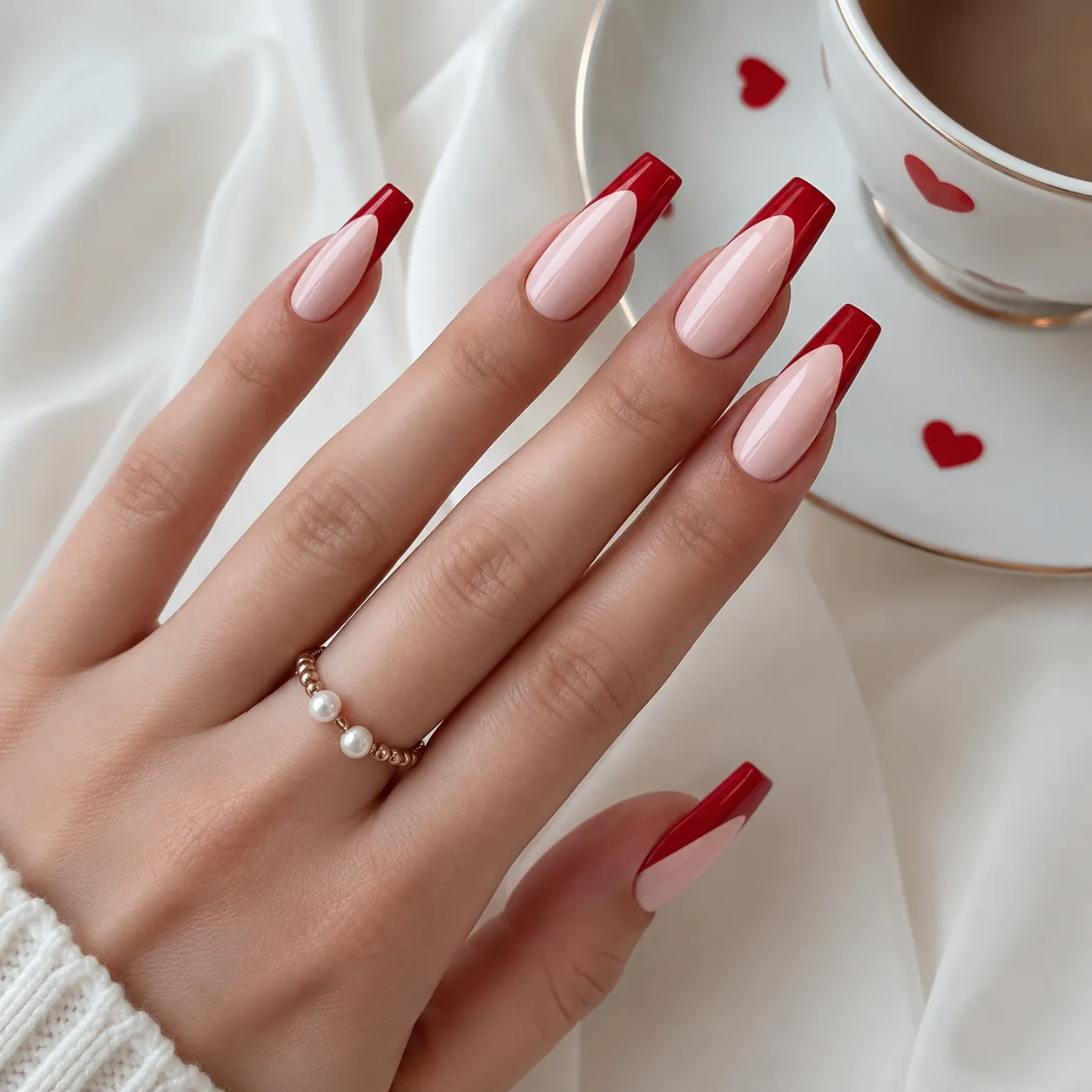
Coffin
The long flat free edge creates a larger red field and a more fashion-led result.
Compare coffin and stiletto →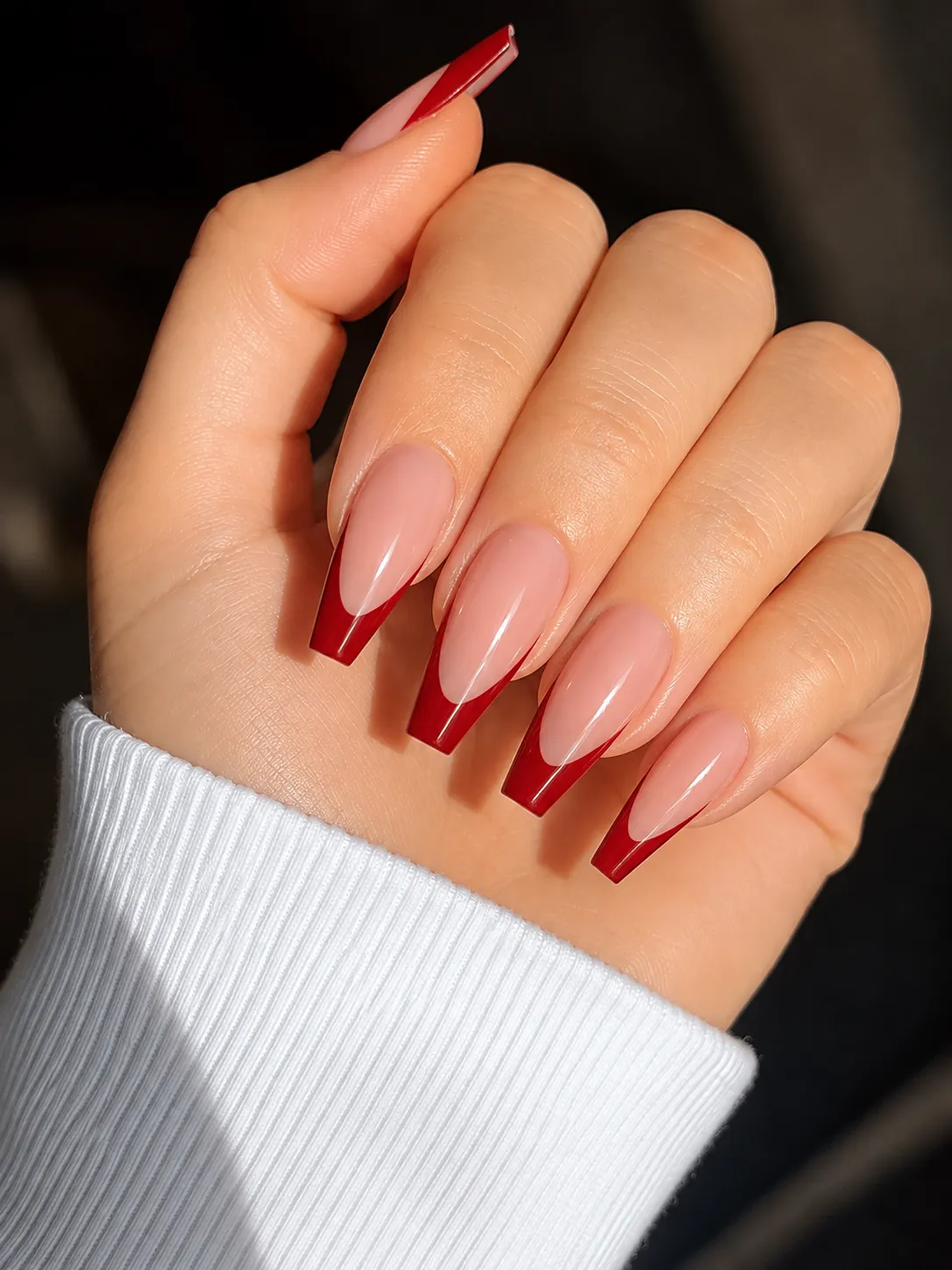
Ballerina
A narrower coffin profile keeps the red edge dramatic without becoming excessively broad.
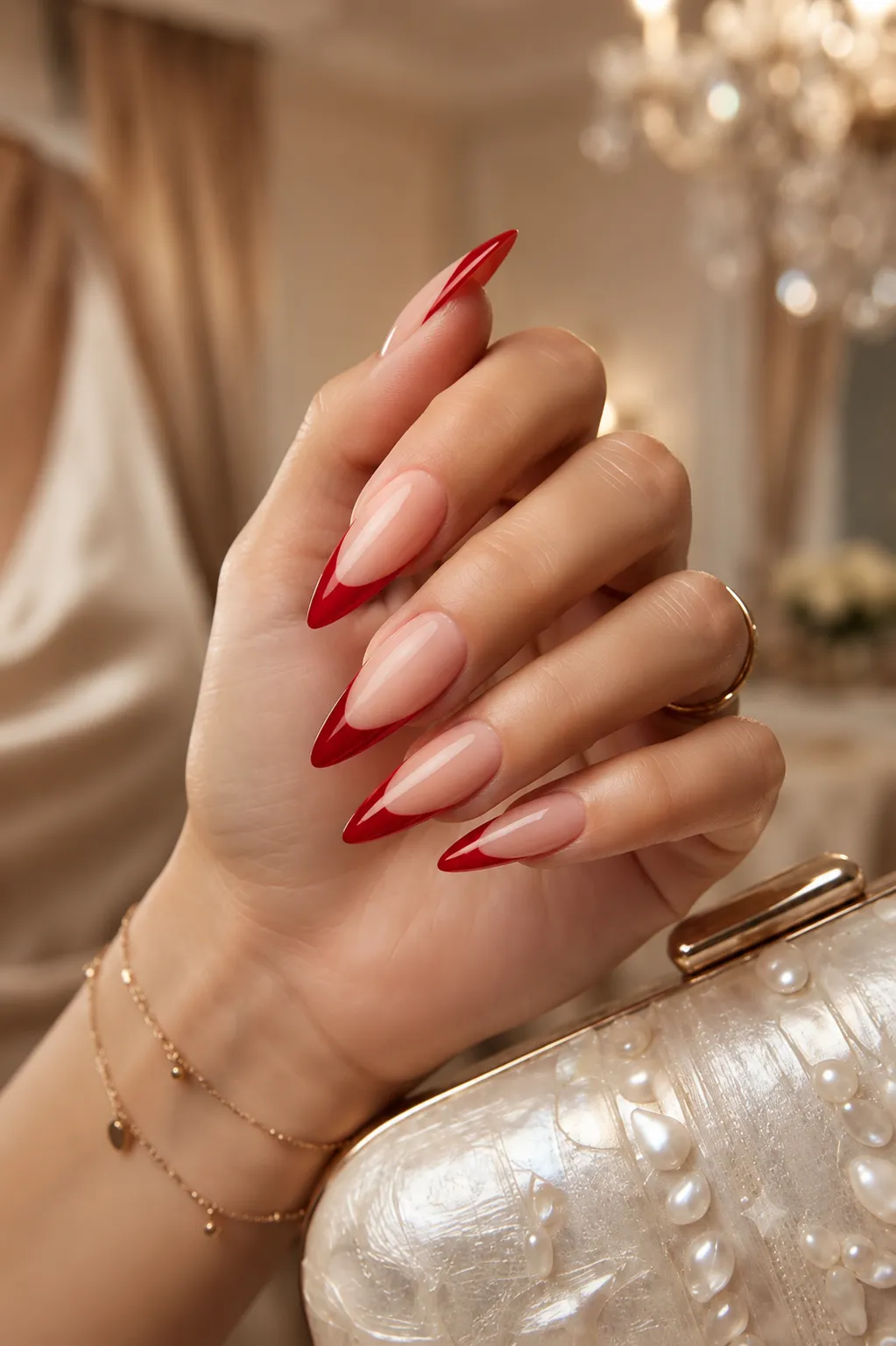
Stiletto
The sharp point stretches the red forward and creates the most theatrical silhouette.
Ten Red Shades and Finishes to Consider
The word “red” covers very different moods. Undertone, depth, transparency, and surface finish can make the same French structure look classic, romantic, seasonal, modern, or highly reflective.
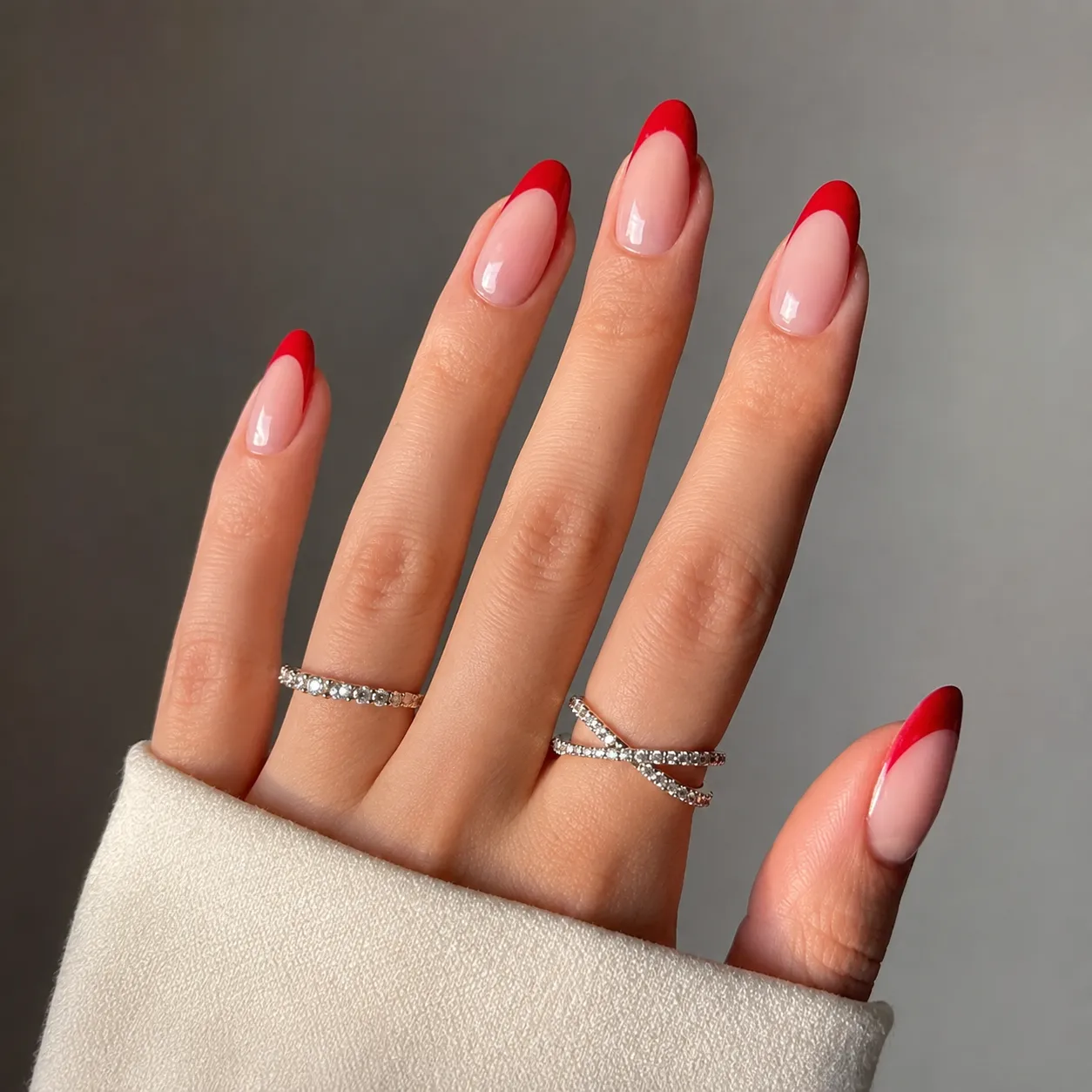
Cherry Red
Bright, blue-based, and polished. A strong choice when you want clear contrast.
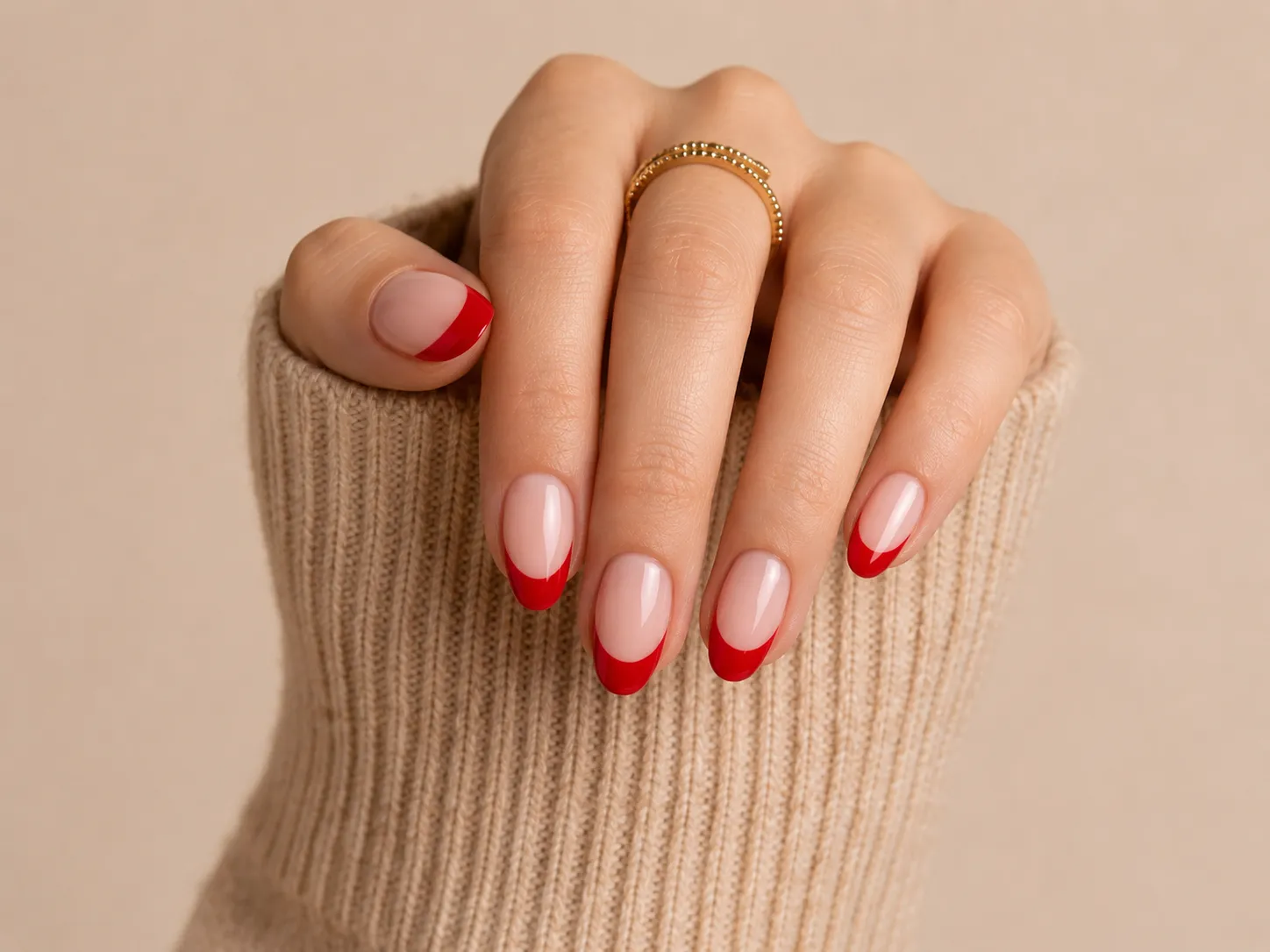
True Red
A balanced red that sits between noticeably blue and noticeably orange undertones.
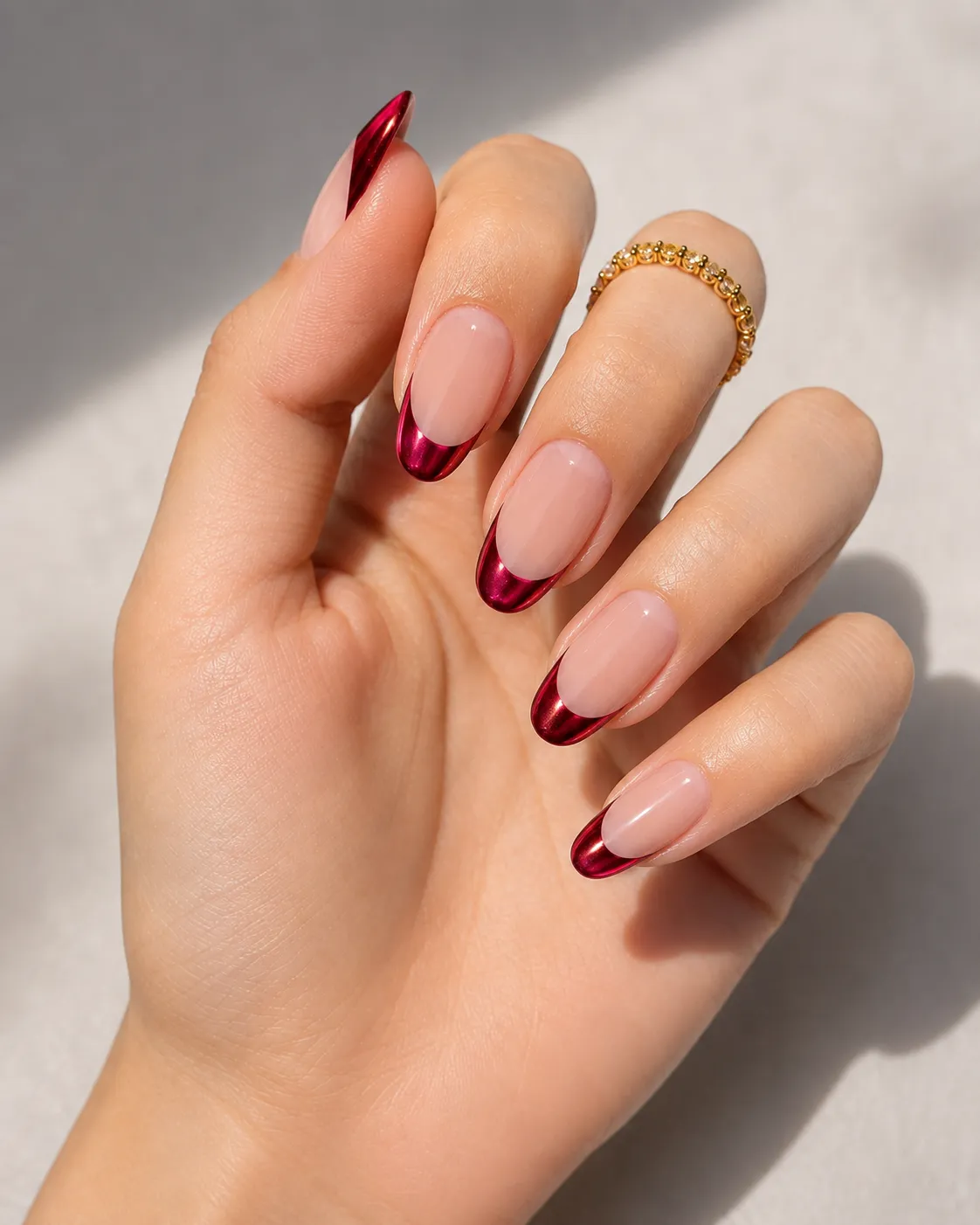
Ruby
A richer, cooler red with more depth than cherry but less darkness than wine.
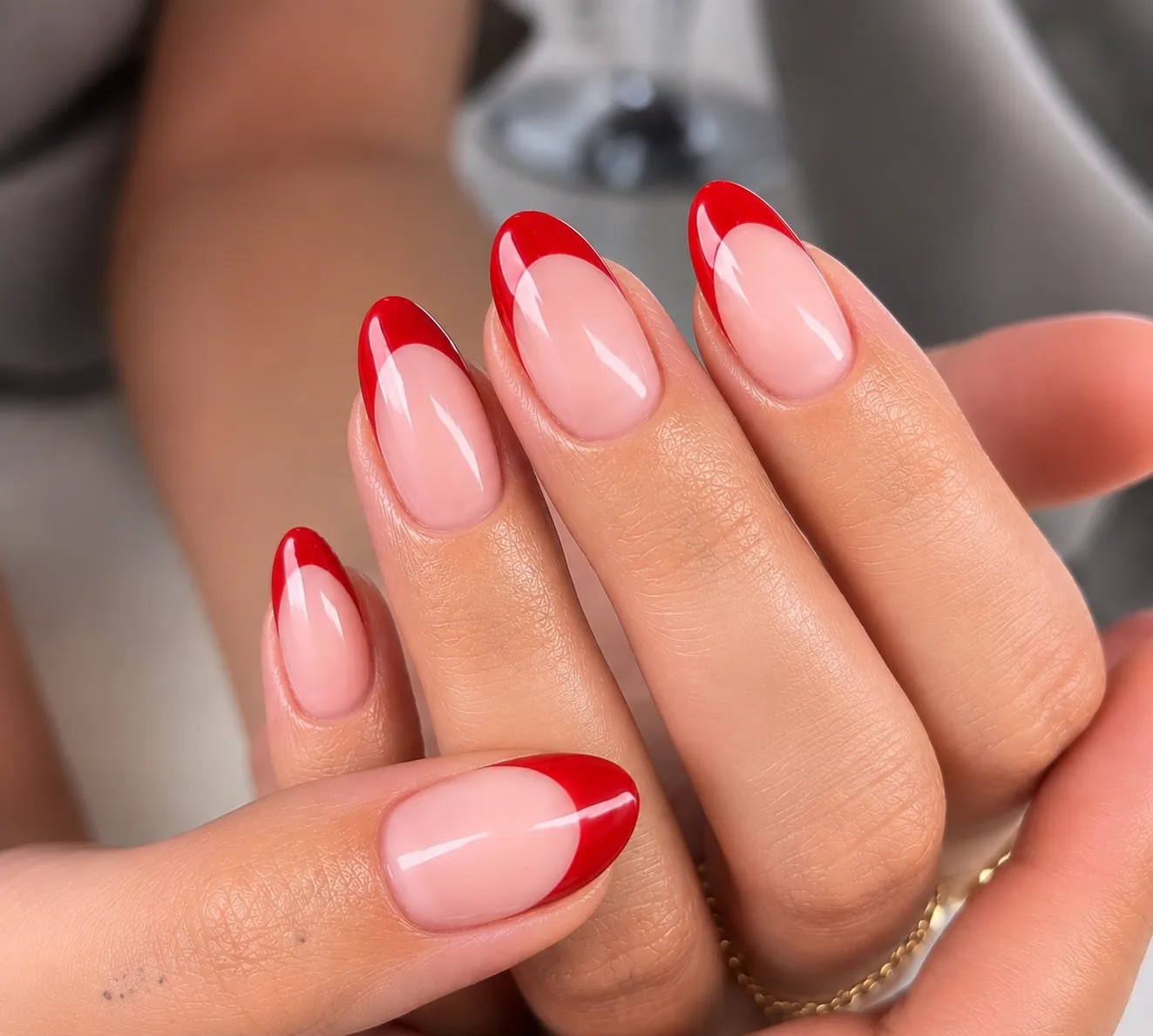
Scarlet
A warmer red that feels brighter, more playful, and especially vivid in direct light.
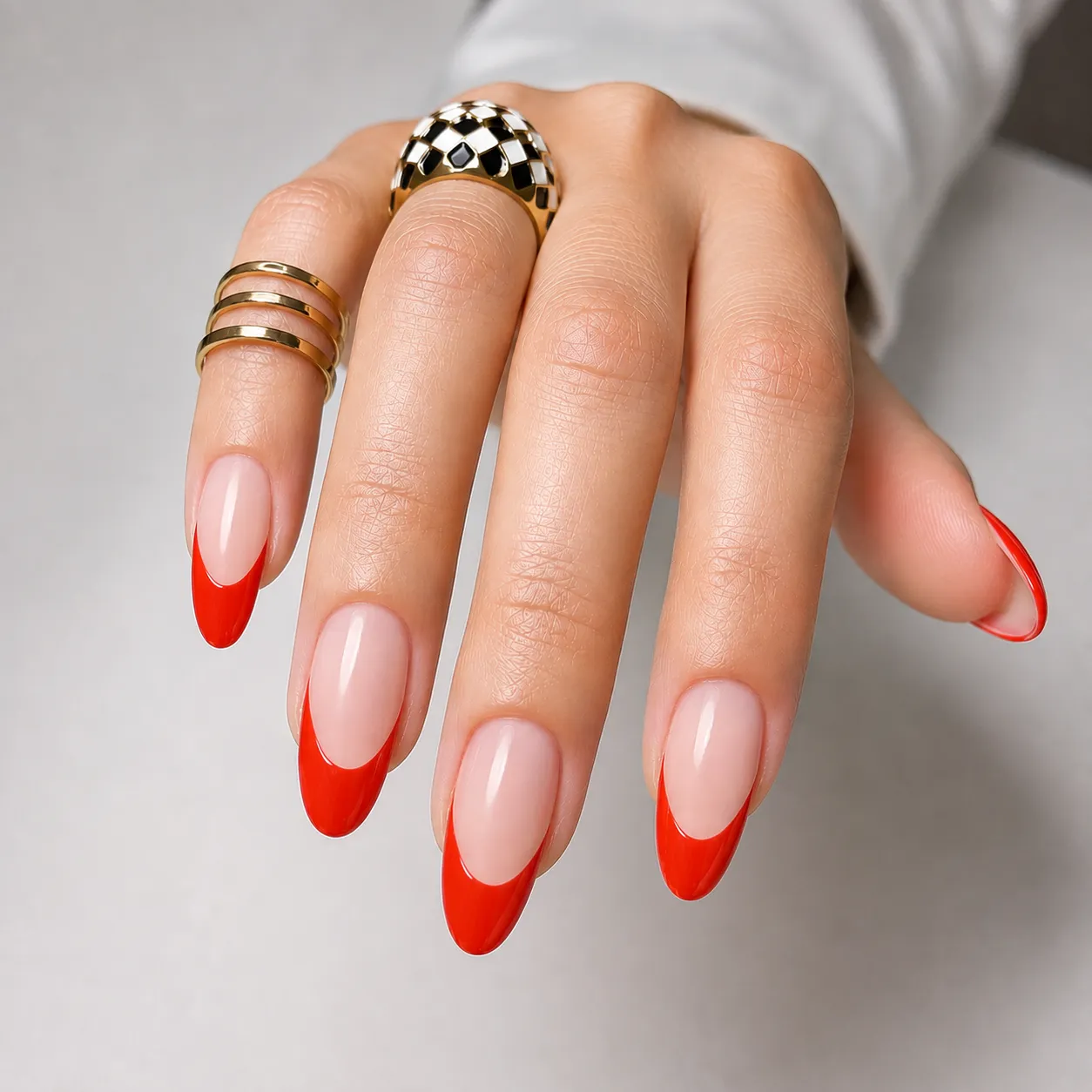
Tomato Red
An orange-leaning option that pairs naturally with warm metals and sunlit styling.
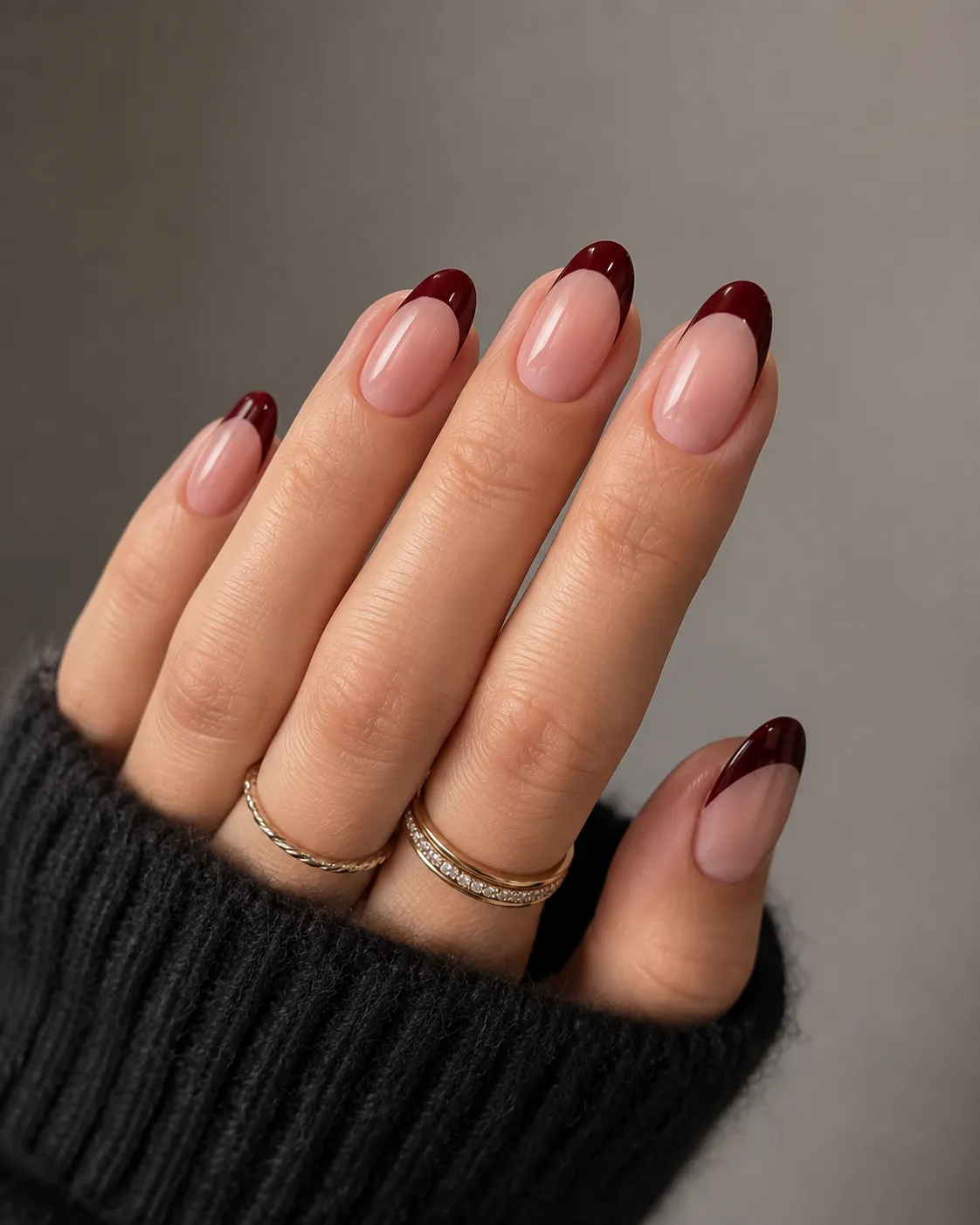
Wine Red
A balanced middle ground between bright cherry and very dark burgundy.
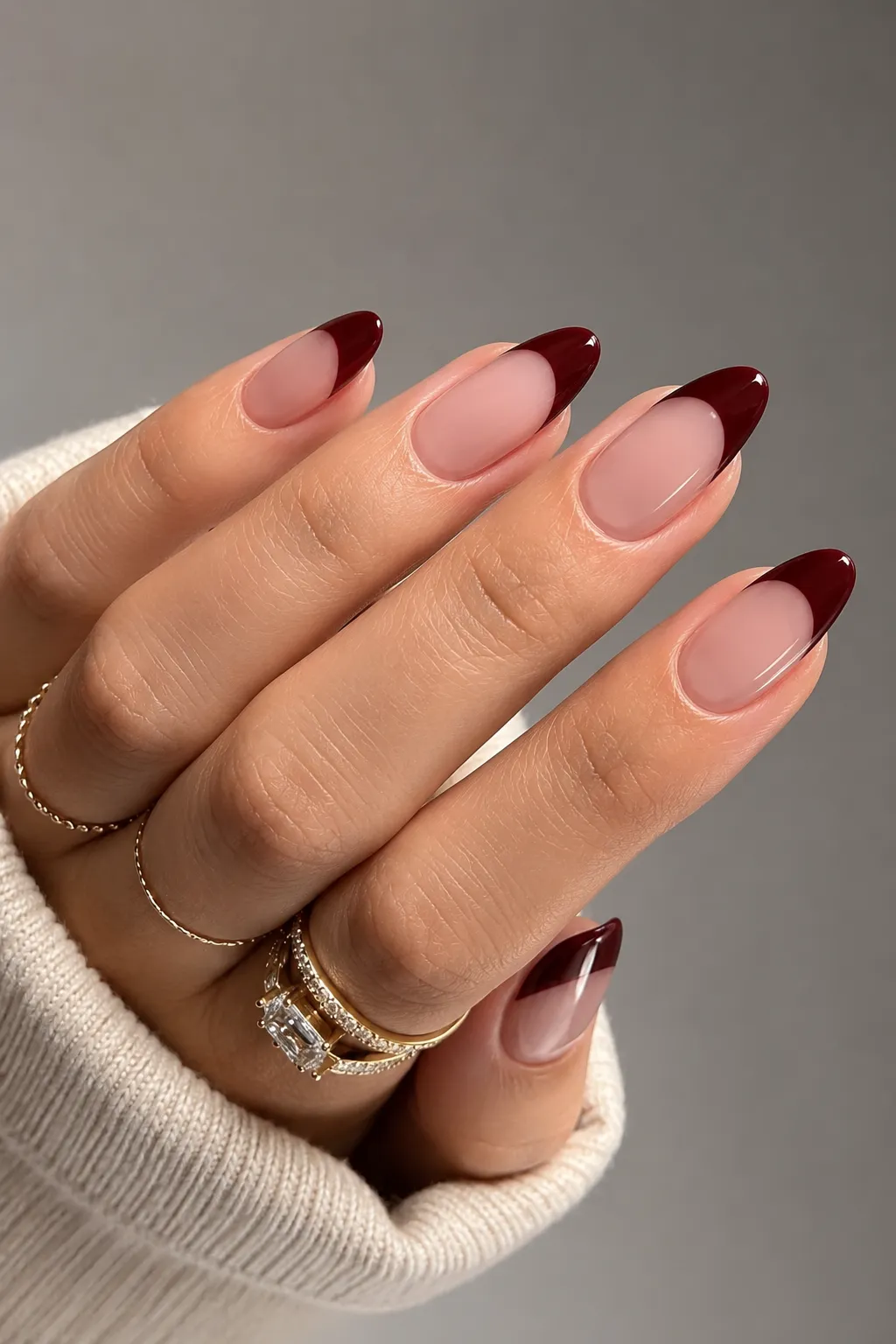
Burgundy
A dark muted red that feels quieter, more formal, and less visually sharp than cherry.
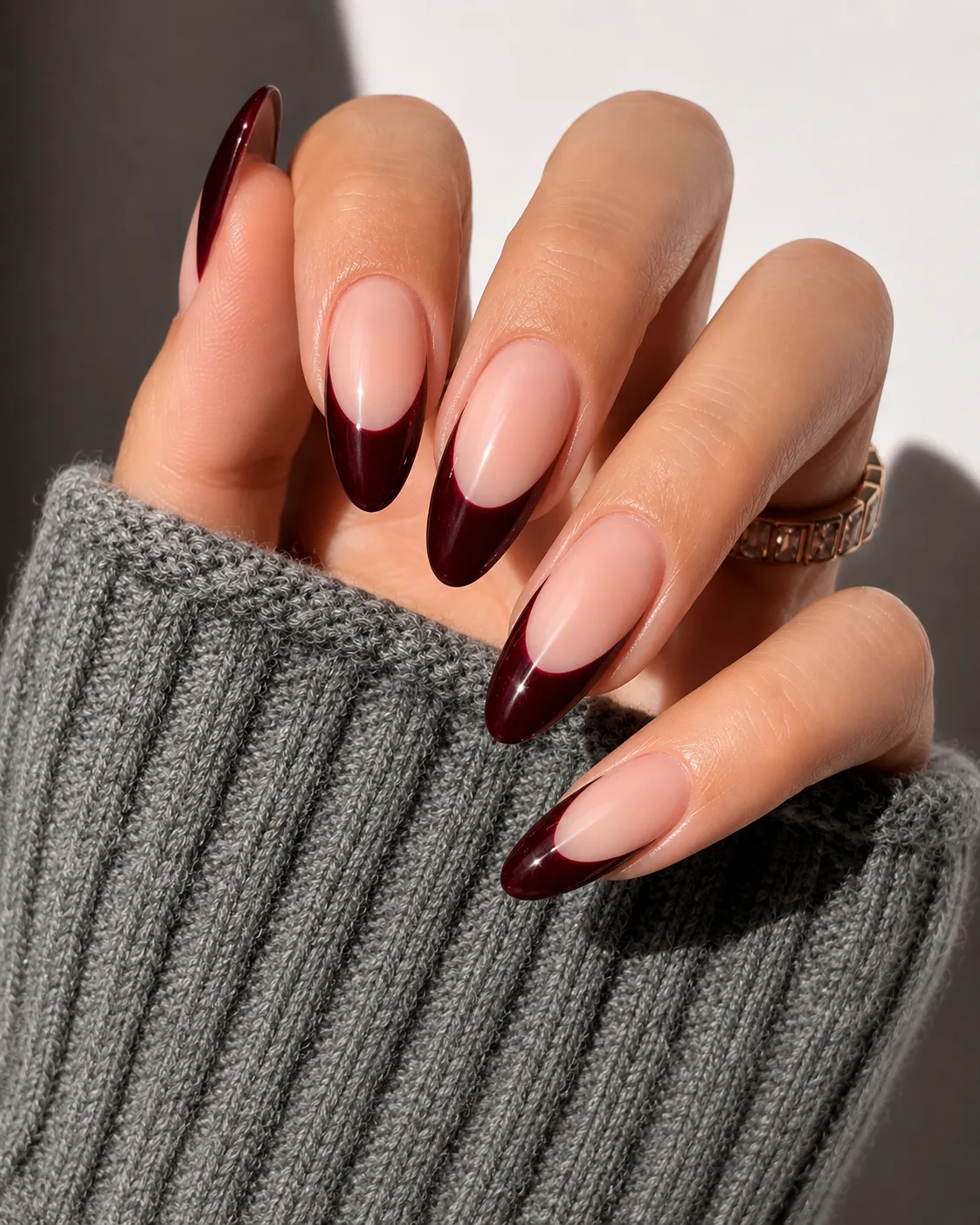
Oxblood
A near-black red for dramatic square, coffin, ballerina, and stiletto shapes.
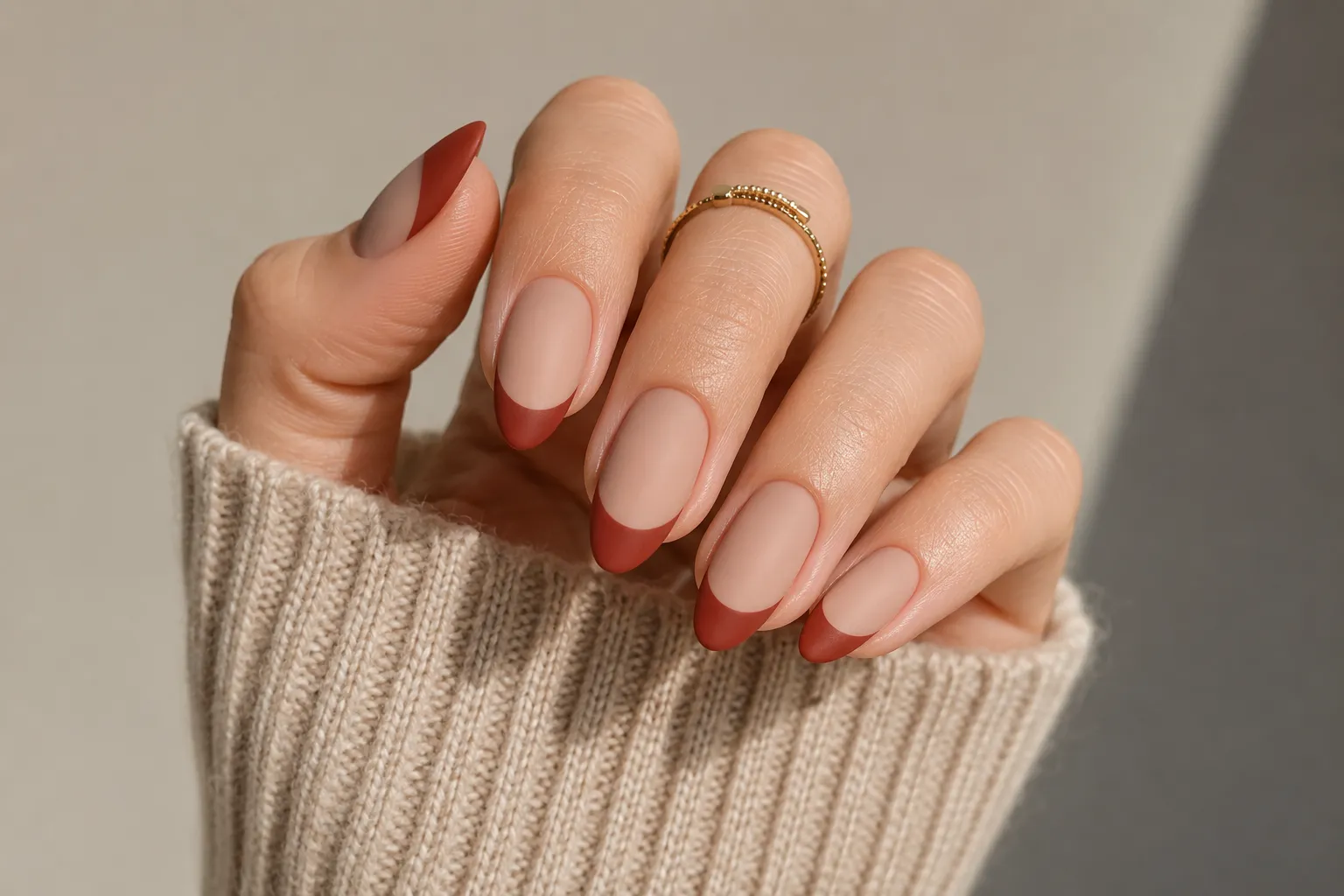
Matte Brick
A muted warm red whose soft surface makes the manicure feel modern and less glossy.
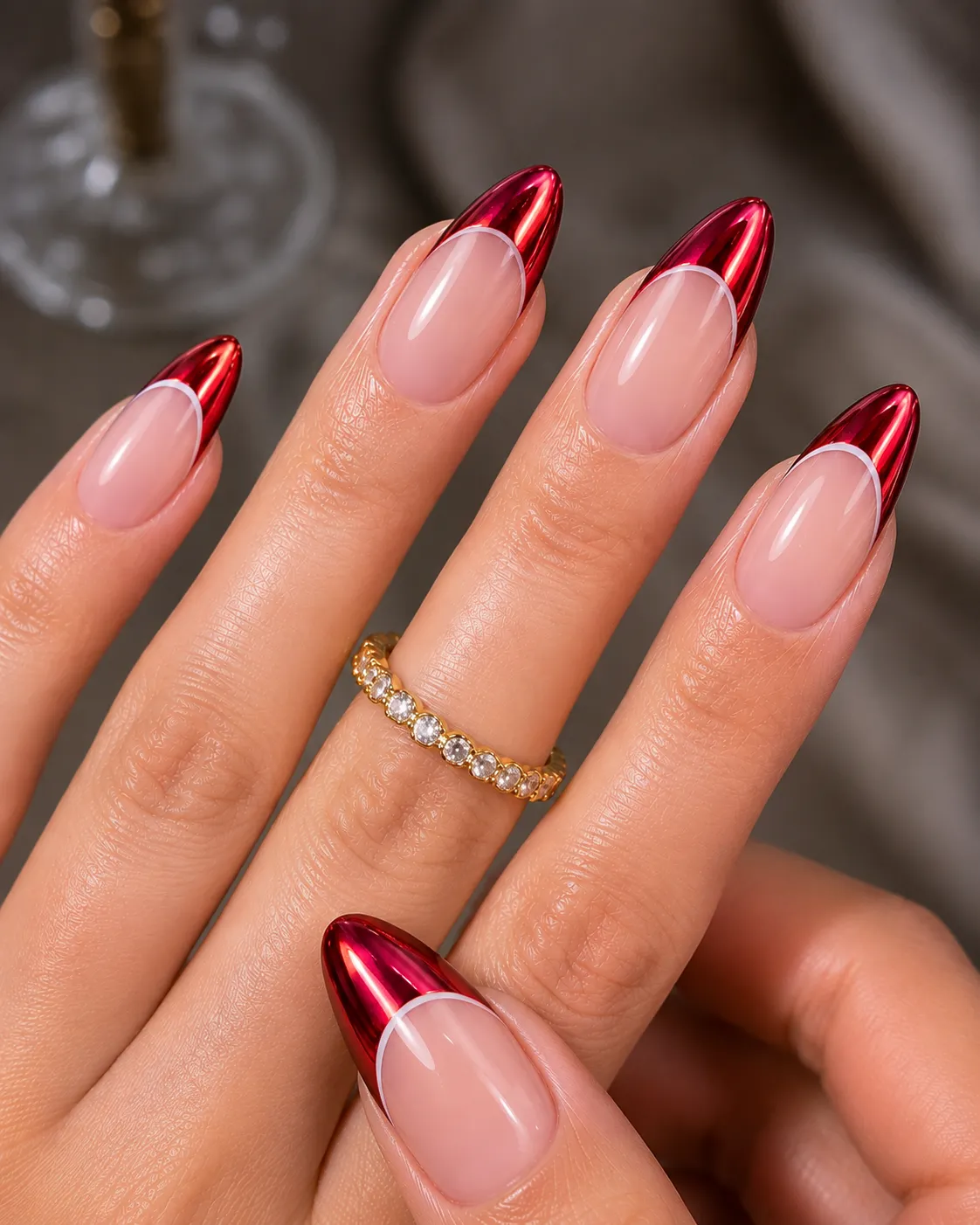
Ruby Chrome
Metallic reflection turns the red tip into a stronger evening or editorial accent.
How to Match Red French Tips to Your Undertone
Undertone guidance is useful, but it is not a rule. The most reliable approach is to compare several red swatches beside the hand in natural light before committing to the full set.
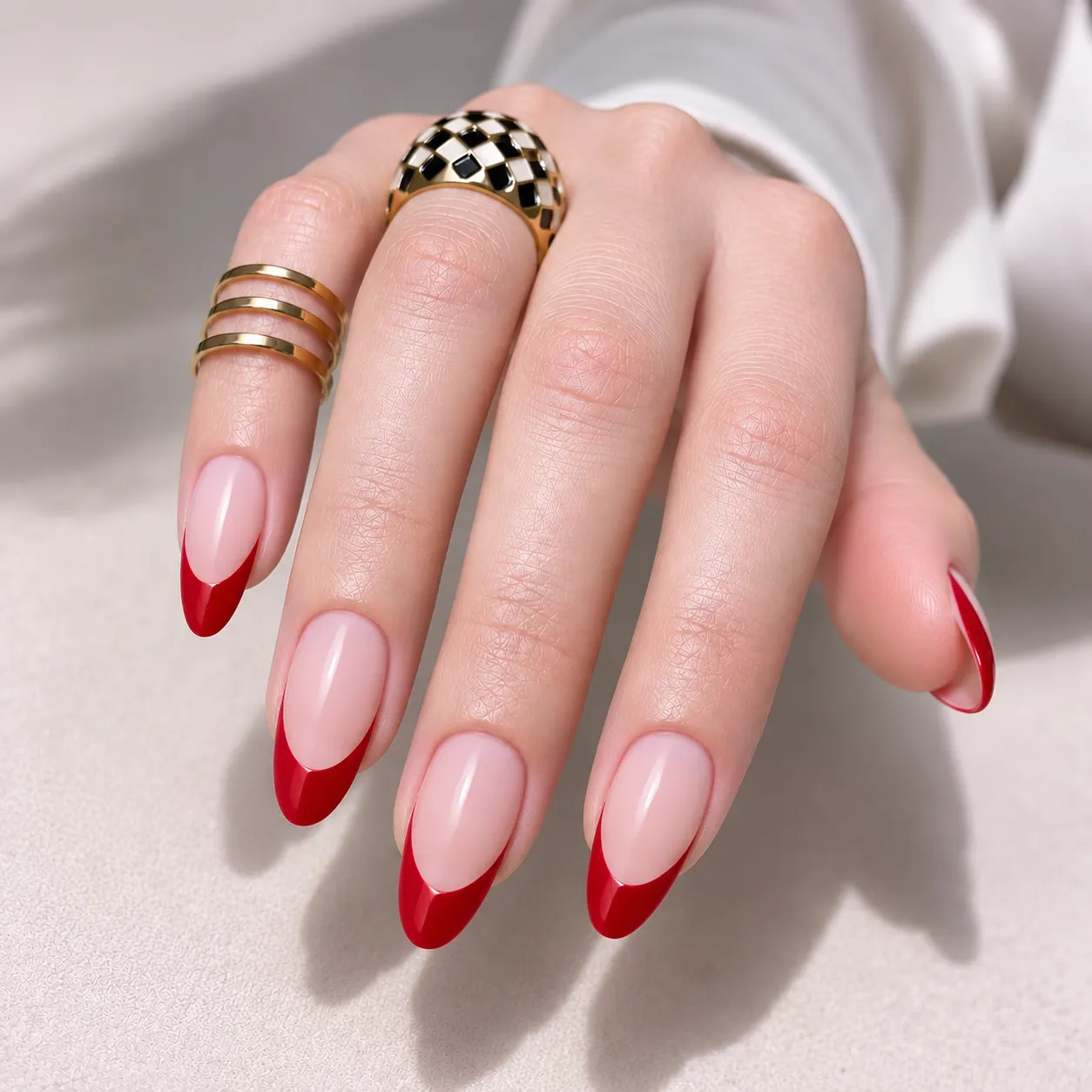
Cherry, Ruby & Wine
Blue-based reds often create a crisp, polished contrast without turning orange.
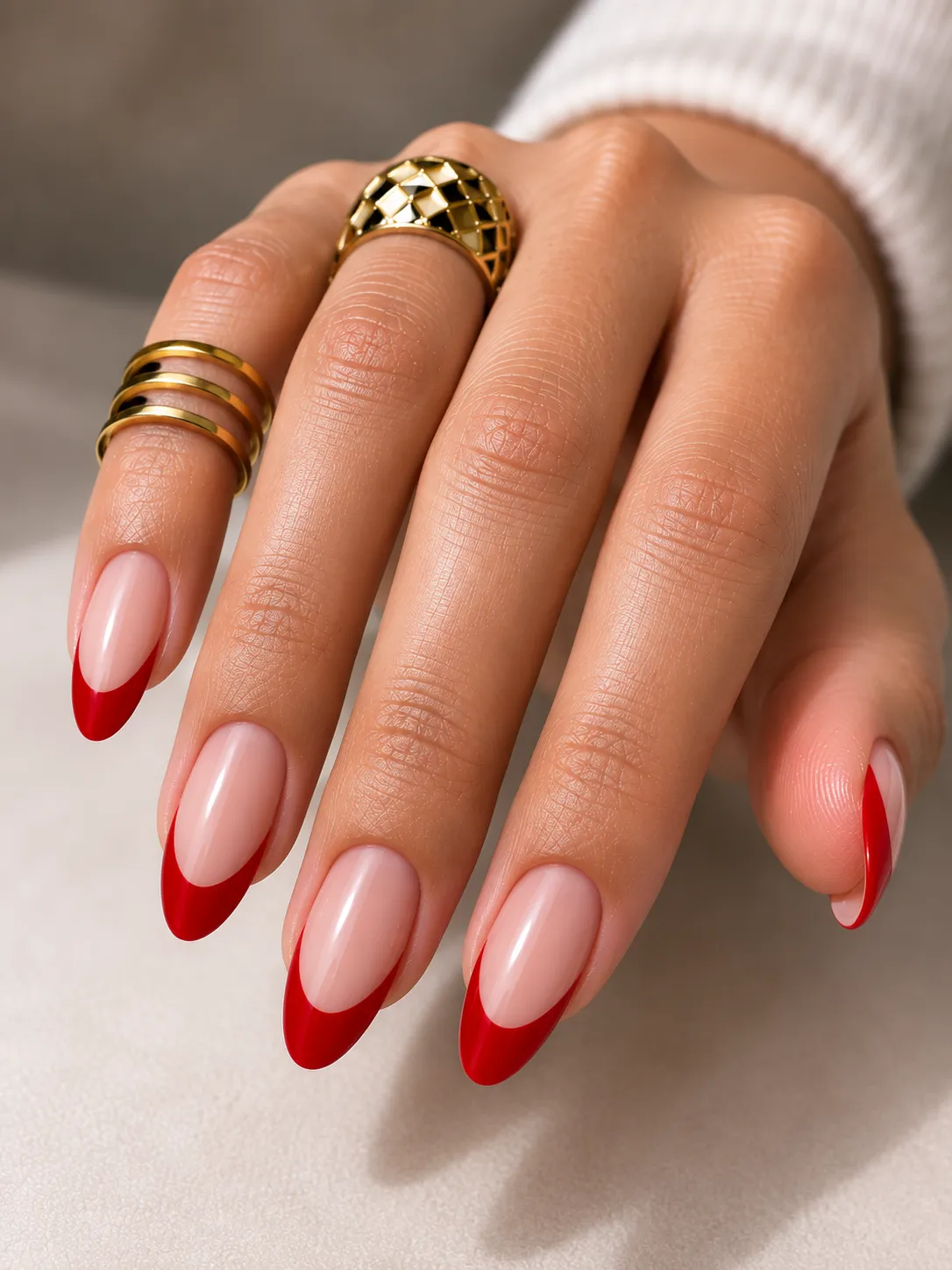
True Red & Balanced Ruby
Neutral reds offer flexibility and usually work with both silver and gold jewelry.
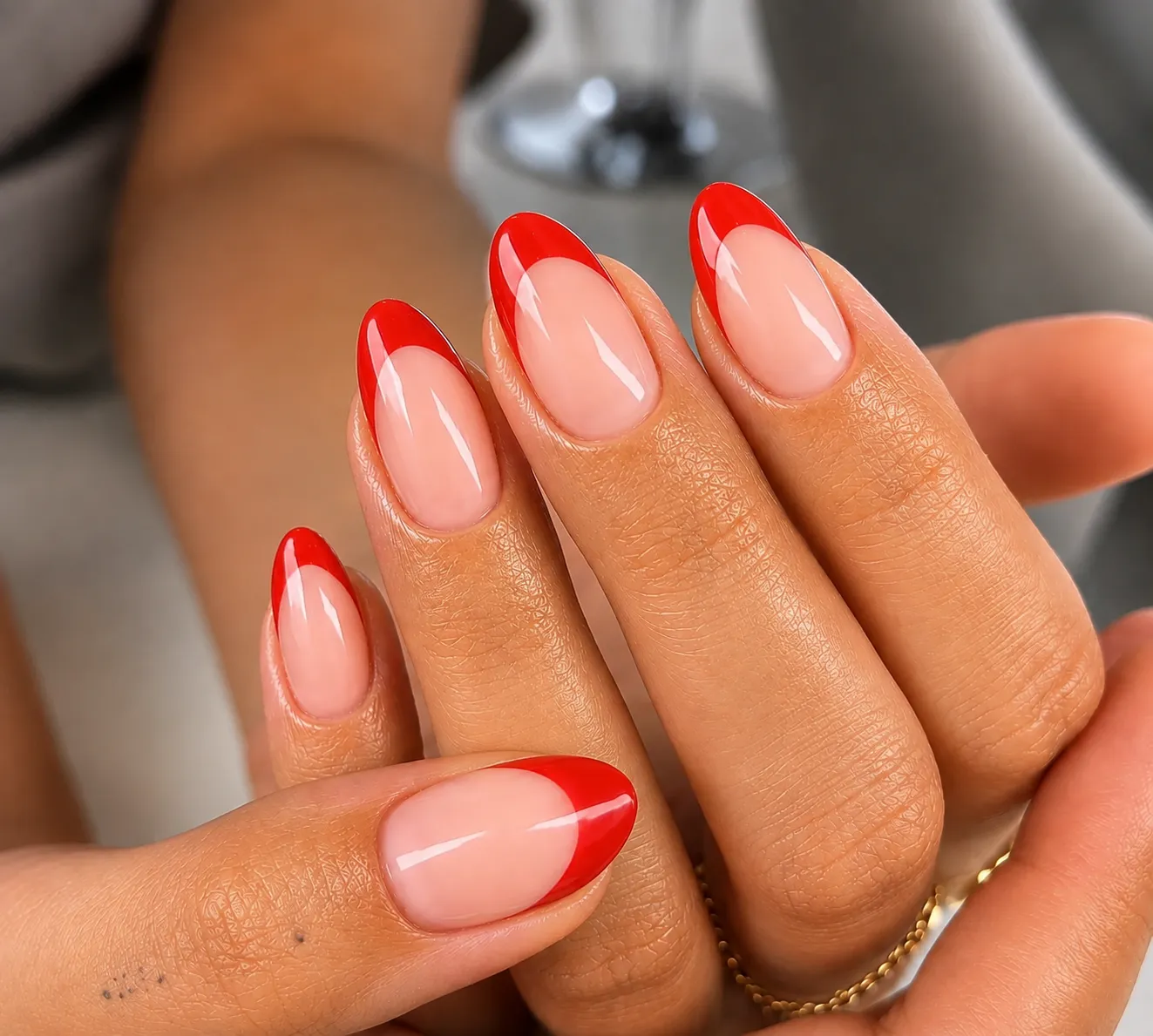
Tomato, Scarlet & Coral-Red
Warmer reds can harmonize with golden undertones and yellow- or rose-gold jewelry.
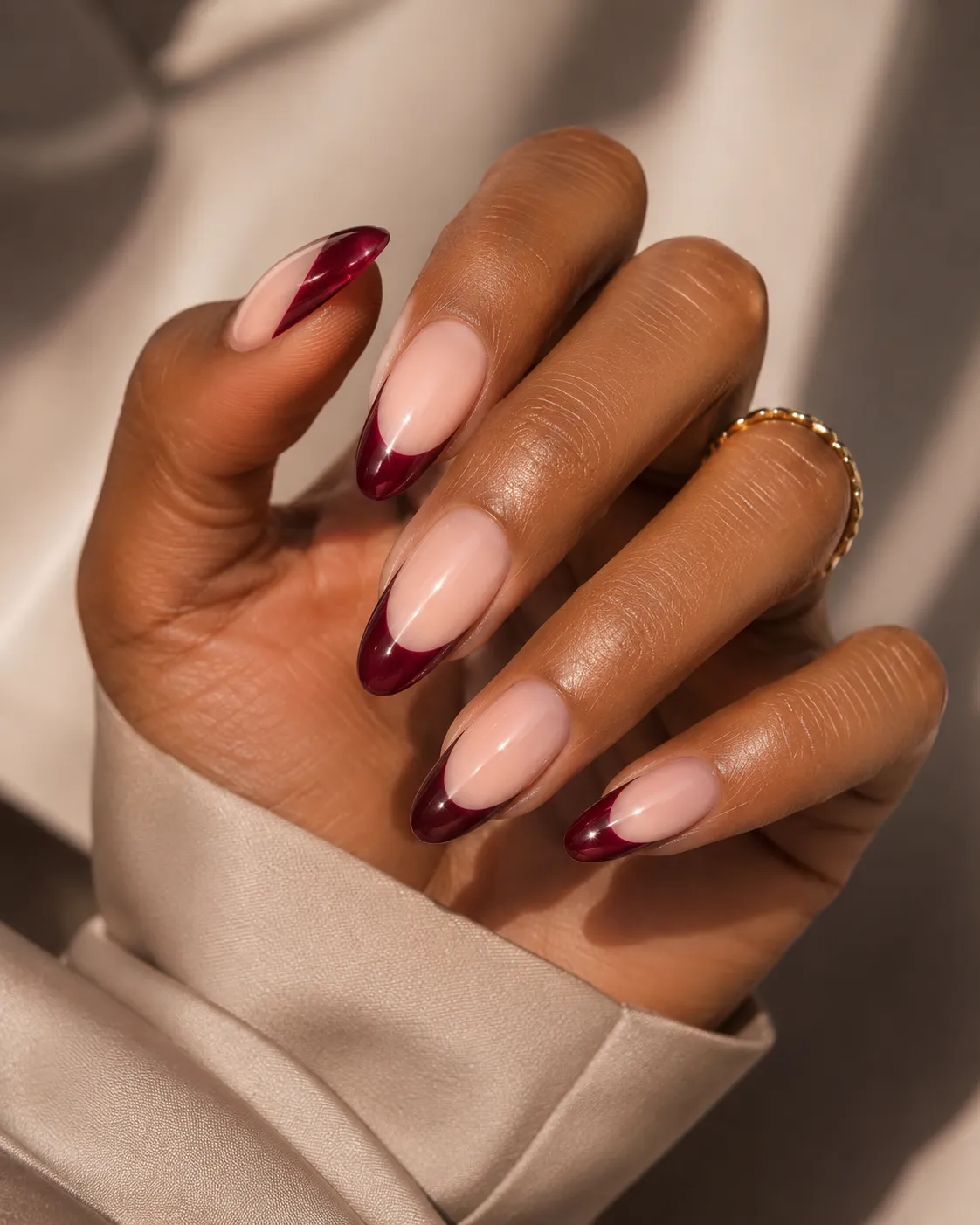
Ruby, Wine & Oxblood
Rich saturated reds preserve contrast without requiring an overly bright or chalky base.
Ask the technician to place two or three uncured red shades beside the hand and compare them in neutral or natural light.
Best Red French Tips for Different Occasions
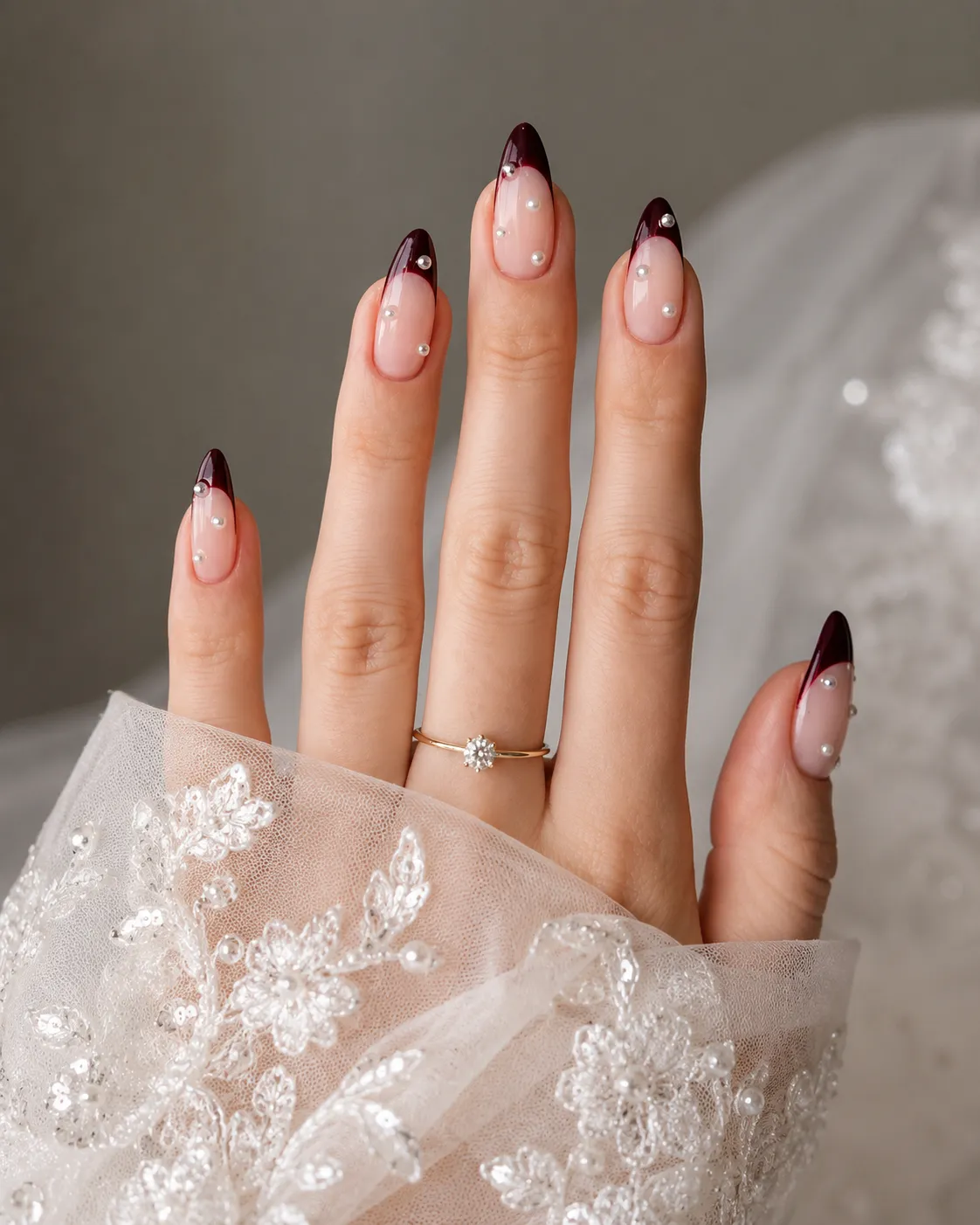
Refined Burgundy
A narrow burgundy edge can feel formal without competing with jewelry, lace, or satin.
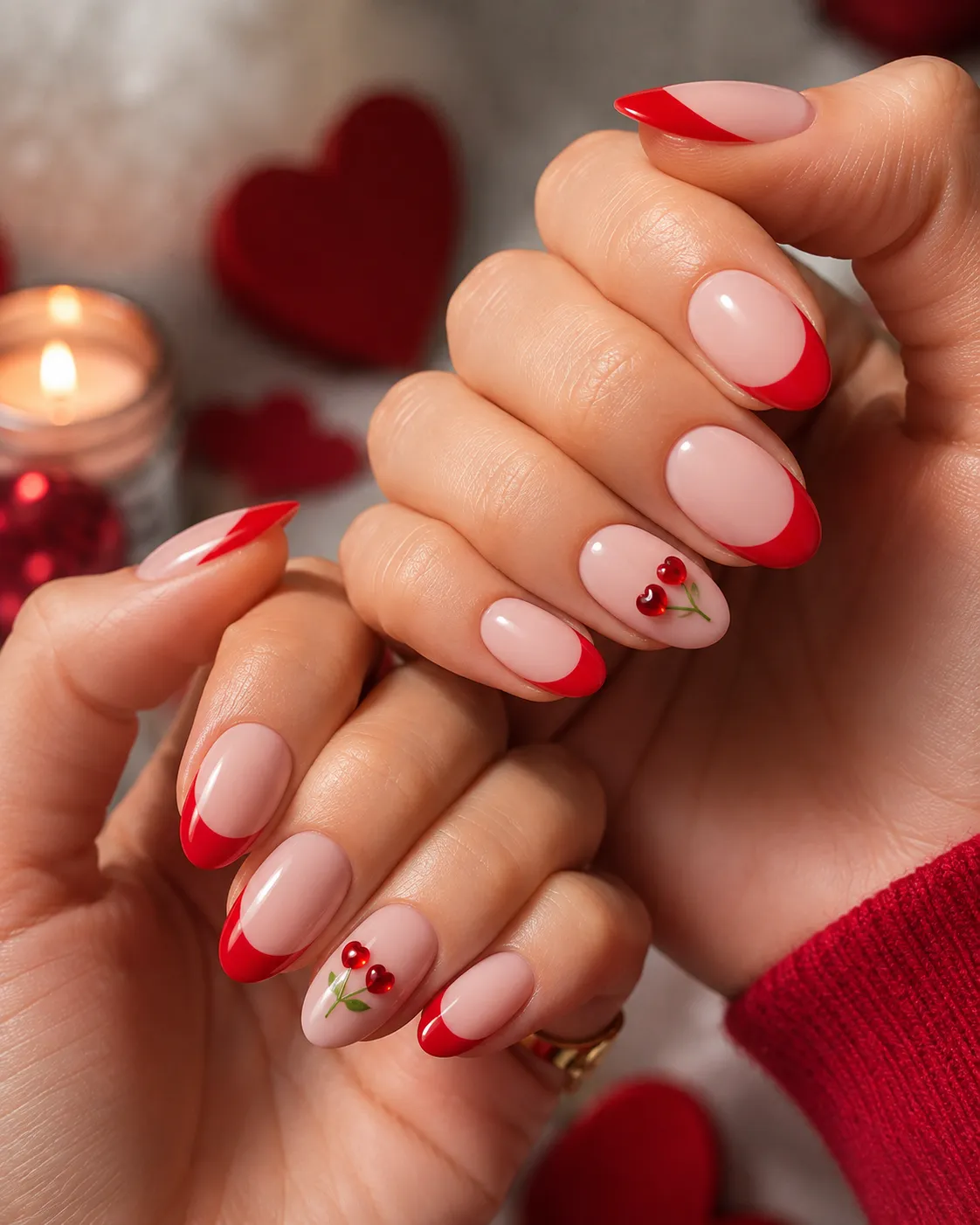
Cherry Red
Classic cherry offers strong romantic color without requiring heavy heart art or full coverage.
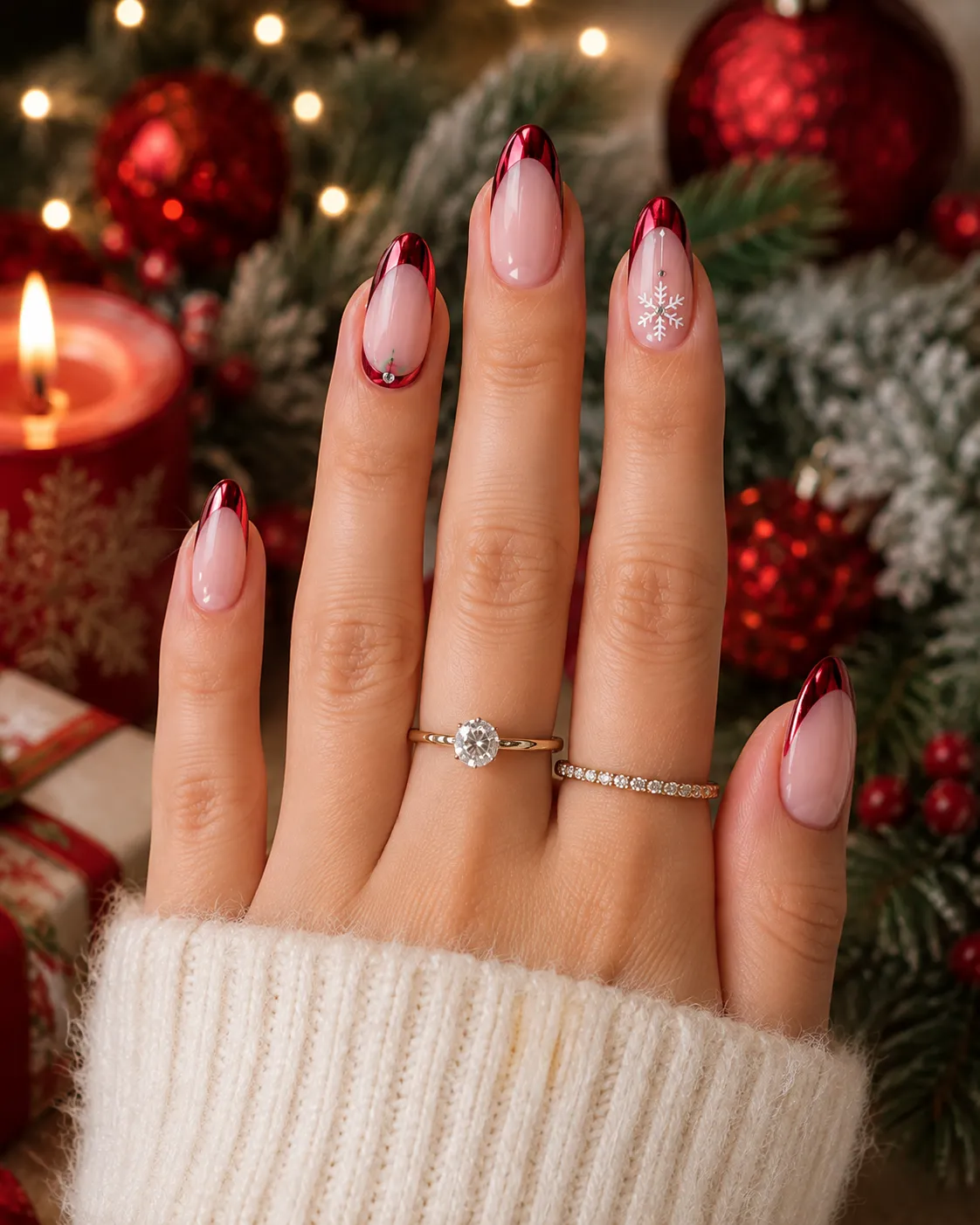
Ruby Chrome
A reflective red tip feels festive while preserving the clean French structure.
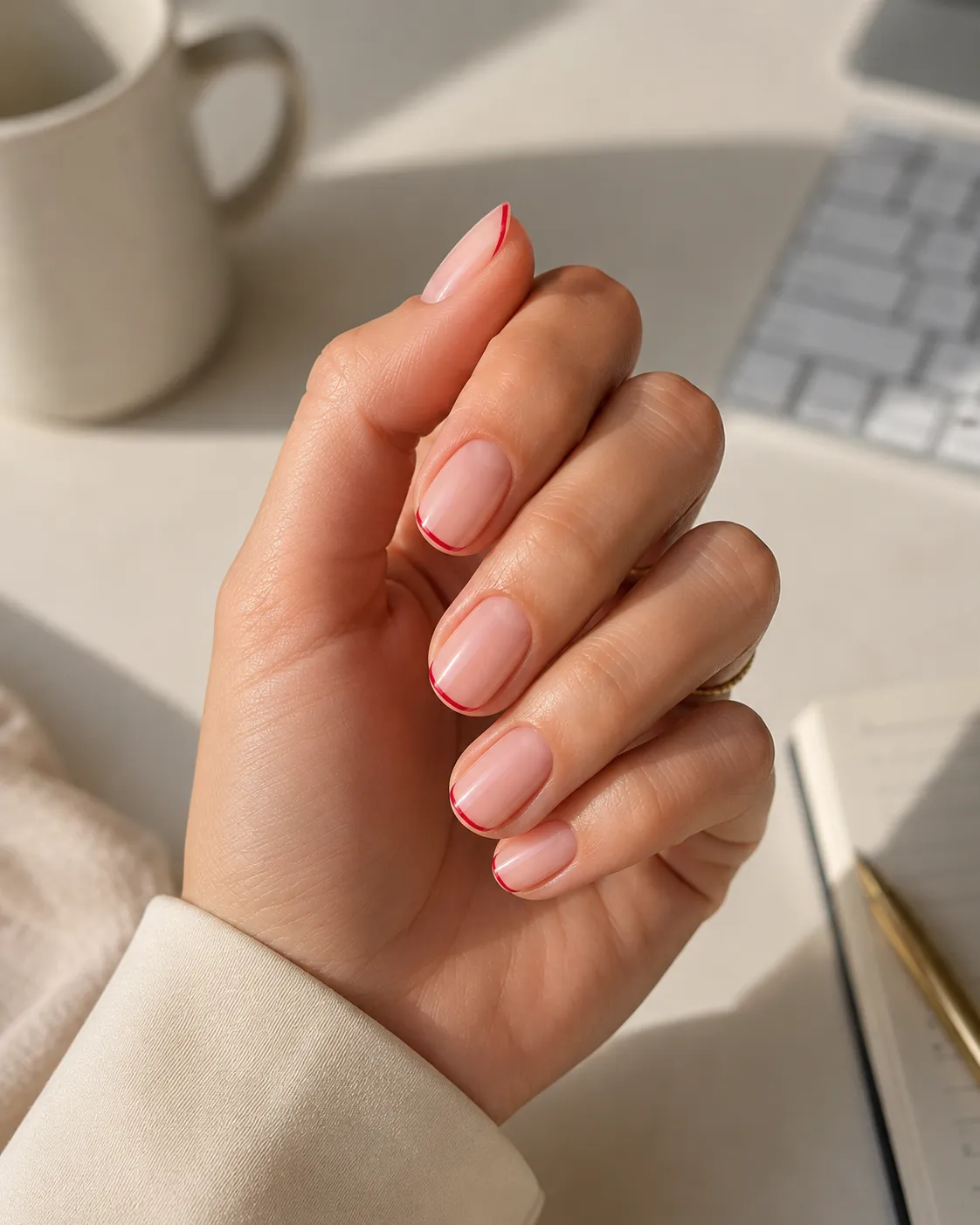
Red Micro-French
A narrow line introduces color while keeping the manicure controlled and easy to style.
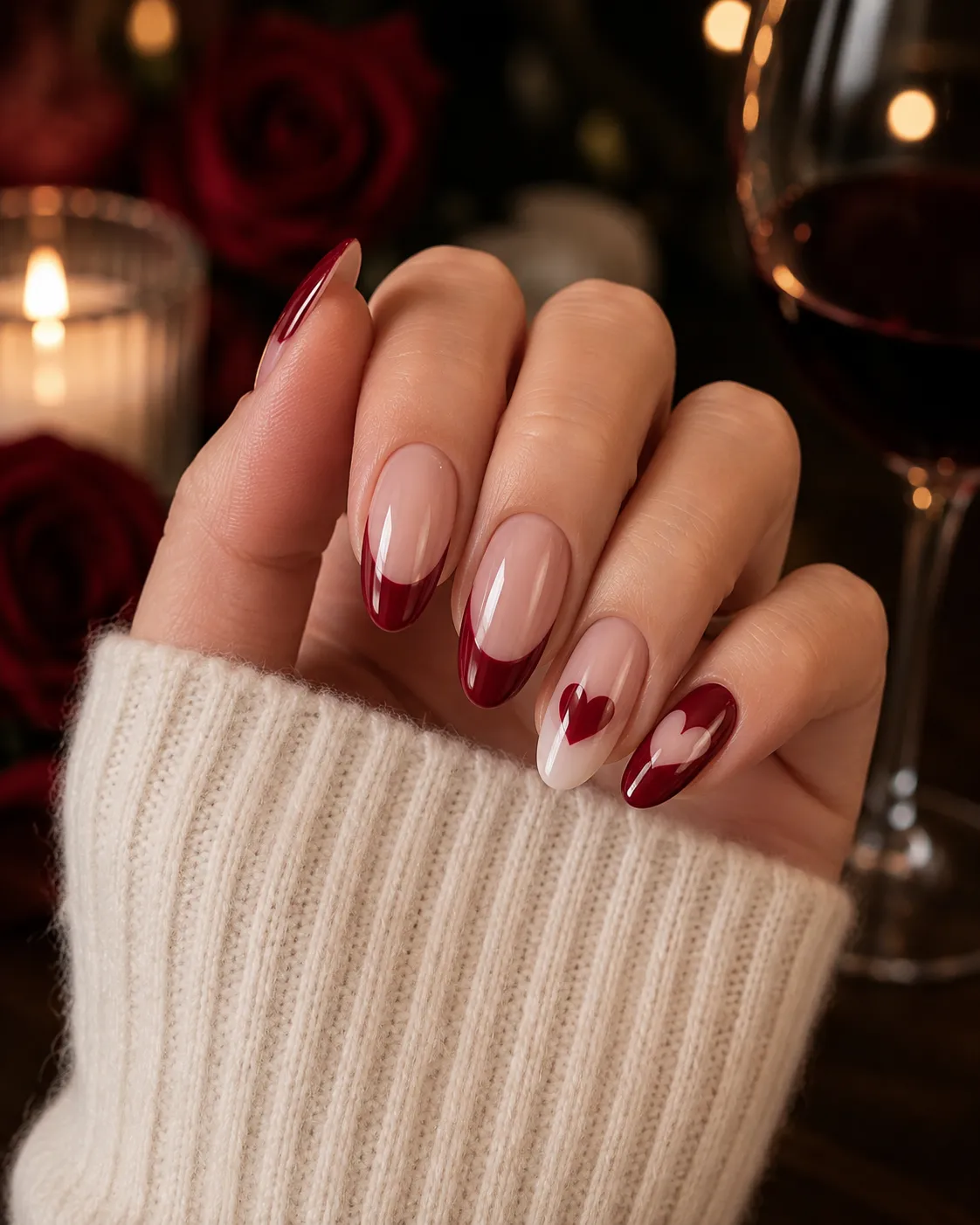
Wine Red
A deeper red adds evening polish without the brightness of scarlet or chrome.
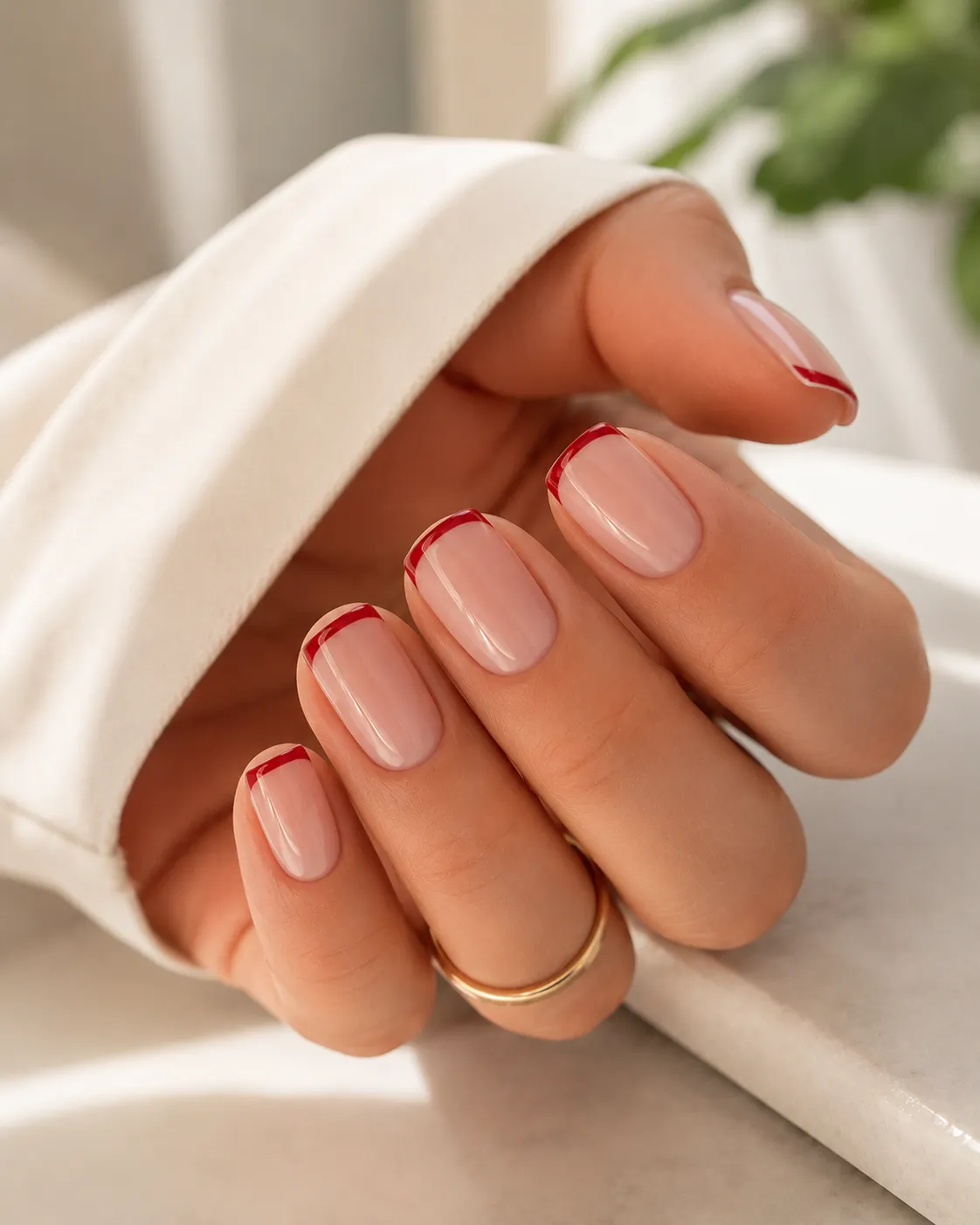
True Red on Squoval
A medium-width true-red tip on a practical shape offers color without excessive length or ornament.
Glossy, Matte, Jelly, Chrome, Velvet, or Cat-Eye?
| Finish | Visual effect | Main consideration |
|---|---|---|
| Glossy | Classic shine with clear pigment depth | Shows scratches, ridges, and unevenness clearly |
| Matte | Soft modern surface, especially effective with brick and burgundy | Can show oil, makeup, and scuff marks |
| Jelly | Translucent glass-like color | Requires even transparency and clean free-edge structure |
| Chrome | Mirror-like metallic reflection | Needs careful sealing to protect the reflective edge |
| Velvet | Soft magnetic depth with diffused movement | The effect must remain contained within the tip |
| Cat-eye | Directional reflective line or halo | Inconsistent magnet placement can make the set look mismatched |
The Salon-Quality Red French Checklist
Dark pigment makes weak application easier to spot. Instead of judging the manicure only by its shine, inspect it like a technician: from above for symmetry, from the side for thickness, and at the free edge for sealing and consistency.
Eight signs the set is genuinely well executed
A polished photo can hide small flaws. These are the details that remain visible from every angle.
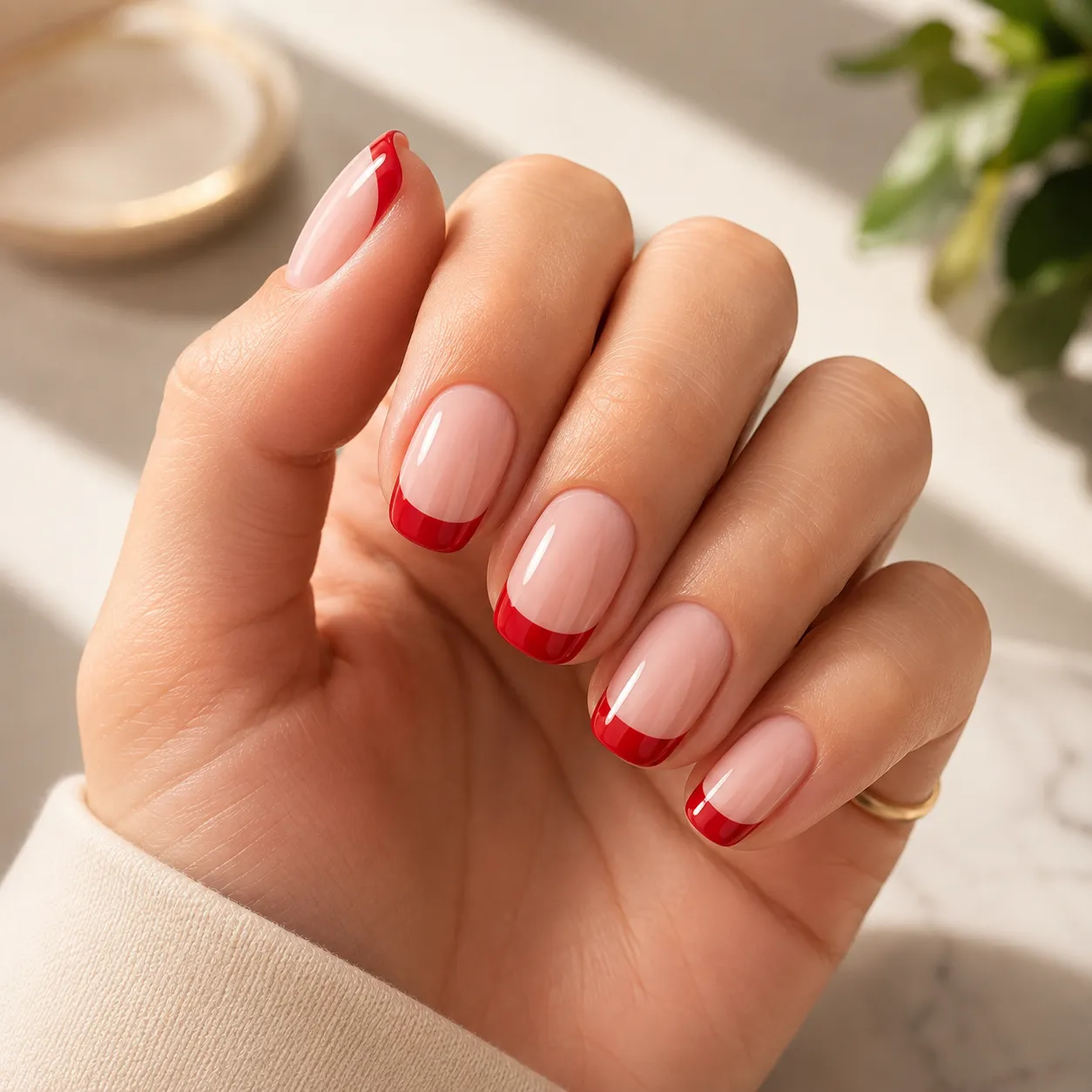
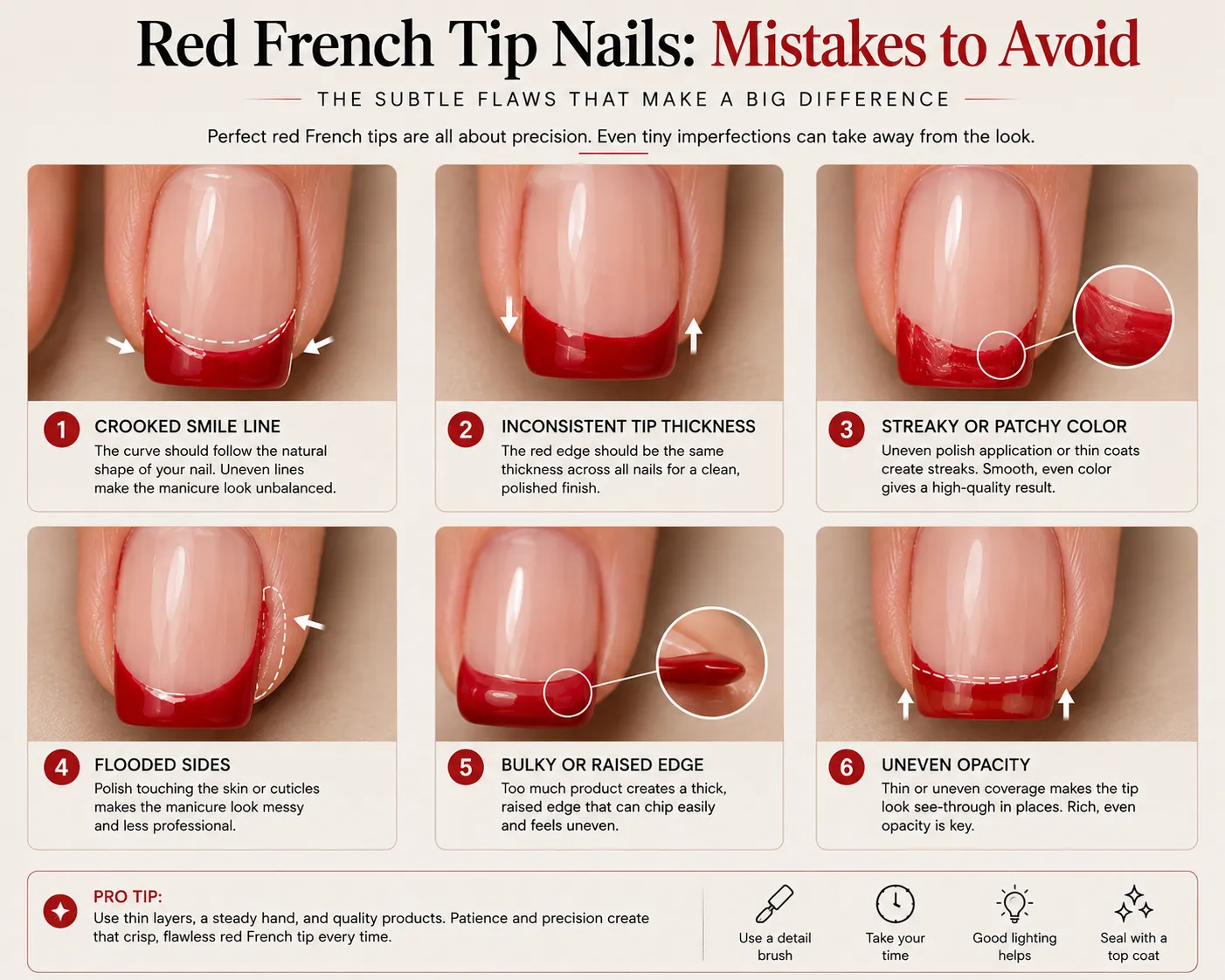
Avoid These Red French Tip Mistakes Before Leaving the Salon
Red pigment is unforgiving: small inconsistencies that disappear in pale polish become obvious in cherry, wine, burgundy, and chrome. Use this final inspection before accepting the finished set.
Look straight down for symmetry, tilt sideways for thickness, inspect both sidewalls for cleanup, and compare all five nails together before the final photos are taken.
Cost, Wear Time, and Maintenance
Red French tips may be priced above a plain color service because the smile line, opacity, layering, and cleanup require additional precision. A colored-French supplement is common, but the final amount depends on the salon, city, enhancement material, nail length, and design detail.
Wear time depends more on preparation and product system than on the red shade itself. Properly applied gel or builder-gel designs commonly remain presentable for around two to three weeks, although nail growth, daily activity, and aftercare can shorten or extend that period.
Pricing and wear vary by location, technician experience, nail length, product chemistry, preparation, lifestyle, and maintenance. The red pigment itself does not guarantee durability. Removal must follow the actual product system rather than the visible color or finish.
How to Keep Red Tips Looking Clean
Apply cuticle oil regularly, wear gloves during prolonged wet work and strong cleaning, and avoid using the free edge as a tool. Dark pigment makes chips, scratches, lifting, and tip wear easy to notice.
For system-specific care, compare Gel X, acrylic, and BIAB. For removal, use the method appropriate to the product rather than peeling or forcing lifted material.
Is a Red French Tip Right for You?
How much nail length do you have?
Almond, square, coffin, ballerina, and stiletto provide enough space for a visible red edge.
A narrow line preserves the appearance of nail-bed length.
How bold should the result feel?
Use a narrow line and a deeper, less saturated red.
Use stronger contrast, shine, or a wider tip on longer nails.
Do you want classic shine or a special-effect finish?
Let the shade and smile-line proportion carry the design.
Keep the finish contained within the tip so the French structure remains readable.
Red French works best when shade, width, finish, and shape are chosen together.
The color should support the nail’s proportions rather than overpower them.
What to Ask for at the Salon
“I want a red French manicure with a sheer [cool pink / neutral nude / warm blush] base, a [micro / medium / deep] smile line, and an even [cherry / true red / wine / burgundy / oxblood] finish. Keep the red layers thin, match the tip depth across all ten nails, clean the sidewalls, and make sure there is no raised ridge before topcoat.”
The Final Verdict
Red French tip nails are strongest when they remain visibly French rather than becoming a block of red at the free edge. Short nails benefit from micro lines; almond and oval soften bright reds; square and squoval make them graphic; coffin, ballerina, and stiletto turn them editorial.
Cherry and true red feel classic, wine and burgundy quieter, scarlet energetic, oxblood dramatic, and chrome or magnetic finishes more reflective. The deciding factor is not simply the shade. It is whether the smile line, opacity, base, shape, and surface are controlled as one design.
Frequently Asked Questions
Are red French tip nails classy?
Yes. A narrow, even red smile line over a sheer nude or soft pink base can look polished and refined. Wine and burgundy feel quieter, while cherry and scarlet create stronger contrast.
Do red French tips look good on short nails?
Yes. A thin red micro-French line usually looks more balanced than a deep block tip because it preserves the visible length of the nail bed.
What base color works best with red French tips?
A sheer nude, translucent pink, or softly milky base keeps the red edge clear without competing with it. Choose a base that also sits naturally against your skin undertone.
Which red shade is best for my skin tone?
Cherry, ruby, and wine reds often complement cooler undertones, while tomato, scarlet, and coral-red shades often complement warmer undertones. Compare swatches in natural light before choosing.
How long do red French tip nails last?
Wear depends on preparation, product system, nail growth, lifestyle, and aftercare. Properly applied gel or builder-gel red French tips commonly remain presentable for around two to three weeks.
Can red French tips be applied over BIAB, gel, or acrylic?
Yes. They can be painted over a properly prepared BIAB overlay, gel enhancement, or acrylic extension. Each red layer should remain thin, compatible with the system, and fully cured.
Do red French tips cost more than classic white tips?
They can. Some red gels need extra layering, cleanup, and precision, so a salon may add a colored-French or nail-art supplement. Pricing varies by location, length, and material.