
Almond French Tip Nails: 20 Ideas That Flatter the Shape
How the taper changes the French edge, which lengths work best, and how to keep almond nails balanced, wearable and salon-accurate.
Almond French tips work because the tapered silhouette and curved French edge reinforce the same visual direction. The nails can look slimmer and more elongated, but the result only feels balanced when the sidewall taper, point alignment, length, structure and tip depth suit one another.
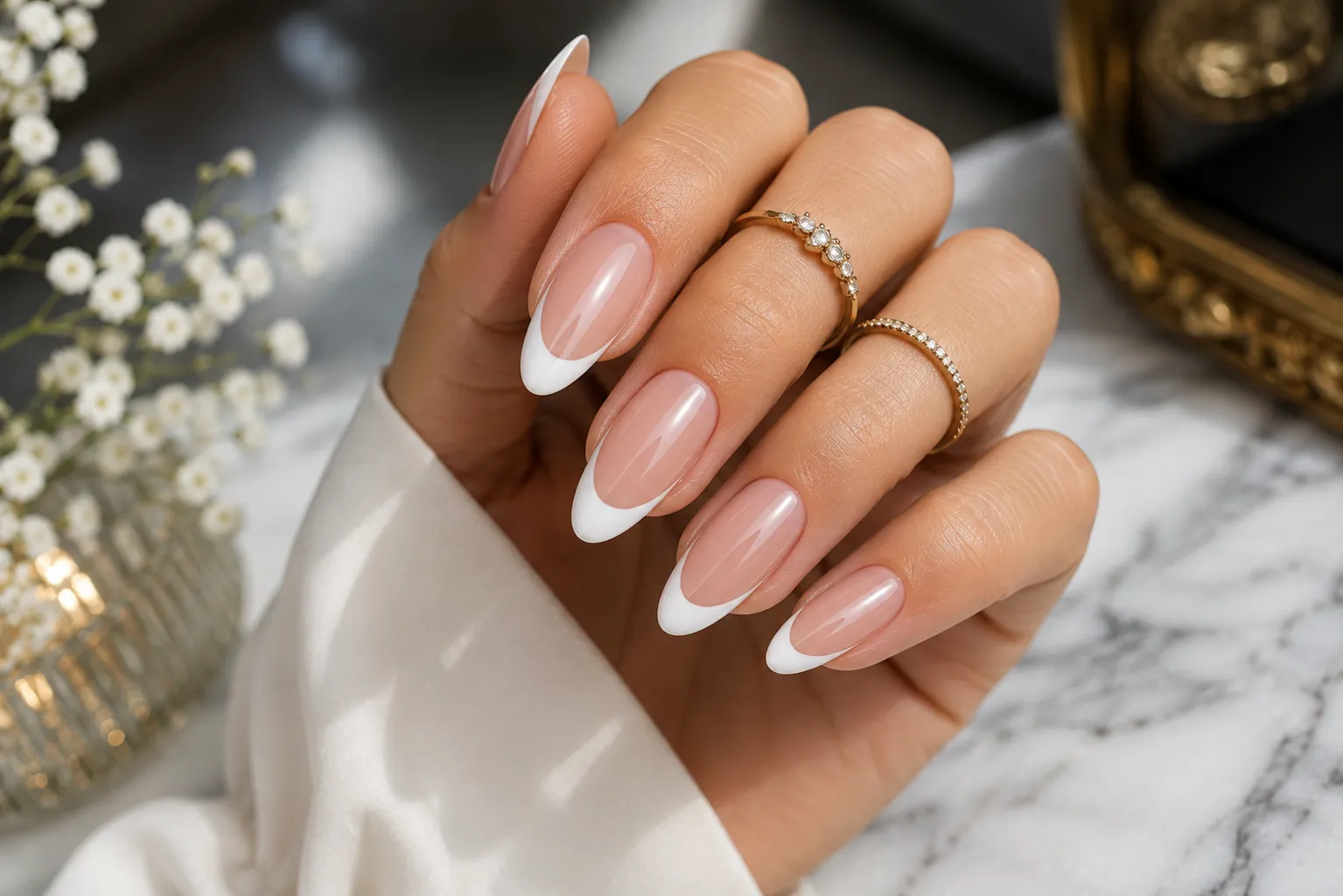
Choose Your Almond French Look
Start with the finish closest to your goal, then compare how each treatment interacts with almond’s tapered silhouette.
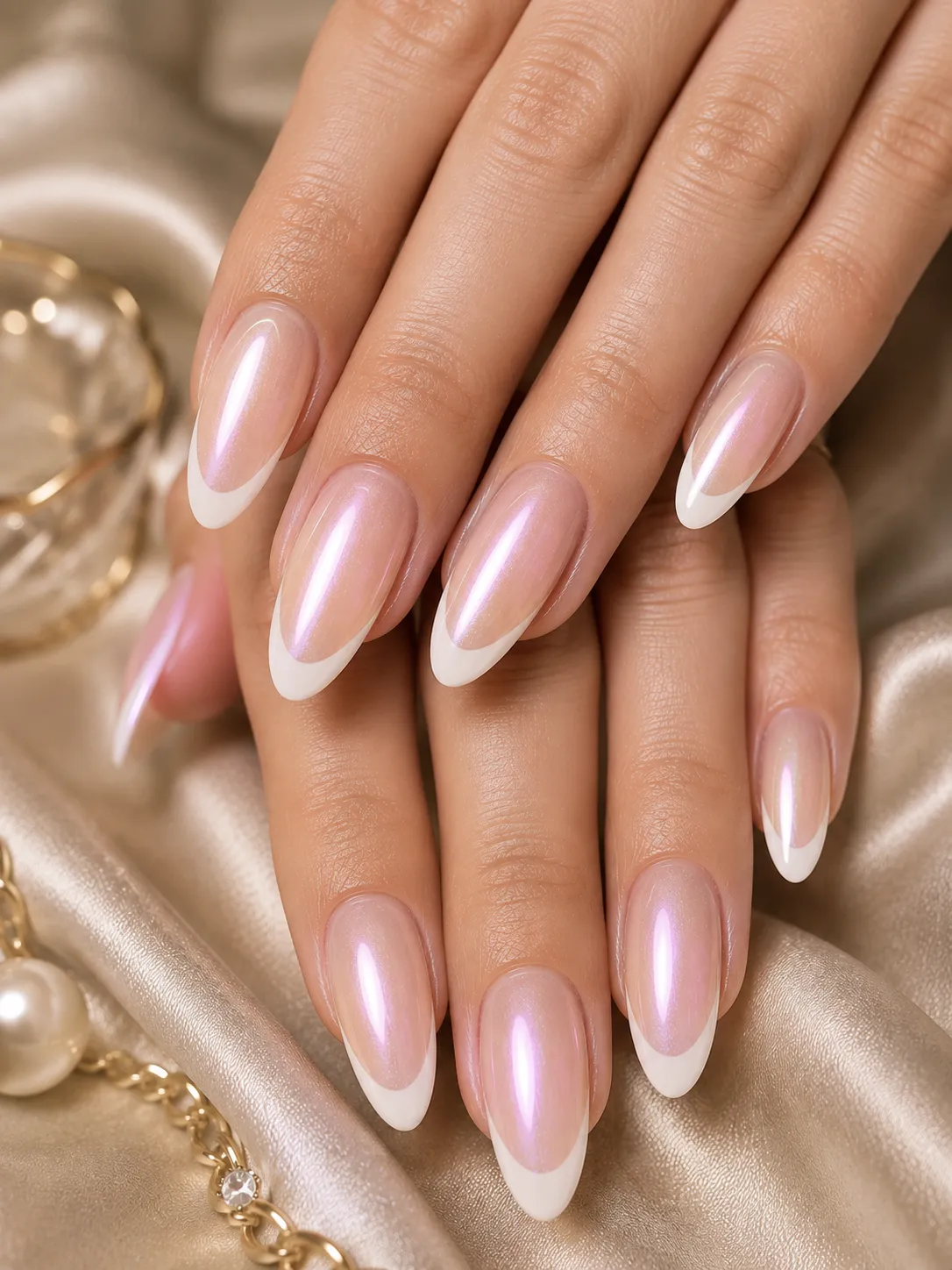
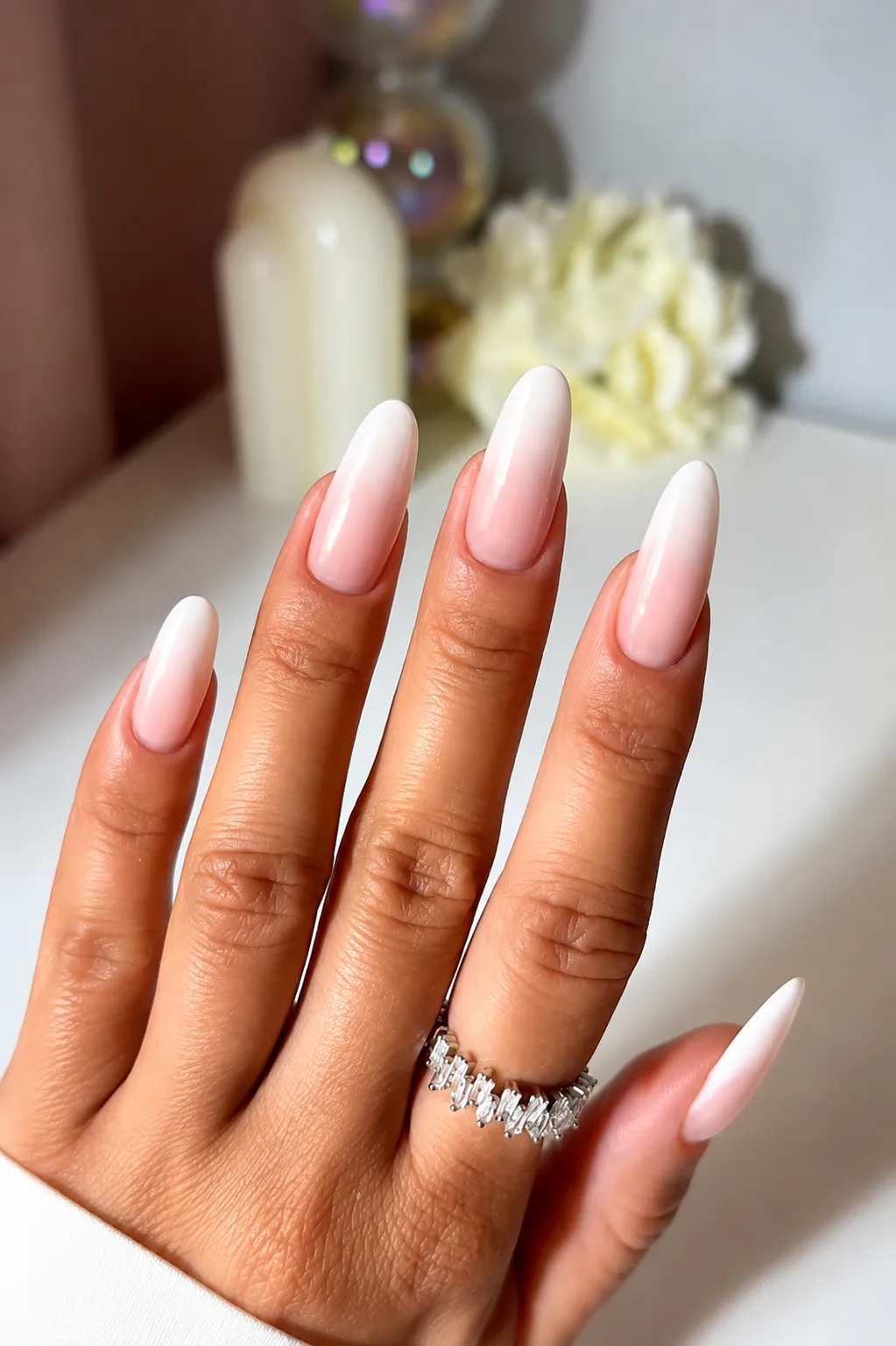
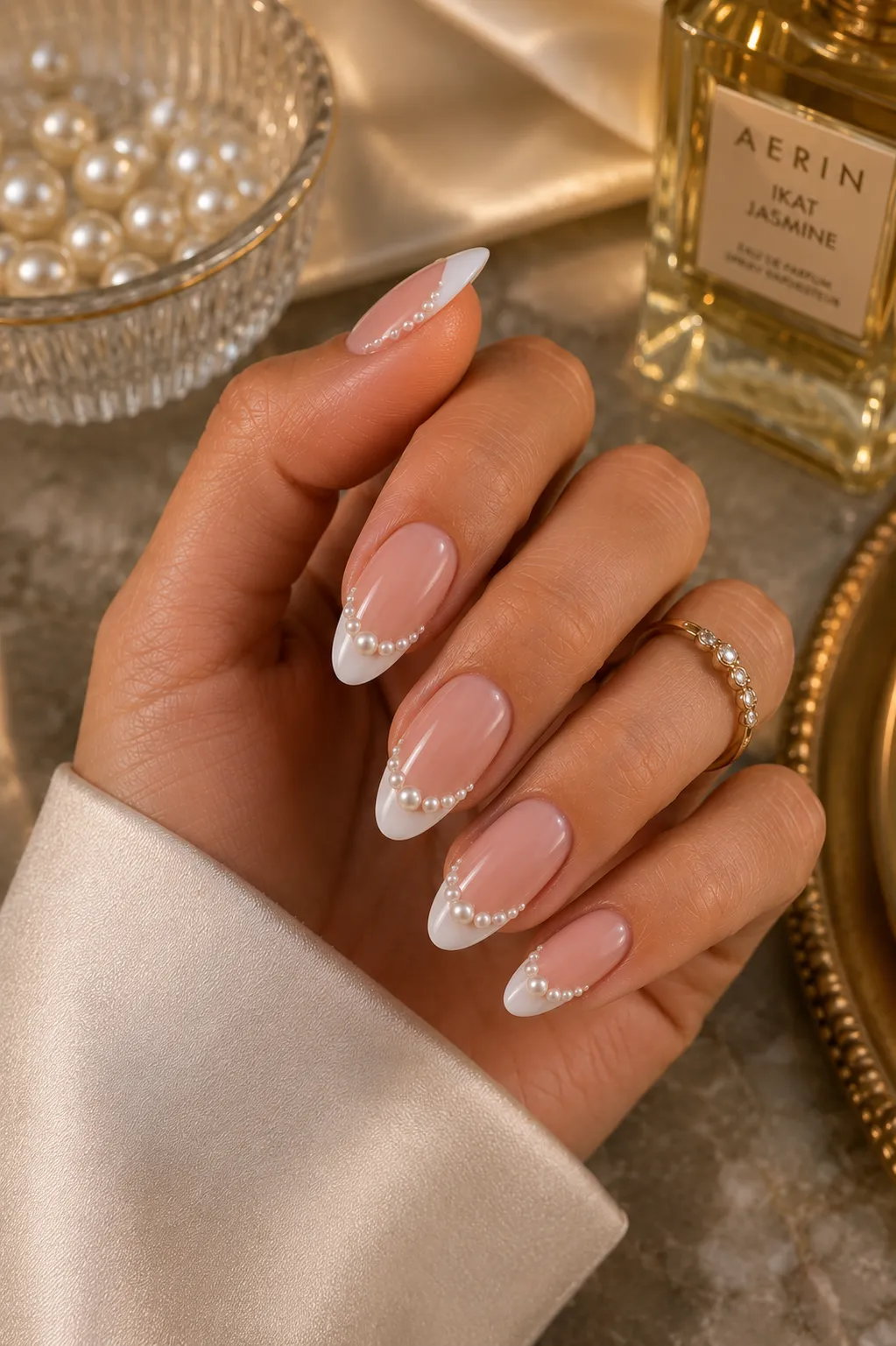
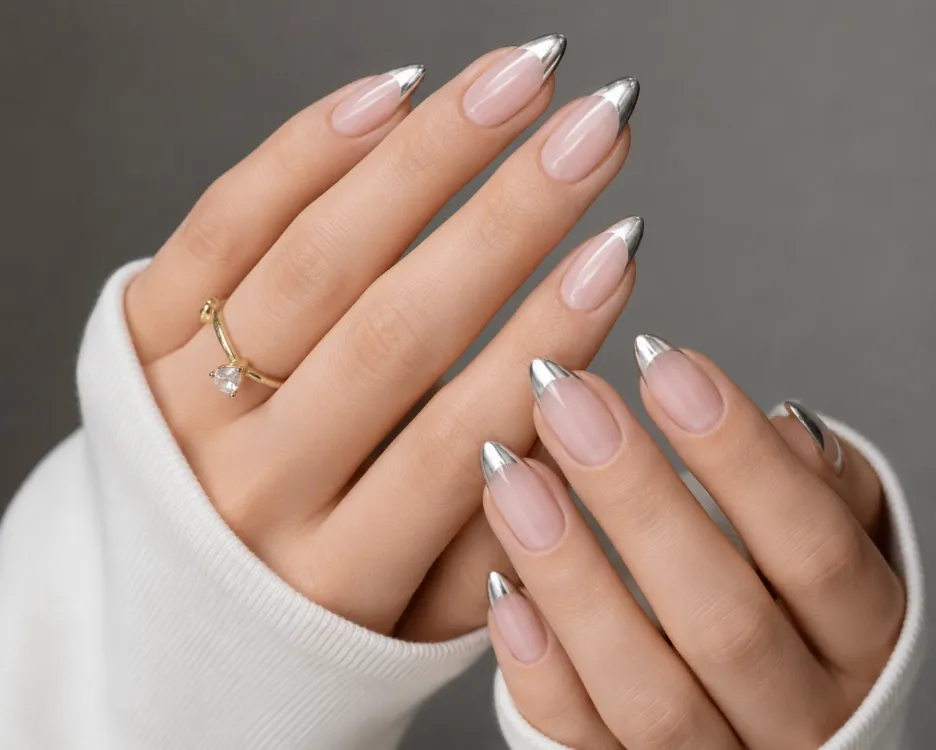
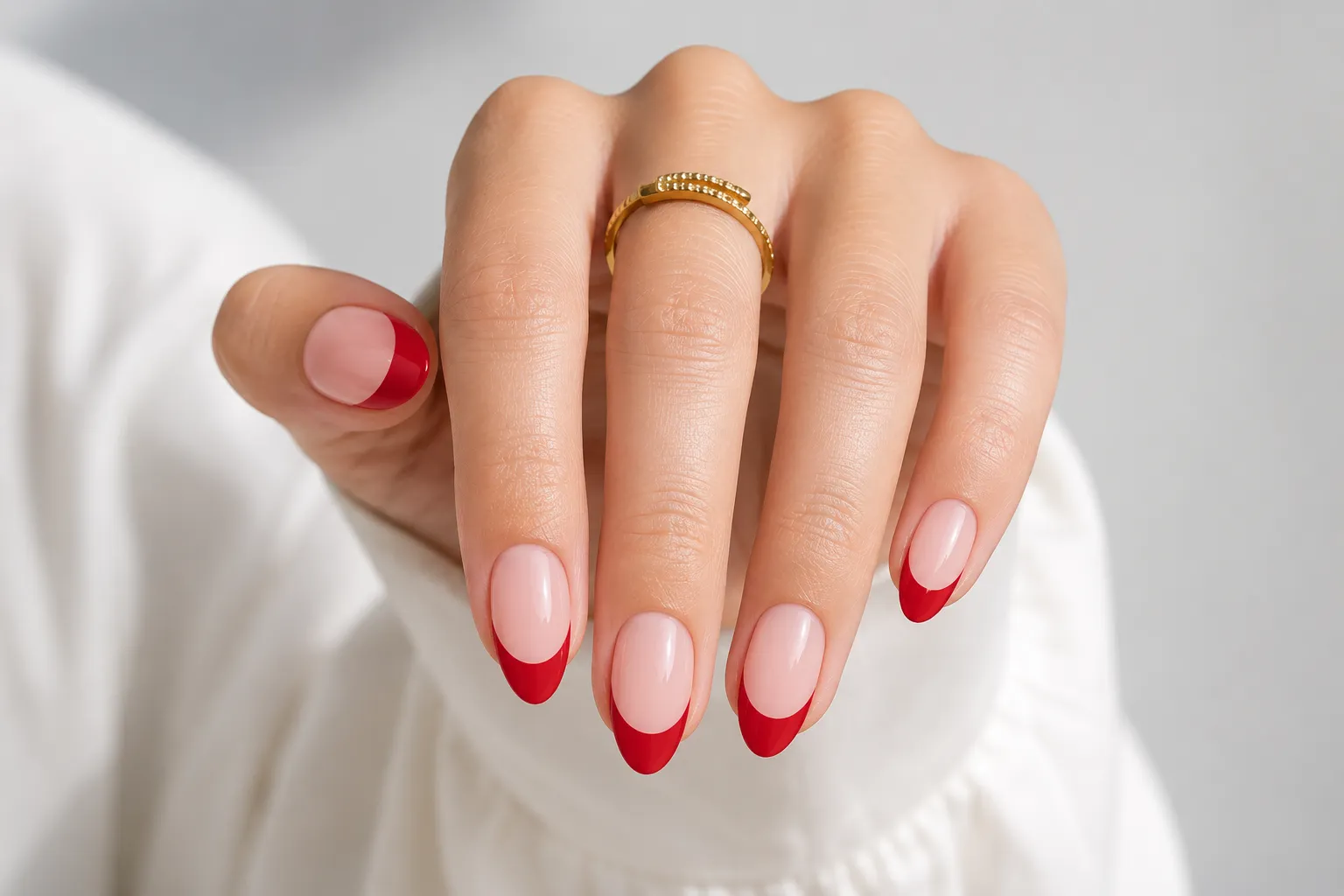
Almond French Tips at a Glance
Start with proportion rather than decoration. Almond looks strongest when the taper, length and French placement support each other before color or embellishment is added.
Signature silhouette
Sidewalls narrow gradually toward a centered soft point rather than collapsing inward abruptly.
Length sweet spot
Medium is a useful reference because the taper reads clearly without requiring an extreme free edge, but the final length should still suit the natural nail and daily routine.
Most wearable French
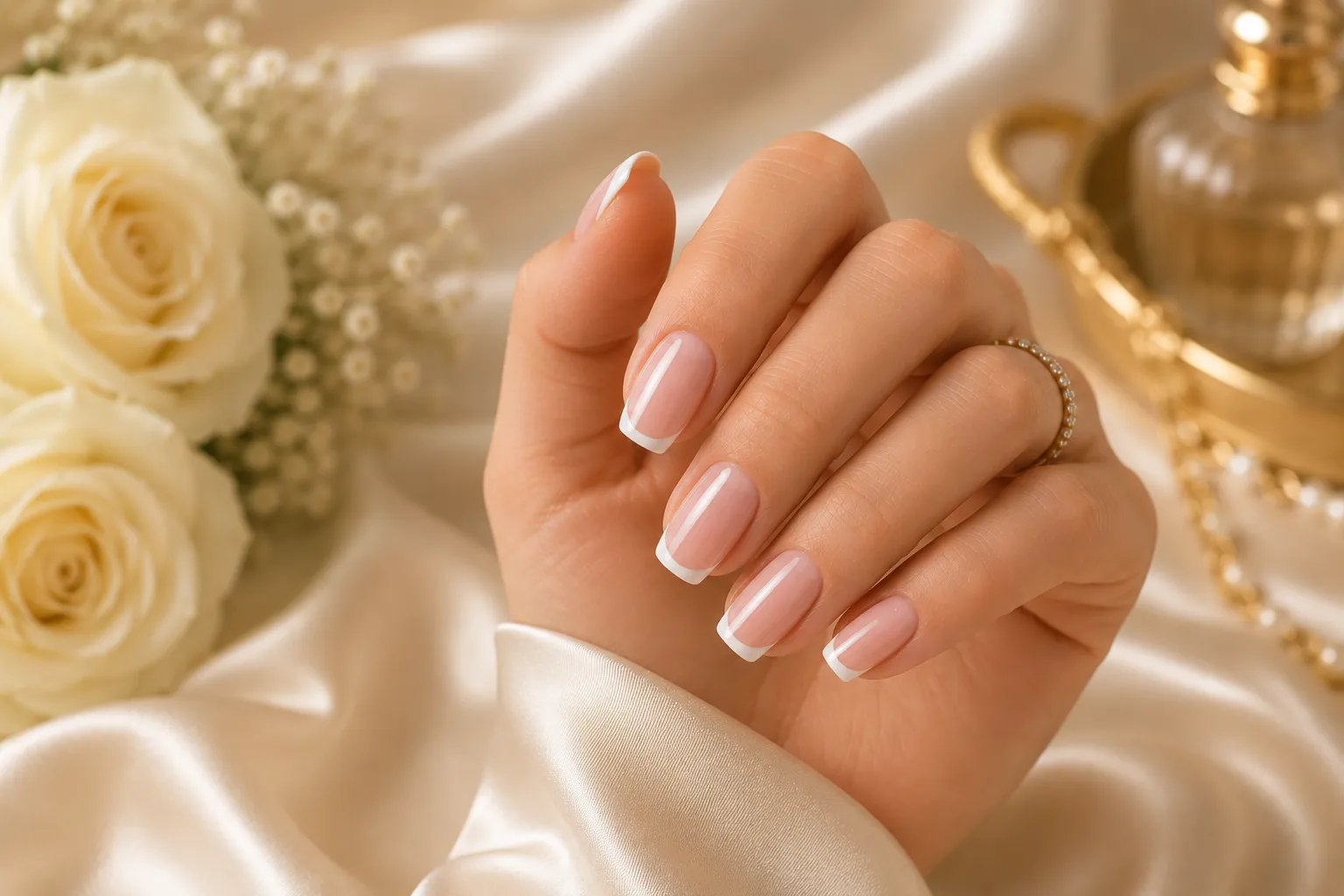
Micro French tips and classic curved tips preserve visible nail-bed length and keep the free edge visually light.
Main maintenance point
The taper needs refining as the nail grows because growth gradually pushes the shape forward and softens the point.
Best visual advantage
The narrowing silhouette can make the nail and finger appear longer without requiring a sharp stiletto point.
Main trade-off
Very short nails may read closer to oval, while long almond needs more structure and creates more free-edge leverage.
Why Almond Works So Well With a French Tip
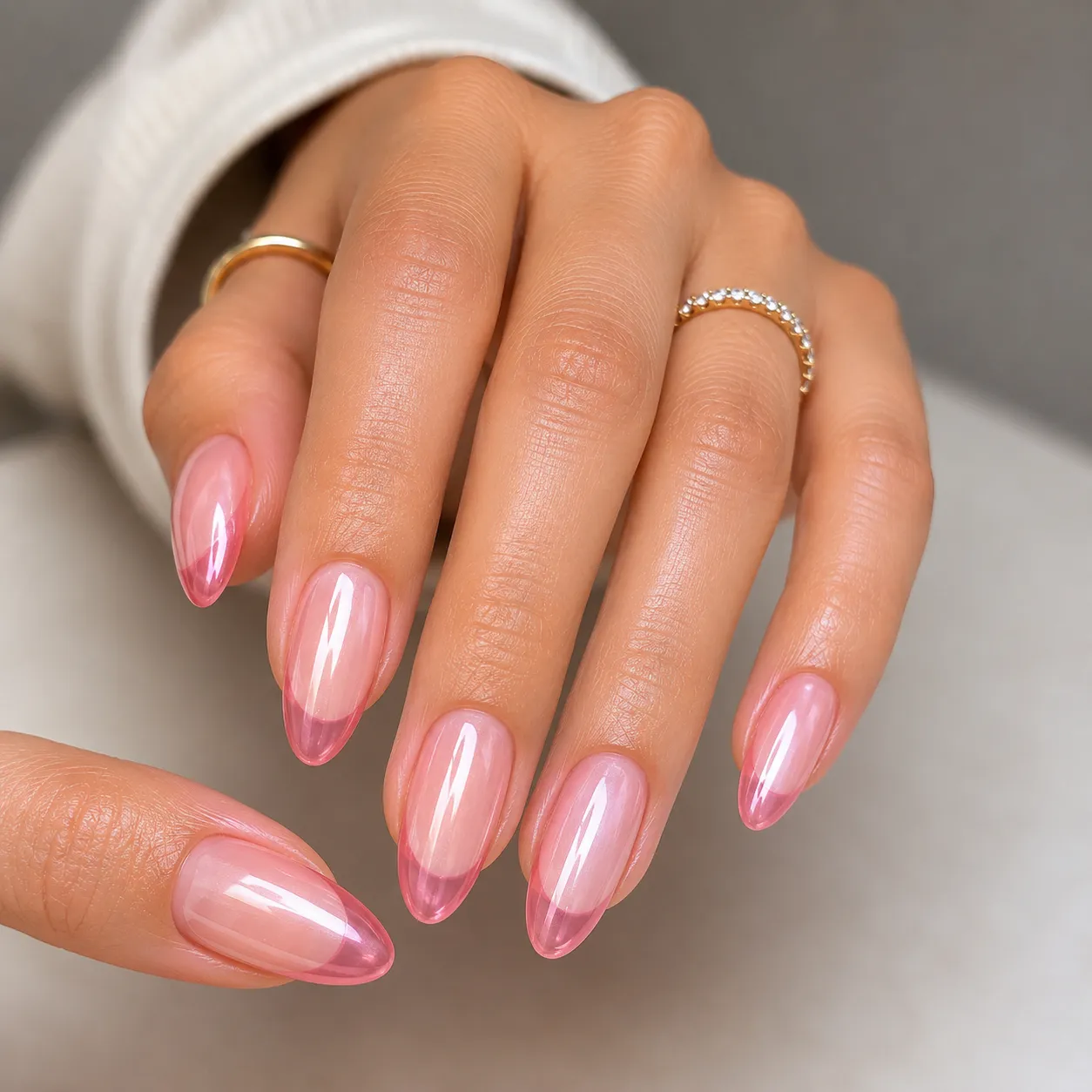
An almond nail narrows gradually from the sidewalls toward a soft point. That taper changes how the French tip is perceived. Instead of reading as a straight band across the nail, a well-placed smile line follows the narrowing silhouette and appears more sculpted through the center.
The effect is visual rather than structural: the nail can look slimmer and more elongated, and even a traditional white tip feels less blocky than it can on a broad square shape.
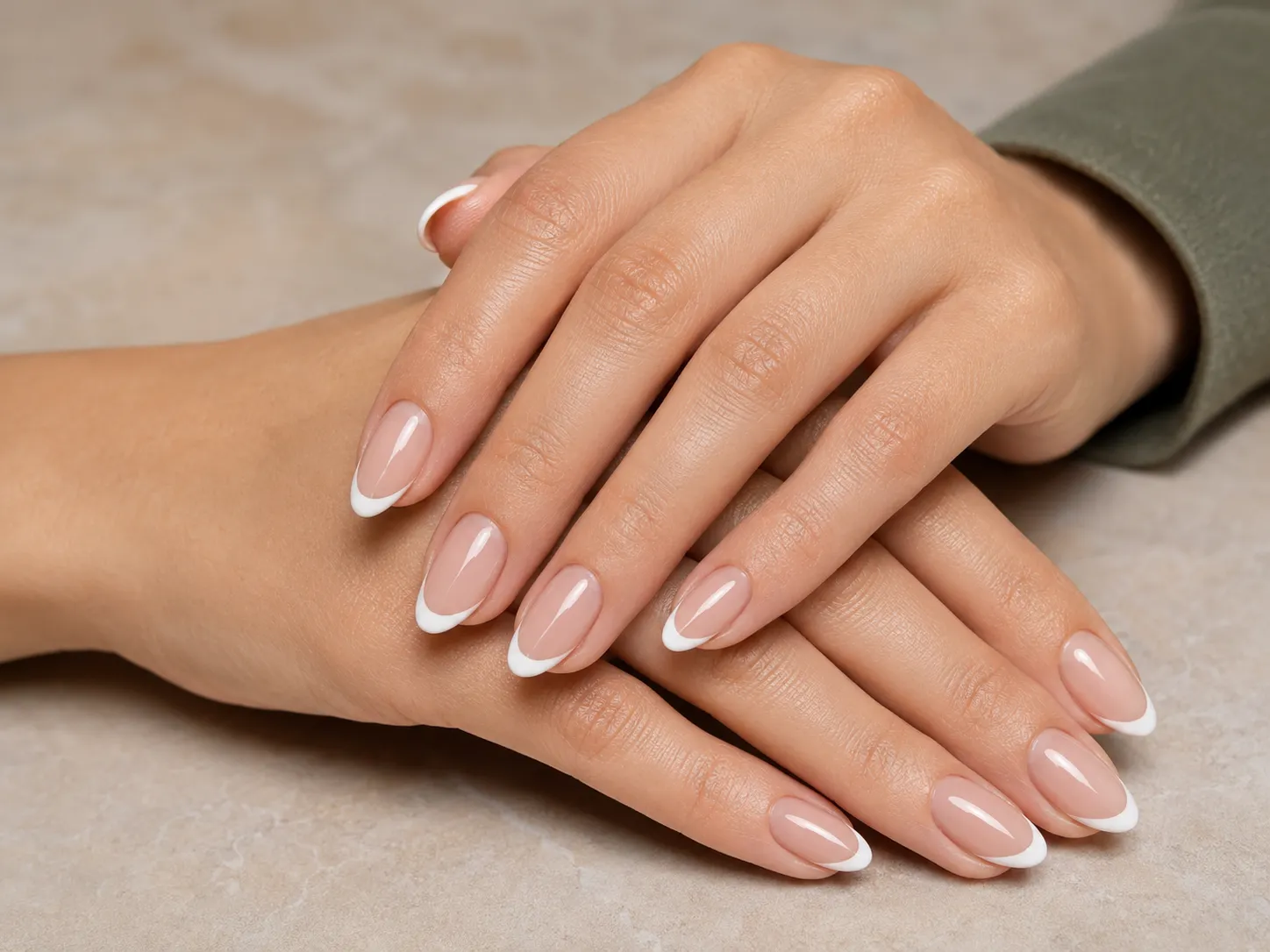
The taper should begin gradually. Filing too aggressively into the sidewalls can create a pinched look and remove useful support near the free edge.
What Makes a Balanced Almond Shape?
A good almond is not simply an oval nail with a pointed end. Read the silhouette from the sidewalls inward: taper first, then center point, then structure, then French proportion.
Look straight down the nail: sidewalls narrow evenly, the point lands in the center, the stress area remains supported, and the French depth looks proportional. Those four checks should read correctly together.
Almond vs. Oval: The Difference Is the Taper
Almond and oval both avoid square corners, but they preserve different amounts of sidewall width. Oval stays fuller and rounds toward the free edge; almond narrows more deliberately and finishes in a soft point.
| Feature | Almond | Oval |
|---|---|---|
| Sidewalls | Noticeably tapered | Fuller and rounded |
| Free edge | Soft point | Rounded arc |
| French placement | Often looks best curved or fine | Tolerates a softer, broader curve |
| Very short natural nails | Can be difficult to taper clearly | Usually easier to achieve |
| Visual effect | More elongated and sculpted | Softer and more natural |
Choosing the Right Almond Length
Almond needs enough free edge for the taper to be visible. As length increases, the shape becomes easier to define and gives the technician more room for French placement, but practical demands also increase.
Three Useful Almond Lengths
Soft, subtle taper. Best with micro-French or a very fine classic edge. On very short nails, the outline may begin to read closer to oval.
Enough free edge for a clearly defined taper and curved French placement, with room for classic, glazed, chrome, pearl, red French tips and Baby Boomer finishes.
Most dramatic and most demanding. Extra length supports deeper curves and layered art but creates more leverage and requires stronger structural control.
Choose enough free edge for the taper to read clearly, then stop before the length begins interfering with your routine. The ideal length is the shortest one that still produces the almond silhouette you want.
Thin, Classic or Thick: Choosing Tip Depth on Almond Nails
Tip depth changes how long an almond nail looks. A thin French tip leaves more nude nail bed showing, so the finger looks longer. A thick tip adds drama but needs more free edge to stay balanced.
| Tip depth | Best almond length | Look | Watch for |
|---|---|---|---|
| Thin / micro | Short to medium almond | Light, elongating, minimal | Uneven thickness shows quickly |
| Classic | Medium almond | Balanced, unmistakably French | Smile line must follow the taper |
| Thick / deep | Medium-long to long almond | Bold, graphic, fashion-forward | Can make short almond look stubby |
If you are unsure where to start, medium almond with a classic or thin tip is the most forgiving combination. The taper reads clearly, the French edge has room to curve, and the length stays practical for daily wear.
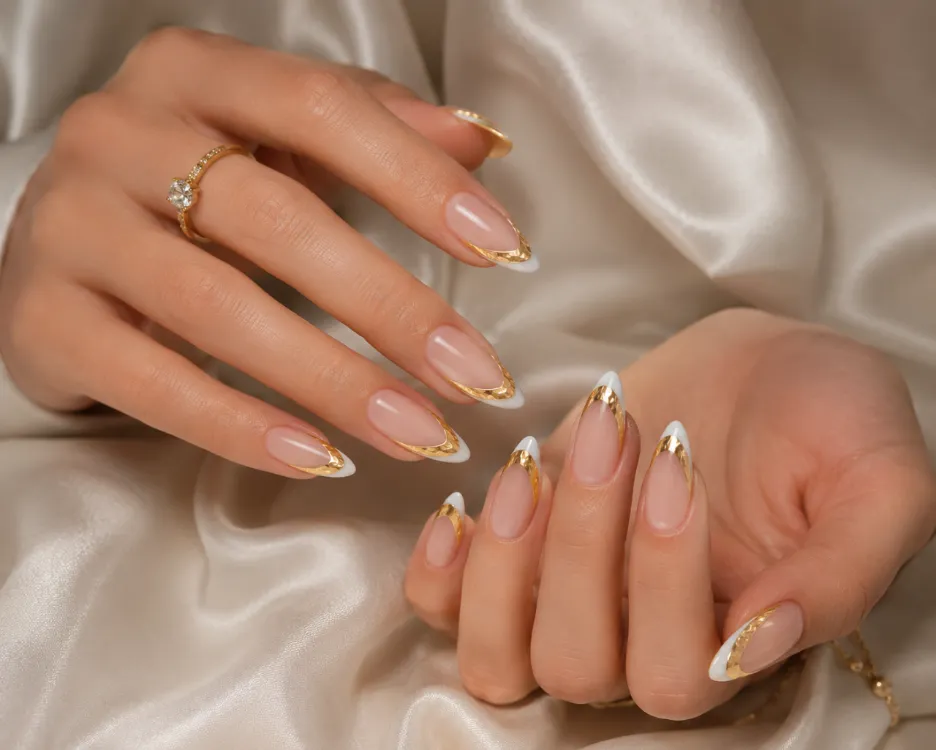
How Different Tip Placements Change Almond Nails
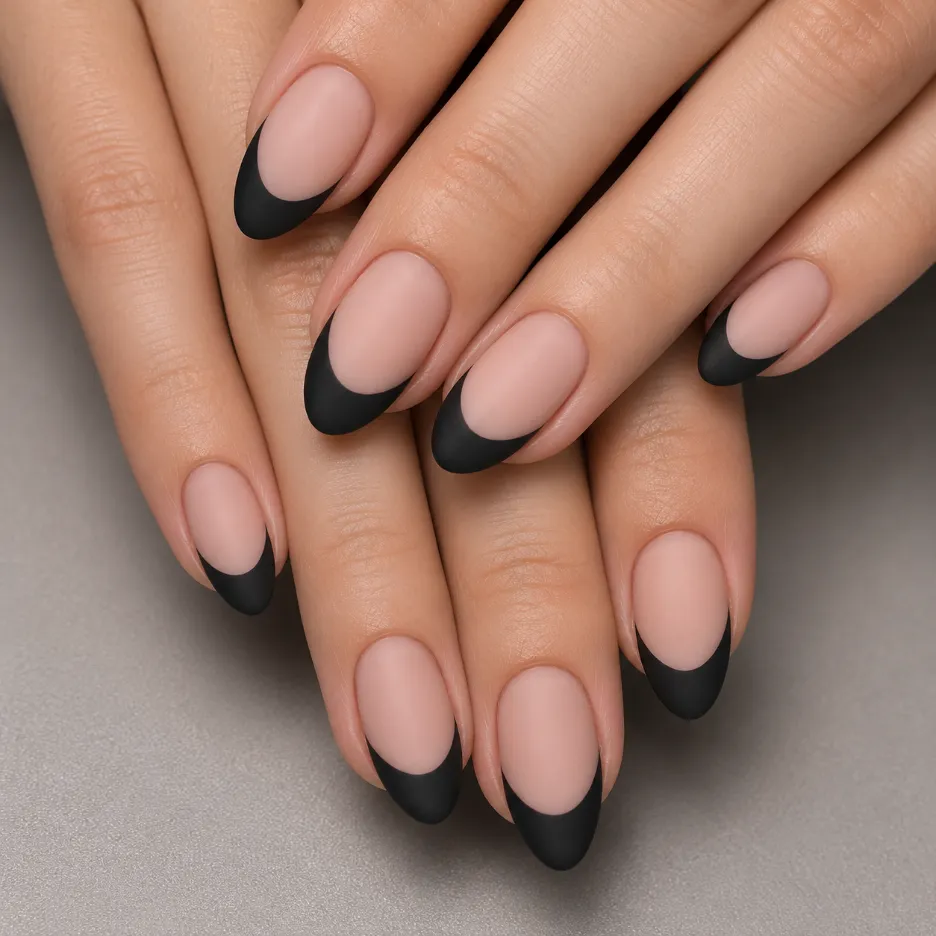
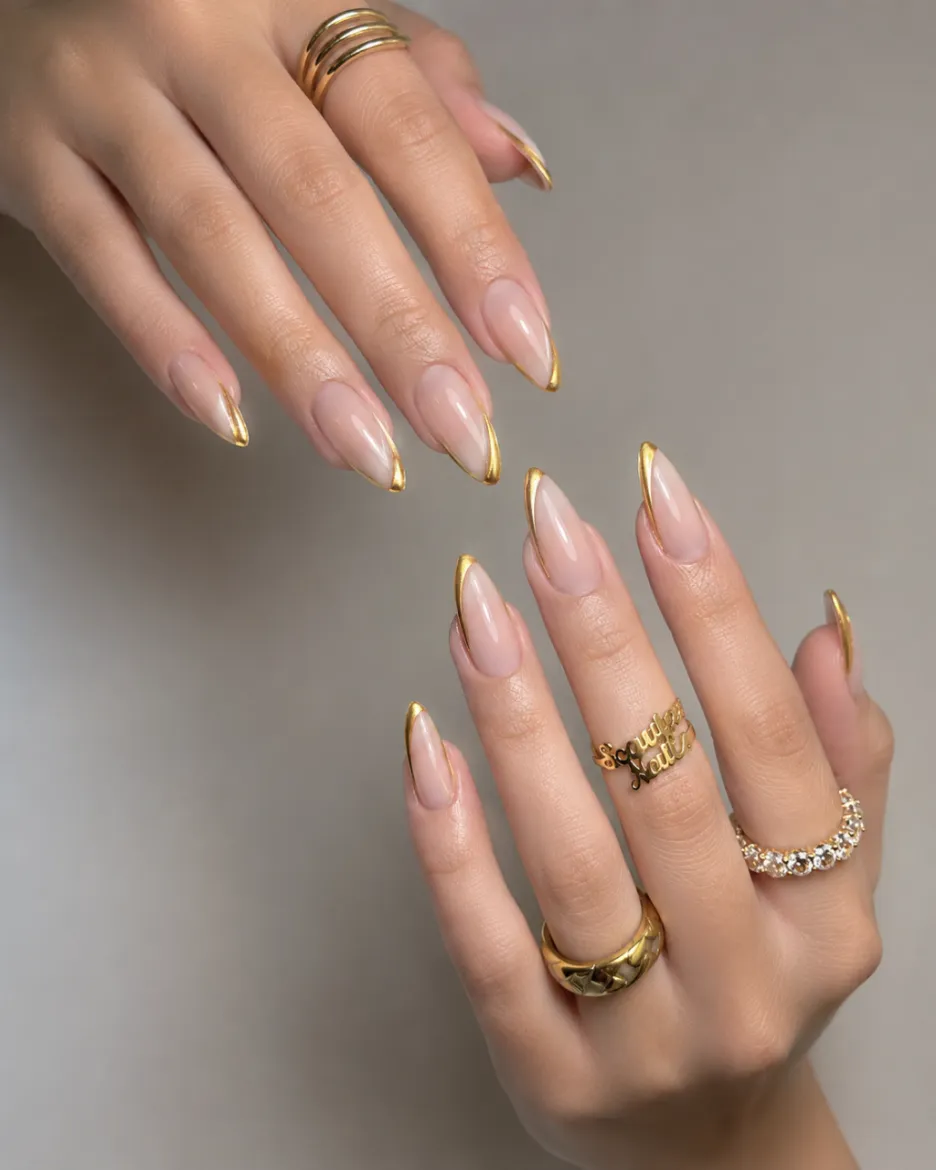
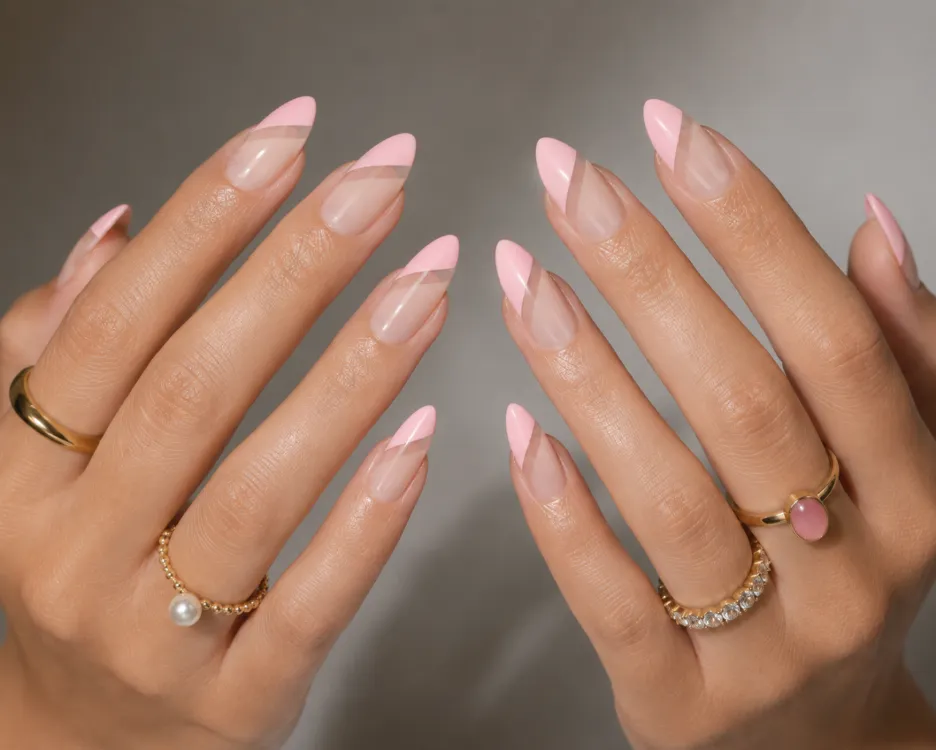
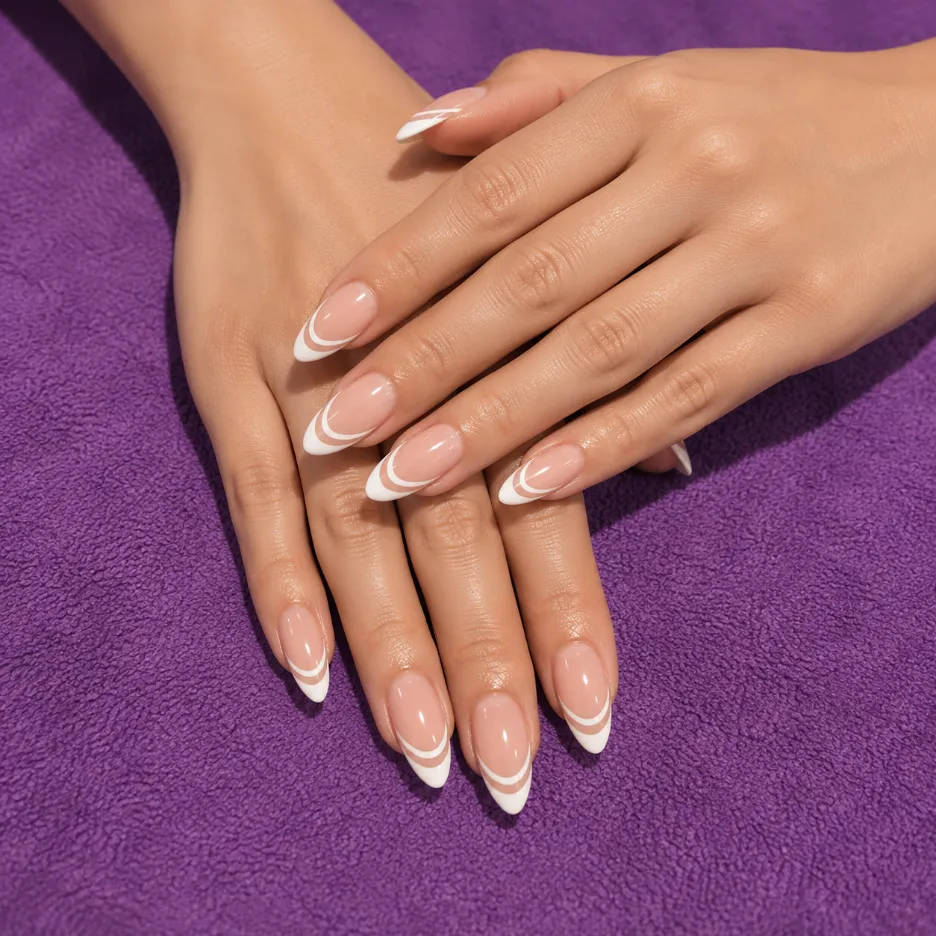
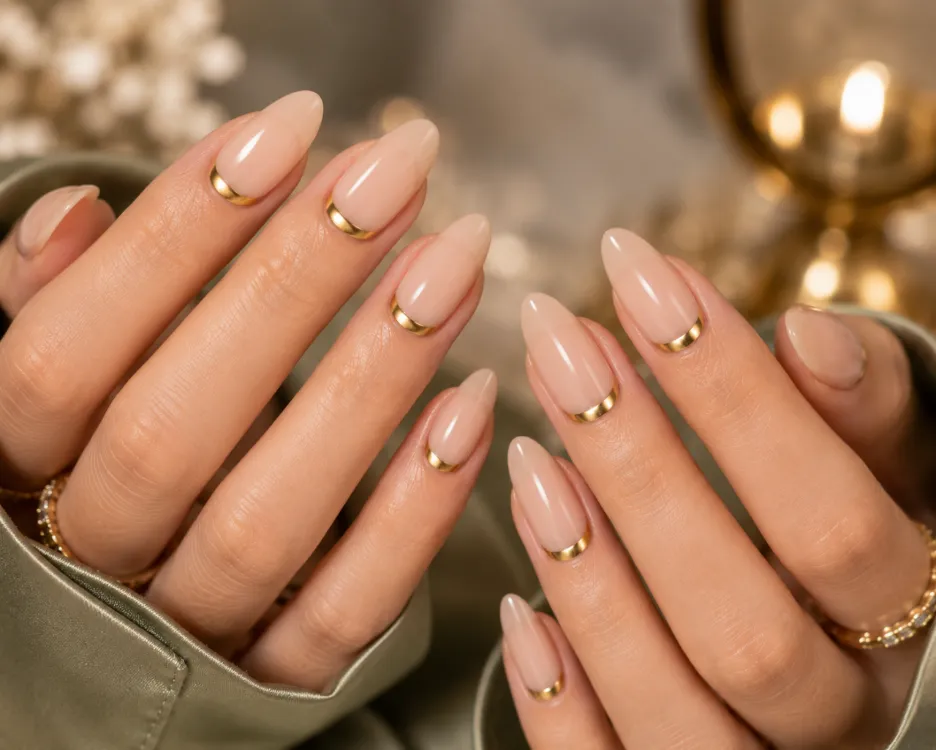
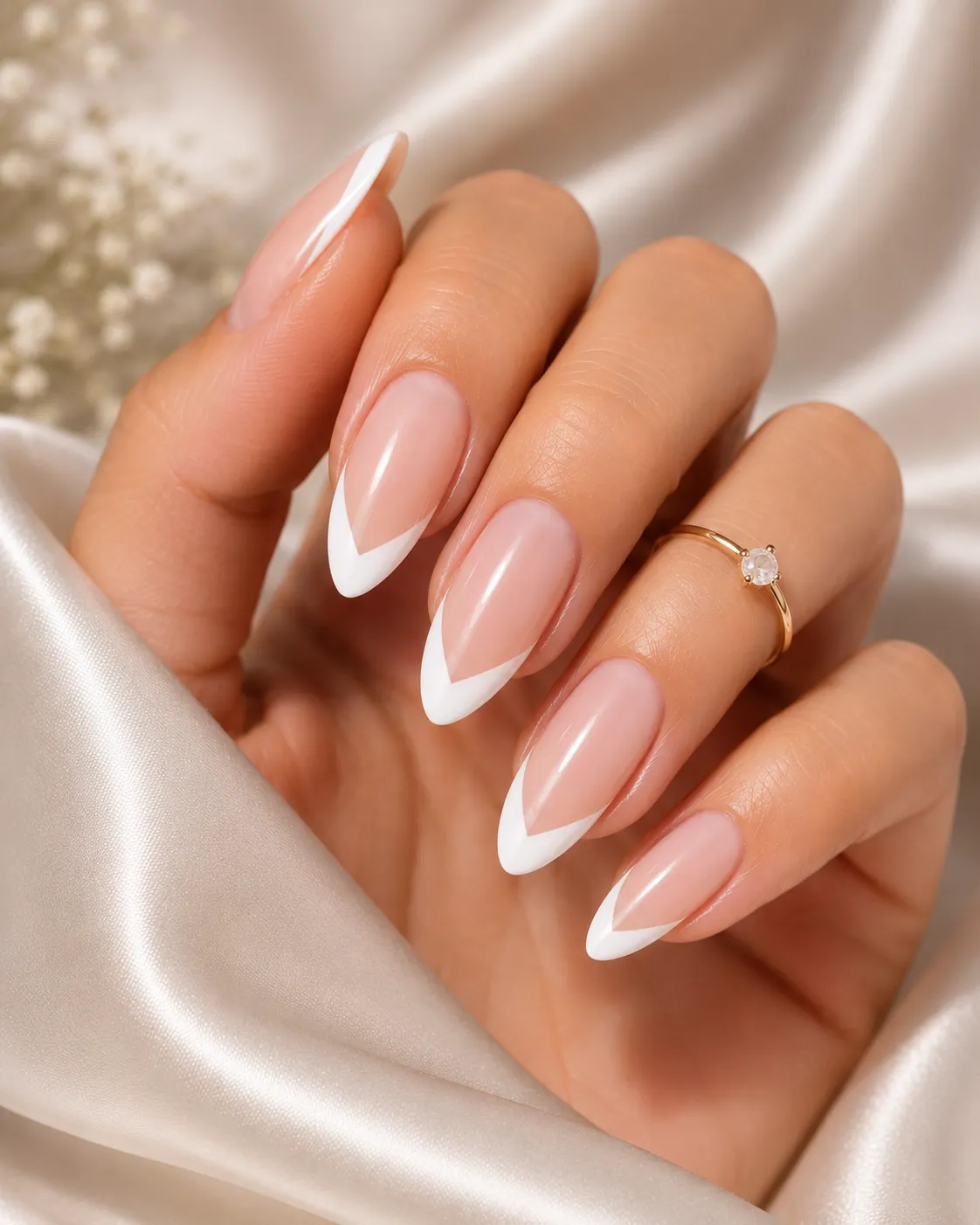
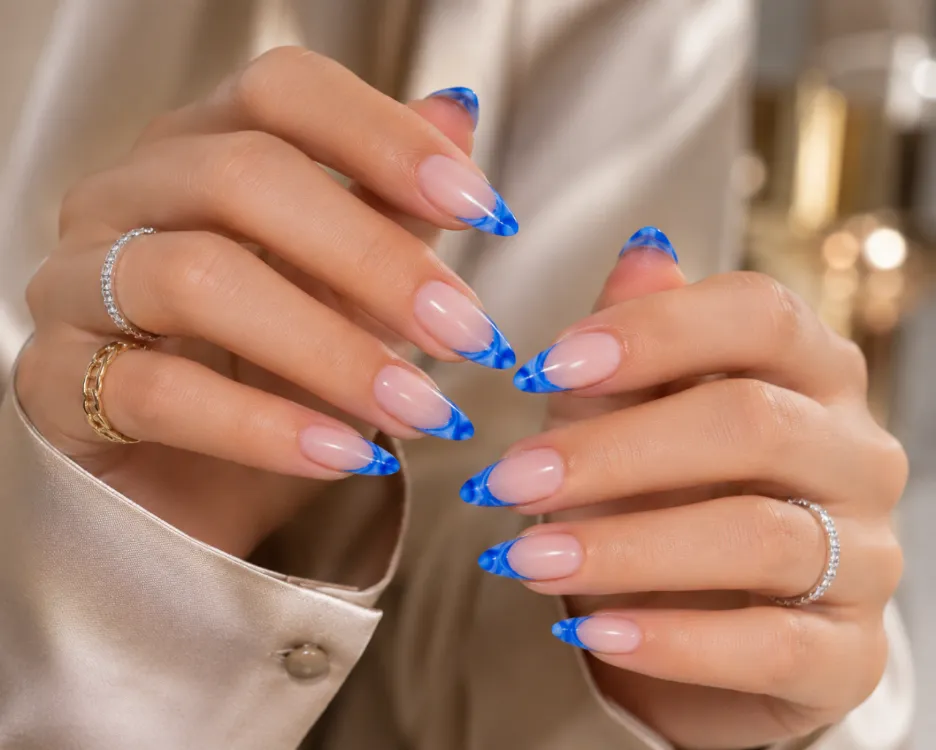
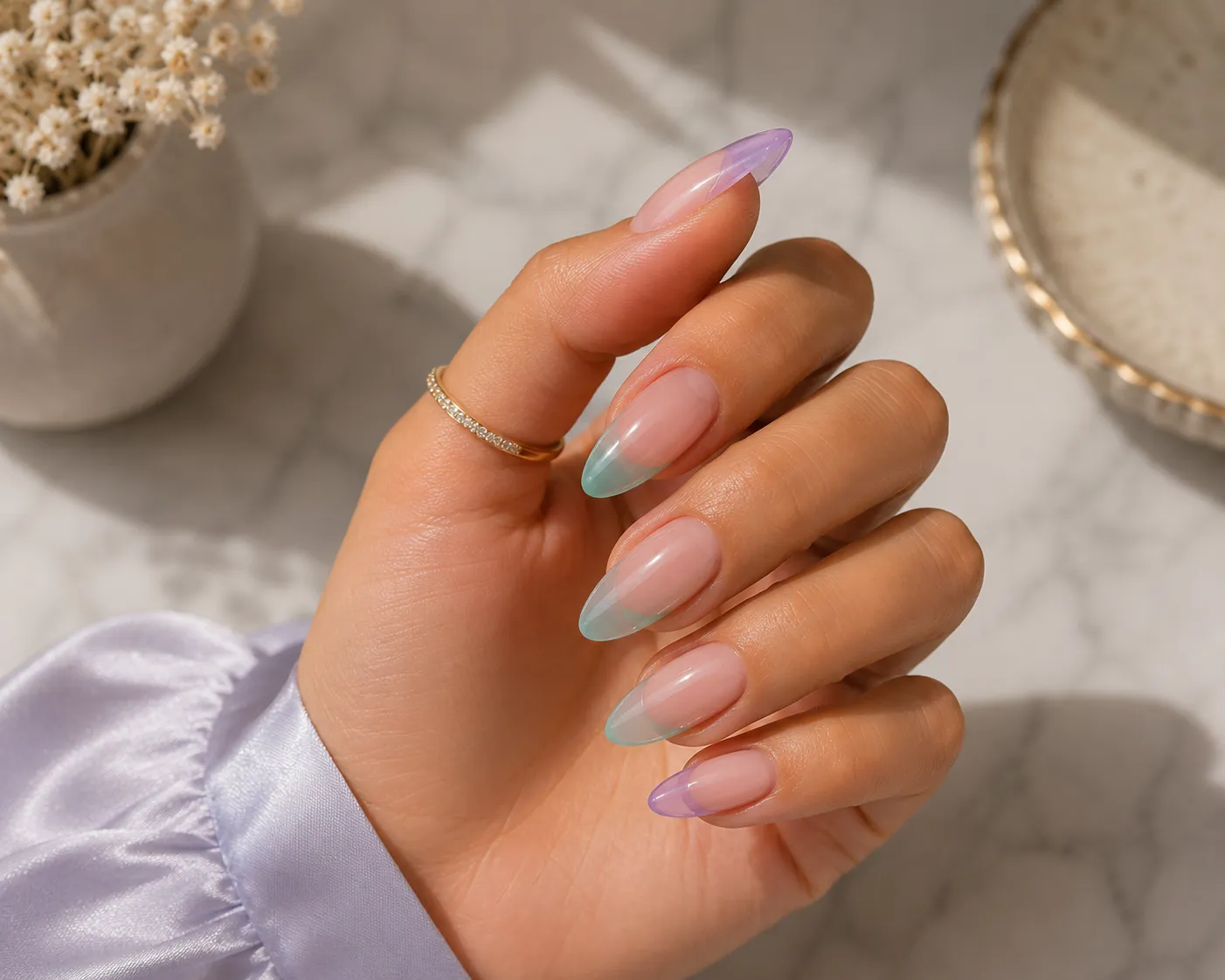
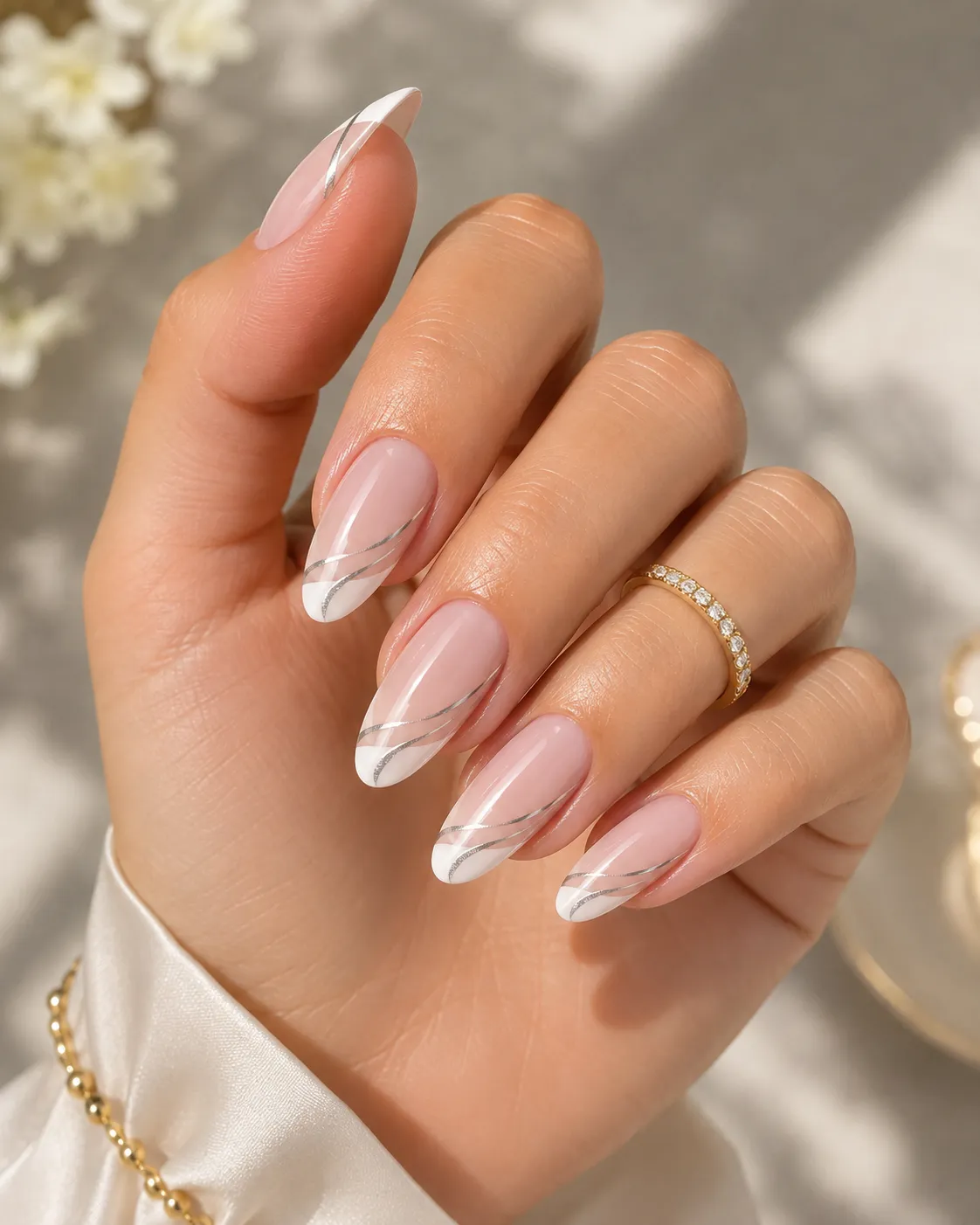
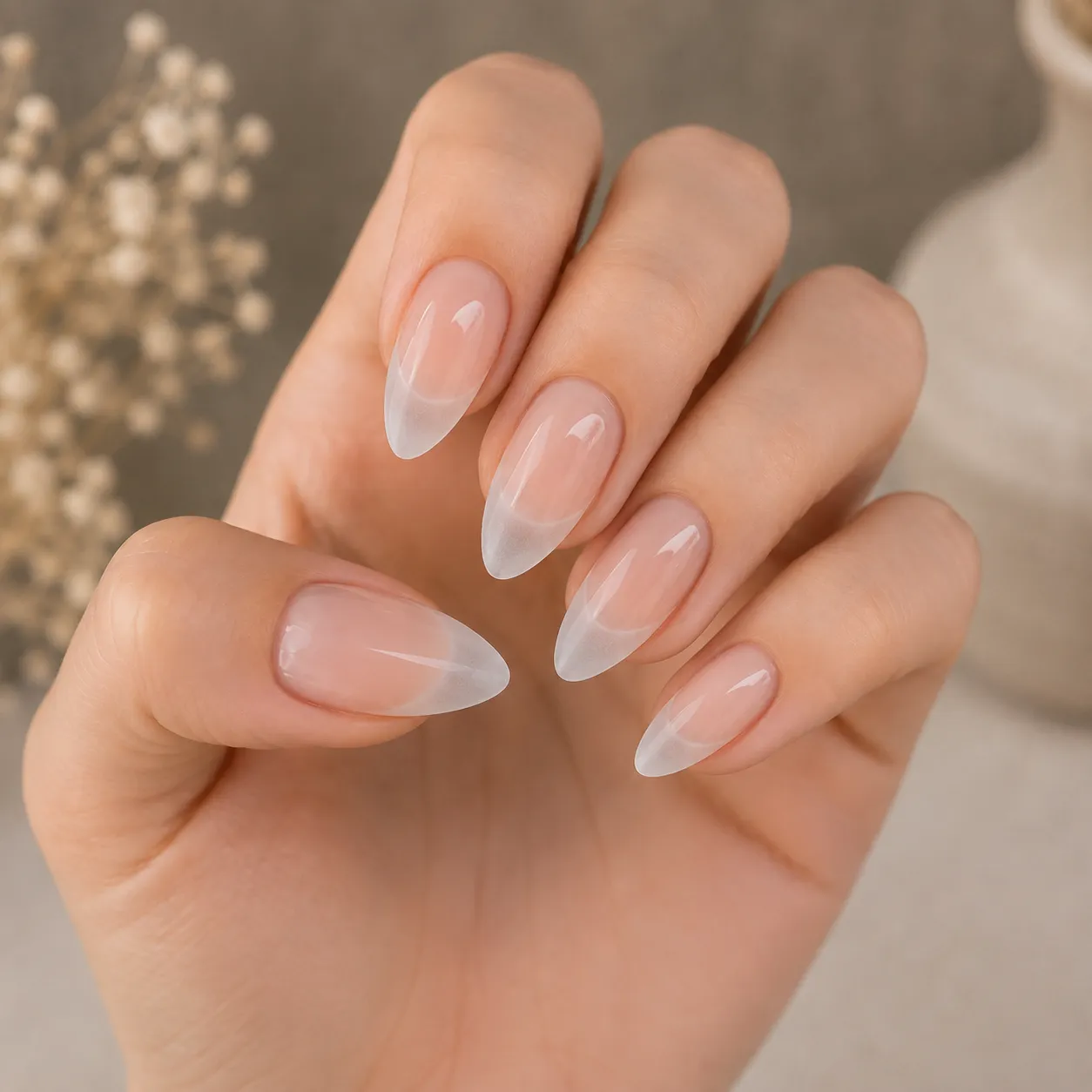
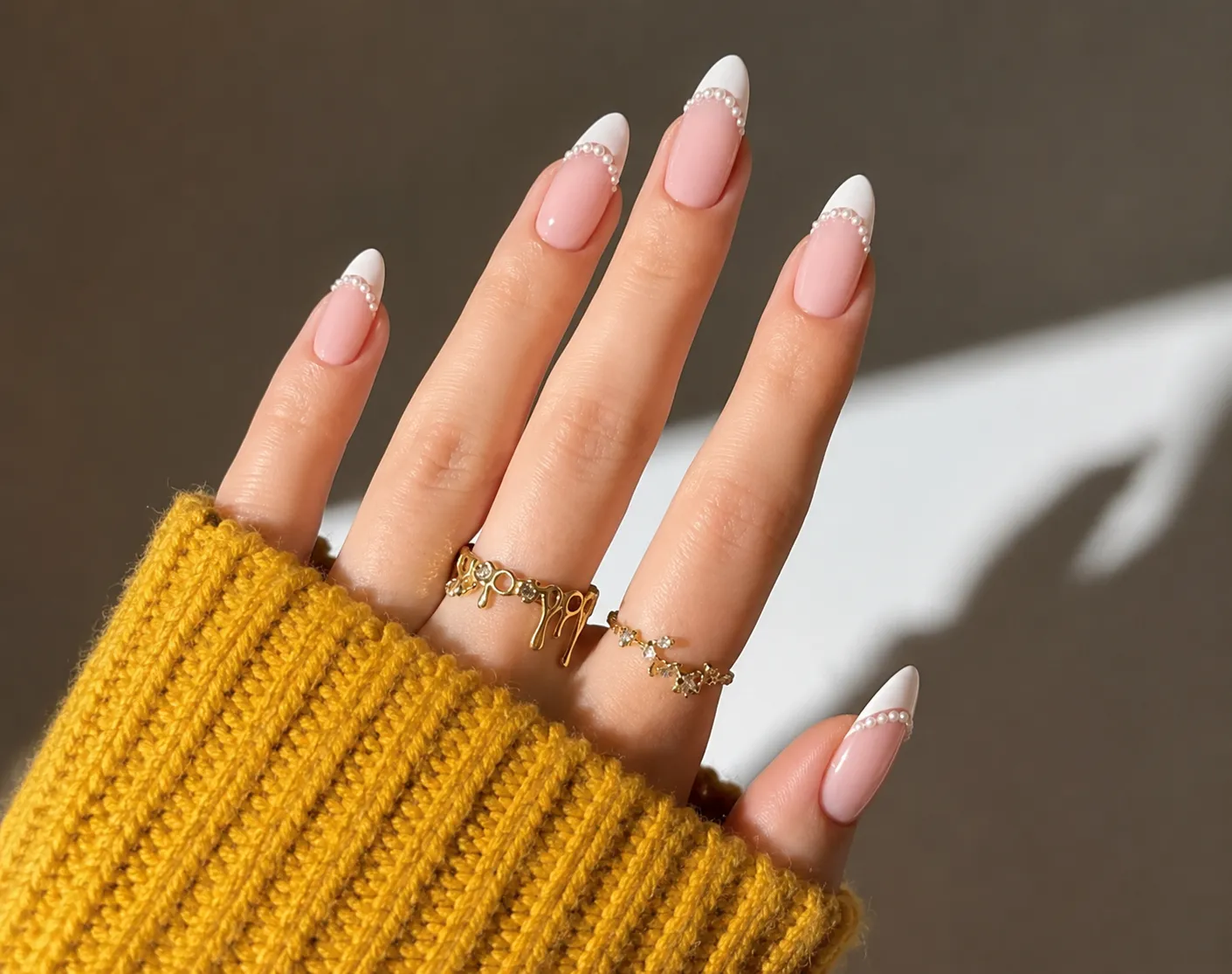
On almond nails, placement changes how narrow, long or visually heavy the free edge appears. These examples show how contrast, asymmetry, negative space and texture interact with the taper.
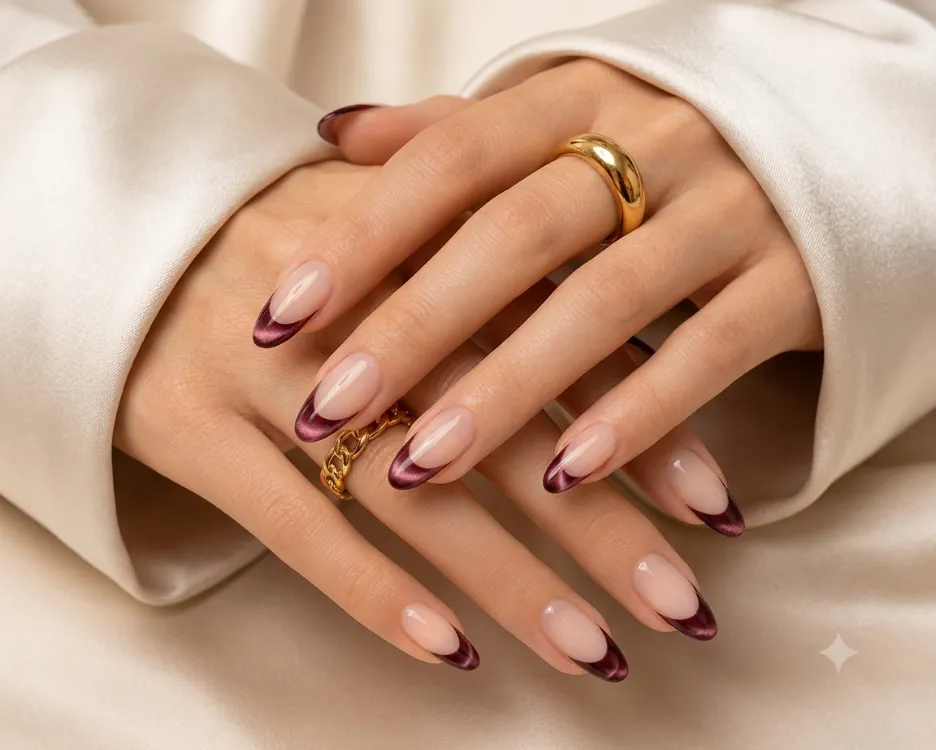
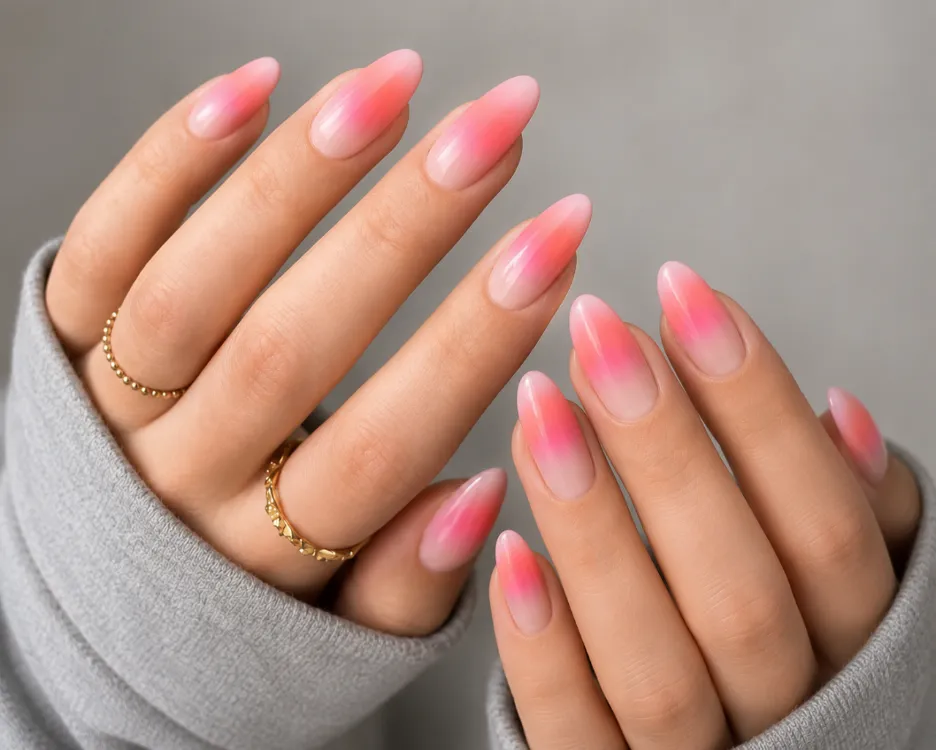
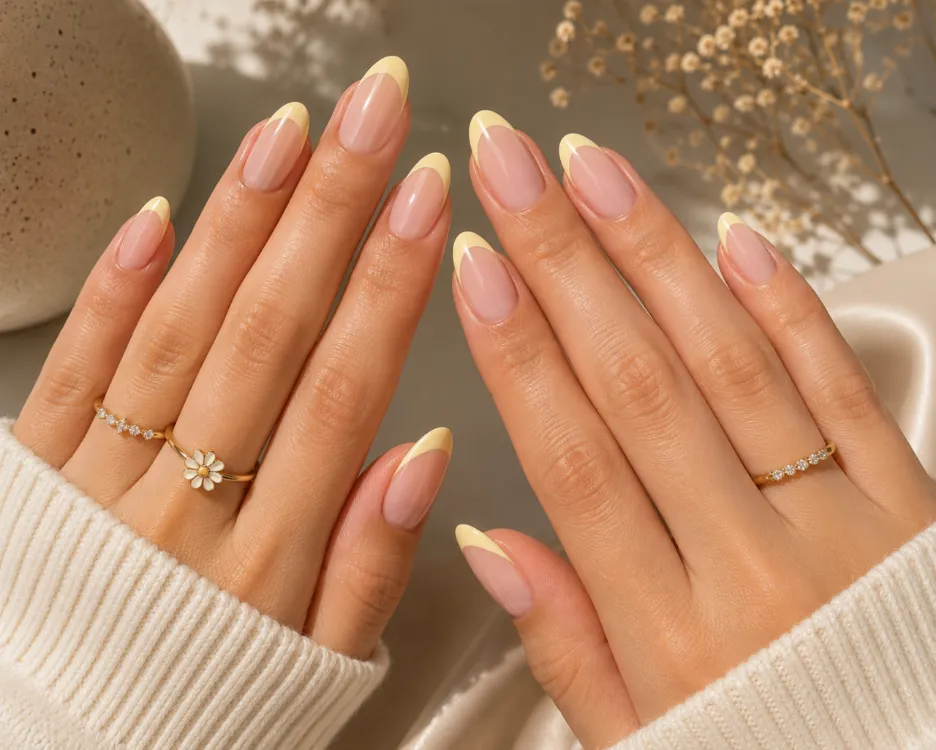
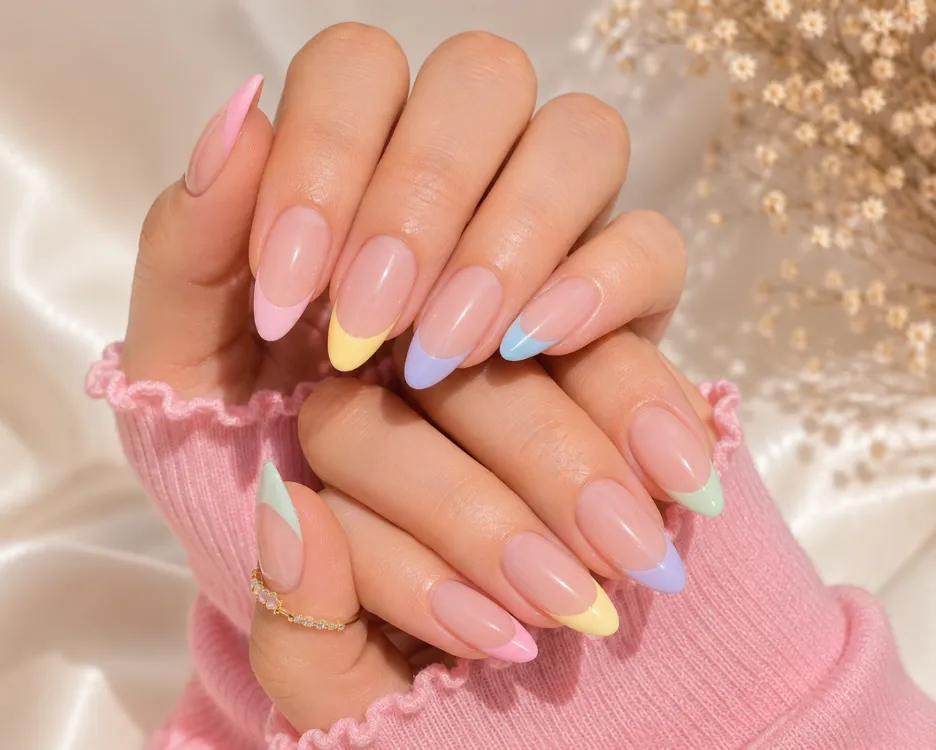
12 More Almond French Tip Nail Ideas
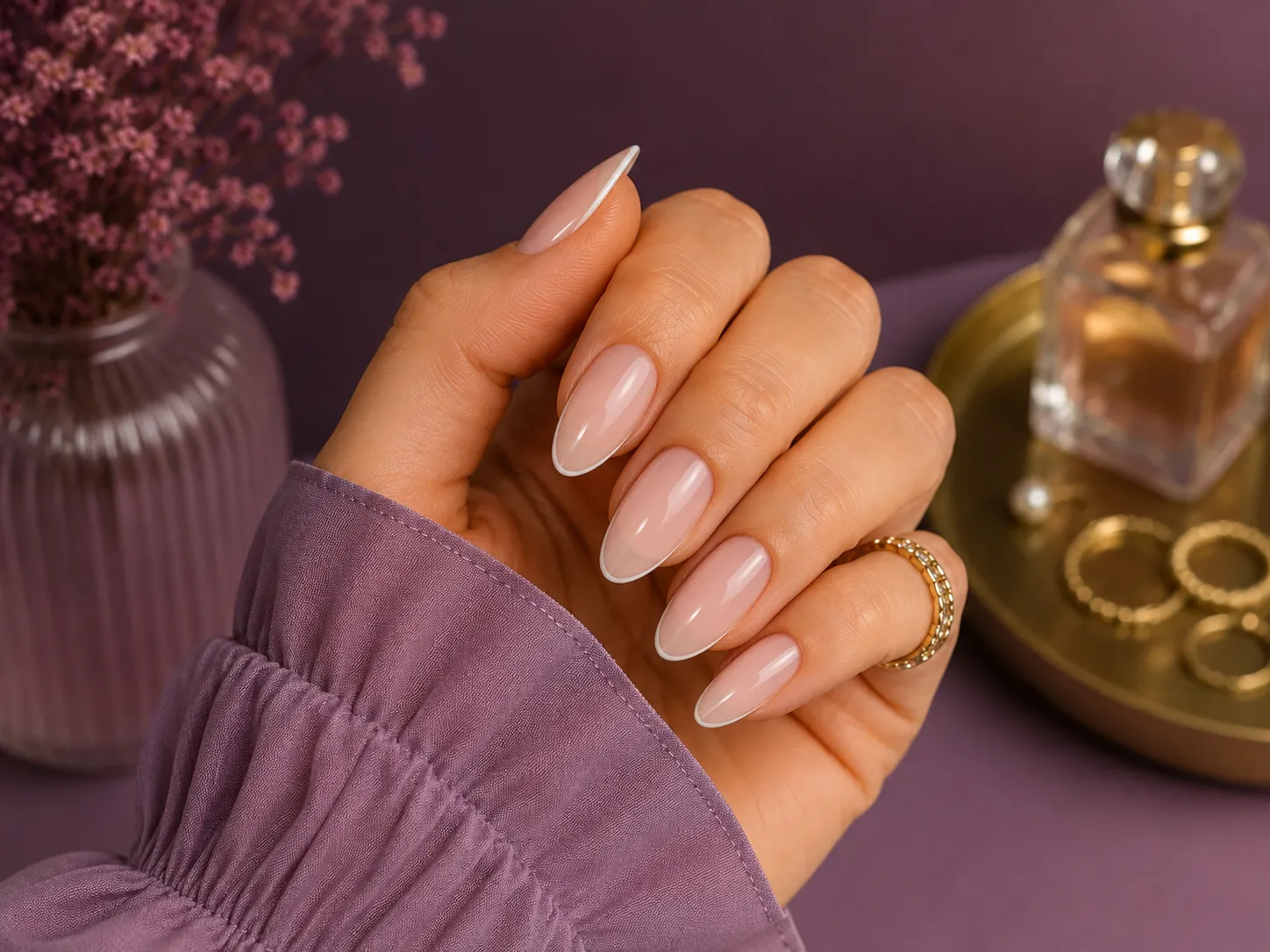
From barely-there micro lines to color, texture and graphic placement, these almond French tip ideas show how far the shape can stretch while the taper stays the hero.
Which Enhancement Material Works Best?
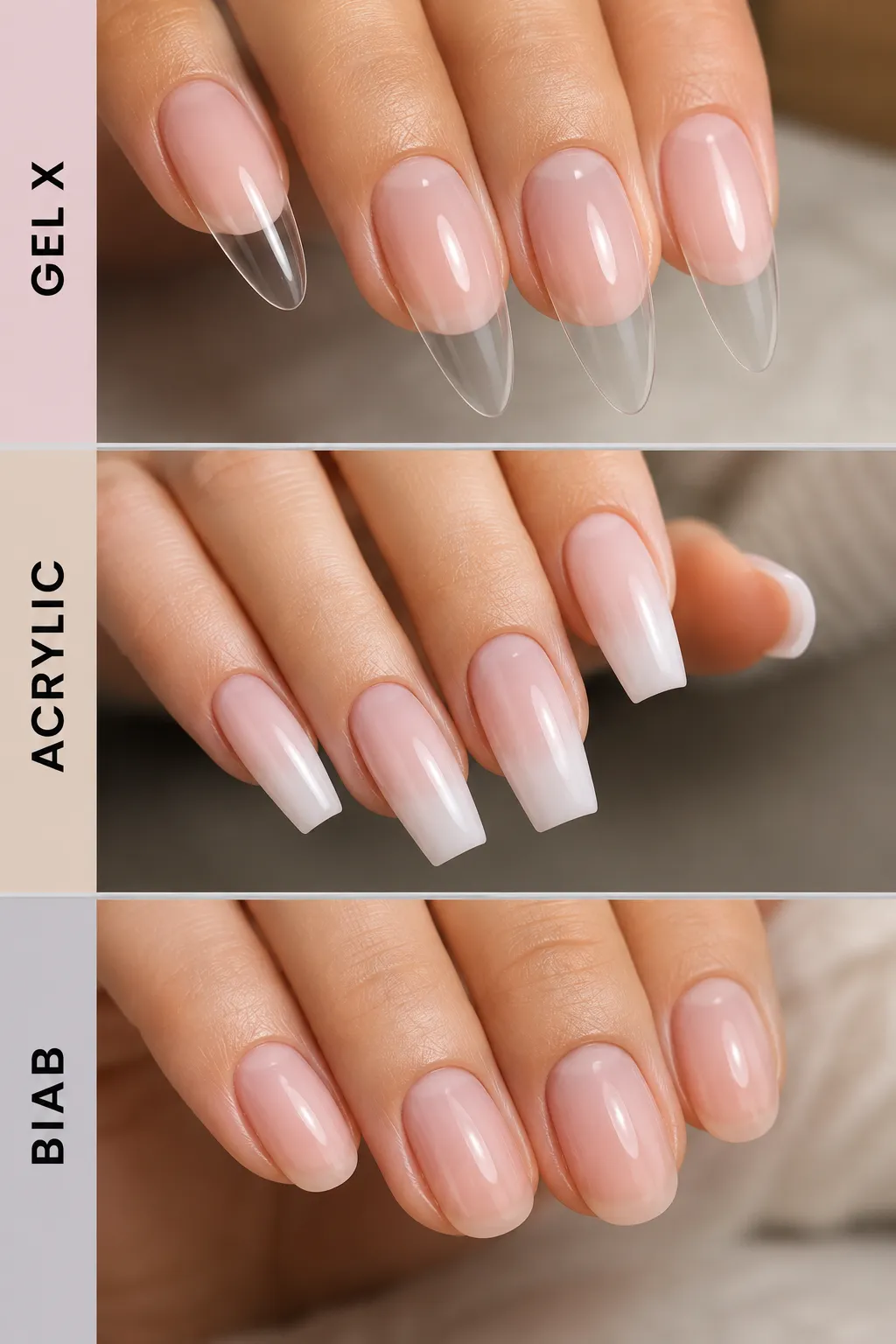
The almond shape does not require one specific product system. The best choice depends on natural-nail condition, desired length, flexibility, removal preferences and how much structural control the technician needs.
| System | Useful for almond nails | Main consideration |
|---|---|---|
| Natural nail + gel polish | Short almond when enough natural free edge already exists | Limited control over length and symmetry |
| BIAB / builder gel | Short-to-medium overlays and reinforcement | Excess product can make the profile bulky |
| Gel-X | Consistent medium or long almond extensions | Tip sizing and attachment must fit the natural nail correctly |
| Acrylic or hard gel | Custom length, corrective shaping and stronger structural control | Requires careful filing and professional maintenance |
How Almond French Tips Fit Different Lifestyles
Length usually matters more than the word “almond.” A moderate taper can work across many routines, while an extreme free edge creates more interference regardless of the finish.
Office & keyboard work
Keep the free edge short to medium and favor micro or fine classic French placement.
Bridal & formal
Medium almond gives classic, Baby Boomer, glazed and pearl finishes enough room to show their detail without making the silhouette excessively long.
Events & statement looks
Medium-to-long almond provides room for chrome, red, pearl, negative-space and other stronger finishes.
Hands-on routines
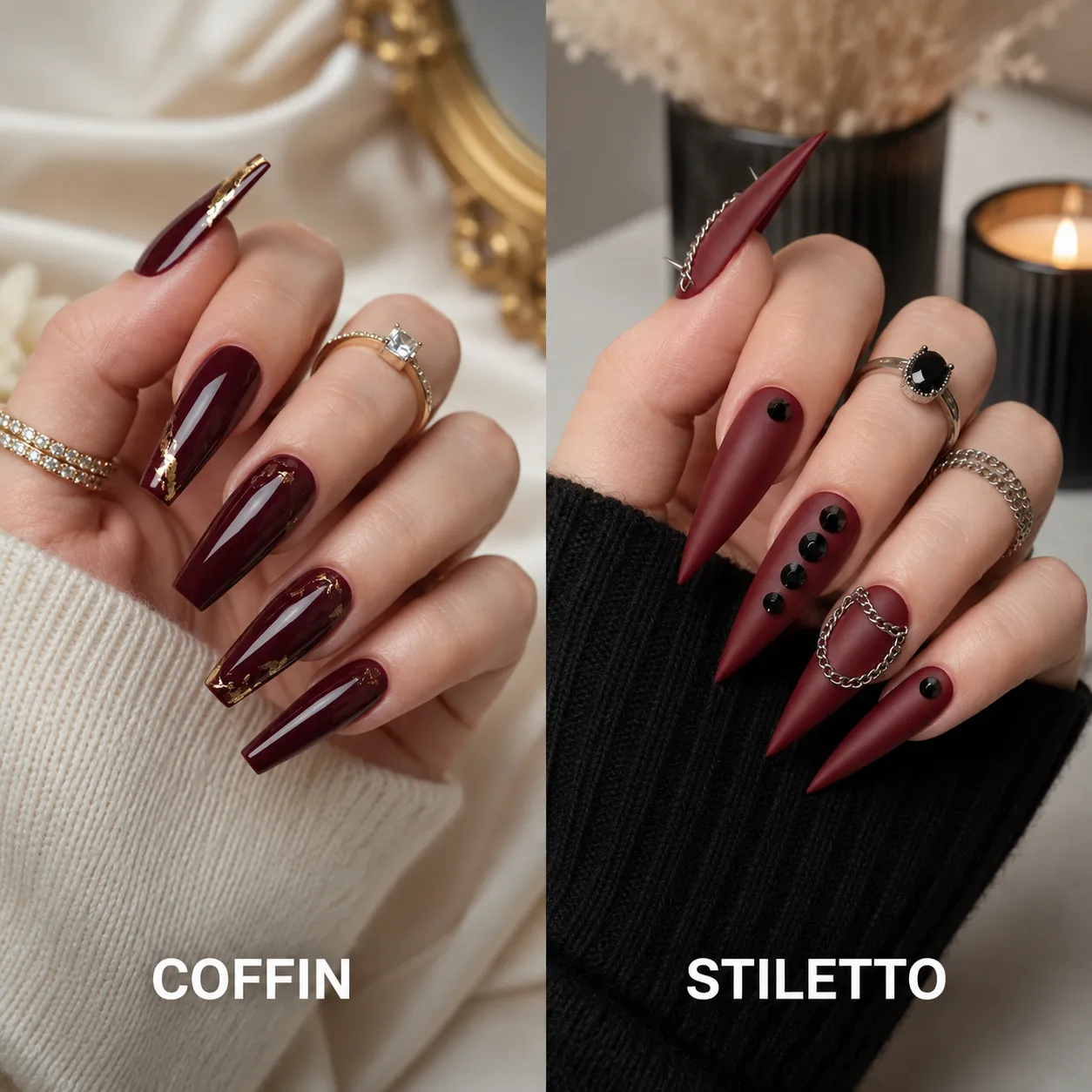
If tight gloves, tools or frequent impact dominate your day, shorten the free edge or compare almond with other silhouettes in the French tip nail shapes guide.
Maintaining the Almond Shape as It Grows
Almond changes noticeably with growth because the taper moves forward with the free edge. A shape that looked perfectly centered at the appointment can begin to look wider, softer or slightly off-axis several weeks later even when the product itself is still intact.
At maintenance, the goal is to refine both sidewalls evenly and re-center the soft point without repeatedly carving into the same area. The French edge also grows forward with the nail, so tip depth and smile-line balance should be reassessed rather than simply copied from the original placement.
Reshape the silhouette as a whole. Do not chase one side aggressively with the file just to force a sharper point; preserving balanced sidewall support matters more than making the nail look narrower.
How to Judge the Work Before You Leave
Almond exposes symmetry problems quickly. Use this six-point inspection after shaping and finishing, before the final photographs or cuticle oil.
Compare the points
Each soft point should finish on its own visual center line rather than drifting left or right.
Check both sidewalls
The taper should narrow at a similar rate on both sides without one side being filed more aggressively.
Compare tip depth
French placement should look proportionally consistent relative to each nail’s visible length.
View the profile
The nail should look supported but not bulky. Longer almond needs structure without unnecessary thickness.
Inspect the free edge
Color and topcoat should finish cleanly without a rough edge, raised ridge or obvious pooling.
Check the cuticle area
The finish should look neat without flooding onto skin, a thick product ledge or visible roughness around the base.
Is Almond French Right for You?
Do you want a visibly tapered, lengthening silhouette?
The narrowing sidewalls create more visual elongation than oval, round or squoval.
Both preserve more width and are easier to achieve at very short lengths.
Do you have enough free edge for a genuine taper?
The sidewalls can narrow gradually without removing too much width from an extremely short nail.
Very short nails often cannot create a clear almond point without over-filing the sidewalls.
Do gloves, tool use or heavy typing dominate your routine?
Reducing free-edge length lowers interference and may suit hands-on routines better.
It keeps the signature taper while offering enough surface area for most French designs.
Choose the shortest length that still gives you a clear, symmetrical almond taper.
Then match the French depth and finish to that silhouette. This keeps shape, wearability and design working together instead of treating length as a fixed rule.
What to Ask for at the Salon
Bring one reference image showing the exact almond silhouette and another showing the French placement you want. Then use a specific request rather than simply asking for “almond French nails.”
“I want a soft almond with a gradual, symmetrical taper—not sharply pinched at the sidewalls. Keep the length medium unless my natural nail needs to be shorter. I want the French edge proportional to the nail bed and curved with the almond shape, with enough structure through the stress area without making the profile bulky.”
Ask for gradual narrowing rather than an abrupt inward cut near the free edge.
Request a centered soft point—not a sharp stiletto endpoint.
The tip should be proportional to visible nail-bed length rather than identical in millimeters on every nail.
Longer almond needs support through the stress area while keeping the overall profile slim.
The Final Verdict
Almond remains one of the most versatile shapes for a French manicure because the taper naturally supports curved tips, micro lines, glazed finishes, chrome, pearls, red and more graphic variations. Its strongest results come from proportion: centered points, gradual sidewalls, appropriate length and a French edge that works with the silhouette rather than against it.
Almond is strongest when shape and French placement are designed together. Prioritize symmetrical taper and a centered point first, then choose tip depth, finish and enhancement system around the nail’s actual length, structure and daily use.
Frequently Asked Questions
Are almond French tip nails practical for everyday wear?
Short and medium almond nails can be practical for many routines. Comfort depends on free-edge length, product thickness, glove use, occupation and how much pressure the fingertips experience.
Can short natural nails be shaped into almond French tips?
Yes, when there is enough free edge to create a gradual taper. Extremely short nails often suit oval or squoval better unless an extension system is used.
Which French tip styles work best on almond nails?
Micro-French and classic curved tips are the safest choices. Baby Boomer, glazed, chrome, pearl, red and negative-space designs also work especially well when the placement follows the taper.
What is the difference between almond and oval nails?
Oval nails preserve more width through the sidewalls and finish in a rounded arc. Almond nails narrow more noticeably toward a centered soft point.
What length is best for almond French tip nails?
Choose enough free edge for the almond taper to be unmistakable without creating unnecessary interference in daily use. Medium is a useful reference point, but natural nail length and routine should decide the final length.
How often does the almond shape need maintenance?
The silhouette should be checked and refined at each maintenance appointment because growth gradually moves the taper forward and softens the point.
Continue Exploring French Manicures
Compare almond with related shapes and finishes from the Manicure Aesthetics French manicure library.
This guide separates visual shape effects from structural claims. Recommendations are based on nail geometry, common salon application methods and practical lifestyle trade-offs. Wear, retention and breakage vary with natural-nail condition, extension length, product system, technician technique and aftercare.