
Square French Tip Nails: 20 Best Ideas & Modern Styles
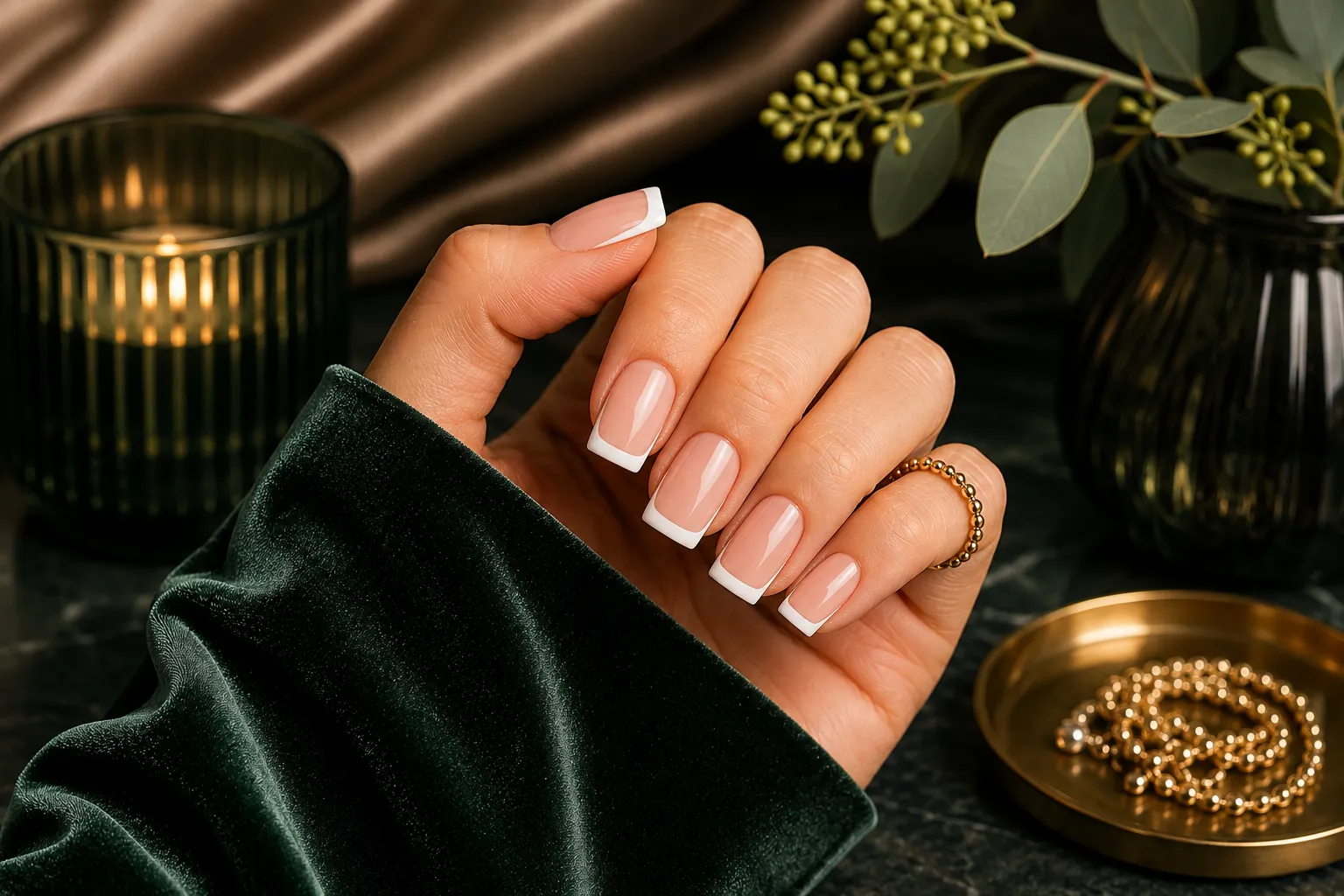
Straight sidewalls, a truly flat free edge and crisp corners give square French tips their graphic, architectural character.
Square French tips are the crispest, most classic way to wear a French manicure: straight sides, a flat tip and sharp corners. Below are 20 square French tip nail ideas, from classic white and micro tips to red, black, pearl and chrome, plus the best tip width for short, medium and long nails and what to look for in square French press-ons.
20 Square French Tip Nail Ideas: From Classic to Modern
Square French tips can stay minimal or become highly graphic without losing the shape’s defining structure. These ideas show how classic white, micro placement, color, glaze, pearls and geometric details behave on a flat terminal edge with straight sidewalls.
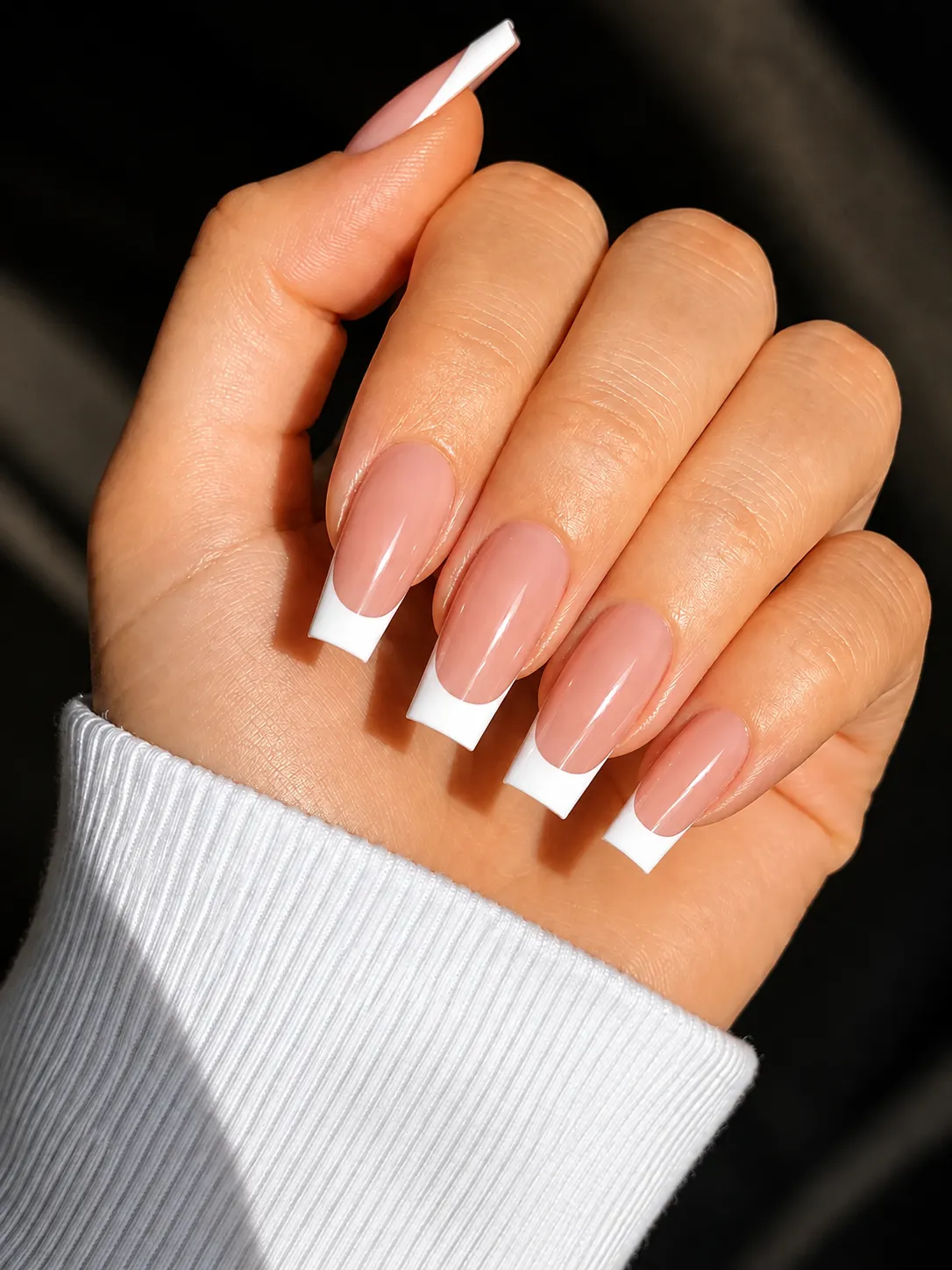
Classic White Square French
Opaque white makes the flat terminal edge and corner symmetry immediately readable.
Explore Classic French →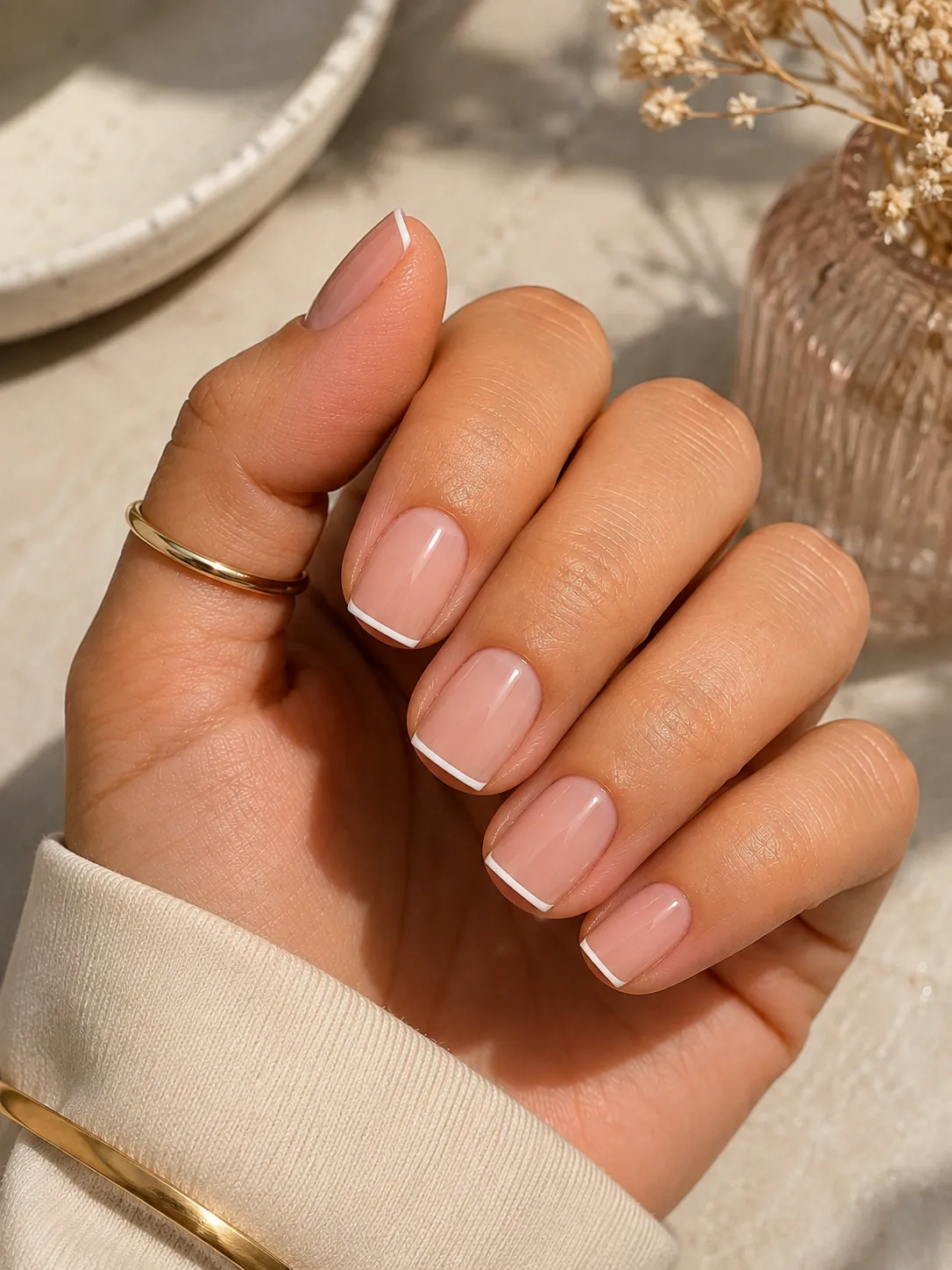
Micro Square French
A hairline white edge keeps the manicure light while preserving maximum visible nude space.
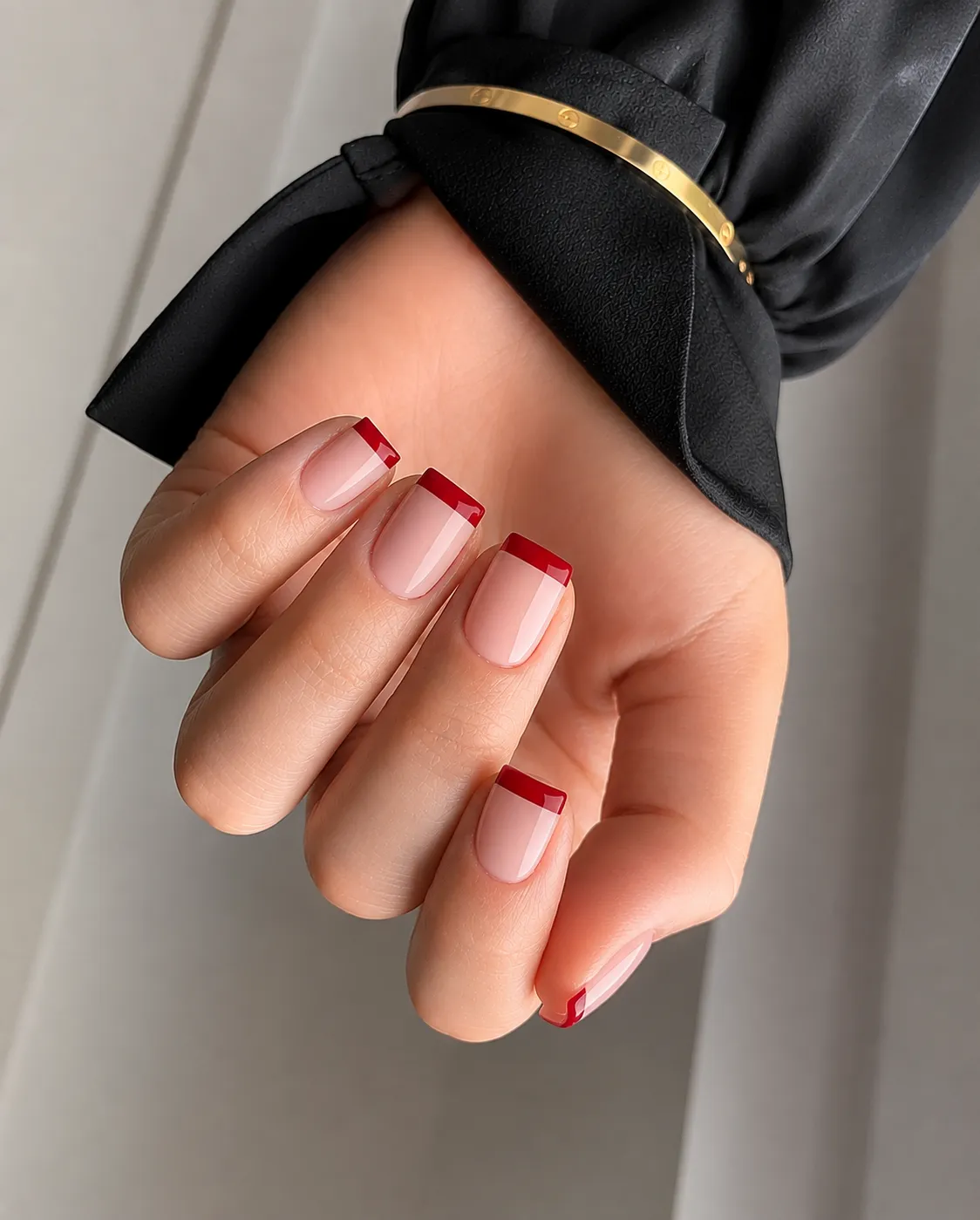
Red Square French
Saturated red turns the broad horizontal tip into a deliberate graphic feature.
Explore Red French →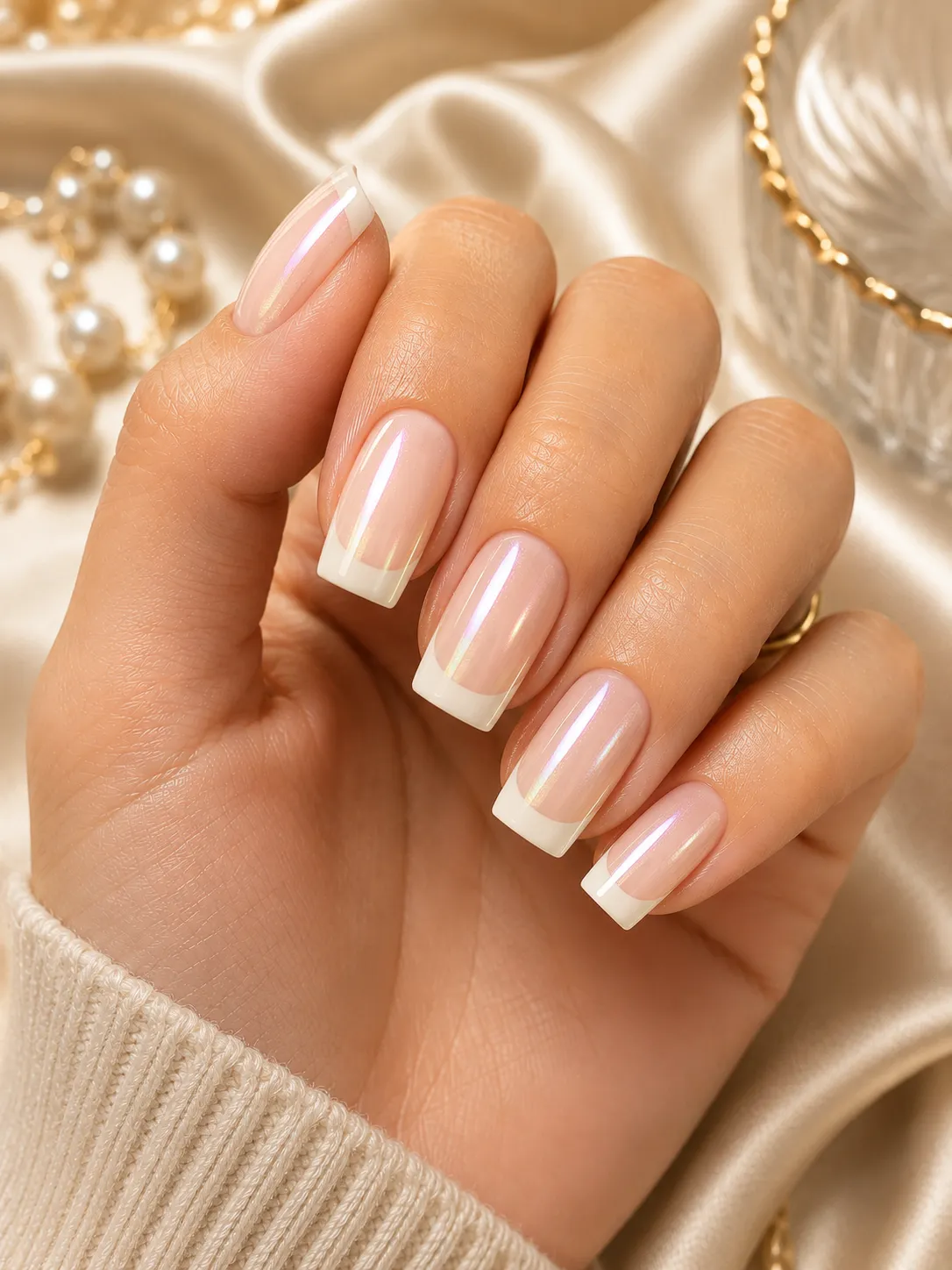
Glazed Square French
A pearl veil softens the finish while the white edge and true-square silhouette stay visible underneath.
Explore Glazed French →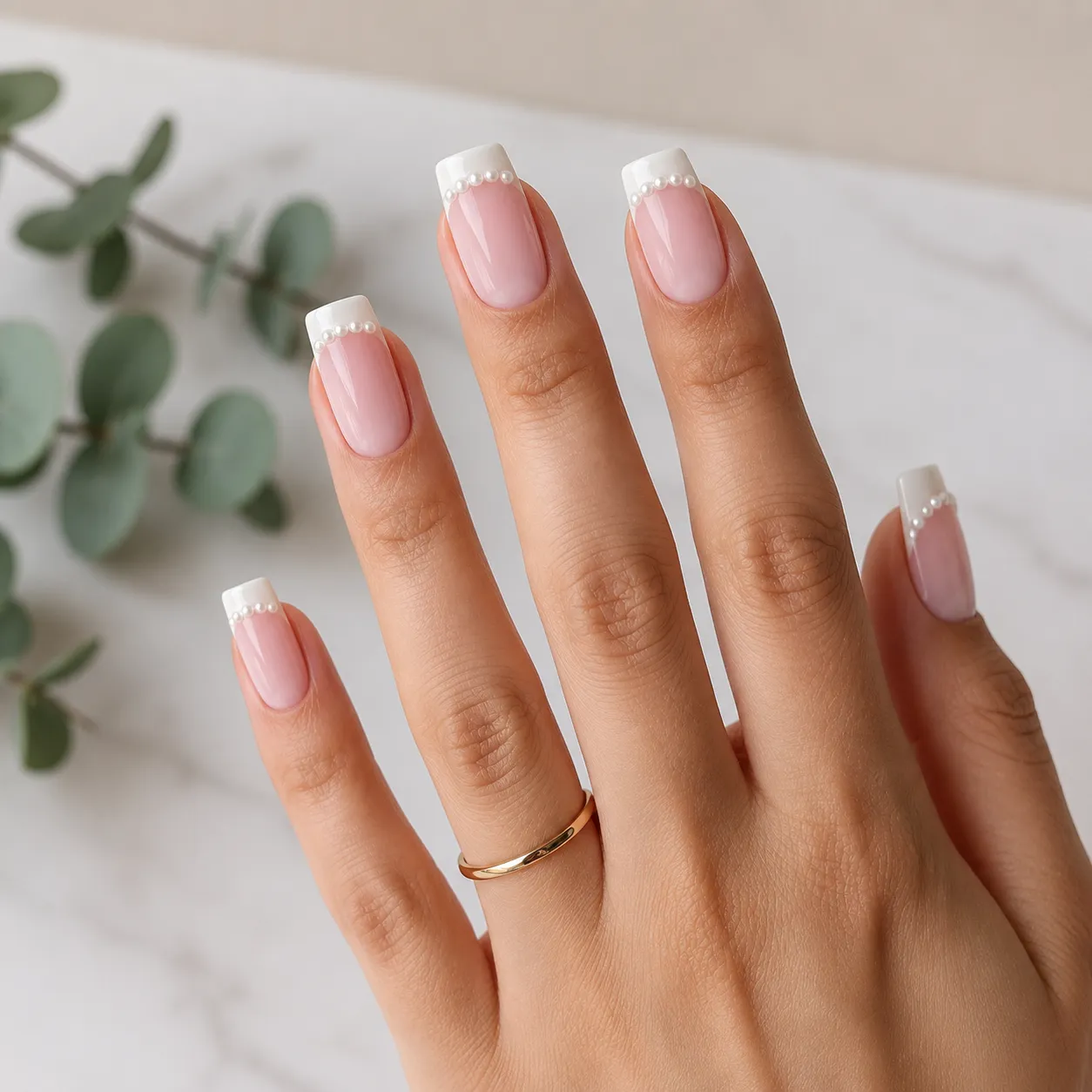
Pearl Square French
Low-profile pearls can trace the French boundary without hiding the corners or changing the silhouette.
Explore Pearl French →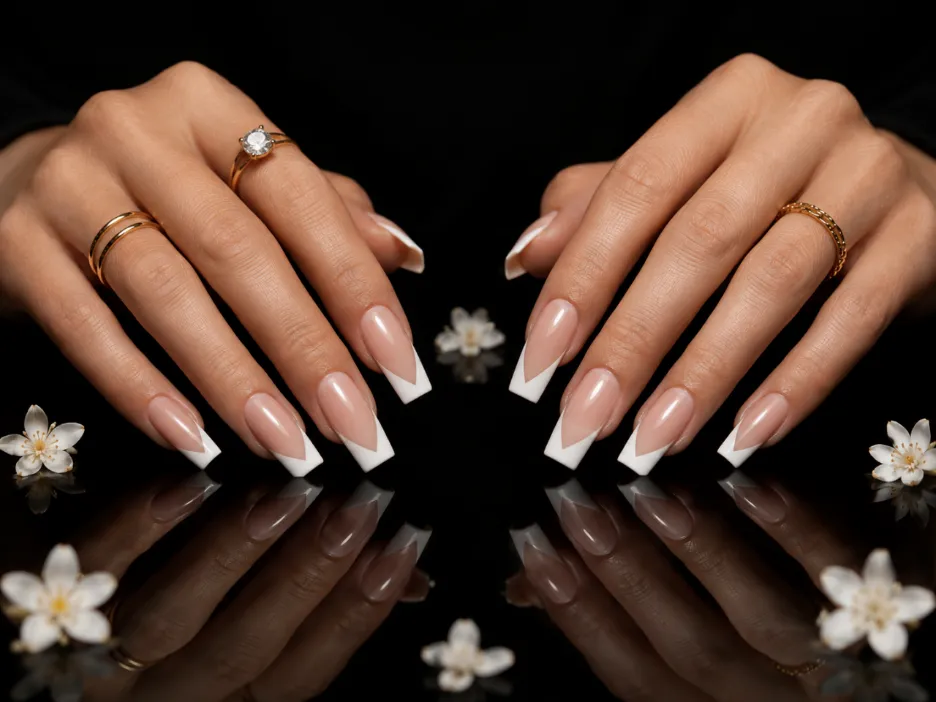
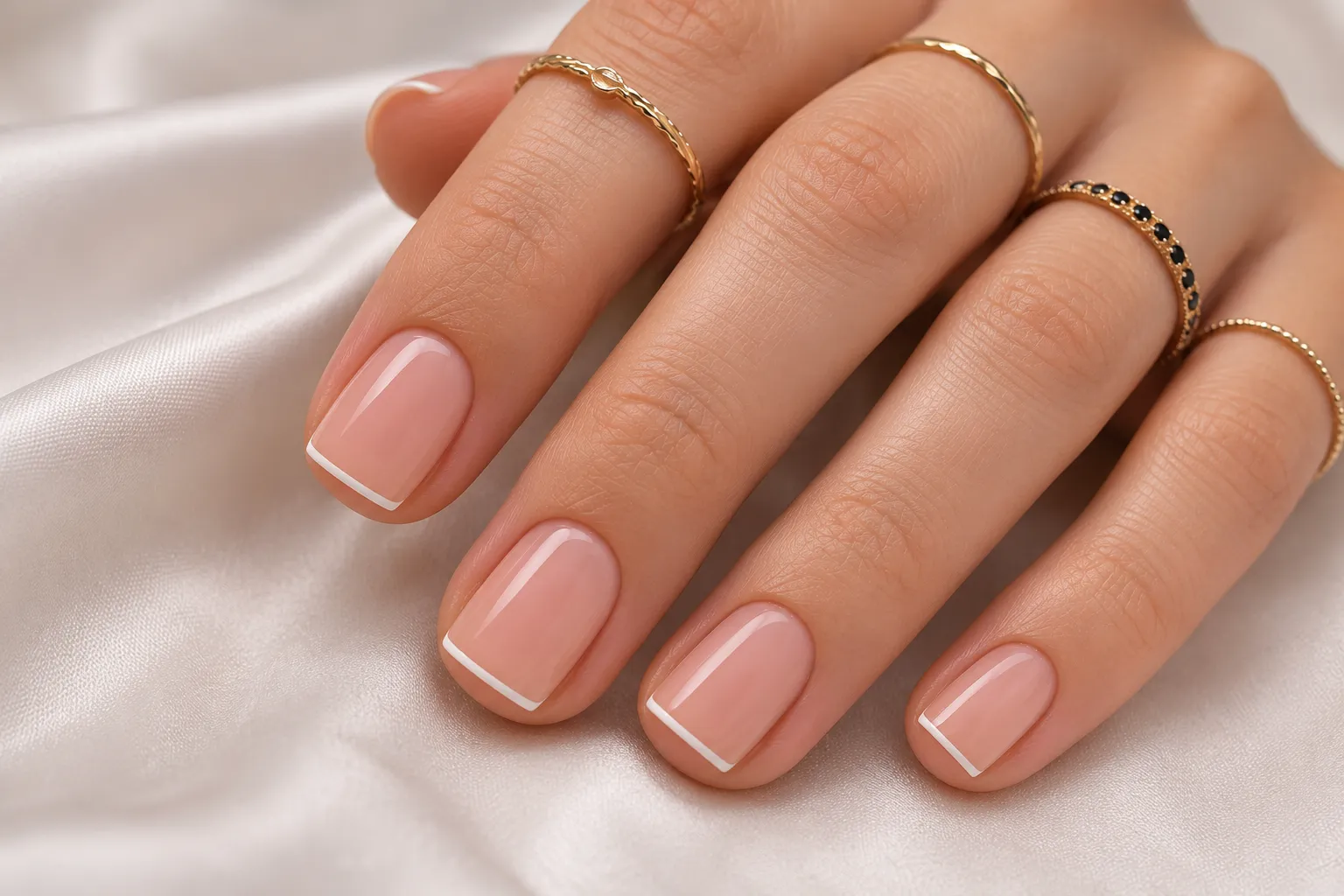
V-Cut Square French
An angular painted V creates tension against the nail’s naturally horizontal terminal edge.
Short Square Micro French
A restrained tip keeps compact square nails crisp rather than visually top-heavy.
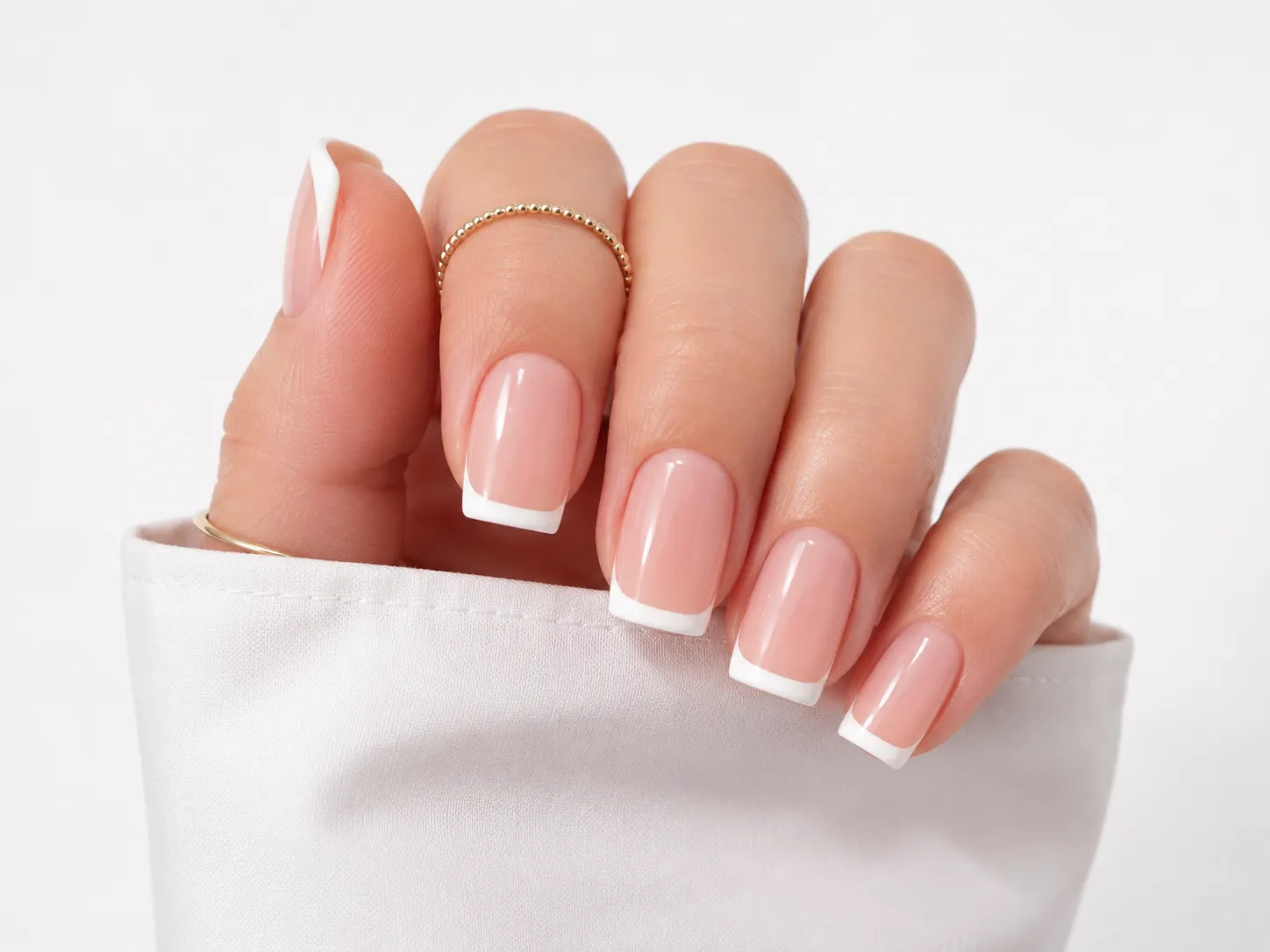
Medium Classic Square French
Medium square gives a classic French band enough space to look balanced without becoming visually heavy.
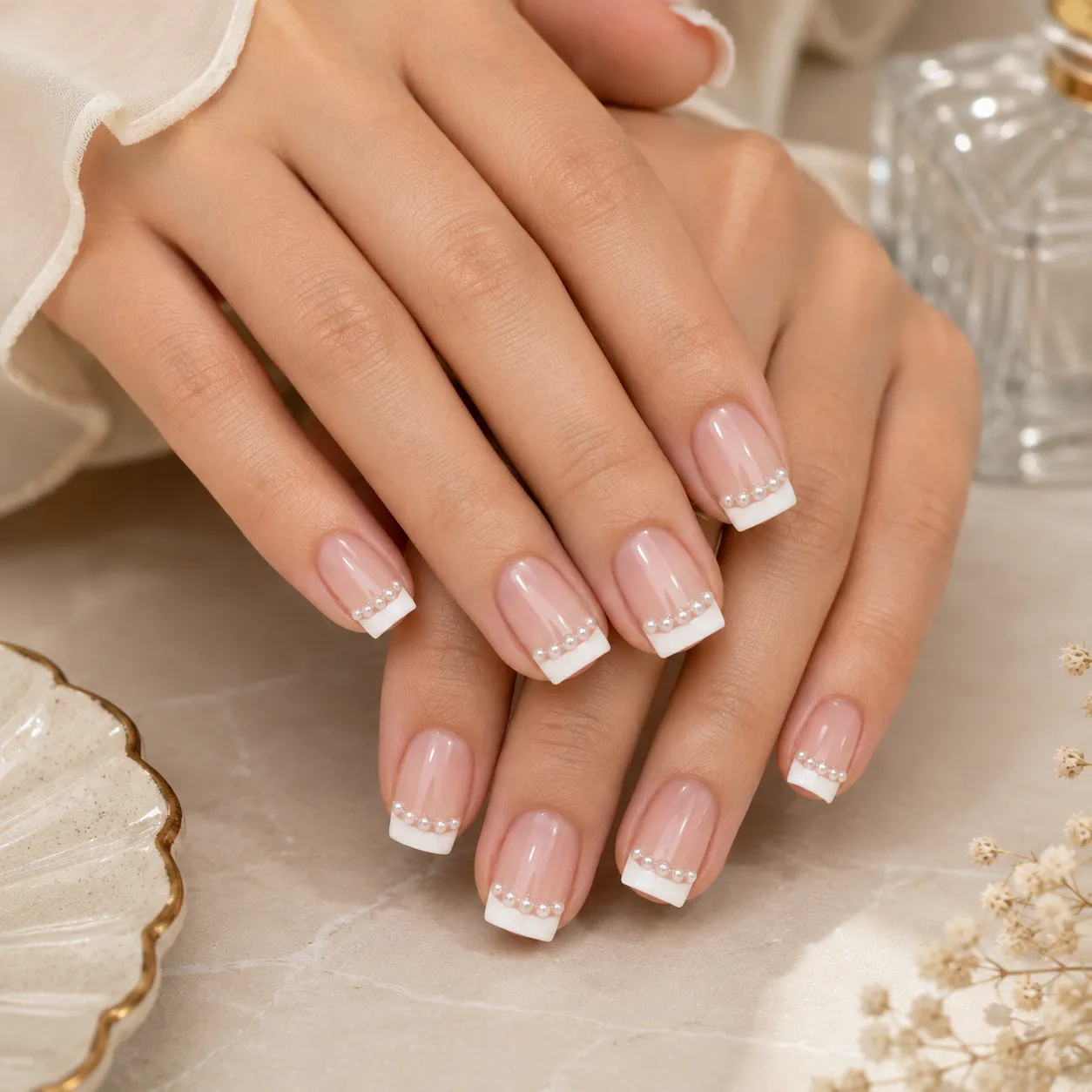
Restrained Pearl Detail
Small dimensional accents add texture while leaving the square corners and white edge easy to inspect.
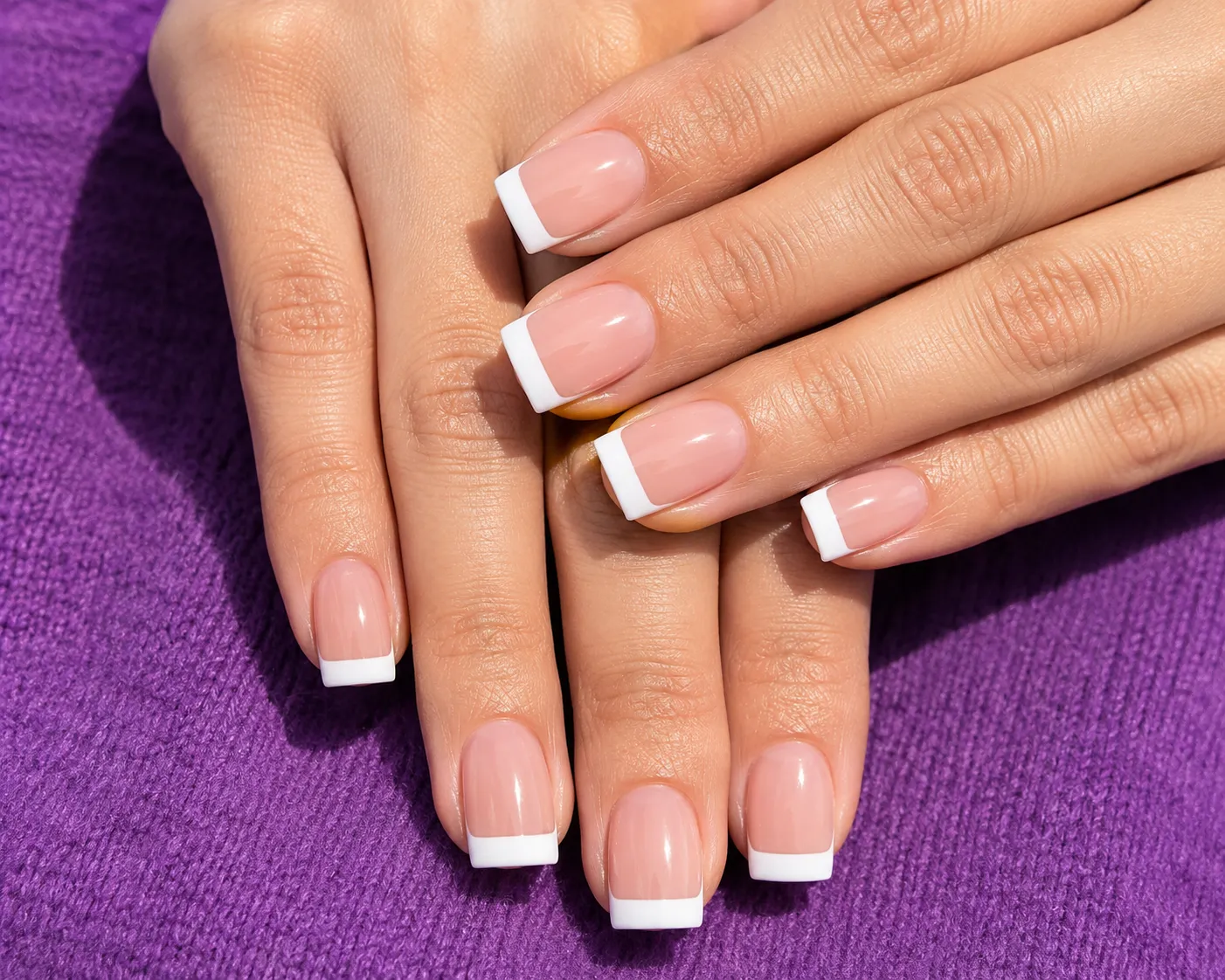
Ultra-Crisp White French
Maximum contrast makes the flat edge, parallel sidewalls and balanced corners impossible to hide.
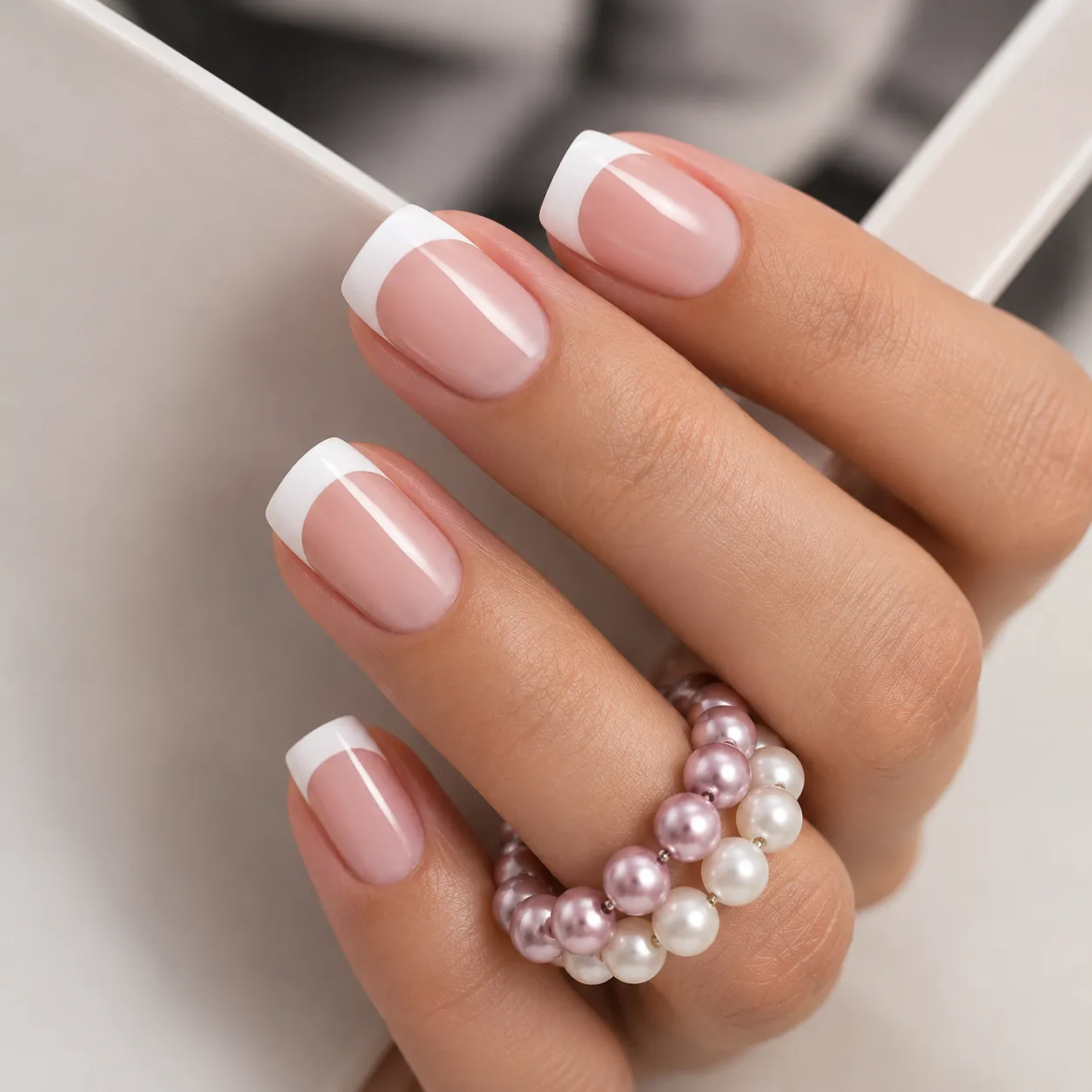
Soft-Curve Square French
The painted smile can curve gently while the physical free edge remains completely square.
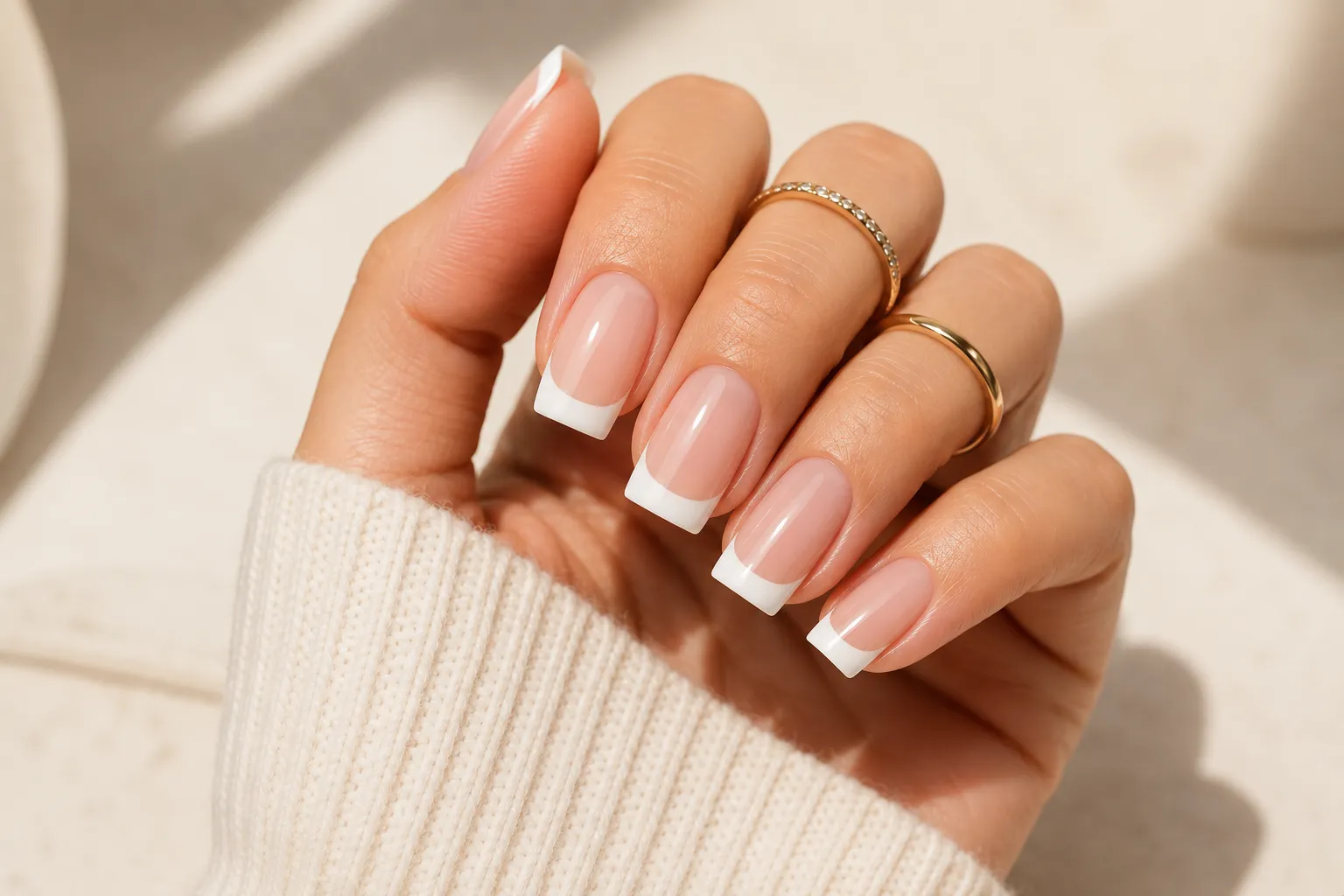
Structured Classic French
A clean nude base and traditional white edge keep the square architecture as the main visual feature.
See Classic French Ideas →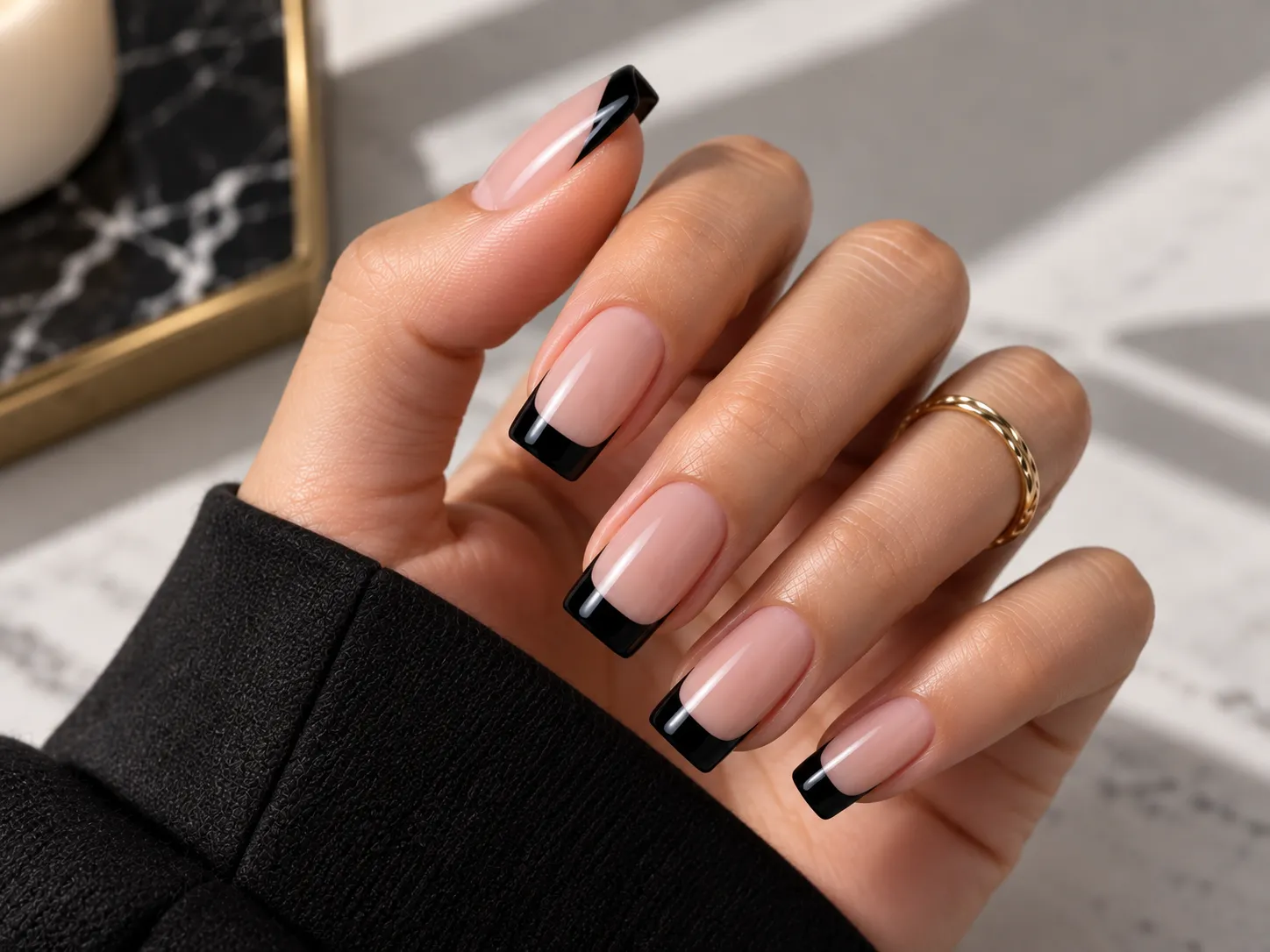
Black Square French
A black tip on a square edge is the most graphic French you can wear. It’s sharp, modern, and great for autumn and winter.
Explore Black French →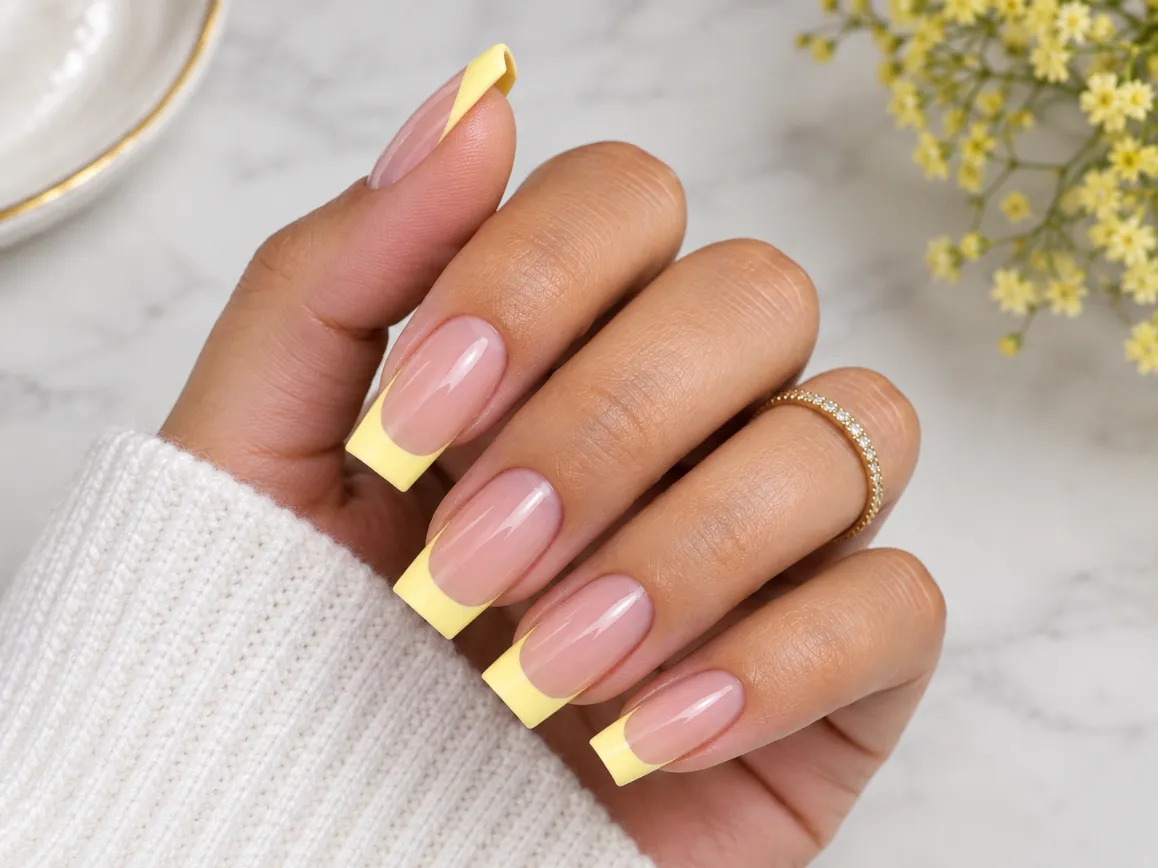
Butter Yellow Square French
A soft buttery yellow tip is fresh and summery but still understated, a gentle way to add color to a classic square French.
Explore Yellow French →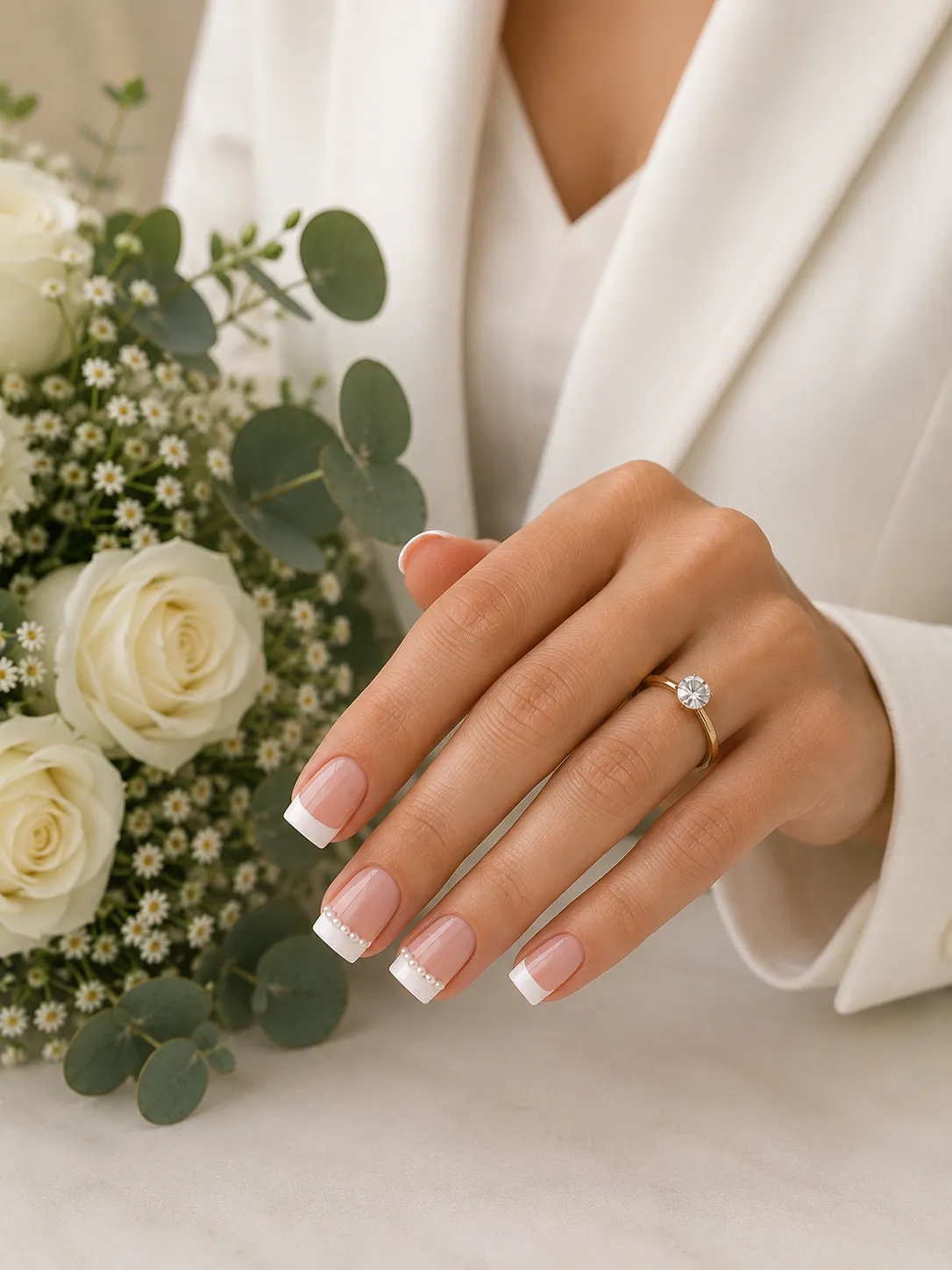
Bridal Pearl Square French
Clean square tips with a few pearl accents give a modern, minimal bridal look. It’s ideal for a civil ceremony or a simple dress.
Explore Pearl French →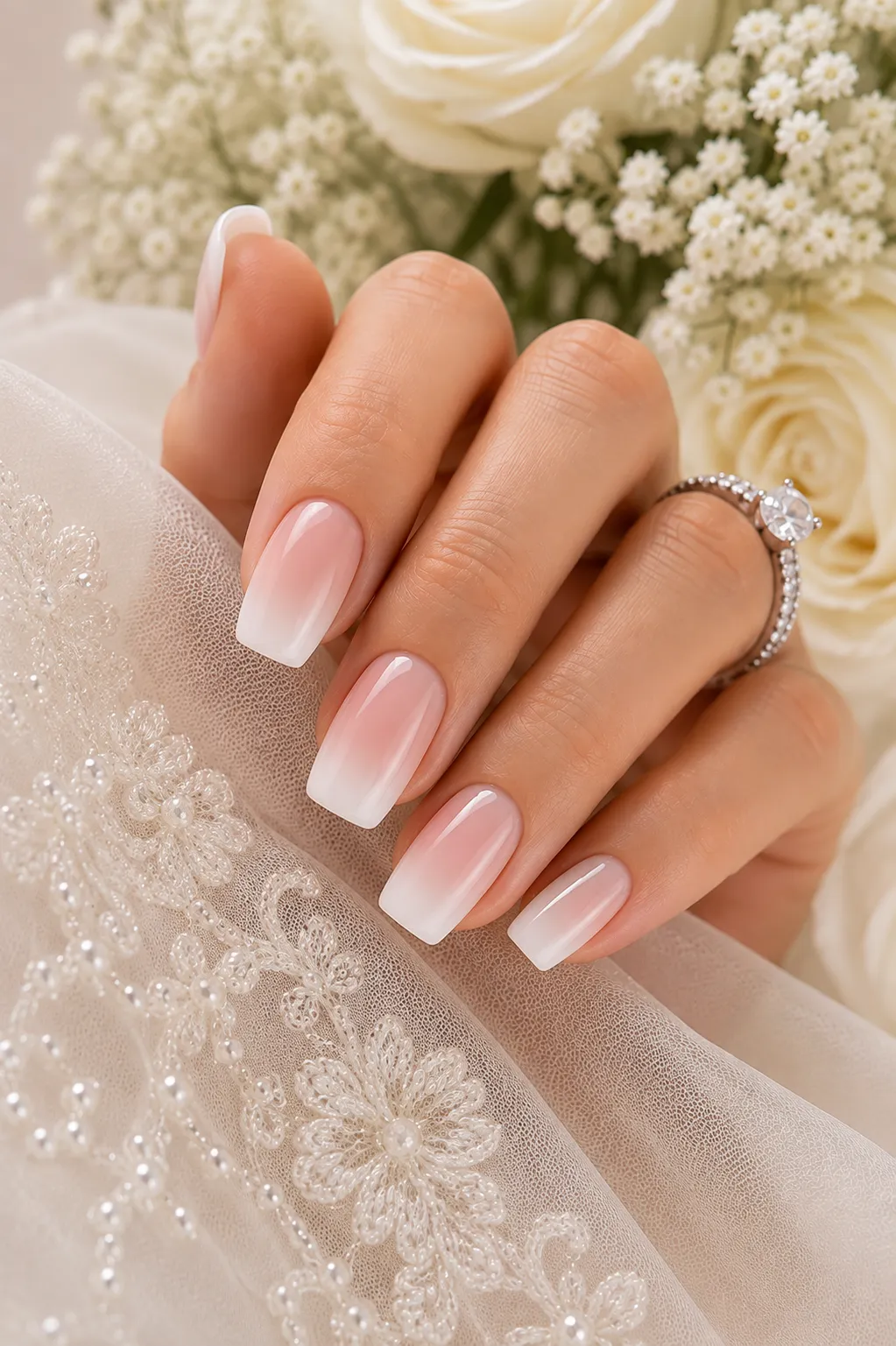
Baby Boomer Square
Pink fades into a creamy white tip with no hard line. Regrowth is barely noticeable, so it stretches longer between appointments.
Explore Baby Boomer Nails →4 More Square French Tip Ideas
Chrome Square French
A silver or gold chrome tip turns the flat square edge into a mirror line, perfect for parties and the holidays.
Explore Chrome French →Double-Line Square French
A second thin line under the tip adds detail without bulk. White on nude keeps it minimal; black on nude makes it graphic.
Matte Square French
A matte top coat over a classic French gives a soft, velvety finish that feels modern and photographs without glare.
Pastel Rainbow Square French
A different pastel tip on each nail (lilac, mint, peach, baby blue) is a fun spring and summer twist on the classic.
What Makes Square French Tips Actually Square?
A square nail should be identifiable before color is added. The French design sits on top of that architecture; it cannot correct a tapered sidewall or an over-rounded corner.
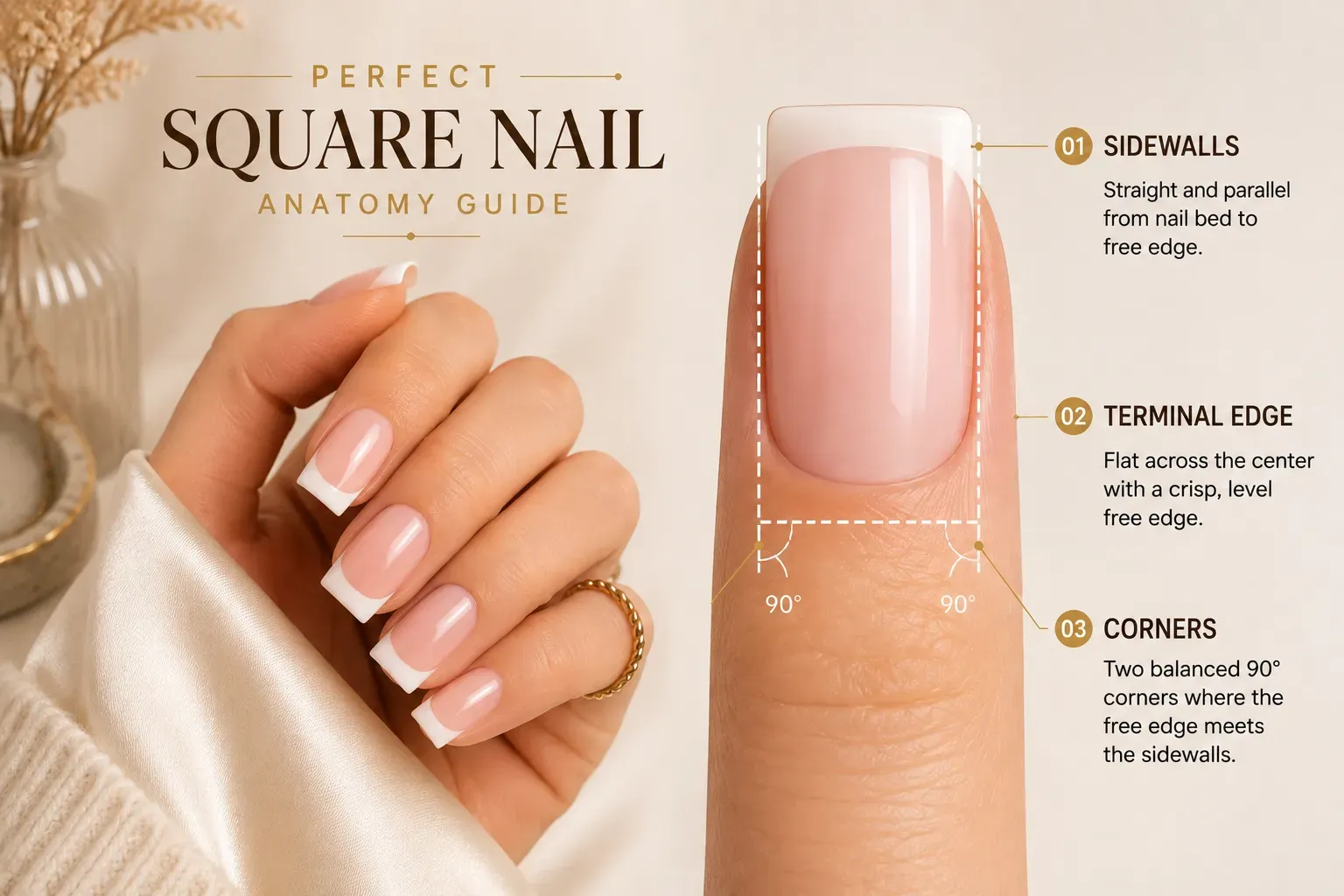
Parallel, not pinched
The sides should travel toward the tip without narrowing inward.
Flat across the center
A continuous arc reads oval; a narrowed flat edge begins to read coffin.
Crisp and matched
Both outer points should project evenly rather than one corner being filed away.
Proportional to width
The broader the nail, the more important controlled tip depth becomes.
Shape First, French Second
The painted French edge should reinforce a square silhouette—not create the illusion of one.
If the sidewalls taper, the corners disappear or the terminal edge arches, the manicure is no longer a technically clear square even when the white tip itself is painted straight.
Square vs Squoval: One Small Change, a Different Silhouette
These shapes share straight sidewalls and a broad flat center. The distinction is concentrated at the outer corners: square preserves them; squoval deliberately softens them.
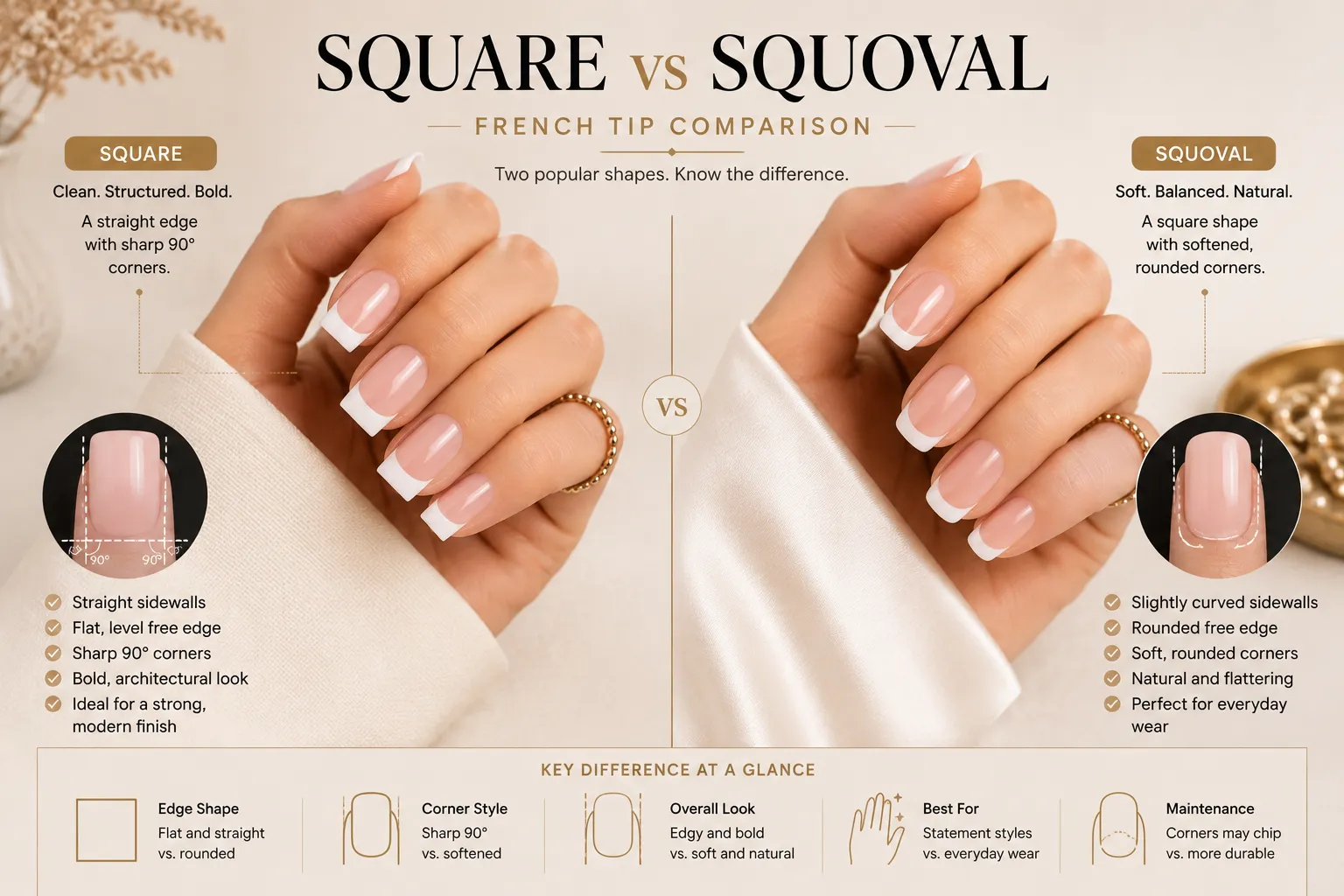
| Feature | Square | Squoval |
|---|---|---|
| Sidewalls | Straight | Straight |
| Center edge | Flat | Flat |
| Outer corners | Crisp and exposed | Controlled rounding |
| Overall character | Graphic, architectural | Structured, softened |
| Everyday contact | More corner exposure | Less corner exposure |
Short, Medium or Long Square?
Length changes both the visual weight of the French band and the leverage placed on the free edge. Short square is compact and practical; medium is the most flexible design canvas; long square is more dramatic and less forgiving of structural or symmetry errors.
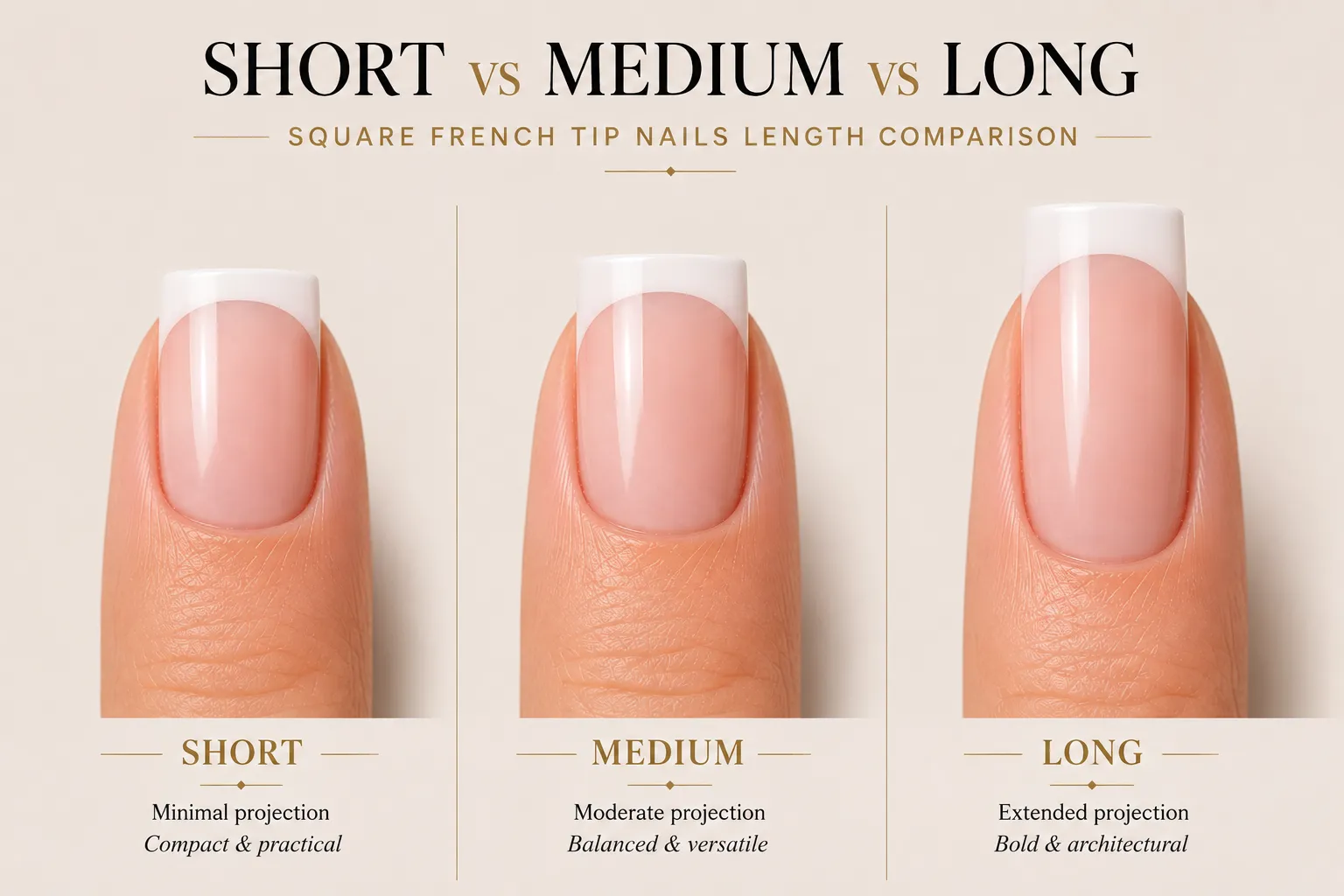
French Tip Width Changes the Whole Square
Because the terminal edge is broad and horizontal, tip depth is especially visible on square nails. A few millimeters can change the manicure from delicate to graphic.
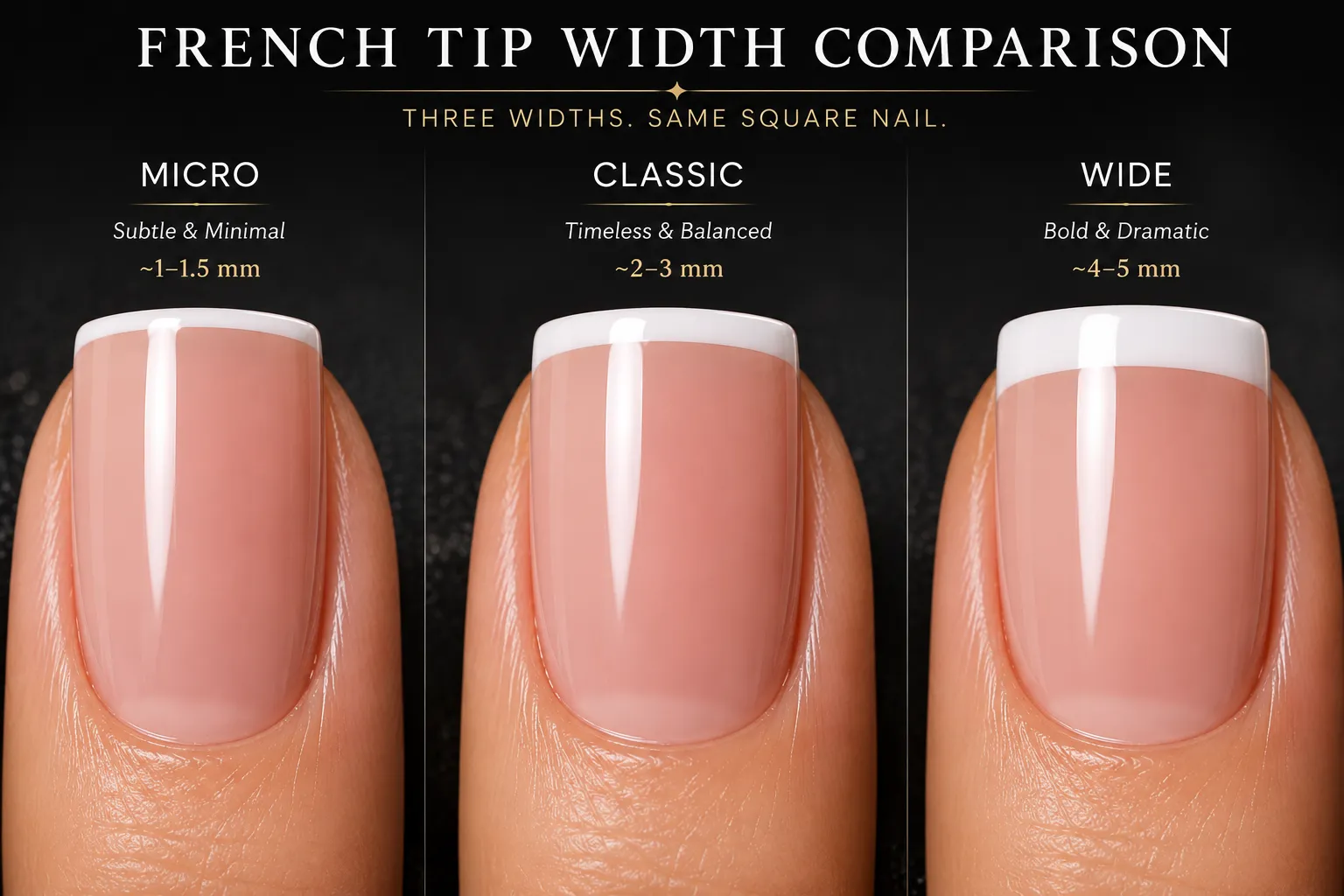
| Tip Width | Best Match | Visual Effect | Watch For |
|---|---|---|---|
| Micro | Short square, minimalist looks | Light, elongated, subtle | Uneven thickness is easy to see |
| Classic | Most medium square nails | Balanced and unmistakably French | Smile depth should remain proportional |
| Wide / block | Medium-long statement nails | Graphic and fashion-forward | Can visually shorten a compact nail bed |
How to Match Square French Tips to Your Nail Bed
Square French tip nails can work on narrow, balanced and broader nail beds, but the same French band will not read the same on every hand. The goal is not to disguise natural nail width. It is to balance visible nail-bed space, French-tip depth and length while preserving the straight sidewalls and flat free edge that define a true square.
Keep the French Edge Restrained
A slimmer nail plate can look visually shorter when the white band becomes too deep. A micro or moderately thin French tip preserves more visible nude space while keeping the square corners easy to read.
Best fit: Micro to classic-width French
Watch for: A deep white band making a compact nail look top-heavy.
Let the Square Shape Lead
Balanced nail beds usually carry the widest range of French placements. Micro, classic and moderately deeper tips can all work when the white edge stays proportional to the visible nail bed.
Best fit: Micro, classic or moderately deep French
Watch for: Changing the sidewalls just to accommodate the painted design.
Use Proportion, Not Extra Taper
A broader nail plate does not need to be filed inward to look slimmer. Keep the sidewalls parallel and use French-tip width, smile-line placement and moderate length to control visual weight.
Best fit: Proportionate classic or softly curved French
Watch for: Filing the corners inward until the nail begins to resemble coffin or squoval.
Nail-Bed Width Changes the Balance, Not the Definition of Square
A narrow or broad nail bed can change how much visual weight the French tip carries, but it should not change the core architecture of the shape.
Straight sidewalls, a level terminal edge and two balanced corners should remain intact. Adjust the painted French placement before filing away the structure that makes the nail square.
| Nail-Bed Proportion | French Tip Strategy | What It Helps Avoid |
|---|---|---|
| Narrow | Micro or restrained classic tip | A deep white band visually compressing the nail bed |
| Balanced | Micro, classic or moderately deep tip | Over-correcting proportions that already look balanced |
| Broader | Proportionate classic tip with adequate nude space | Unnecessary taper that changes square into coffin-like geometry |
| Short + broad | Short-medium length with a lighter French edge | Too much visual weight across a compact free edge |
What to Ask for at the Salon
“True square”
“Keep the sidewalls straight and parallel with a flat terminal edge and even corners.”
Choose for routine
“Keep it short or medium unless my structure and daily routine suit more length.”
Set the tip depth
“Keep the French band proportional to my visible nail bed rather than automatically making it deep.”
Do not soften by default
“Keep the corners crisp; if I want them rounded, I will ask for squoval.”
Square French Tip Press-On Nails: What to Look For
Press-ons are the fastest way to wear square French tips at home. Before you buy, check these five things in the product photos and description:
| Check | What to look for | Why it matters |
|---|---|---|
| Shape | Straight sides, flat tip, sharp corners | Many “square” sets are actually squoval or slightly tapered |
| Length | Short or medium for daily wear | Long square corners catch and pop off more easily |
| Sizes in the set | Plenty of sizes, with spares | Each nail needs a press-on that covers it edge to edge without touching the skin |
| Tip width | Thin tip for short nails, classic for medium | A deep white band makes short square nails look stubby |
| Adhesive | Sticky tabs for a few days; nail glue for longer wear | Tabs are gentler to remove; glue holds longer but must be soaked off |
If a press-on is slightly too wide, file its sides down rather than choosing a smaller size that leaves gaps. Gaps let water in and cause lifting.
Quality Check: What Should You Inspect Before Leaving?
Square is unforgiving in a useful way: symmetry problems are easier to see. Check the nails from above, from the front and in profile rather than judging only the polish surface.
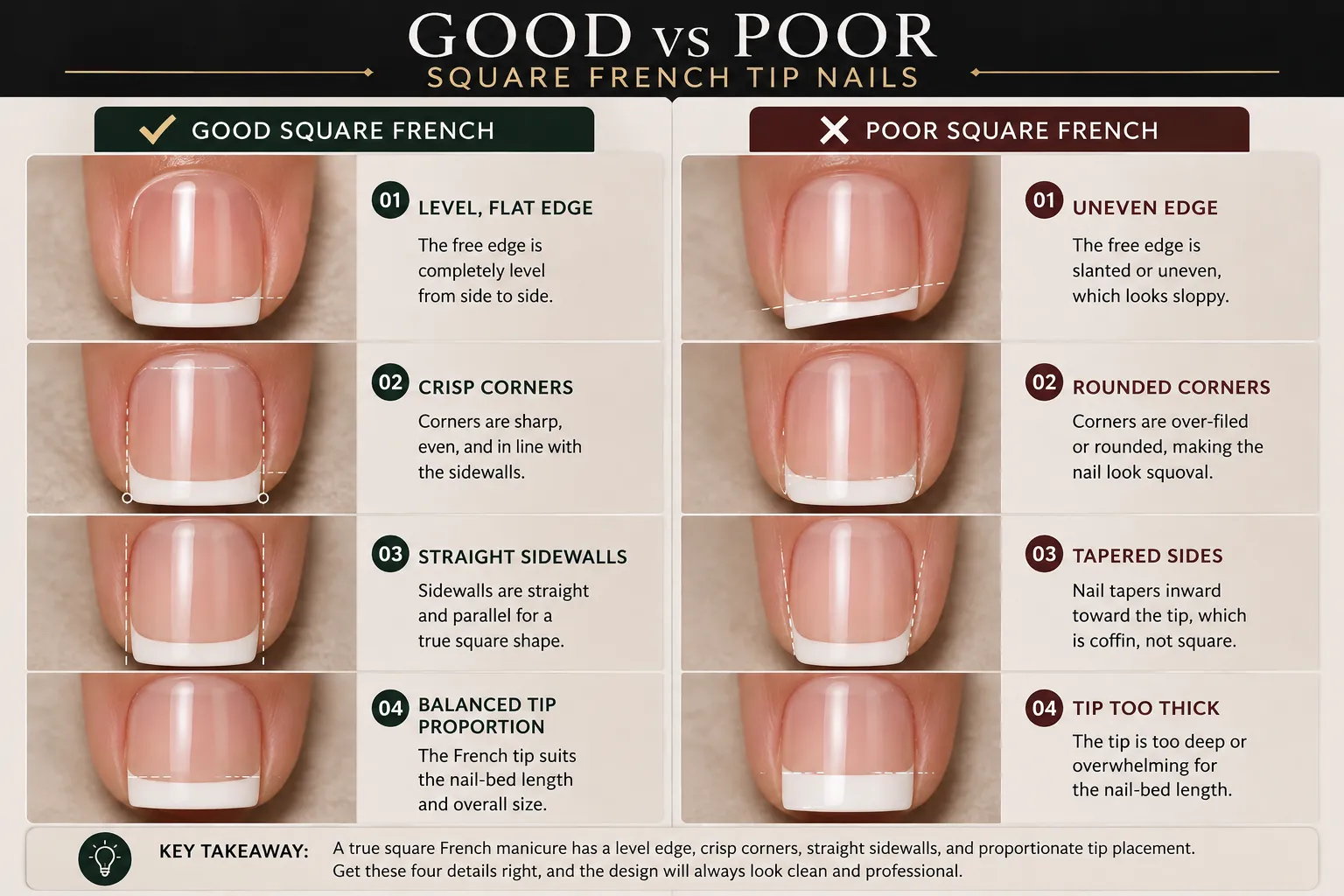
Compare the sidewalls
They should remain visually parallel rather than narrowing toward the free edge.
Sight across the free edge
The terminal line should look level, not tilted or progressively rounded.
Match the corners
One corner should not be sharper, shorter or more rounded than its partner.
Compare French depth
Placement should look proportionally consistent from nail to nail rather than mechanically identical in millimeters.
View the profile
Structure should support the length without an unnecessarily bulky surface or obvious product ridge.
Inspect the finish
Look for clean sidewalls, a neat cuticle area, even opacity and a smoothly capped free edge.
How Practical Are Square French Tips?
Short and medium square nails can be very wearable, but crisp corners are more exposed than on squoval or oval shapes. The longer the nail, the more leverage and contact those corners experience.
| Routine | Best Square Approach | Reason |
|---|---|---|
| Frequent typing | Short + micro French | Less leverage and less tip bulk. |
| Office / general wear | Short-medium + classic French | Strong visual structure without extreme length. |
| Events / bridal | Medium + pearl or glazed French | Enough design space while preserving manageable proportions. |
| Hands-on routine | Very short square or consider squoval | Reduces repeated contact at the outer corners. |
How to Maintain Square Nails Without Turning Them Squoval or Coffin
File the terminal edge straight
Establish a level free edge before refining either side.
Keep the sidewalls parallel
Repeated inward filing creates taper and slowly converts square into coffin-like geometry.
Do not round the corners away
A tiny finishing pass is different from deliberately softening both corners into squoval.
View from more than one angle
Top view reveals taper; front view reveals a tilted free edge; profile reveals excess bulk or weak structure.
Do Not File Over Damage
Lifting, cracks, tenderness, discoloration or impact damage should not simply be hidden with glue, filing or more polish.
Enhancement problems should be assessed by a nail professional. Persistent natural-nail concerns may require medical advice.
Should You Choose Square French Tips?
Do you specifically want a crisp, flat and architectural silhouette?
The straight sidewalls and exposed corners are the defining visual features.
Squoval softens only the corners; almond and oval introduce substantially more curve or taper.
Do exposed corners work with your routine?
Short-medium square gives the strongest balance of geometry and wearability.
Reduce length first; if corners still interfere, soften them deliberately rather than accidentally.
How much visual weight do you want at the tip?
Keeps the broad edge visually light.
Uses the flat terminal edge as a deliberate design block.
Short-to-medium length, true parallel sidewalls and a French band chosen for the visible nail-bed proportion.
That combination preserves what makes square distinctive without making the manicure unnecessarily difficult to wear.
Final Verdict
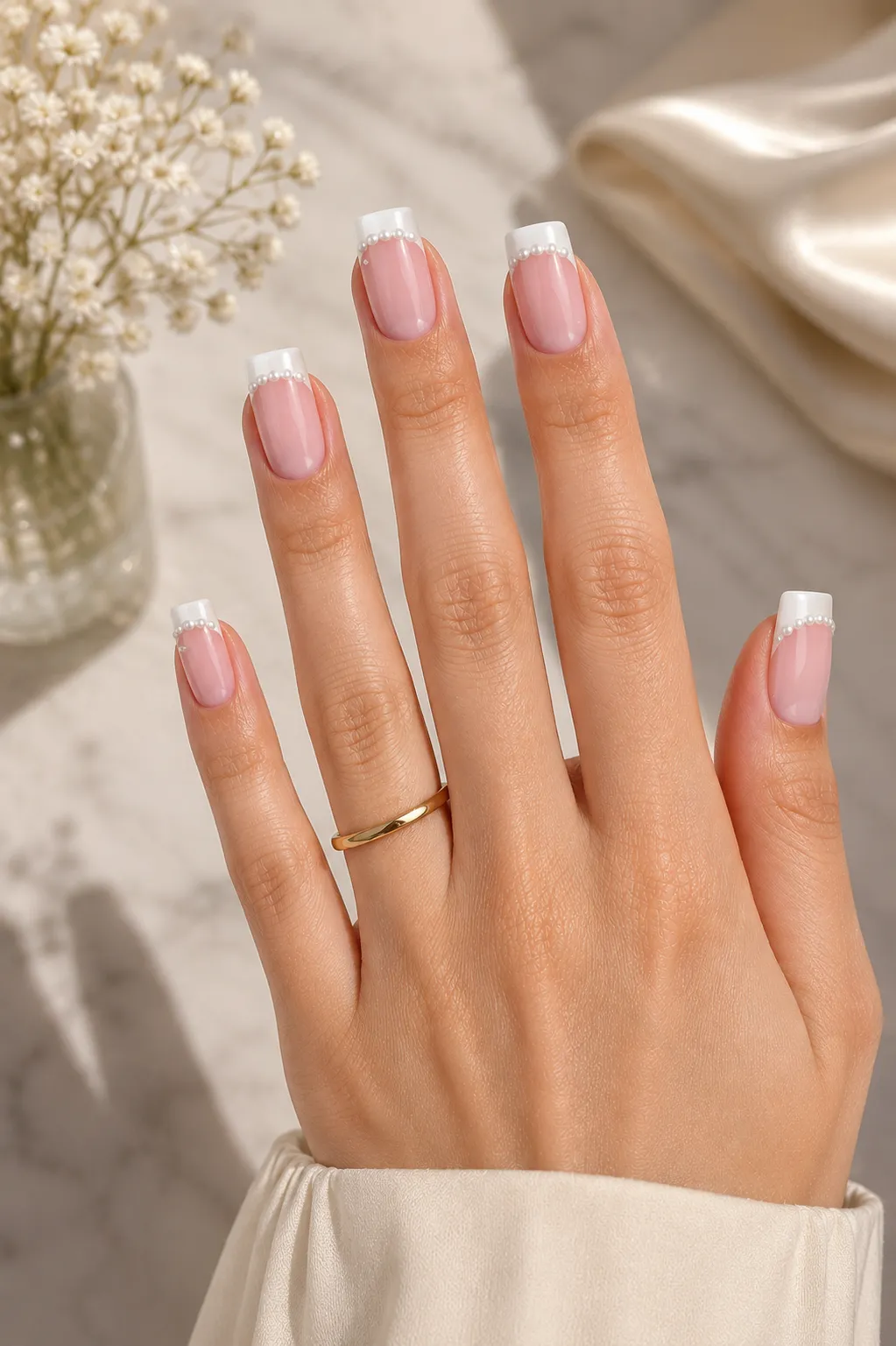
Square French tips are not simply classic French nails with a blunt end. Their appeal comes from controlled width, parallel sidewalls, a genuinely flat terminal edge and balanced corners. Once that foundation is correct, the shape can carry everything from a barely-there micro line to red, glazed, pearl and geometric French designs without losing its identity.
Frequently Asked Questions
Are square French tip nails good for short nails?
Yes. Short square nails work particularly well with micro or narrow French placement because a thinner band preserves visible nail-bed length while keeping the terminal edge crisp.
What is the difference between square and squoval nails?
Both can have straight sidewalls and a flat center. Square preserves crisp outer corners; squoval intentionally rounds those corners while keeping the center relatively flat.
What French tip width looks best on square nails?
Micro tips suit short or minimalist square nails, classic-width tips balance most medium lengths, and wider block tips work best when there is enough nail-bed and free-edge length to support the extra visual weight.
Do square nails make wide nail beds look wider?
They can emphasize width because the sidewalls do not taper. A narrower French band, moderate length and careful proportion can keep the result balanced without changing the shape.
How do you keep square nails from becoming squoval?
Keep the free edge level and avoid repeatedly rounding the outer corners during maintenance. Once both corners are deliberately softened, the silhouette begins to read squoval.
How do you keep square nails from looking like coffin nails?
Preserve parallel sidewalls. Coffin nails narrow toward a smaller flat terminal edge; true square nails retain their width toward the tip.
Explore Related Nail Guides
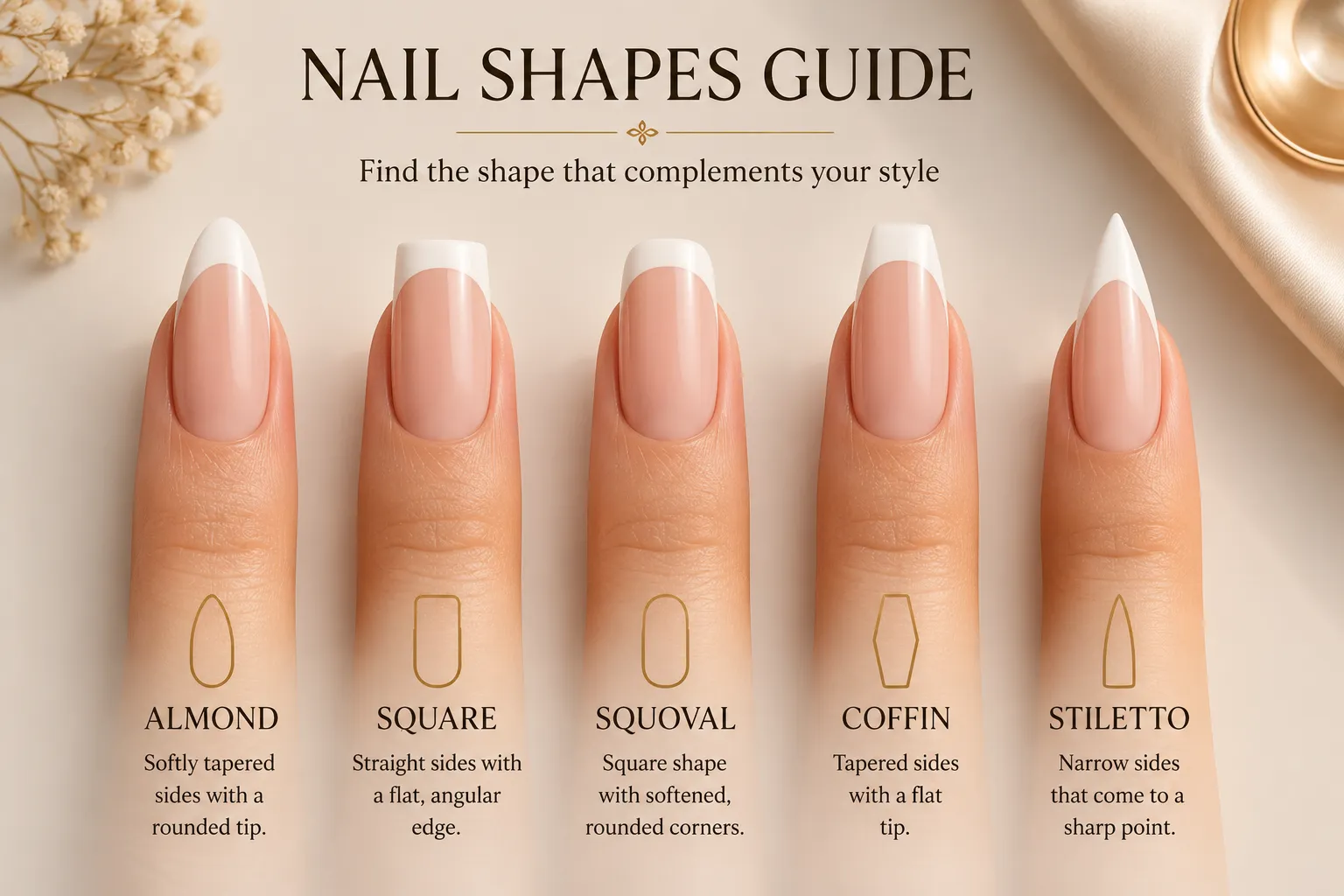
Nail Shapes Guide
Compare square with squoval, almond, oval, coffin, stiletto and other core silhouettes.
Explore Nail Shapes →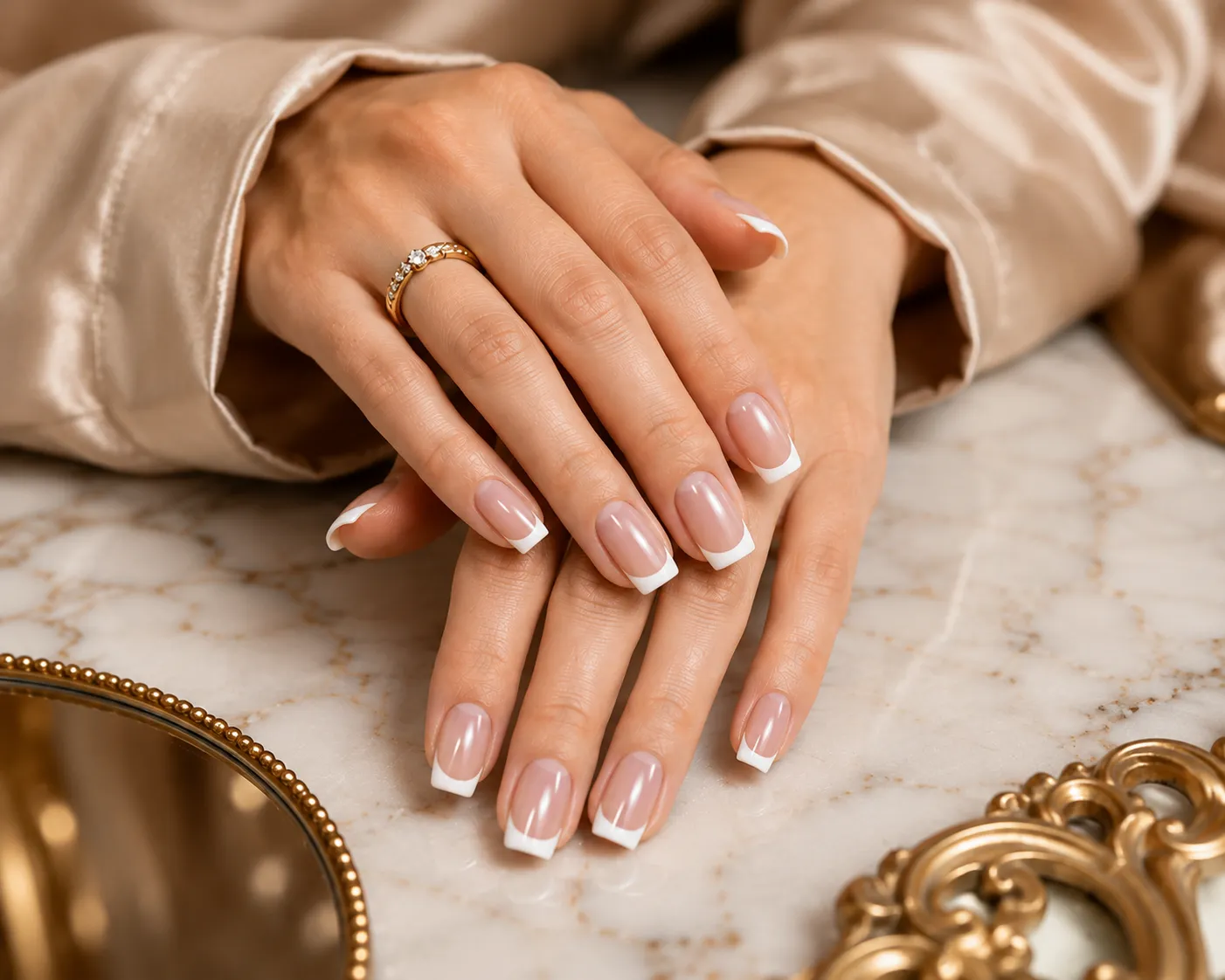
Squoval French Tip Nails
See how softening only the corners changes the look and everyday feel.
Explore Squoval French Tips →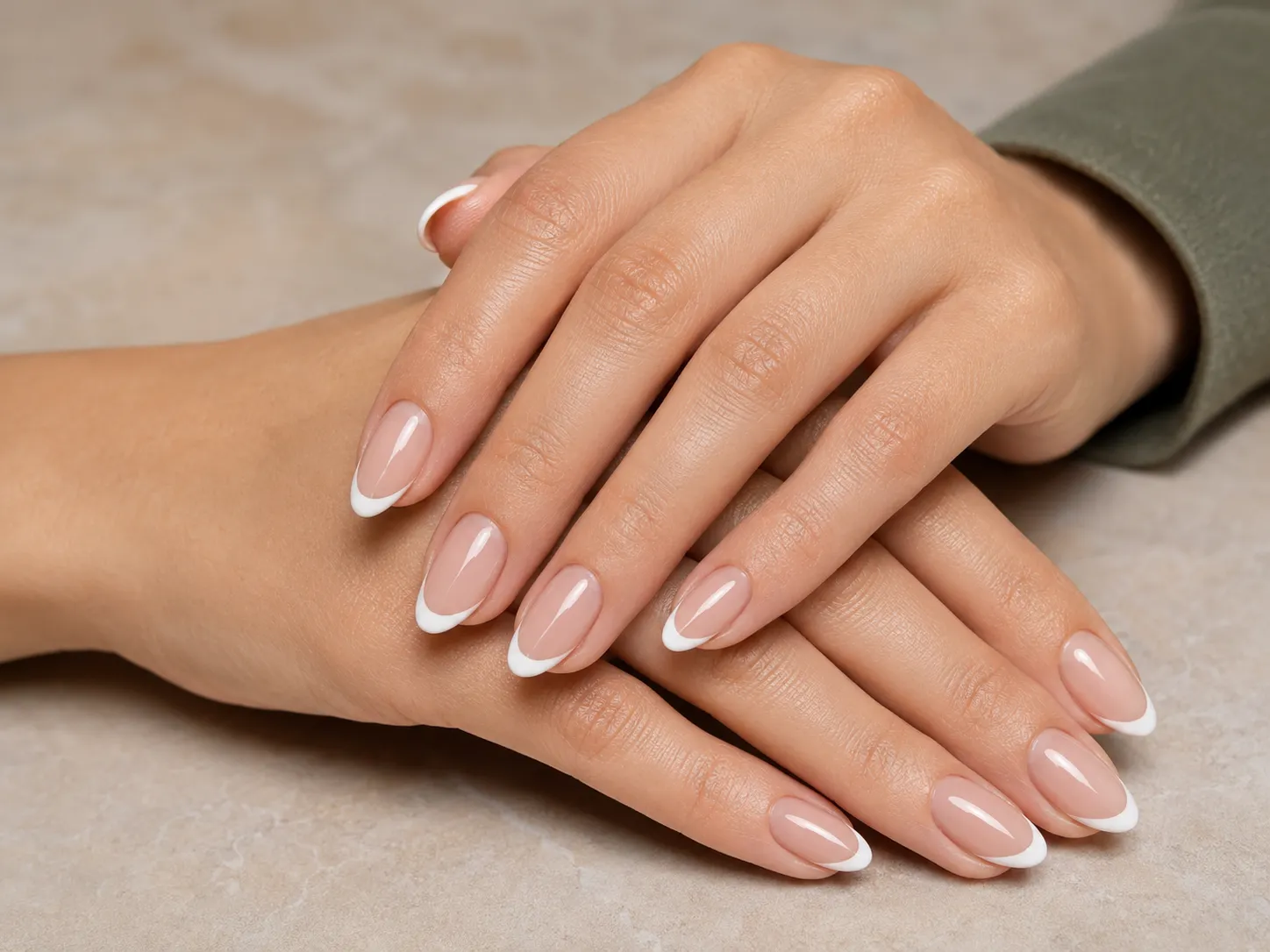
Almond French Tip Nails
Compare square’s broad flat edge with almond’s gradual taper and centered soft point.
Explore Almond French Tips →