
Squoval French Tip Nails: 15 Ideas & the Shape That Flatters Every Hand
Flat through the center, softened at the corners, and exceptionally easy to pair with French placement—squoval is where structure meets everyday wearability.
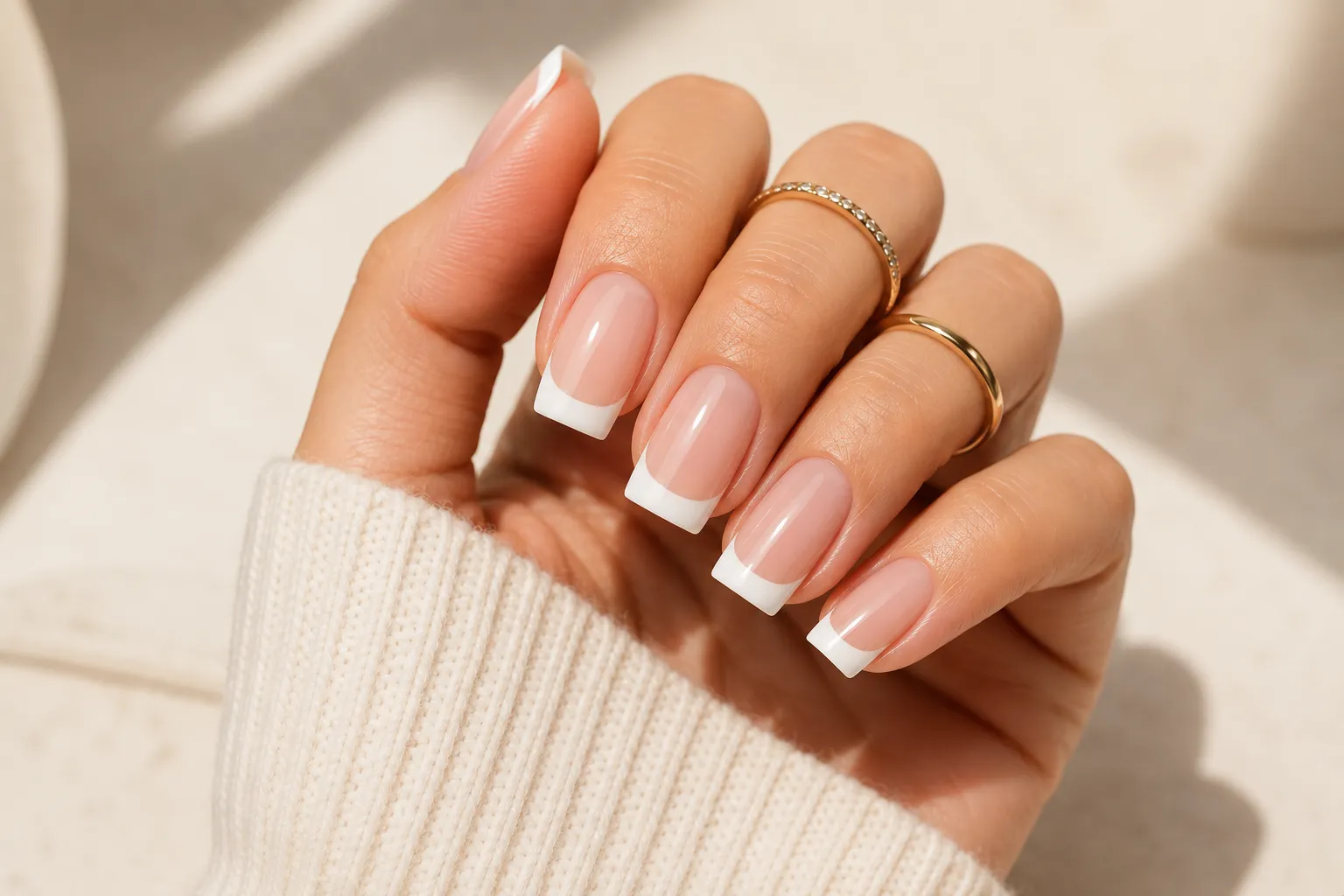
Squoval French tip nails combine the clean horizontal structure of square nails with softened outer corners. The result is less angular than square, less curved than oval, and especially convincing on short and medium nails where a French edge needs to look precise without feeling severe.
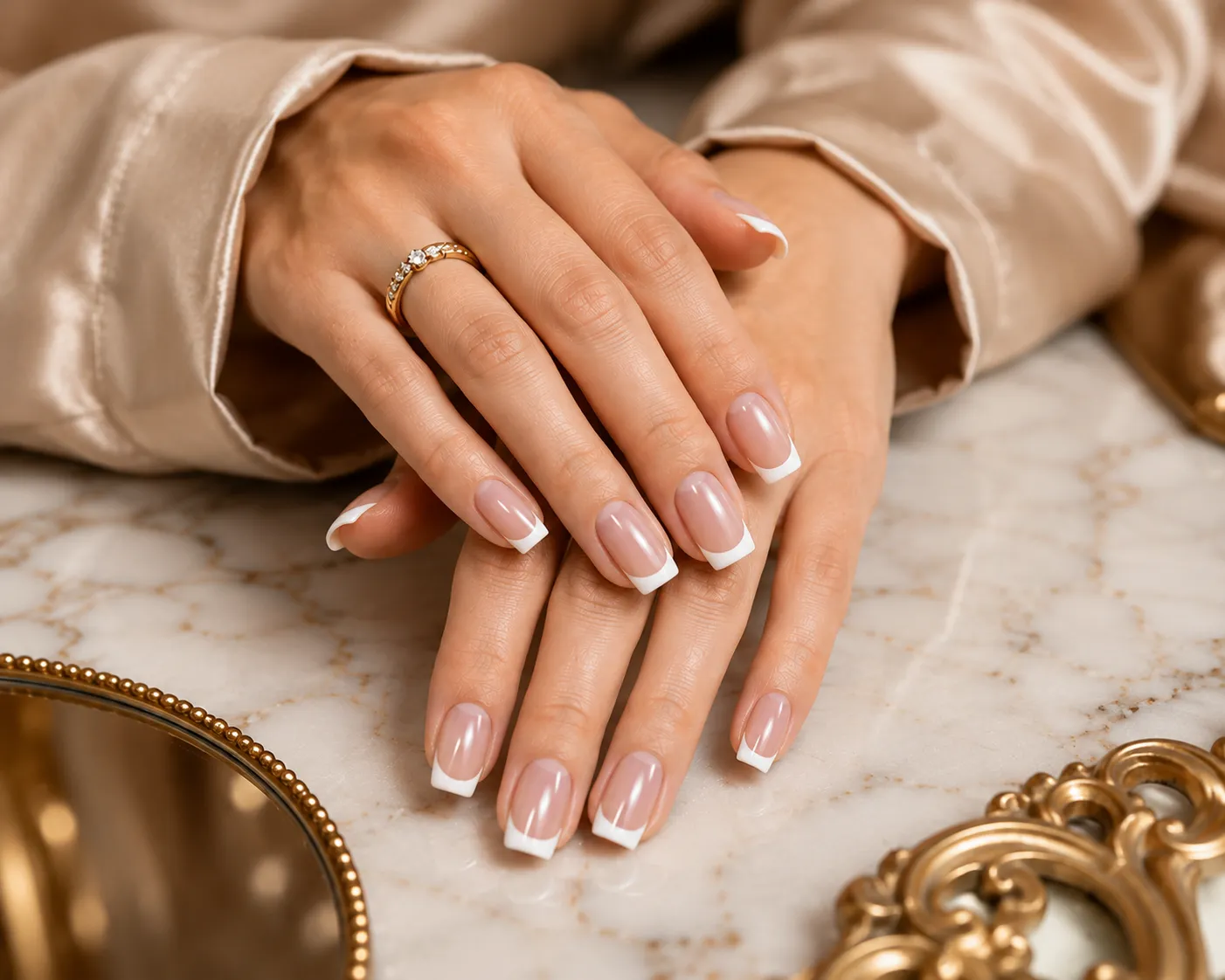
Why Squoval Works So Well for French Tips
Structured, Not Severe
The flat center keeps the French edge crisp while rounded corners soften the silhouette.
Best at Short to Medium
The shape reads clearly without needing dramatic length or a strong taper.
French-Friendly Geometry
Micro, classic, colored, pearl and glazed edges all cooperate with the broad free edge.
15 Squoval French Tip Nail Ideas to Try
From a clean white tip to red, black, pearl and glazed finishes, these squoval French tip ideas work on short and medium nails. Use them as references to show your nail tech, or to choose press-ons in the right shape.
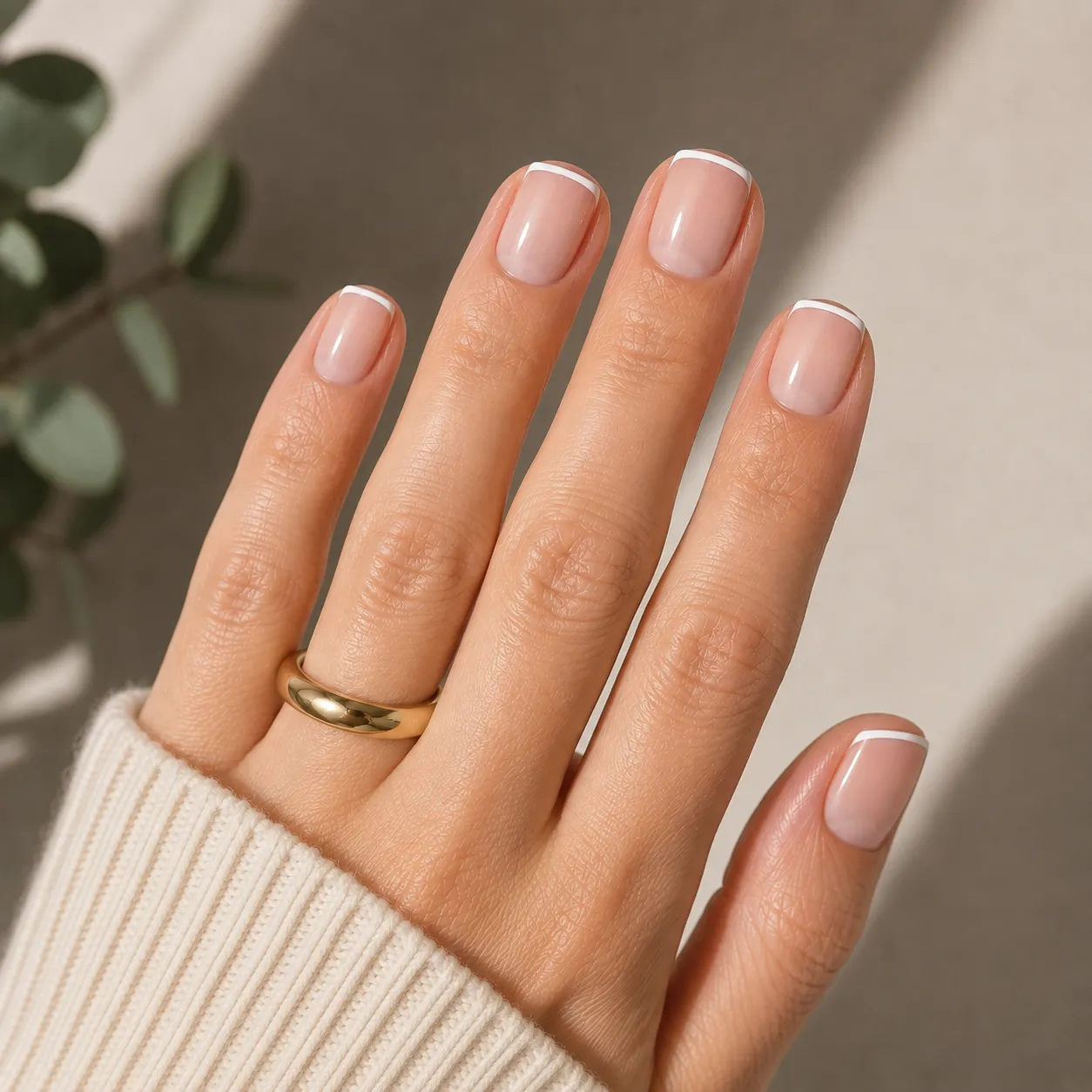
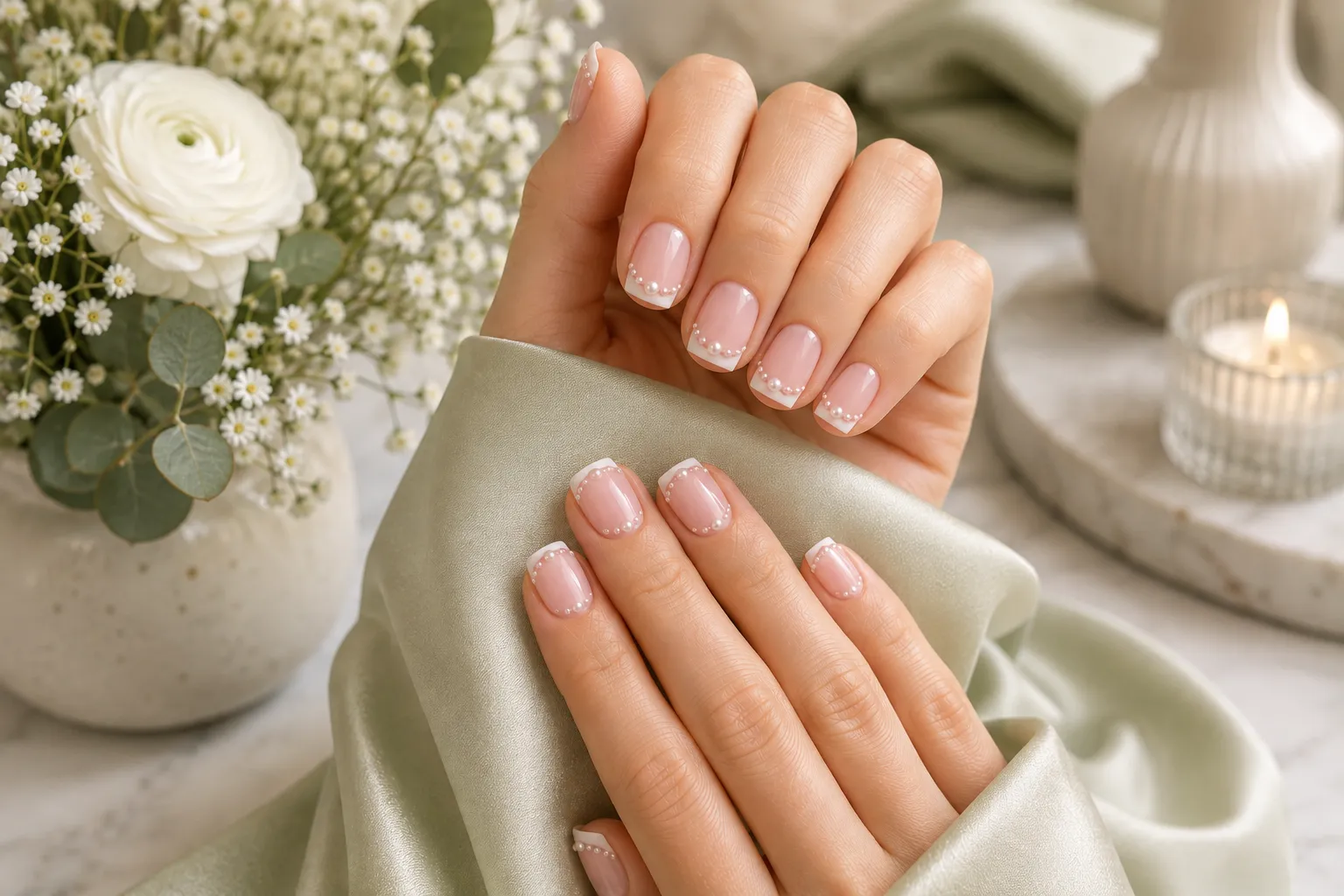
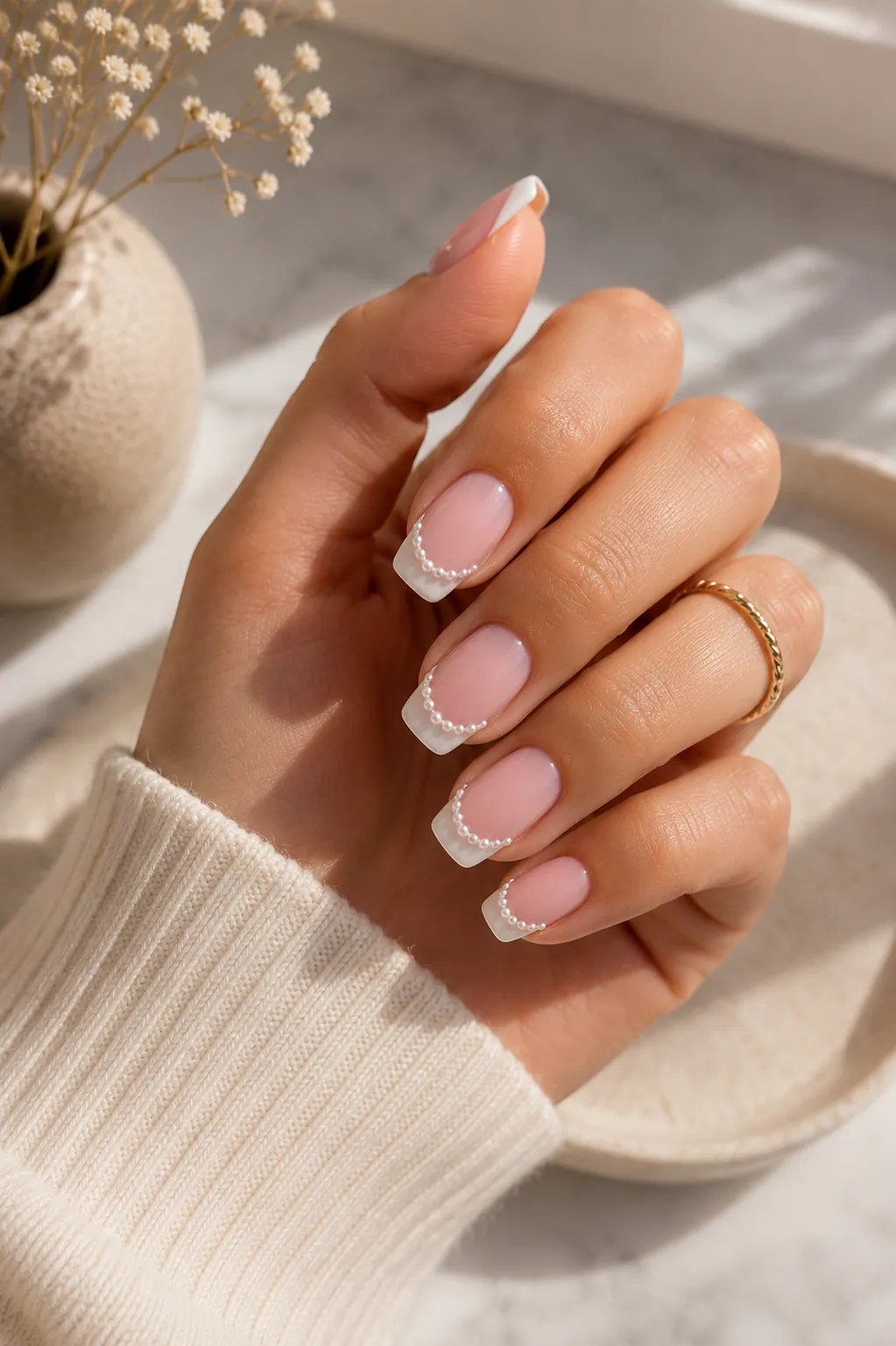
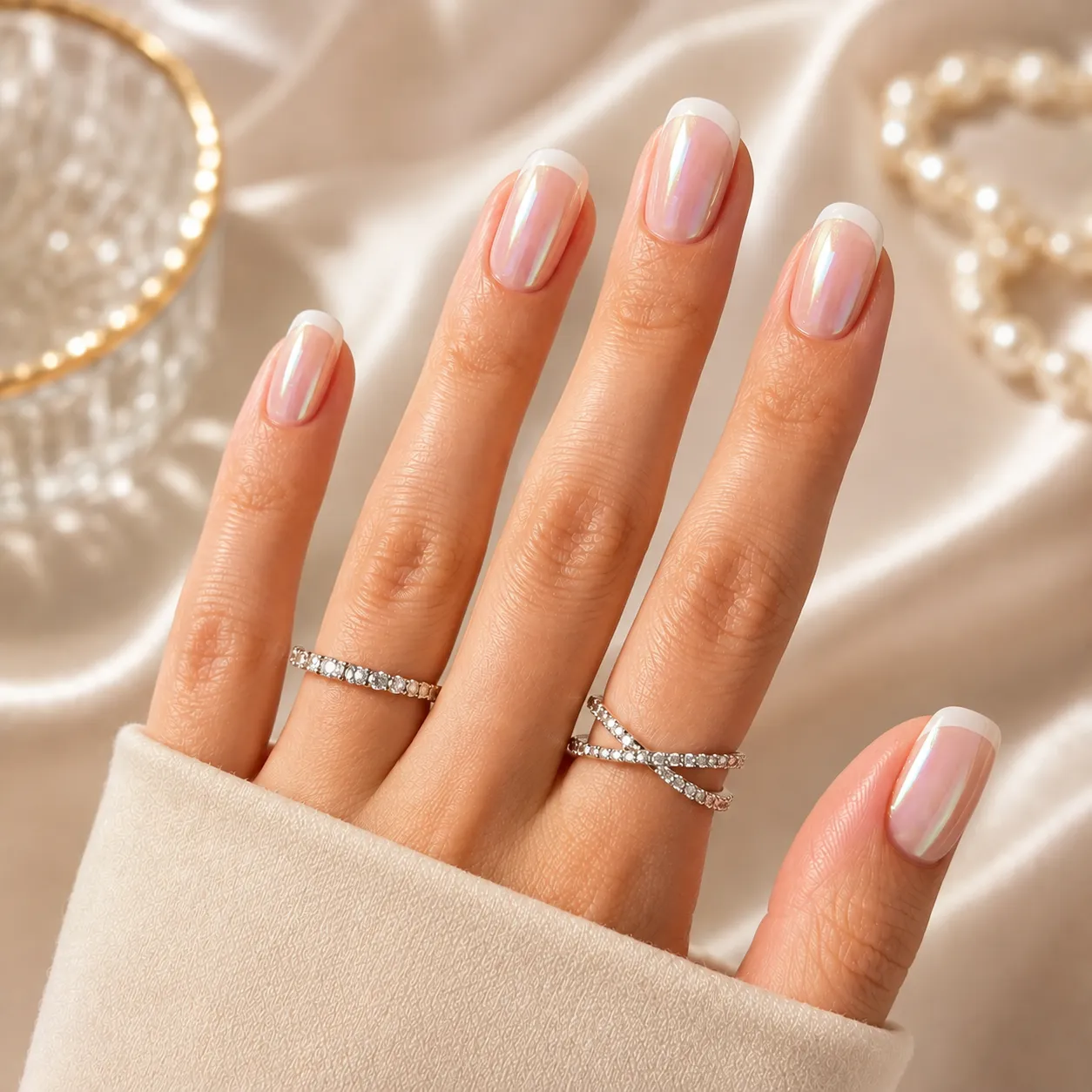
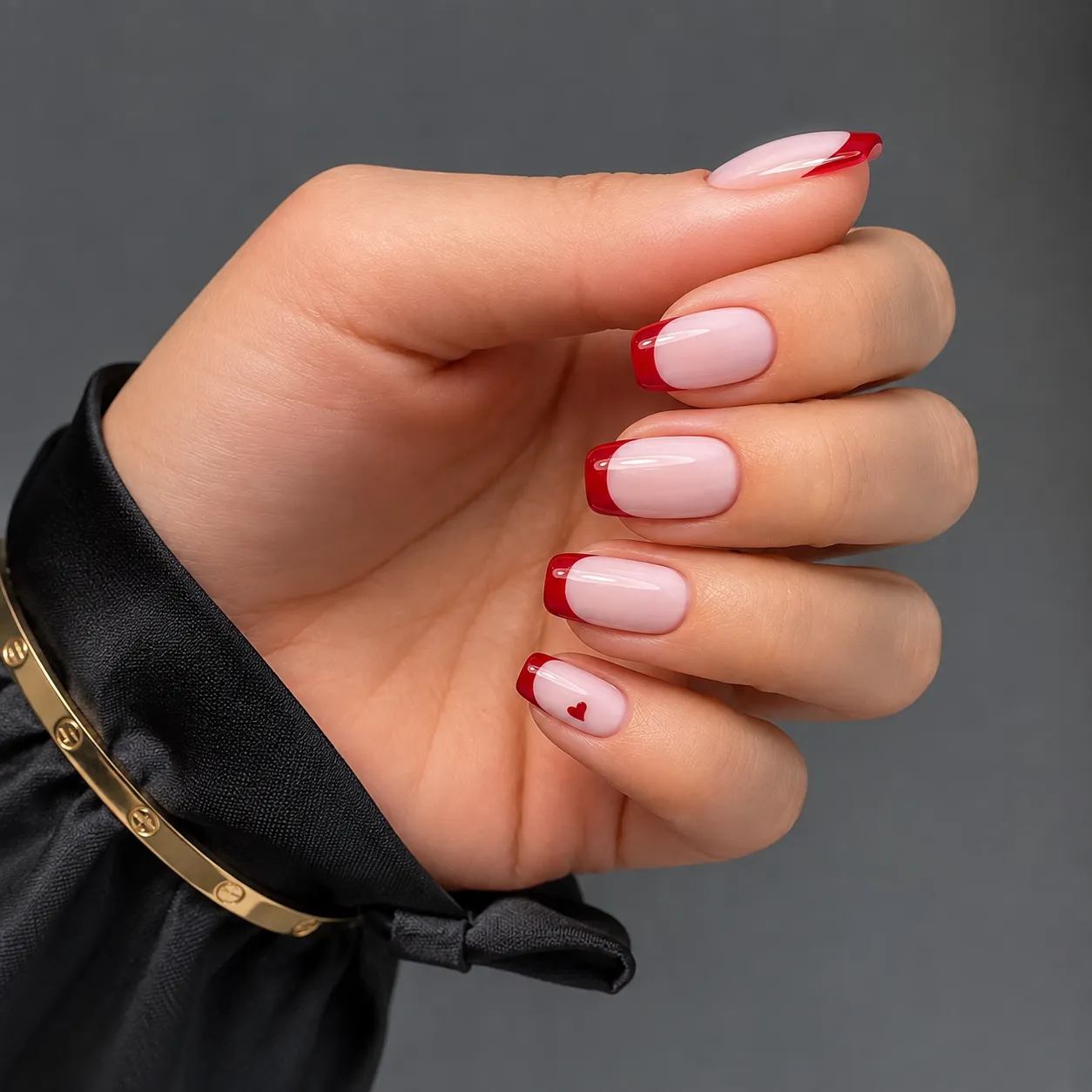
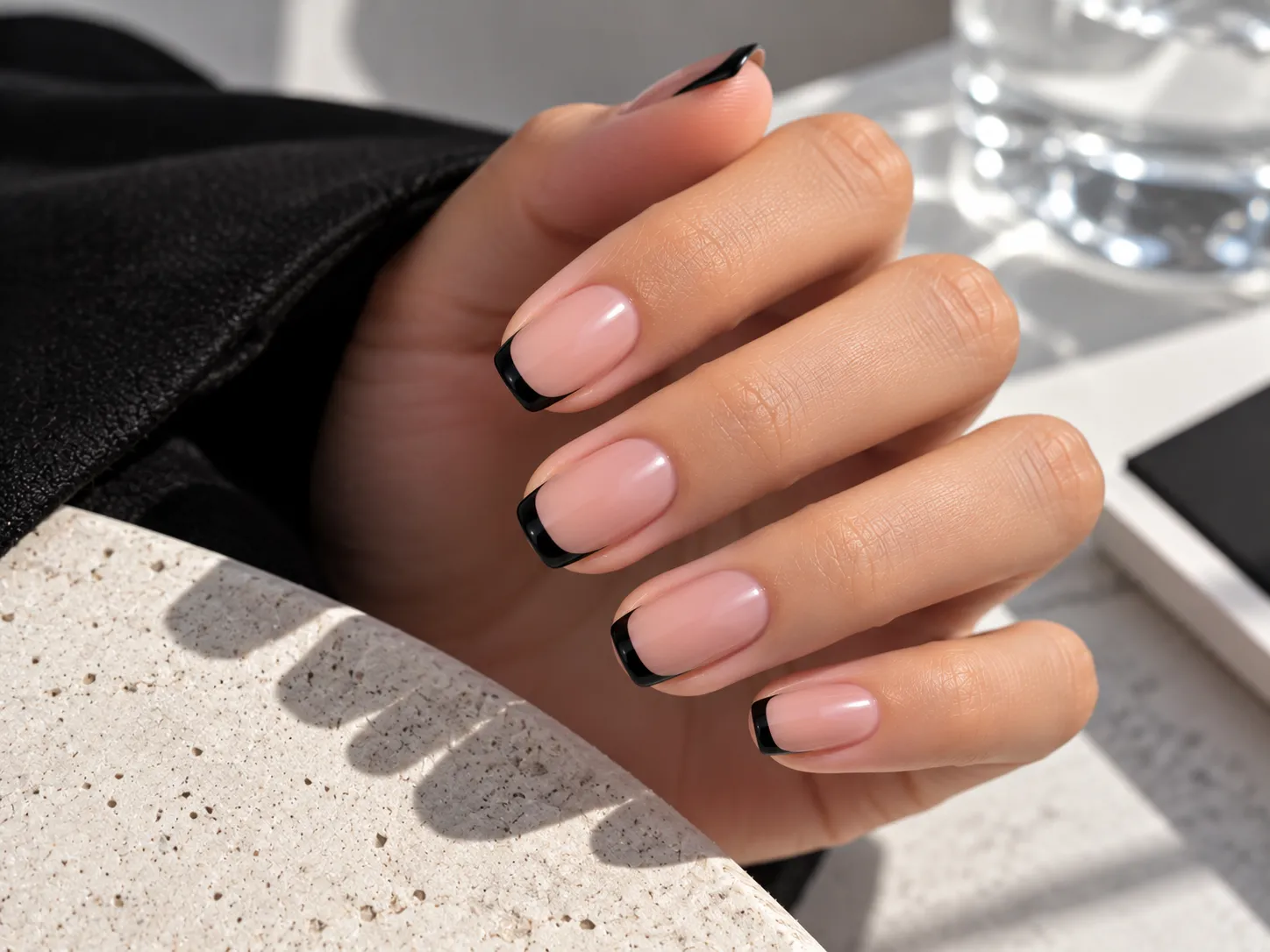
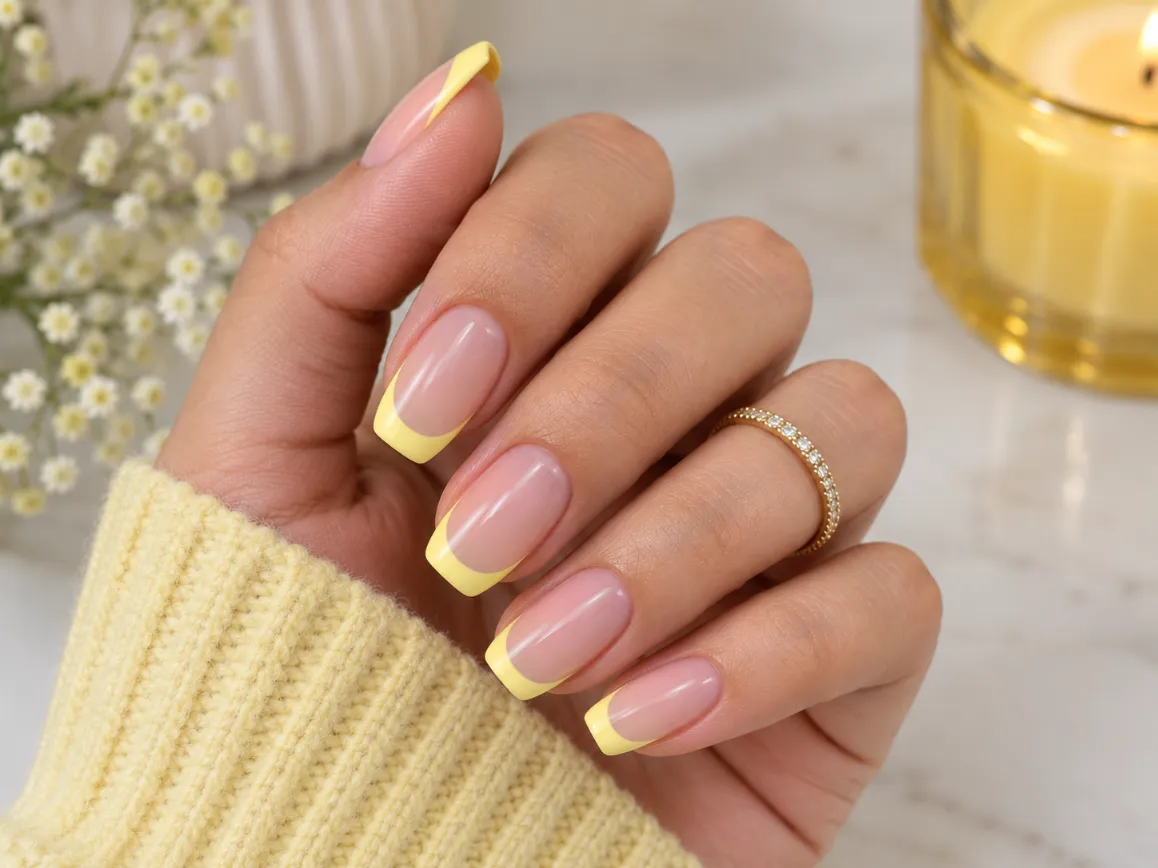
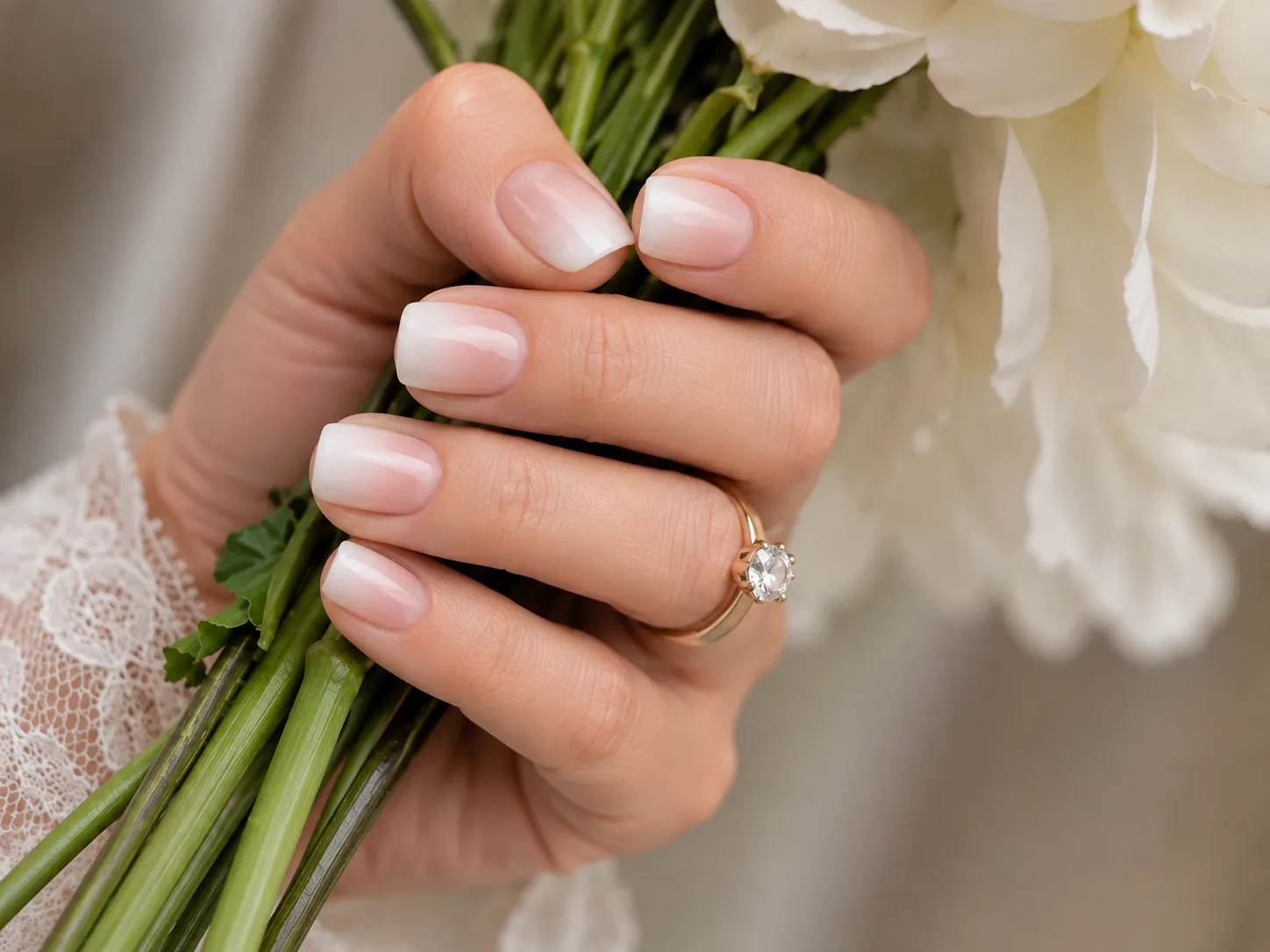
5 More Squoval French Ideas
Chrome Squoval French
A silver or gold chrome tip turns the flat squoval edge into a mirror line. It’s a great party look on medium nails.
Explore Chrome French →Double-Line Squoval French
A second fine line just below the tip adds detail while keeping the look minimal. White on nude is the easiest version.
Milky White Squoval French
A milky, semi-sheer white tip instead of opaque white softens the contrast, giving a “clean nails” look.
V-Cut Squoval French
A V-shaped tip instead of a curve adds a sharp, modern accent and makes short nails look a little longer.
Explore V-Cut French →Pastel Rainbow Squoval
A different pastel on each nail (lilac, mint, peach, baby blue) keeps the French structure but adds color for spring and summer.
What Makes a True Squoval Nail?
Flat, not fully curved
The middle of the free edge stays level.
Straight, not tapered
The sides remain relatively parallel.
Softened equally
Both outer corners receive the same controlled rounding.
Proportional to length
Tip depth should suit the visible nail bed.
Squoval vs Square: The Difference Is at the Corners
| Feature | Squoval | Square |
|---|---|---|
| Center edge | Flat | Flat |
| Corners | Softly rounded | Sharp |
| Visual effect | Structured but softened | Graphic and angular |
| Everyday contact | Less exposed at corners | Corners project farther |
| French character | Balanced and wearable | Crisp and architectural |
Salon wording: ask for a square foundation with the two corners softly and evenly rounded. The center of the free edge should remain flat rather than becoming an oval curve.
Best Lengths for Squoval French Tip Nails
Best French Tip Styles for Squoval Nails
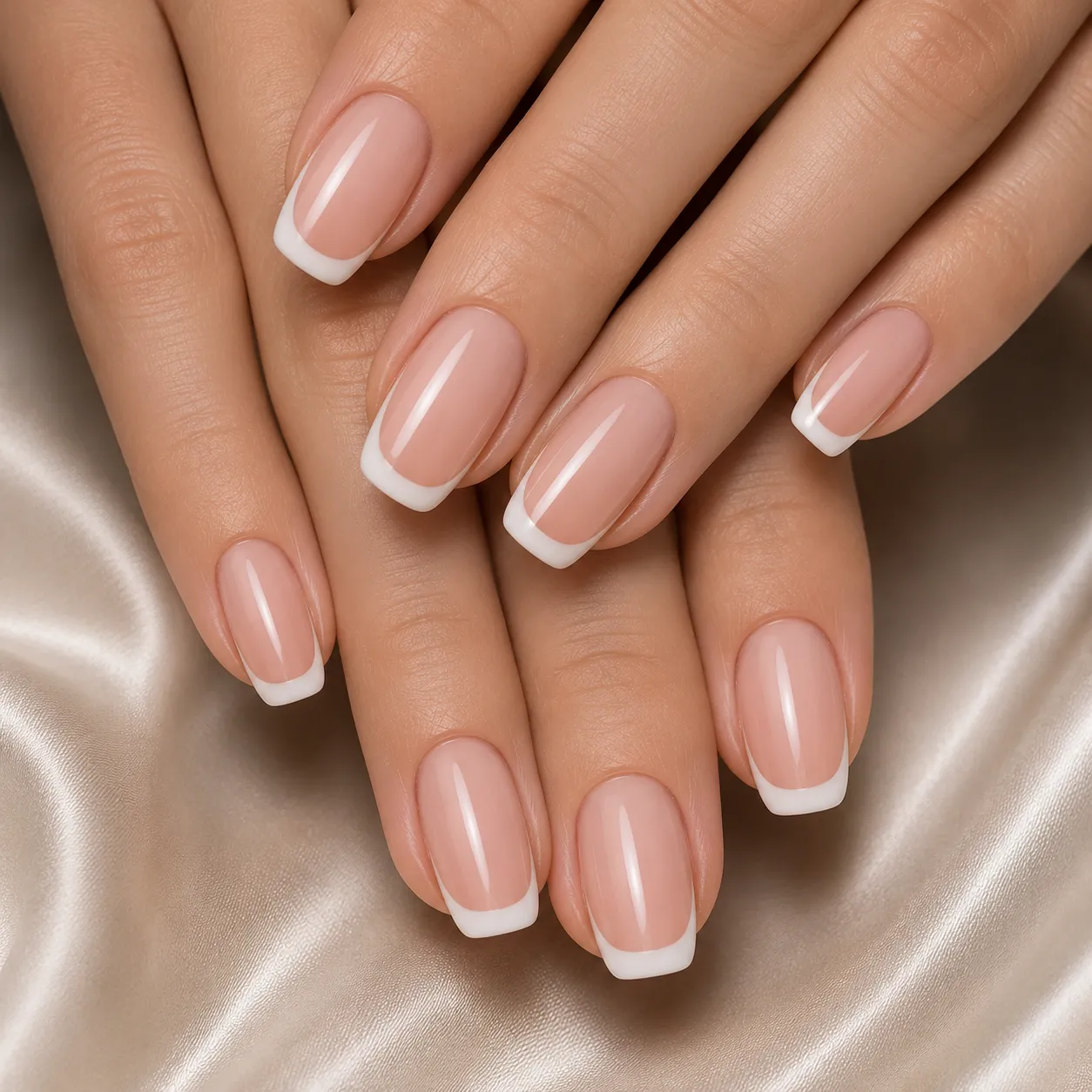
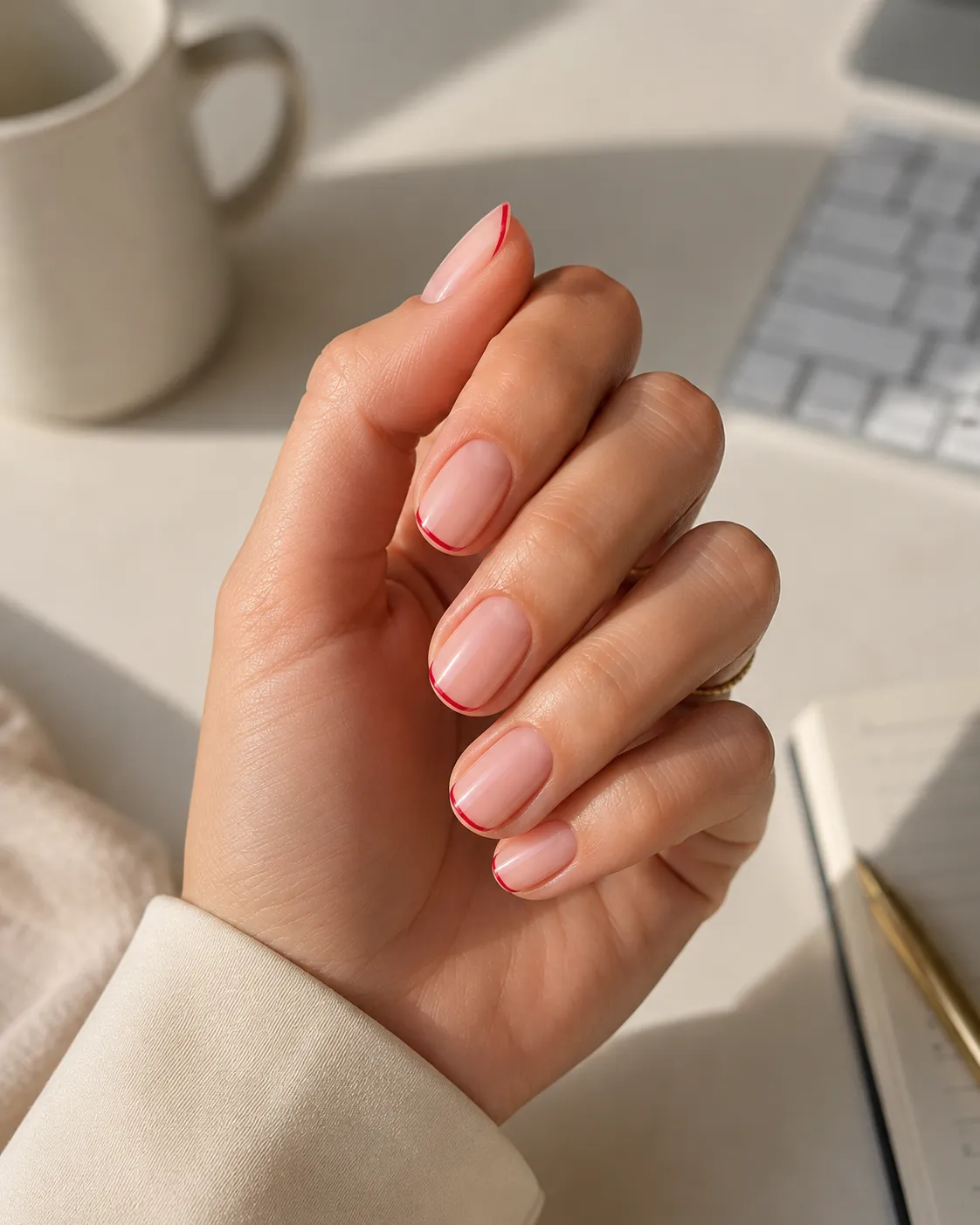
Use micro or narrow placement on short squoval nails, classic-width placement on medium nails, and reserve deeper block tips for enough length to support the extra visual weight.
Pearl, Glazed and Ombré Finishes on Squoval
Why Squoval Is an Everyday Shape
Squoval earns its reputation through geometry rather than marketing. Compared with a sharp square at the same length, its softened outer corners project less aggressively into everyday contact. That can make typing, gloves, pockets, hair and fabric feel less intrusive.
| Routine | Best Squoval Approach | Why |
|---|---|---|
| Heavy typing | Short + micro French | Less free-edge leverage and minimal visual bulk. |
| Office / meetings | Short-medium + classic French | Structured, polished and easy to coordinate. |
| Bridal / events | Medium + pearl or glazed French | Enough design space without requiring extreme length. |
| Hands-on work | Short natural squoval | Keeps the silhouette compact and corners softened. |
Rounded corners do not make a manicure unbreakable. Length, natural-nail condition, enhancement structure, product condition and daily impact still matter.
How to Maintain Squoval Nails Without Turning Them Oval
File the center straight across
Shorten the central free edge with controlled level strokes. Avoid rocking the file into a curve across the entire tip.
Soften only the outer corners
Use light diagonal passes on each corner and remove very little at a time. The middle should stay visibly flat.
Compare both corners from above
Step back and check the whole nail before filing again. One corner should not look softer or shorter than the other.
Smooth without changing the geometry
Use a fine-grit file or buffer only to remove roughness. Do not keep refining once the center and corners are balanced.
Preserve the silhouette instead of chasing perfection with more filing: flat center first, corners second, symmetry check last.
Do Not File Over Damage
Lifting, cracks, tenderness, discoloration or impact damage should not simply be hidden with glue, filing or more polish.
Enhancement problems should be assessed by a nail professional. Persistent natural-nail concerns may require medical advice.
Simple At-Home Routine
Use a fine-grit file suitable for natural nails and work with controlled movements.
View all nails from above before removing more length or softening another corner.
Use cuticle oil regularly around the nail and surrounding skin.
Wear gloves for prolonged water exposure and harsh cleaning products.
Squoval French Tip Press-On Nails: What to Look For
Press-ons are the quickest way to try squoval French tips at home. Many sets are labeled “square” even when the corners are softened, so judge by the photos, not the name.
| Check | What to look for | Why it matters |
|---|---|---|
| Shape | Flat tip with gently rounded corners | Sharp corners mean square; a fully curved tip is oval |
| Length | “Short” or “extra short” for everyday wear | Squoval looks best and lasts longest at short to medium length |
| Sizes in the set | Plenty of sizes, with spares | Each nail needs a press-on that covers it edge to edge without touching the skin |
| Tip width | Thin tip for short nails, classic width for medium | A thick white tip makes short nails look stubby |
| Adhesive | Sticky tabs for a few days; nail glue for longer wear | Tabs are gentler to remove; glue holds longer but must be soaked off |
If a press-on is slightly too wide, file its sides down rather than using a smaller size that leaves gaps. Gaps let water in and cause lifting.
Should You Choose Squoval French Tips?
Do you want a structured French edge without sharp square corners?
It keeps the flat visual foundation of square while softening the outer points.
Choose square for sharper geometry or explore oval and almond when you want more continuous curvature.
Will you keep the nails short or medium for everyday wear?
The shape stays readable without requiring excessive free-edge length.
Soft corners remain, but extra length still increases leverage and maintenance.
How visible should the French edge be?
Fine placement keeps short squoval nails visually light.
Medium squoval provides enough width for a clearer edge or dimensional detail.
Short or medium nails + a structured outline + practical everyday wear.
That combination is where squoval French tips are most convincing.
Final Verdict
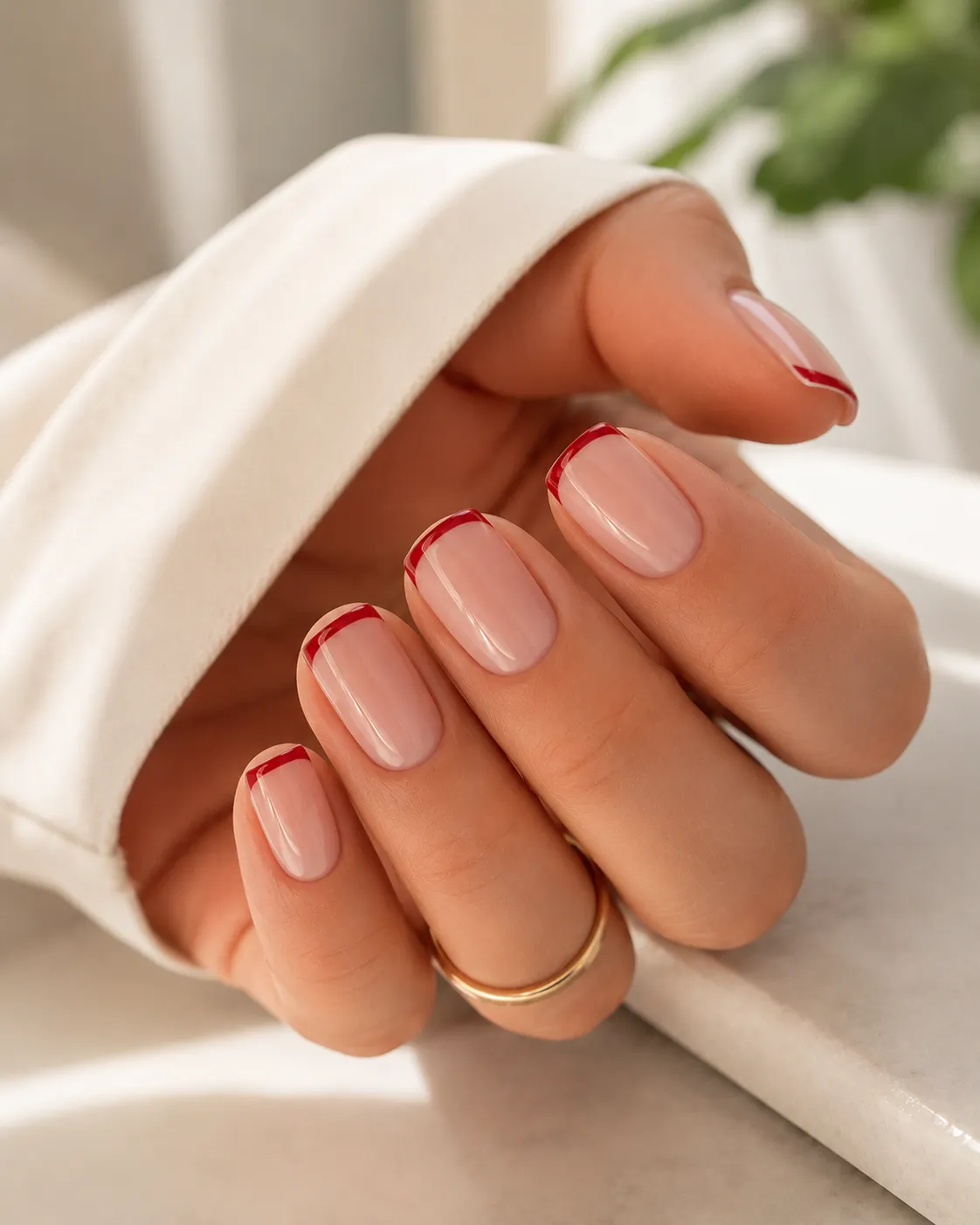
Squoval French tip nails are strongest when the goal is balance. They preserve the crisp foundation of a square manicure, soften its most exposed corners, and work convincingly at lengths suited to ordinary routines.
If you want one French shape that can move between minimal, classic, colored and embellished finishes without requiring extreme length, squoval is one of the most versatile places to start.
Frequently Asked Questions
Are squoval nails suitable for natural nails?
Yes. Squoval works especially well on natural nails because it can be formed with a short free edge and does not require the taper or length associated with more dramatic shapes.
Can square nails be reshaped into squoval nails?
Usually, yes. Keep the center flat and gradually soften both corners. Avoid filing deeply into the sidewalls, because that creates taper rather than a true squoval shape.
What French tip width looks best on squoval nails?
Short squoval nails usually suit a micro or narrow line. Medium nails can carry a classic-width tip, while longer nails can support wider block tips or more detailed finishes.
Are squoval nails good for wide nail beds?
They can be. Rounded corners soften the broad, rigid effect a sharp square may create, while the flat center keeps the nail structured rather than fully round.
How often should squoval nails be reshaped?
Lightly refine natural nails when growth makes the corners look sharp or uneven. Enhancement maintenance depends on growth, length and product condition and should follow the schedule recommended by the nail technician.
Explore Related Nail Guides
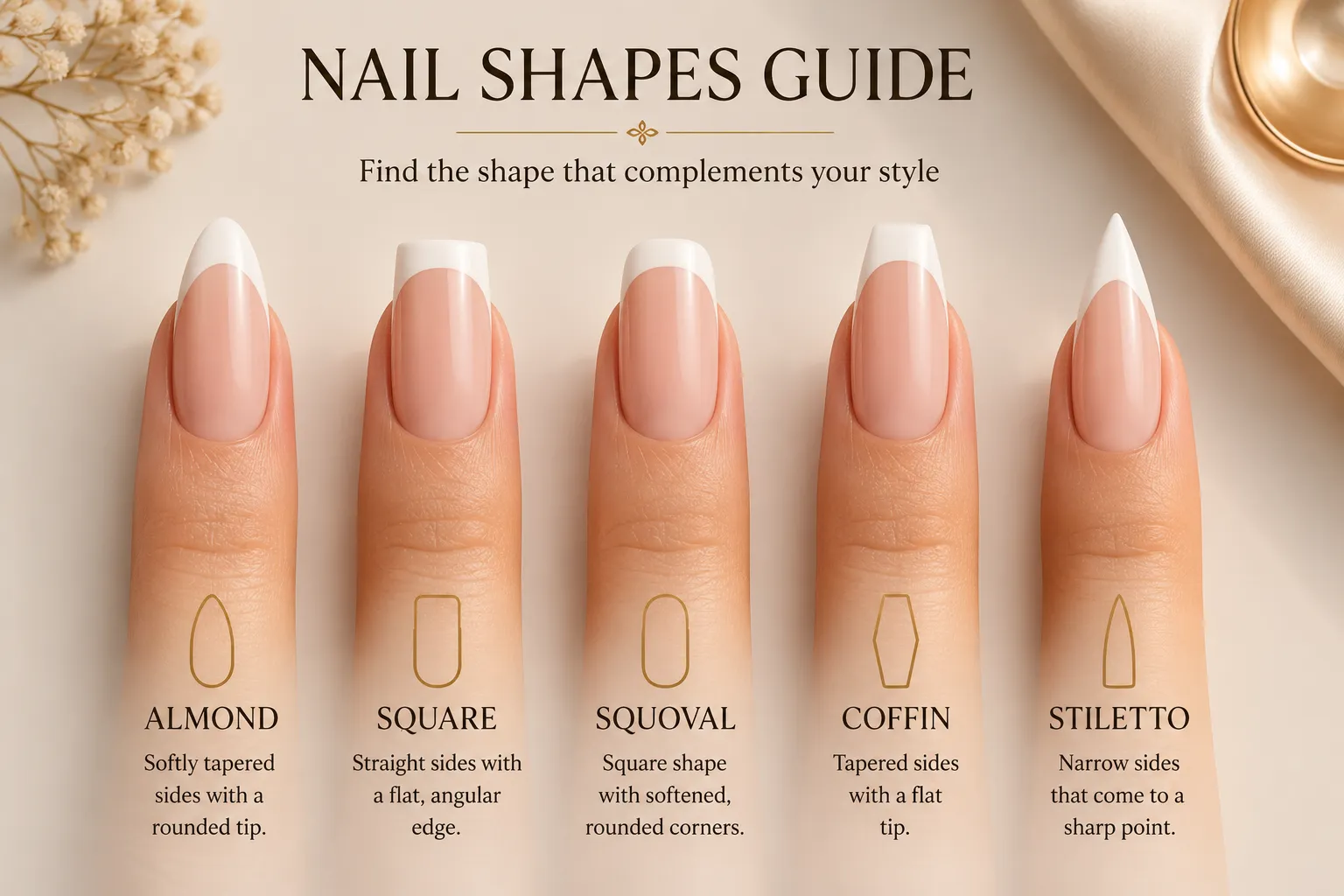
Nail Shapes Guide
Compare squoval with square, almond, oval, coffin, stiletto and other core silhouettes.
Explore Nail Shapes →Square French Tip Nails
See what changes when the softened squoval corners become crisp and angular.
Explore Square French Tips →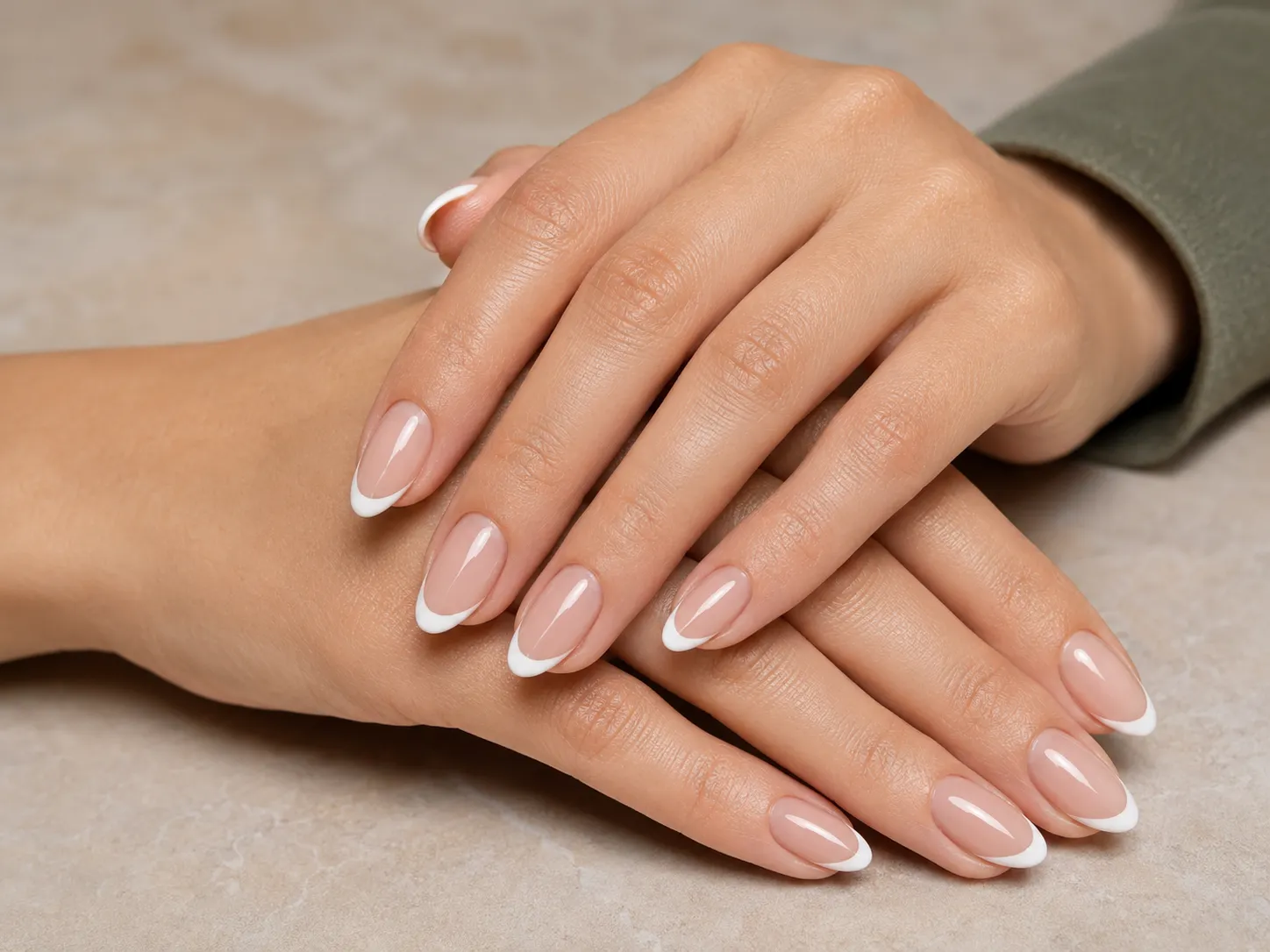
Almond French Tip Nails
Compare squoval’s broad flat center with almond’s gradual taper and soft centered point.
Explore Almond French Tips →