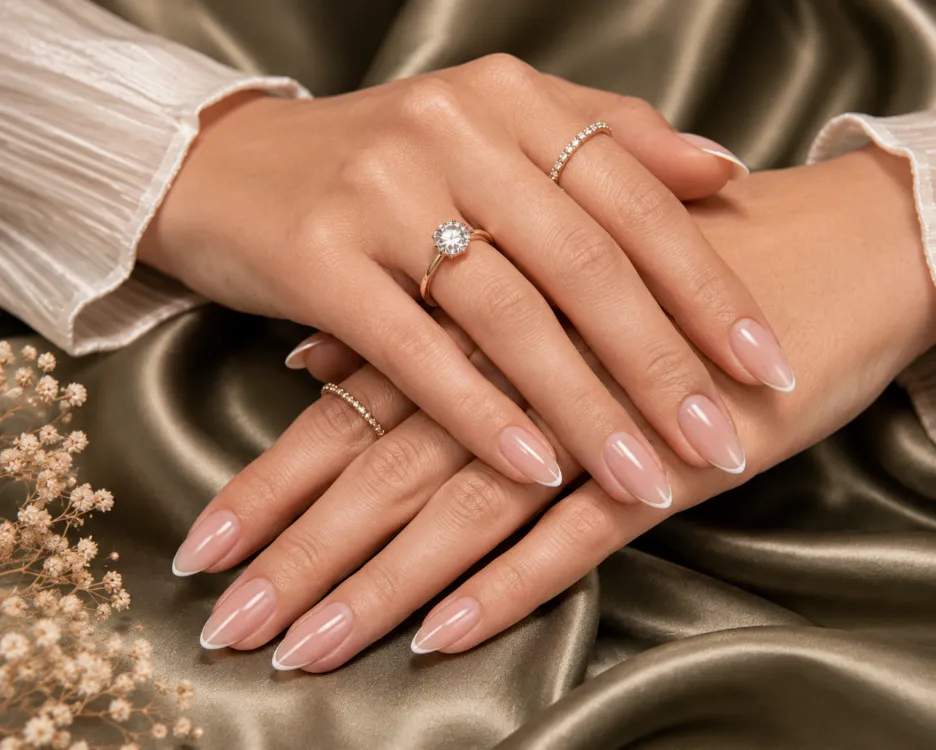
Pearl French Tip Nails: 9 Elegant Ideas & 3D Styles
A visual guide to wearable 3D pearl French tips, flattering placements, nail shapes, bridal styling and salon-quality application.
Pearl French tips sit between manicure and jewelry. Pearl French tip nails are French manicures decorated with real or imitation nail pearls—usually flatback or half pearls—placed along the smile line, tip, cuticle, or selected accent nails. Unlike a pearlescent or glazed French manicure, true 3D pearl nail art physically rises above the nail surface. The most wearable versions use small pearls, controlled spacing, and enough negative space for the French shape to remain visible.
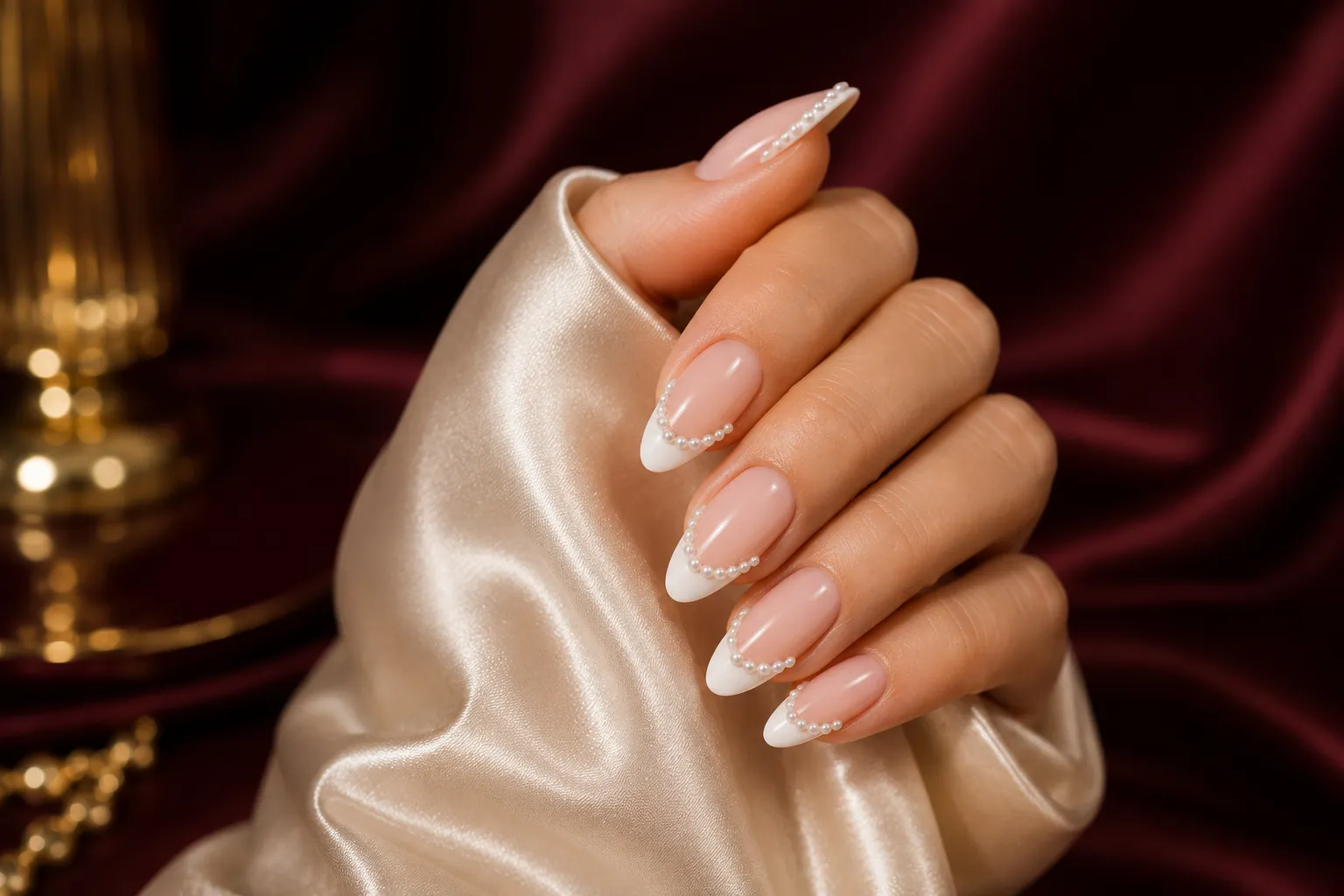
Pearl French Tips at a Glance
Start with scale, placement, and structure. The most wearable pearl French manicures keep the French silhouette visible while using dimension deliberately rather than covering every nail.
Signature
Small flatback or half pearls placed along a smile line, cuticle, tip, or restrained accent nail.
Best pearl scale
Micro and small pearls—roughly 1–2.5 mm—give the cleanest balance of dimension and wearability.
Best shapes
Almond, oval, squoval, medium square, and controlled coffin provide useful placement space.
Best occasions
Bridal styling, formal events, celebrations, editorial looks, and restrained everyday accents.
Main trade-off
Snagging and impact risk increase as pearl height, diameter, and placement density increase.
Smartest base
Structured gel, Gel-X, hard gel, or acrylic may suit heavier designs; sparse micro pearls can also work on suitable natural nails.
Choose Your Pearl French Look
Save the placement closest to your goal first. Then use the technical sections below to choose pearl size, nail shape, support system, and salon application method.
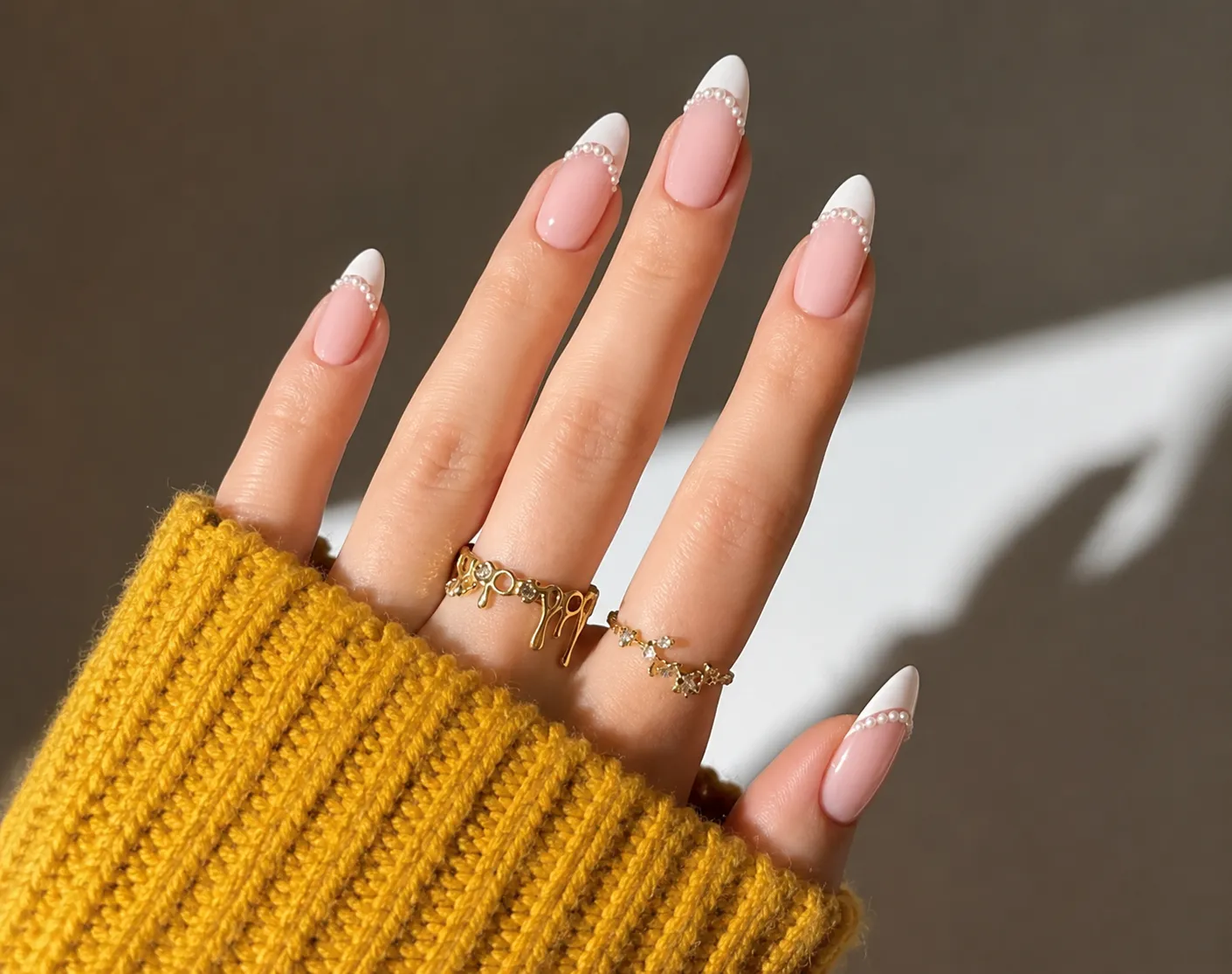
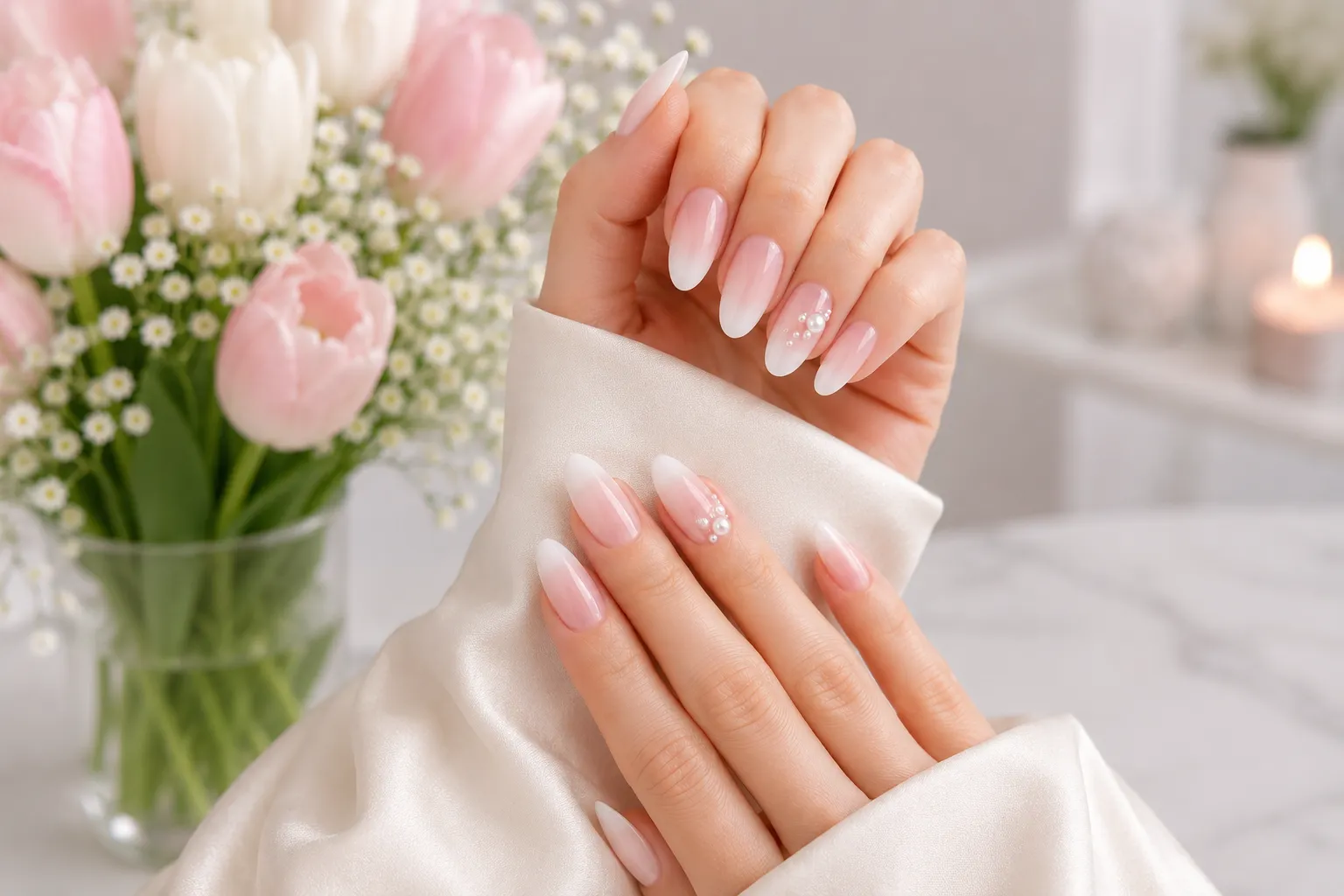
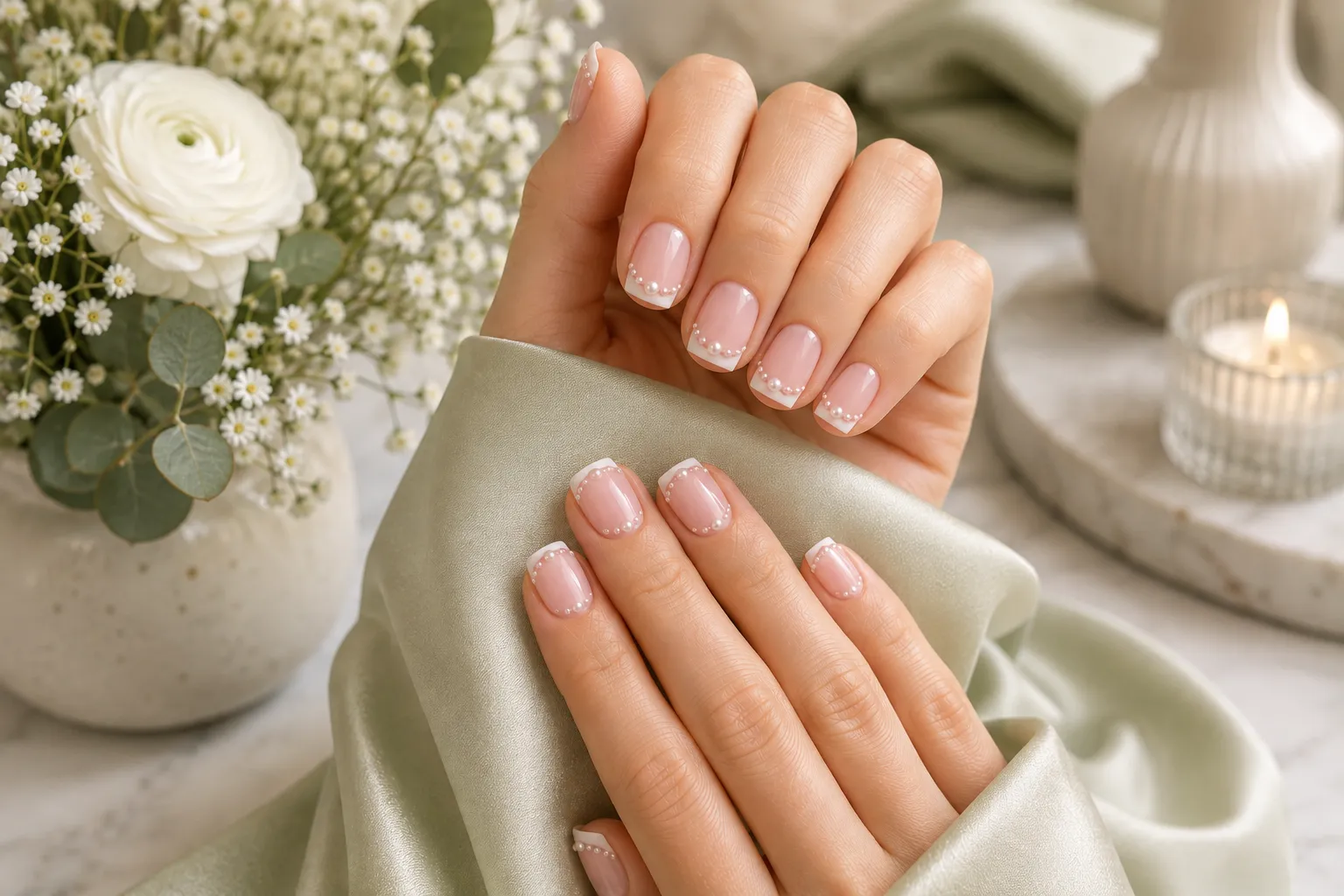
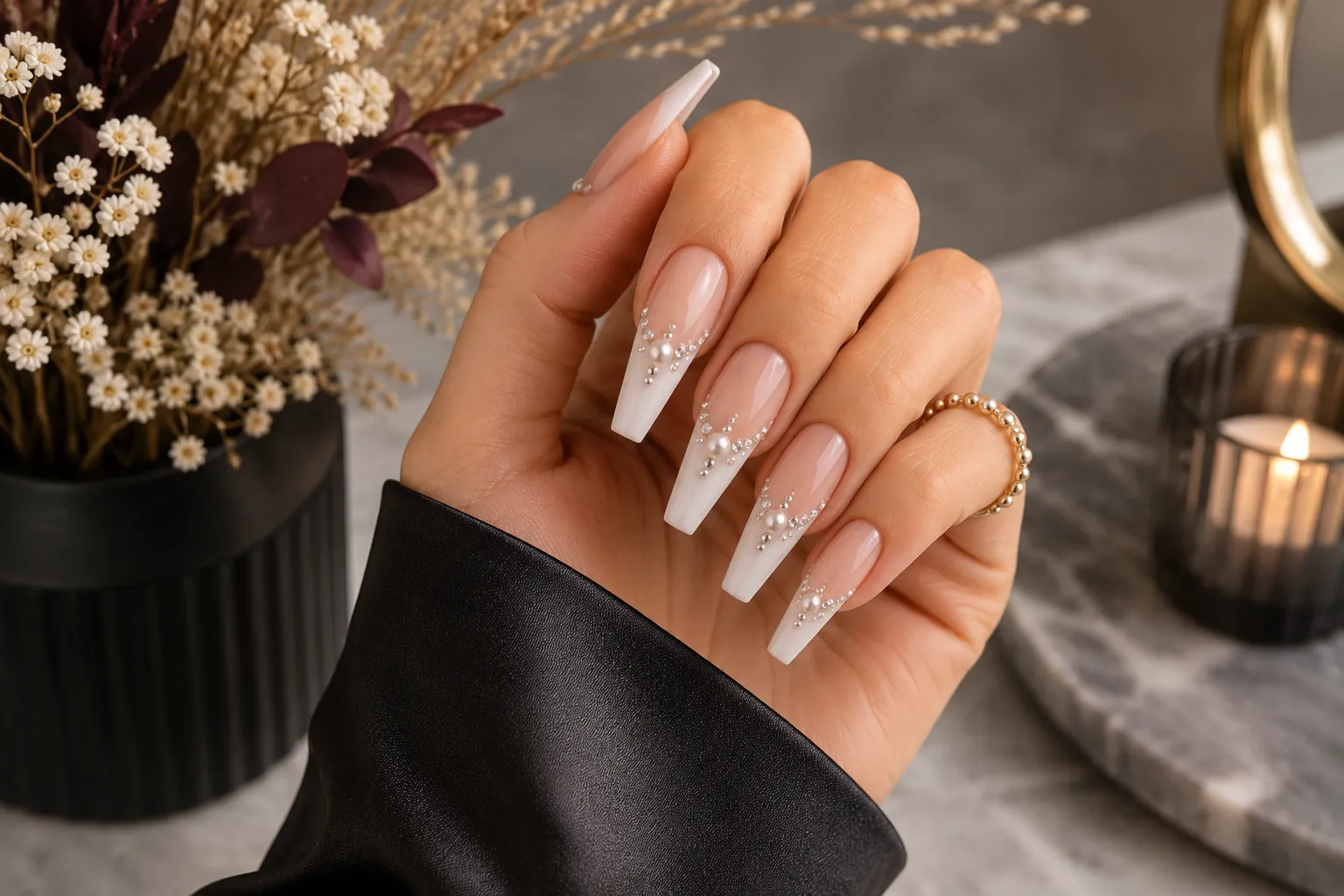
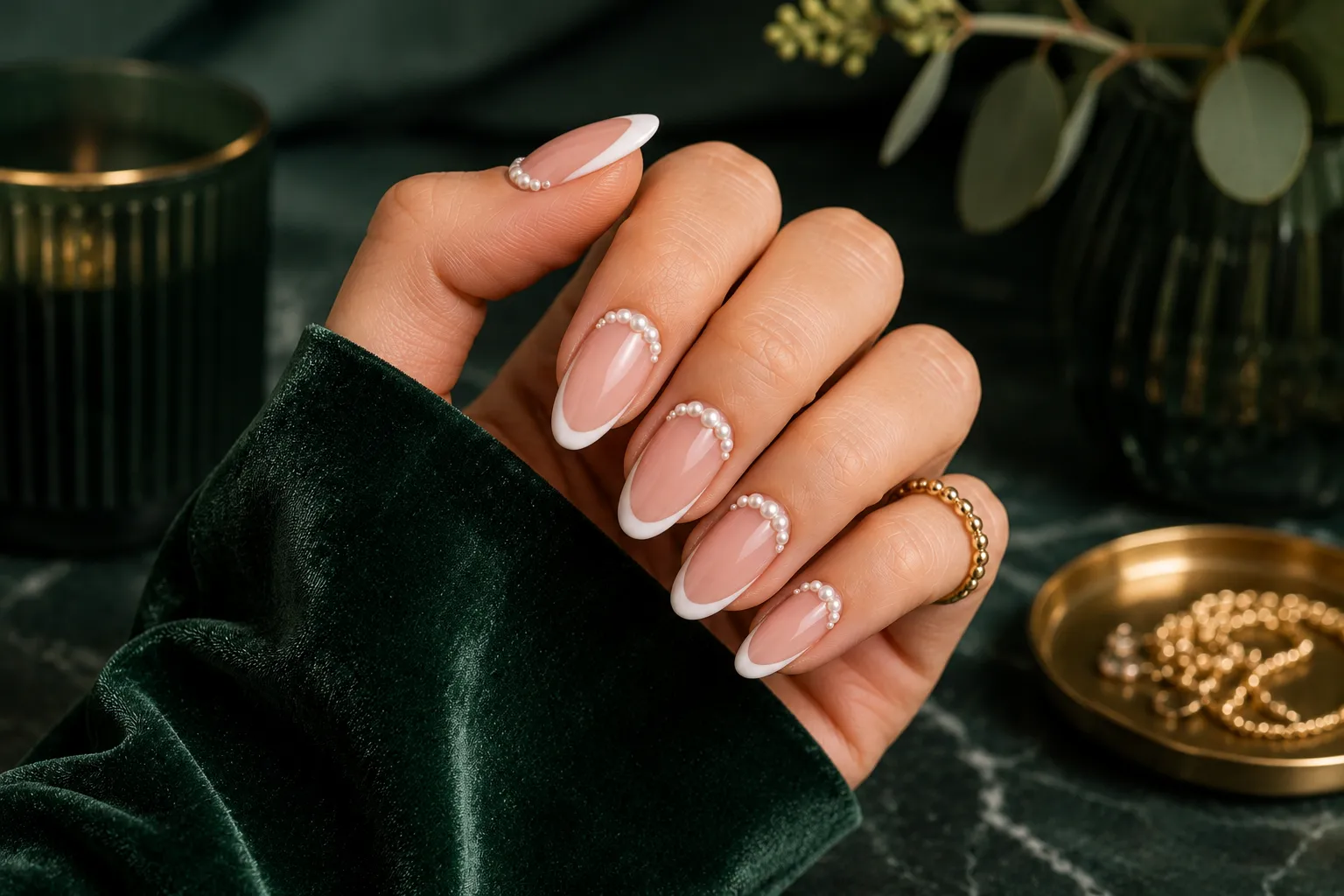
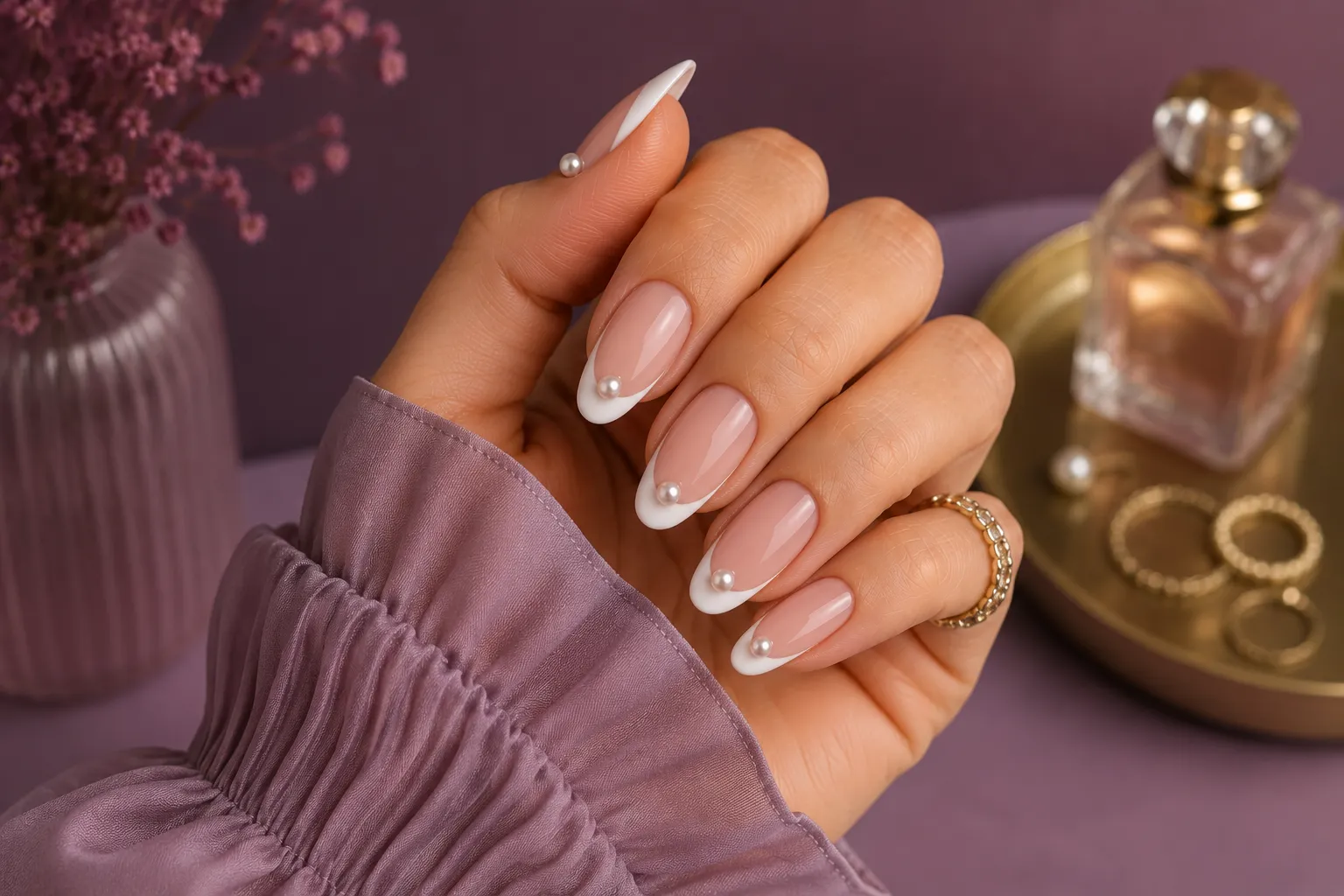
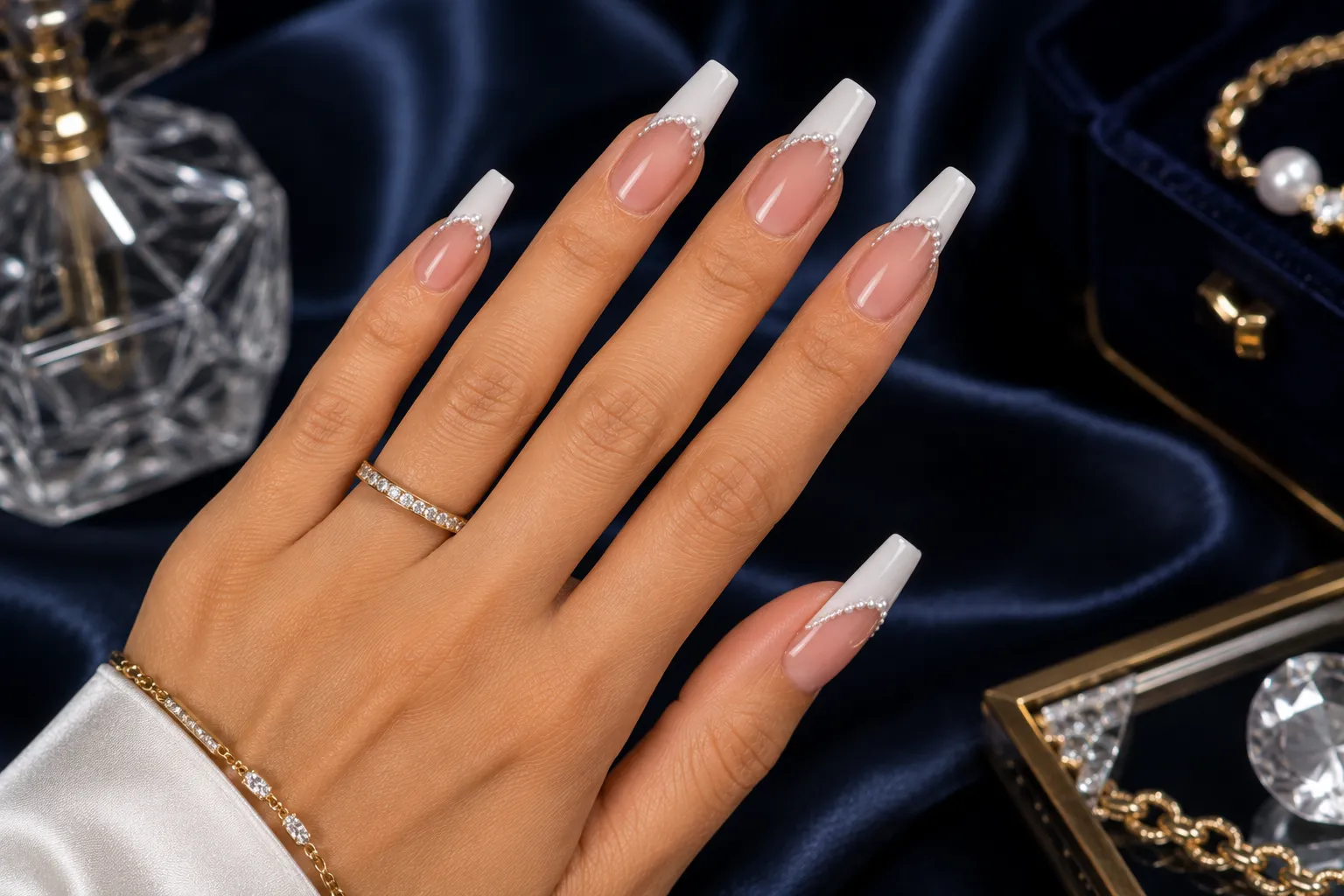
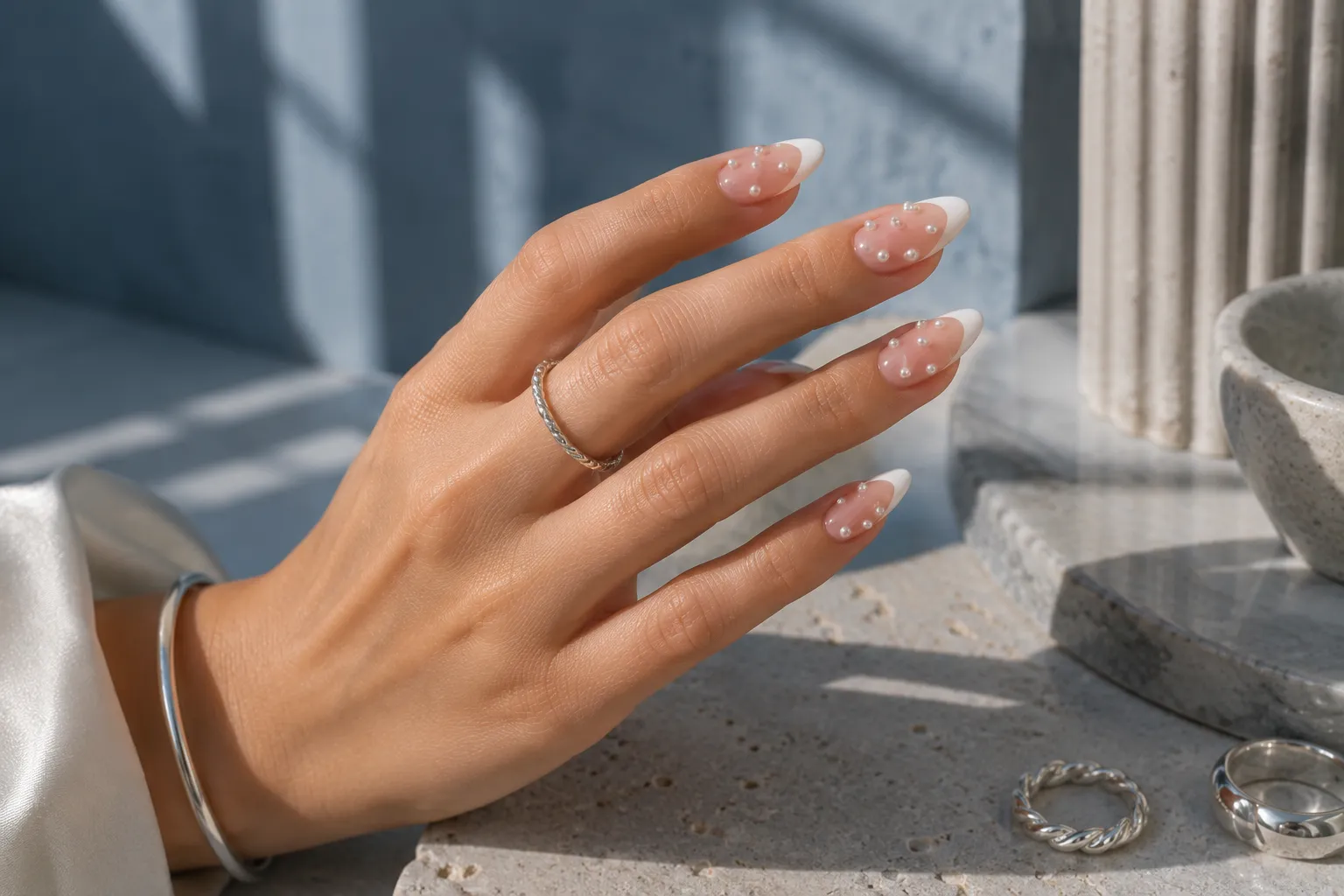
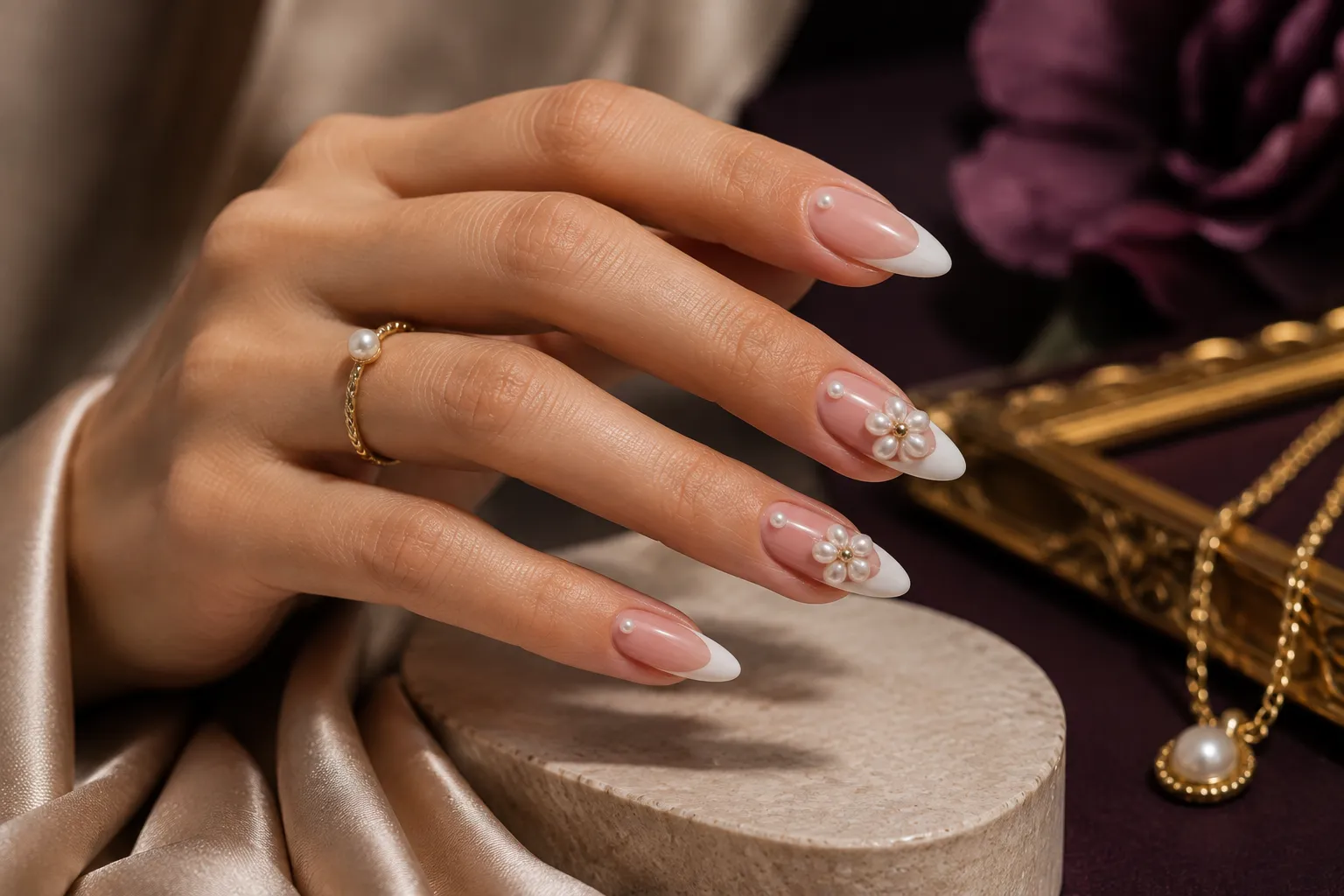
Pearl French in Practical Terms
1.5–2.5 mm flatback pearls or half pearls
One accent nail or a single sparse smile line
Almond, oval, coffin, and medium square
Weddings, formal dinners, celebrations, editorial shoots
Snagging and impact risk increase with height and density
Structured gel, Gel-X, hard gel, or acrylic depending on weight
What Makes a Pearl French Manicure Truly 3D?
A pearl French manicure becomes three-dimensional when the decoration physically rises above the finished nail surface. That depth changes the reflection, silhouette, and maintenance of the set. It also means pearl French should be planned as a structure—not treated as decoration casually glued onto finished polish.
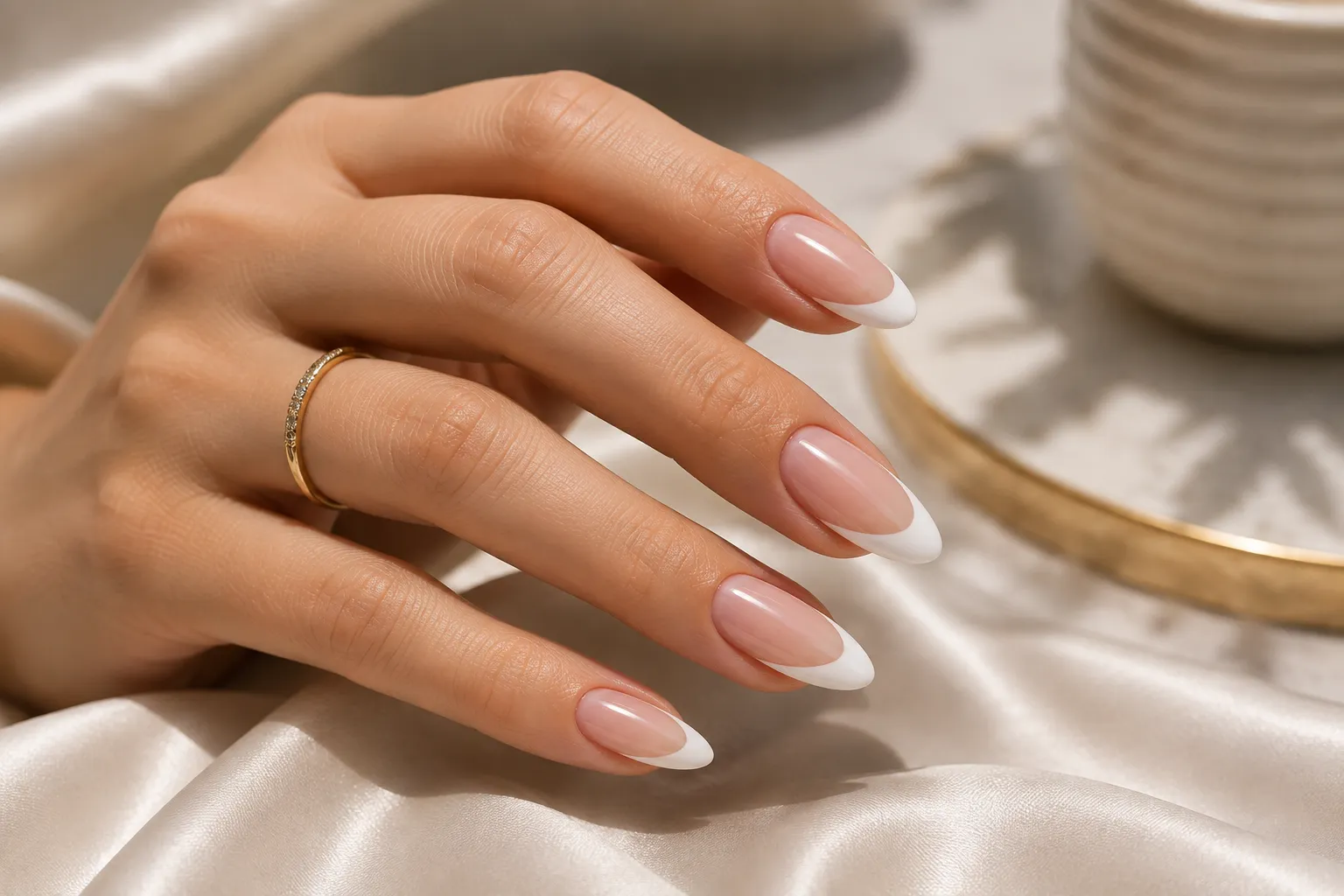
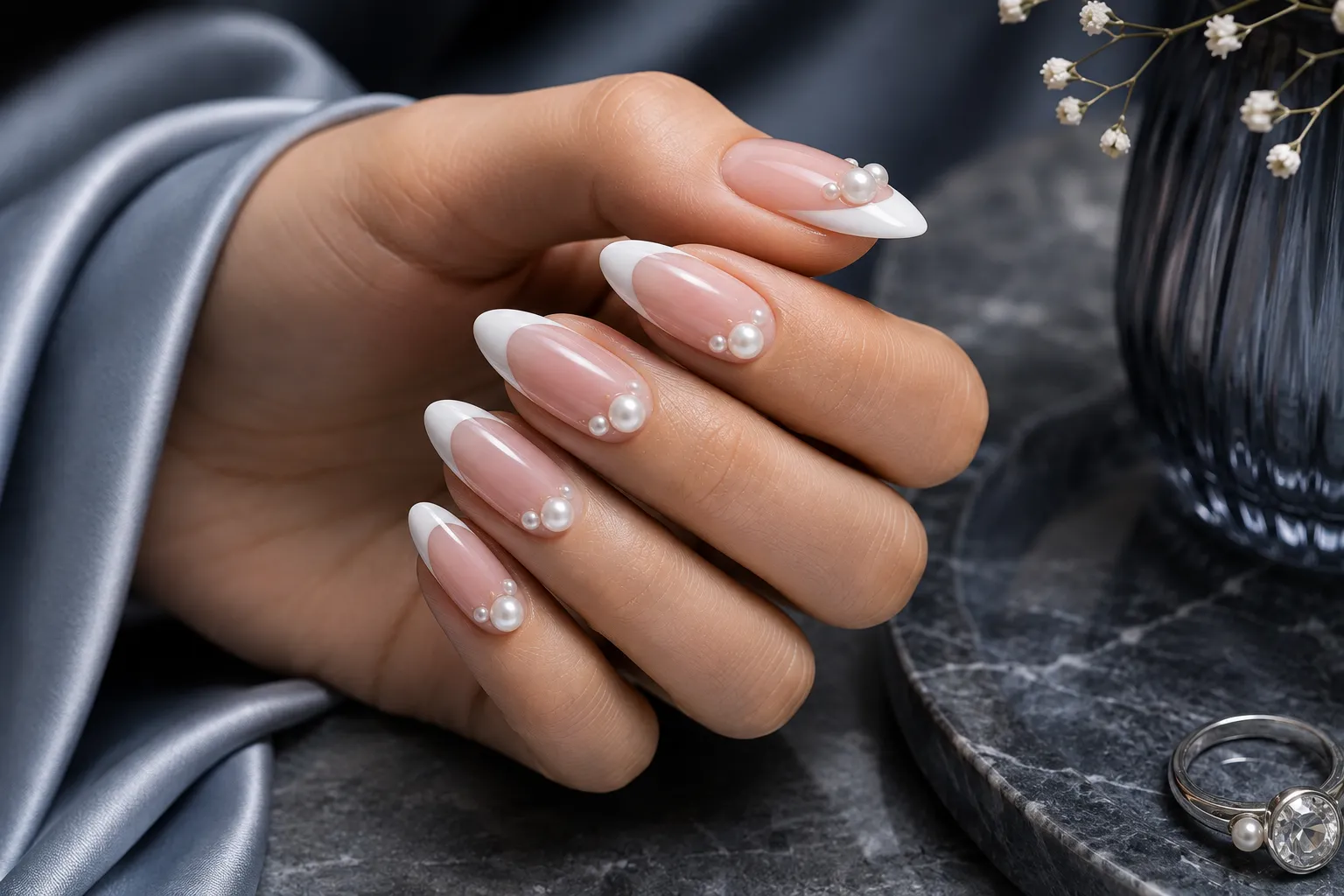
The pearl should enhance the French silhouette, not hide it. When the tip, smile line, base color, and pearl arrangement all compete equally, the result loses its luxury restraint.
Pearl Size Changes the Entire Design
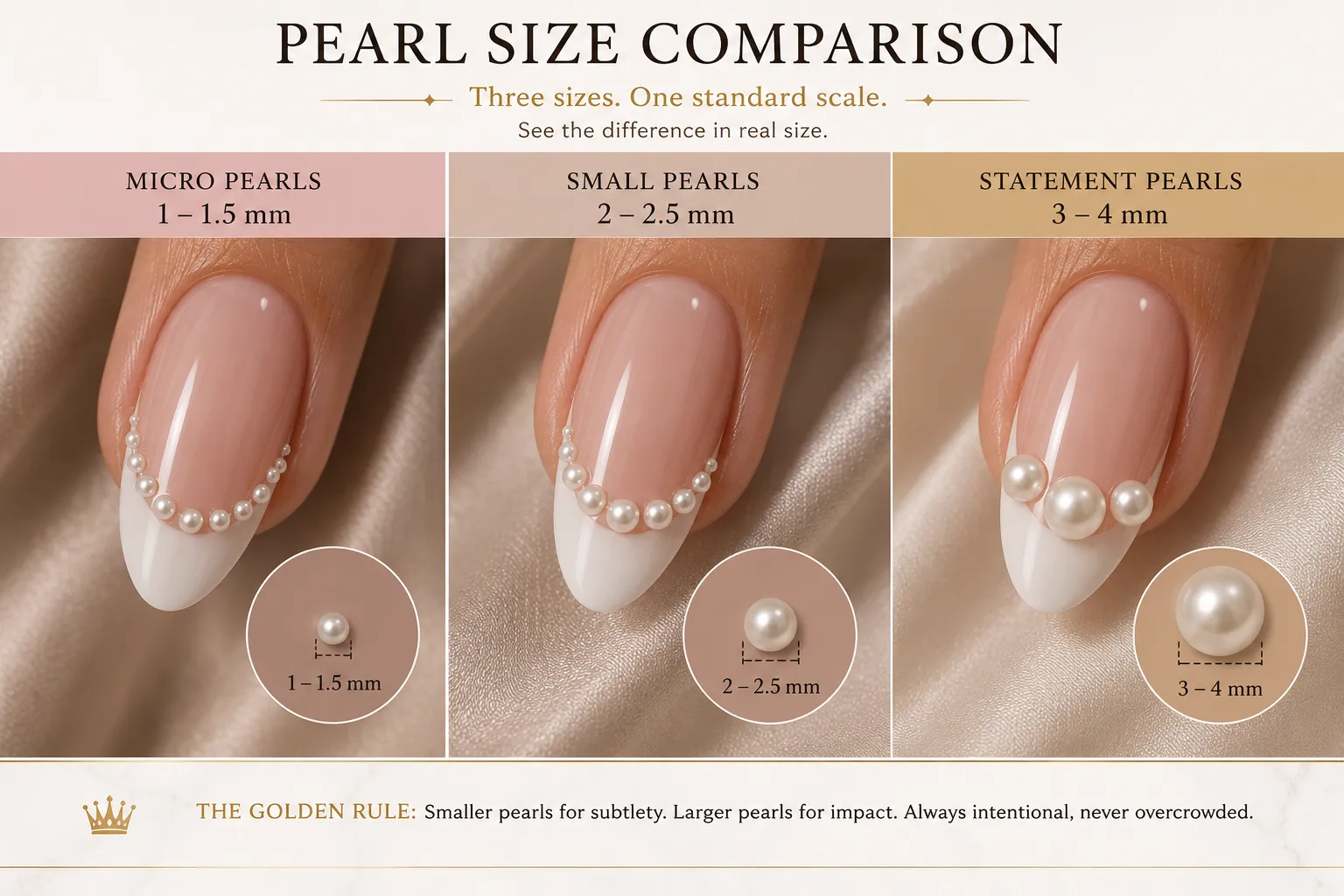
Pearl size determines whether the manicure reads as delicate, decorative, or sculptural. The difference between a 1.5 mm micro pearl and a 4 mm dome is not subtle once ten nails are involved.
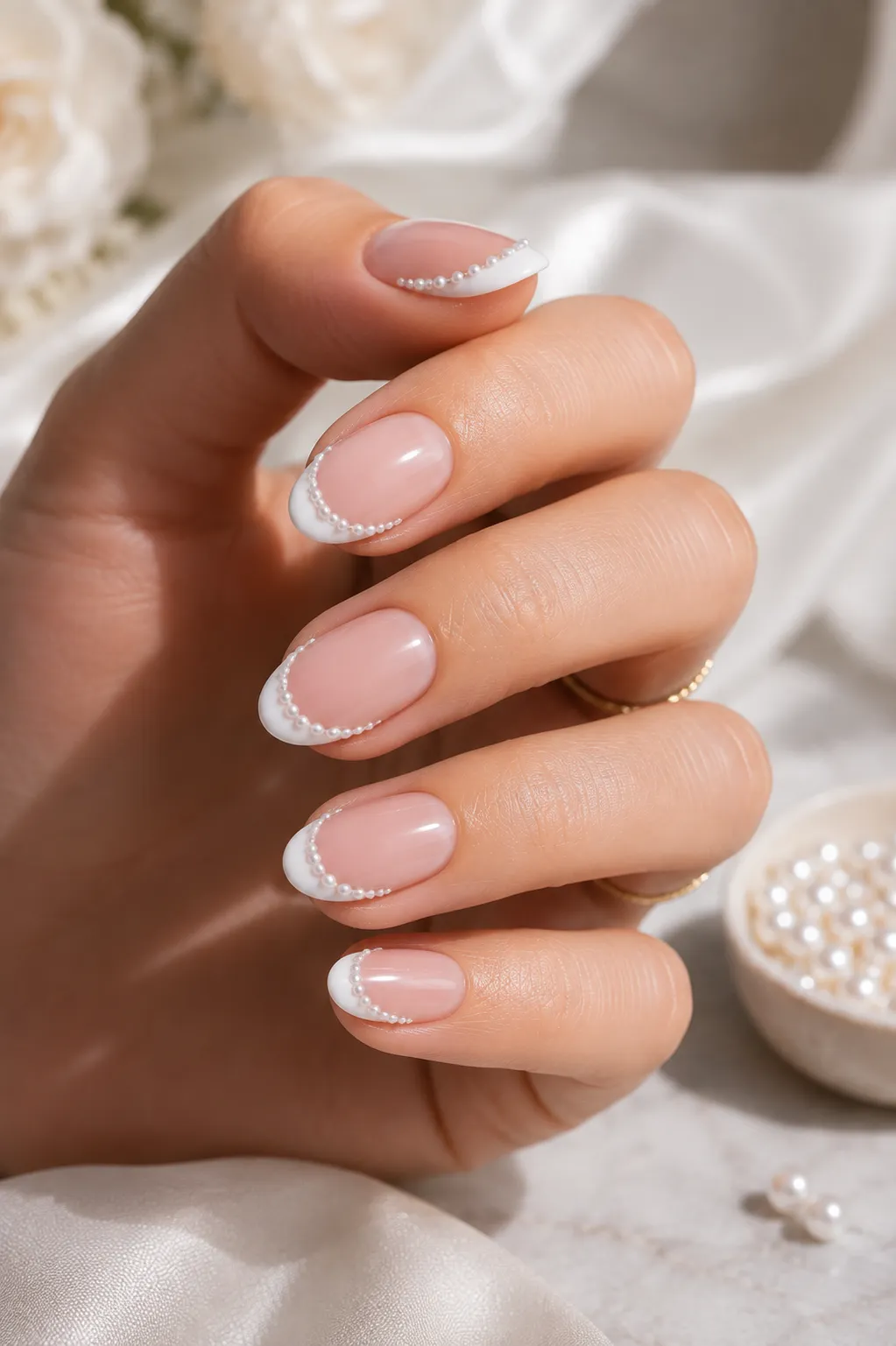
Micro Pearls: 1–1.5 mm
Ideal for short nails, narrow smile lines, and dense but delicate placement. They create texture without dominating the nail.
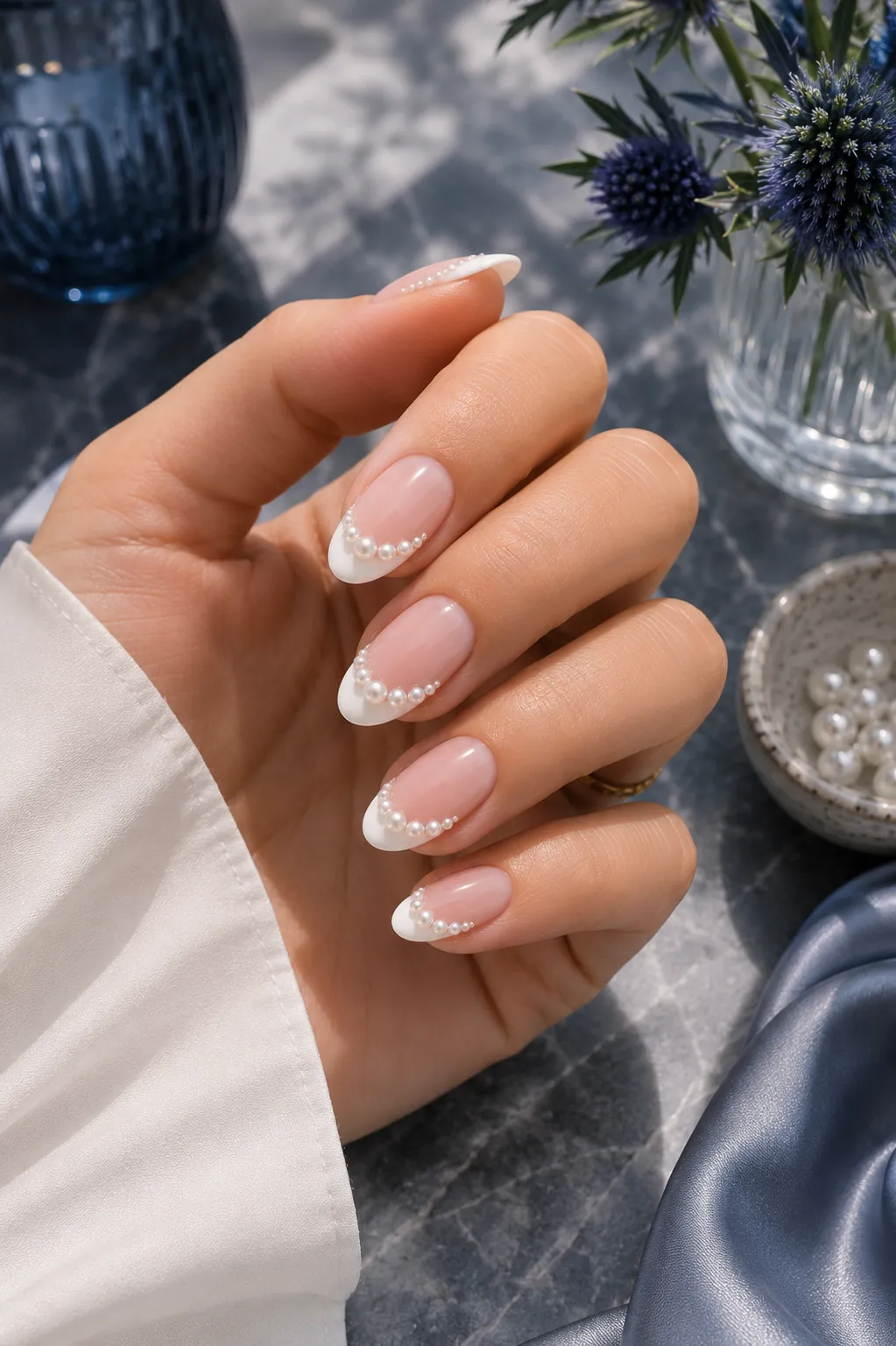
Small Pearls: 2–2.5 mm
The most versatile scale for a full pearl line. Large enough to read in photographs, but still manageable around clothing and hair.
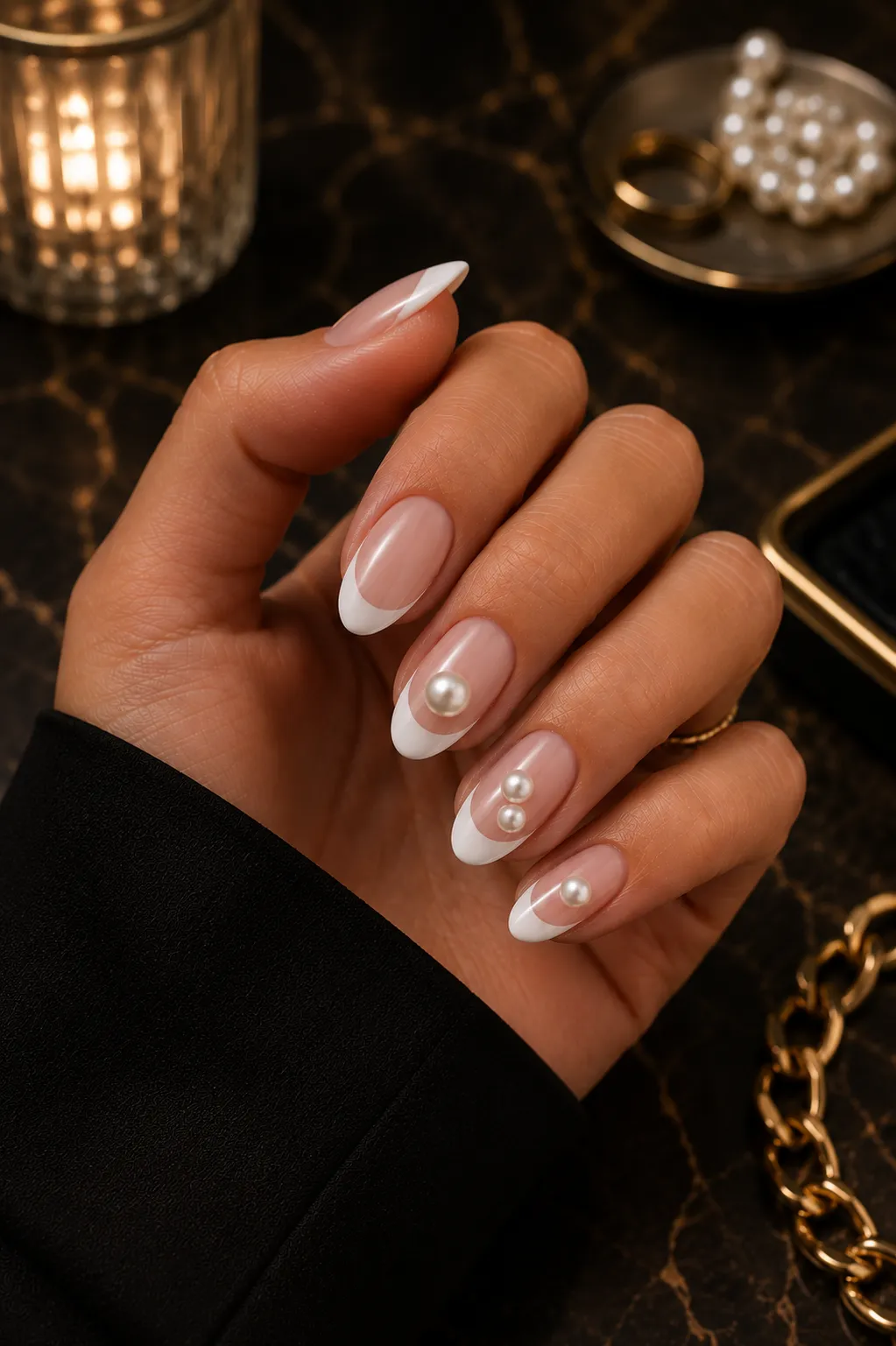
Statement Pearls: 3–4 mm
Better used selectively. Large domes create strong height, visual weight, and snagging risk, so one or two pearls often look more expensive than a crowded row.
Six Pearl Placements That Actually Work
Placement controls both aesthetics and wearability. These six arrangements are easy to visualize, realistic to generate, and practical enough for a salon consultation.
Smile-line trace
Pearls follow the boundary between the base and the tip. Best for a recognizable pearl French look.
Sidewall sweep
A short diagonal of pearls rises from one corner. It feels lighter and leaves most of the nail unobstructed.
Cuticle crescent
Pearls frame the base of the nail. Best with clean, healthy-looking cuticle work and a simple tip.
Center accent
One pearl sits near the center or lower third of the nail. Minimal, graphic, and easy to wear.
Ring-finger cluster
A small group appears only on the accent nail. Best for reducing snagging and service time.
Scattered negative space
A few micro pearls float across a sheer base. Best when spacing remains intentional and asymmetrical.
How Pearl French Changes Across Nail Shapes
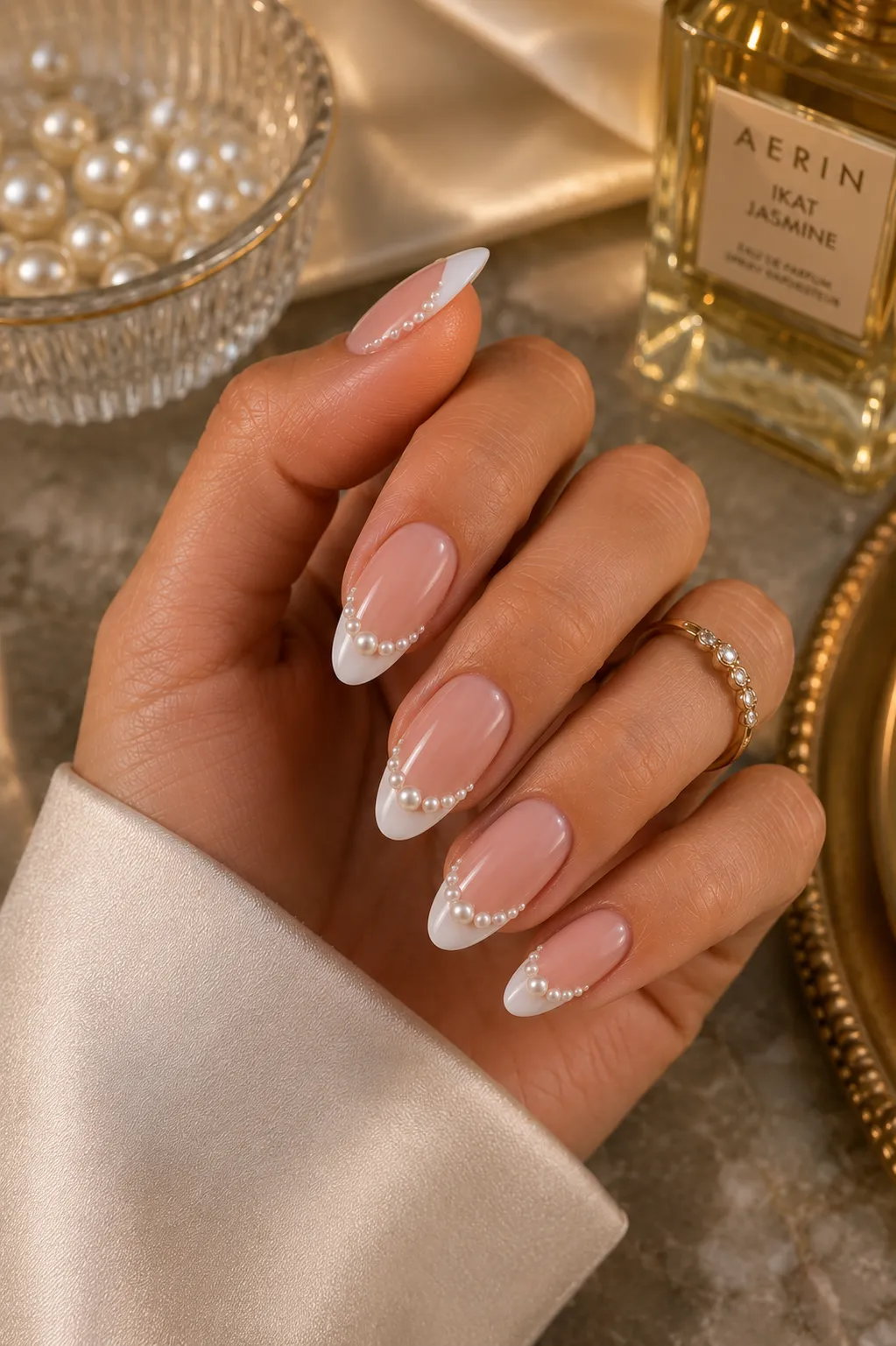
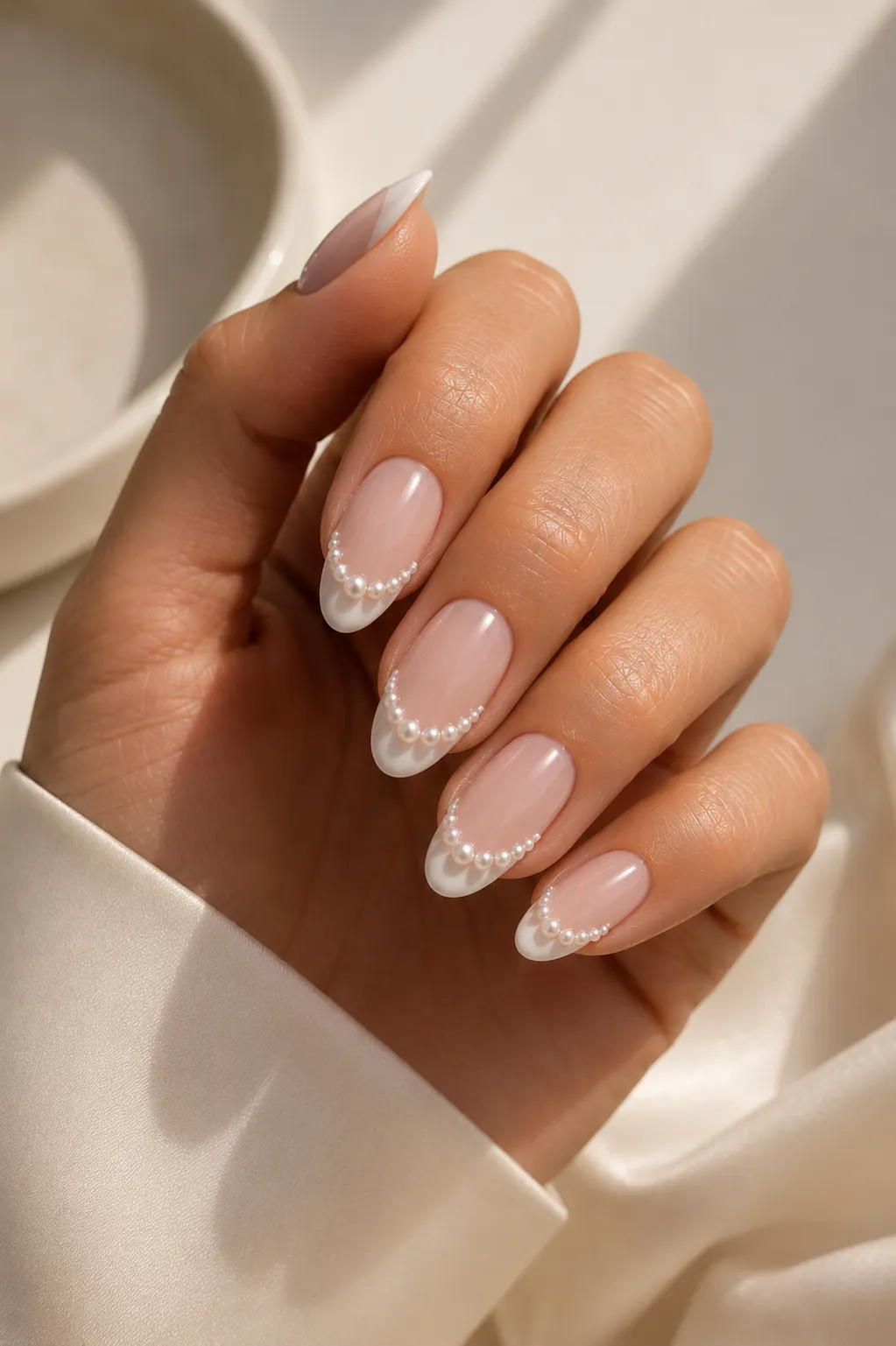
The same pearl line behaves differently on each silhouette. Curved shapes soften the decoration; straight-edged shapes make spacing errors more visible.
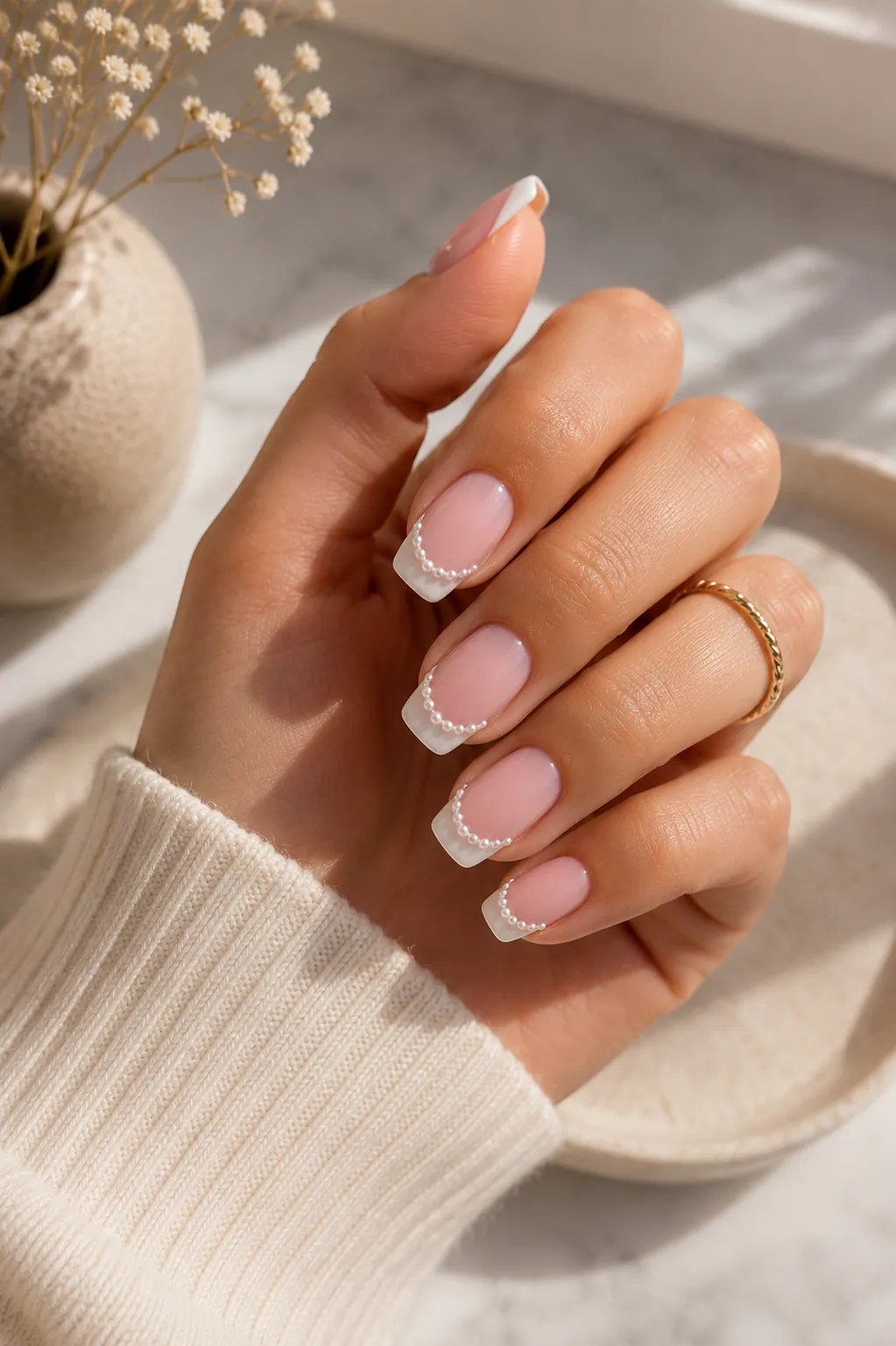
Oval
A forgiving shape for subtle pearls and natural-length manicures.
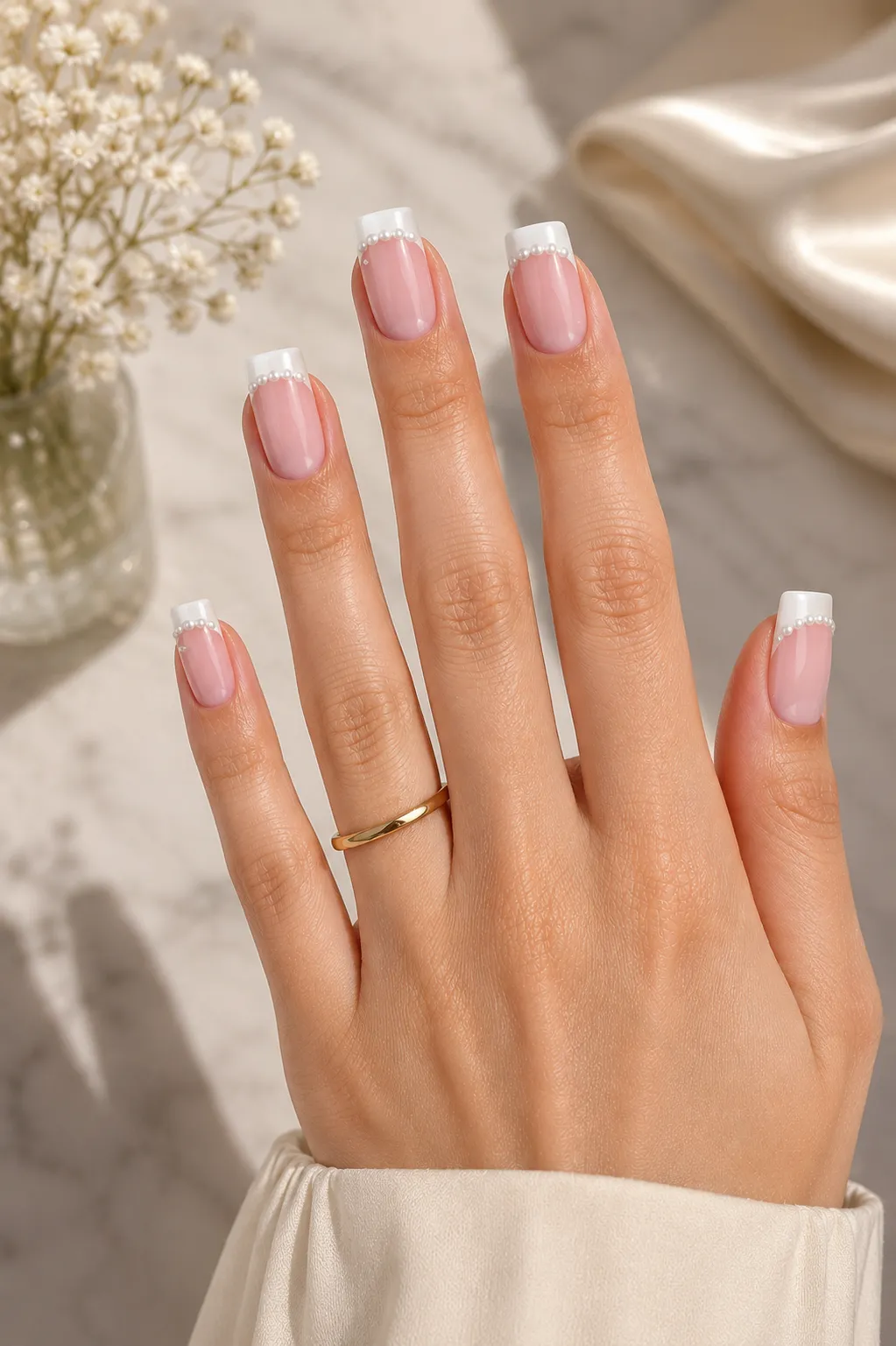
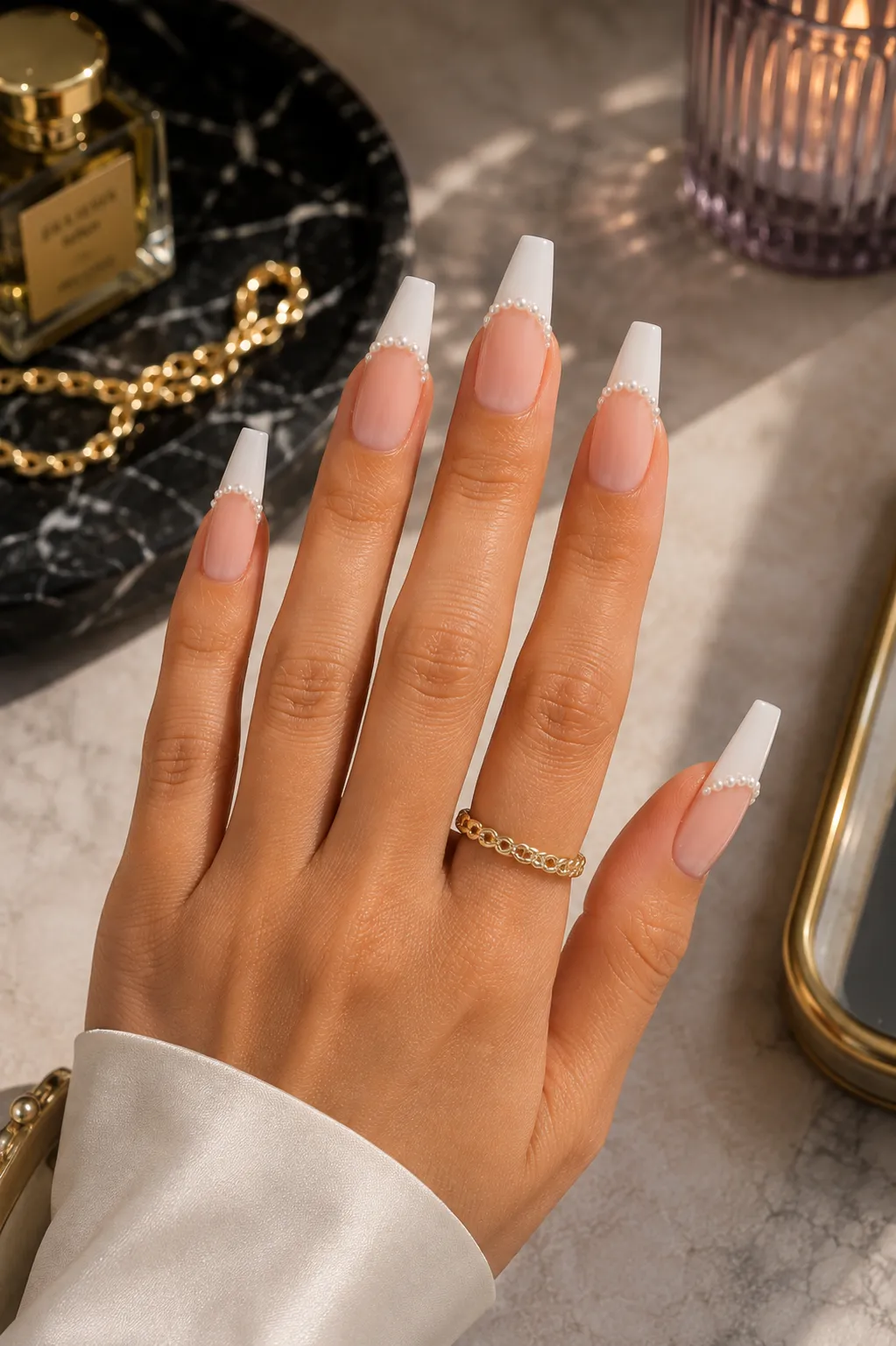
Coffin
The wide tip allows layered pearl-and-crystal compositions without crowding.
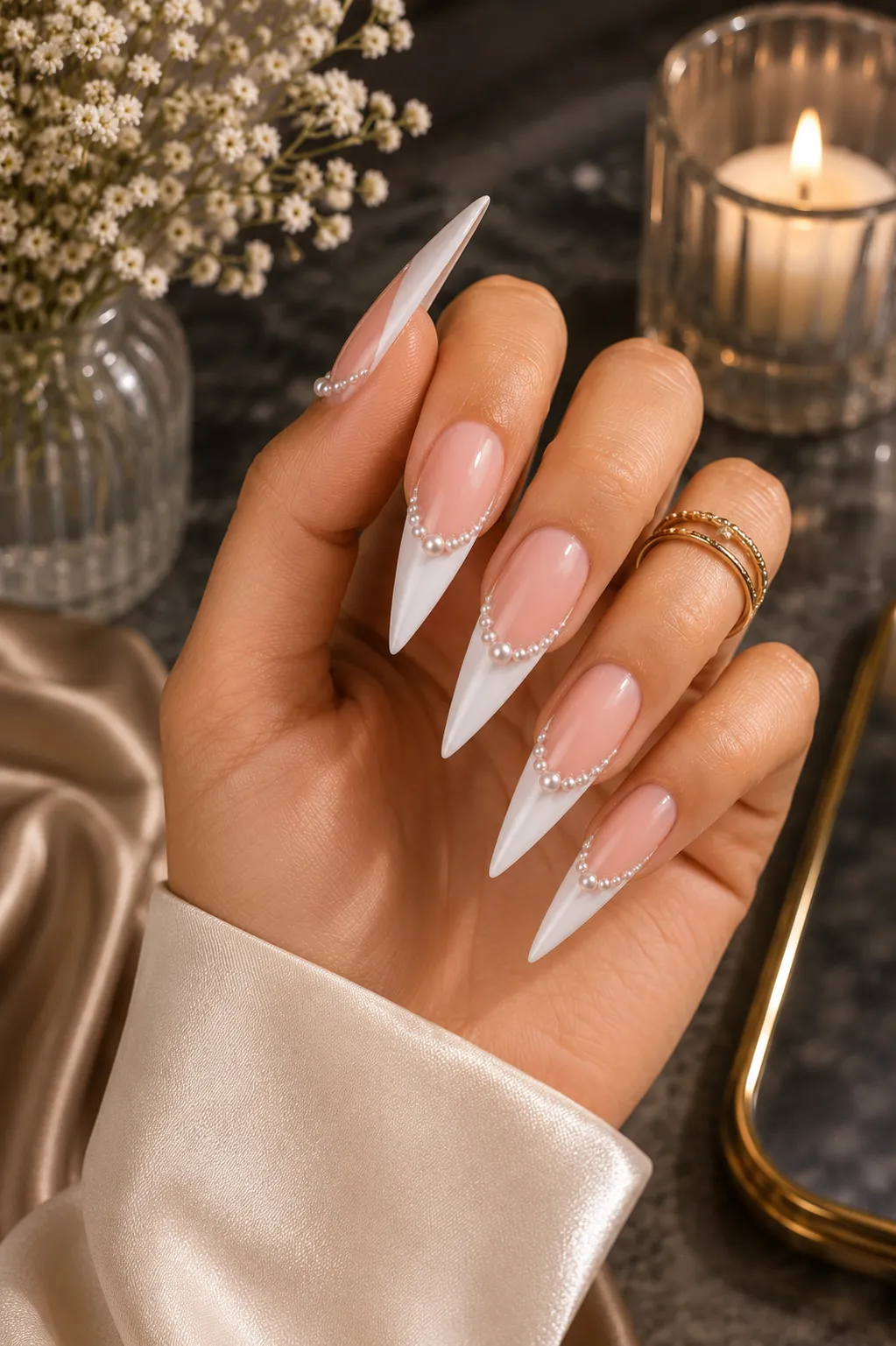
Stiletto
A side sweep or isolated pearl works better than trying to force a full row around the sharp point.
The Bridal Edit: Matching Pearls to the Dress
Pearl nails do not need to match the dress bead for bead. They need to harmonize with the dress temperature, metal tone, fabric texture, and level of embellishment.
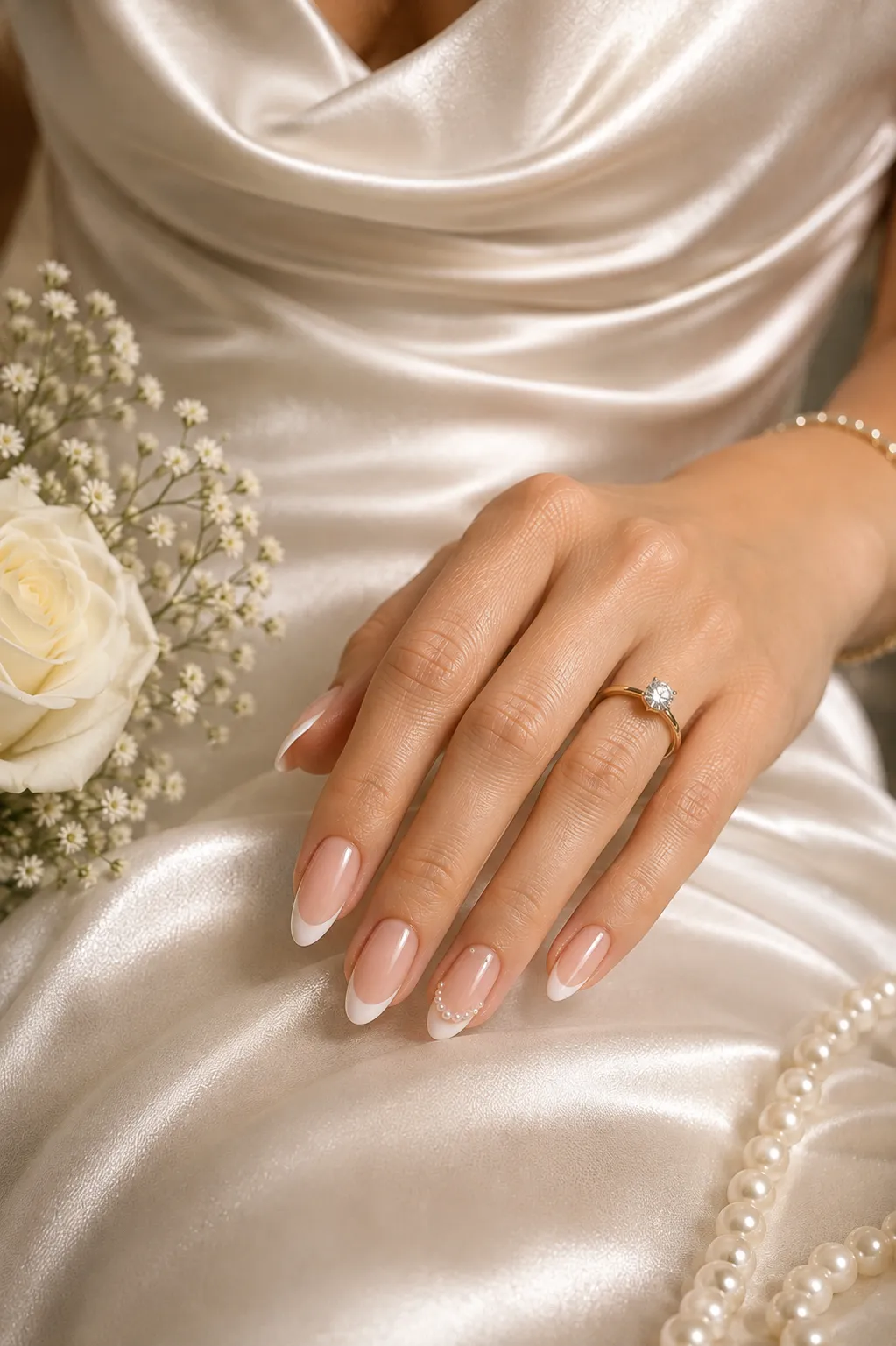
Clean Satin Dress
Use one pearl line or one accent nail. A quiet dress benefits from a polished detail, not a competing surface.
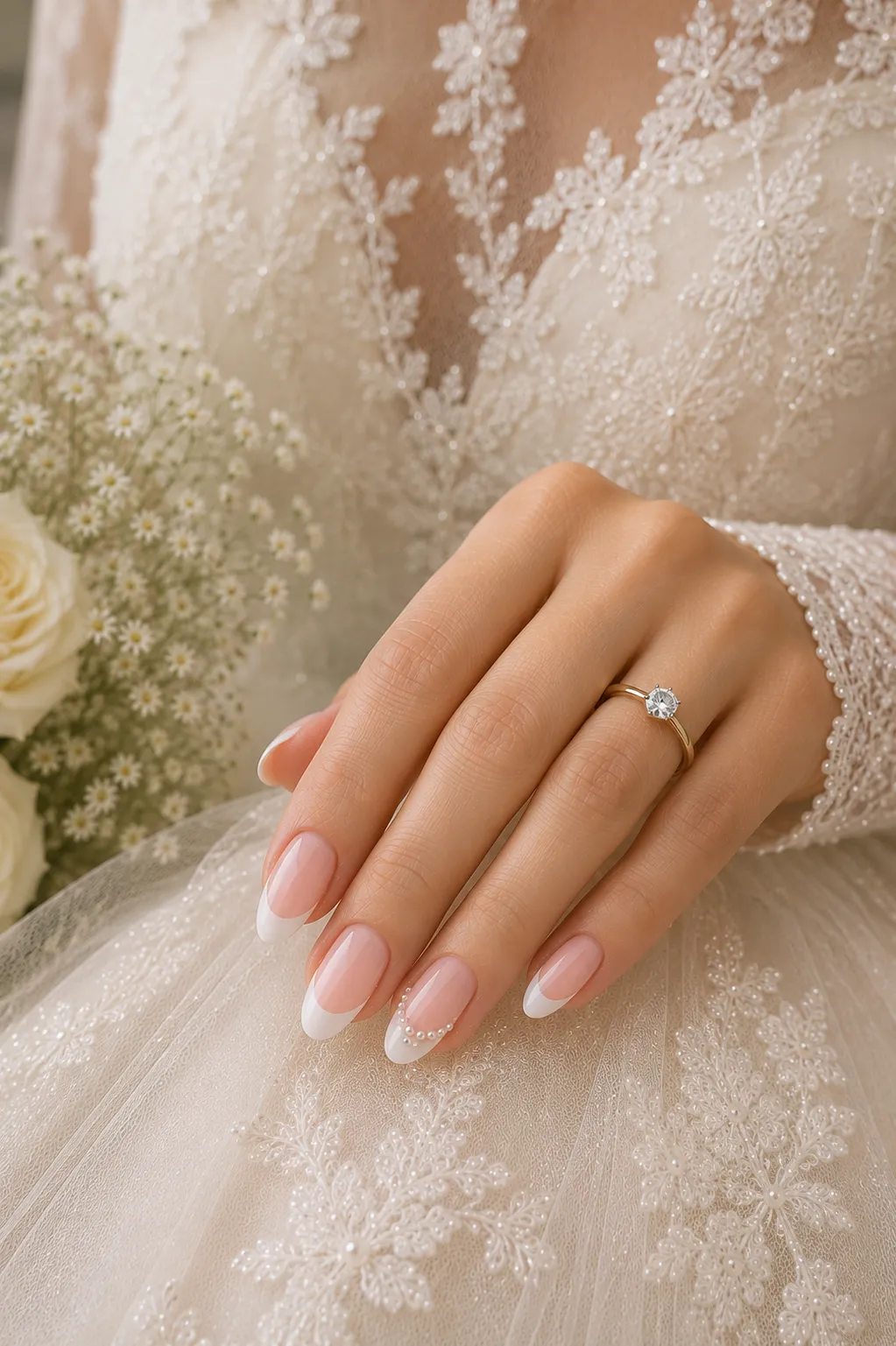
Lace or Tulle Dress
Choose tiny half pearls or flatback crystals with sealed edges. Avoid large domes that can catch the fabric.
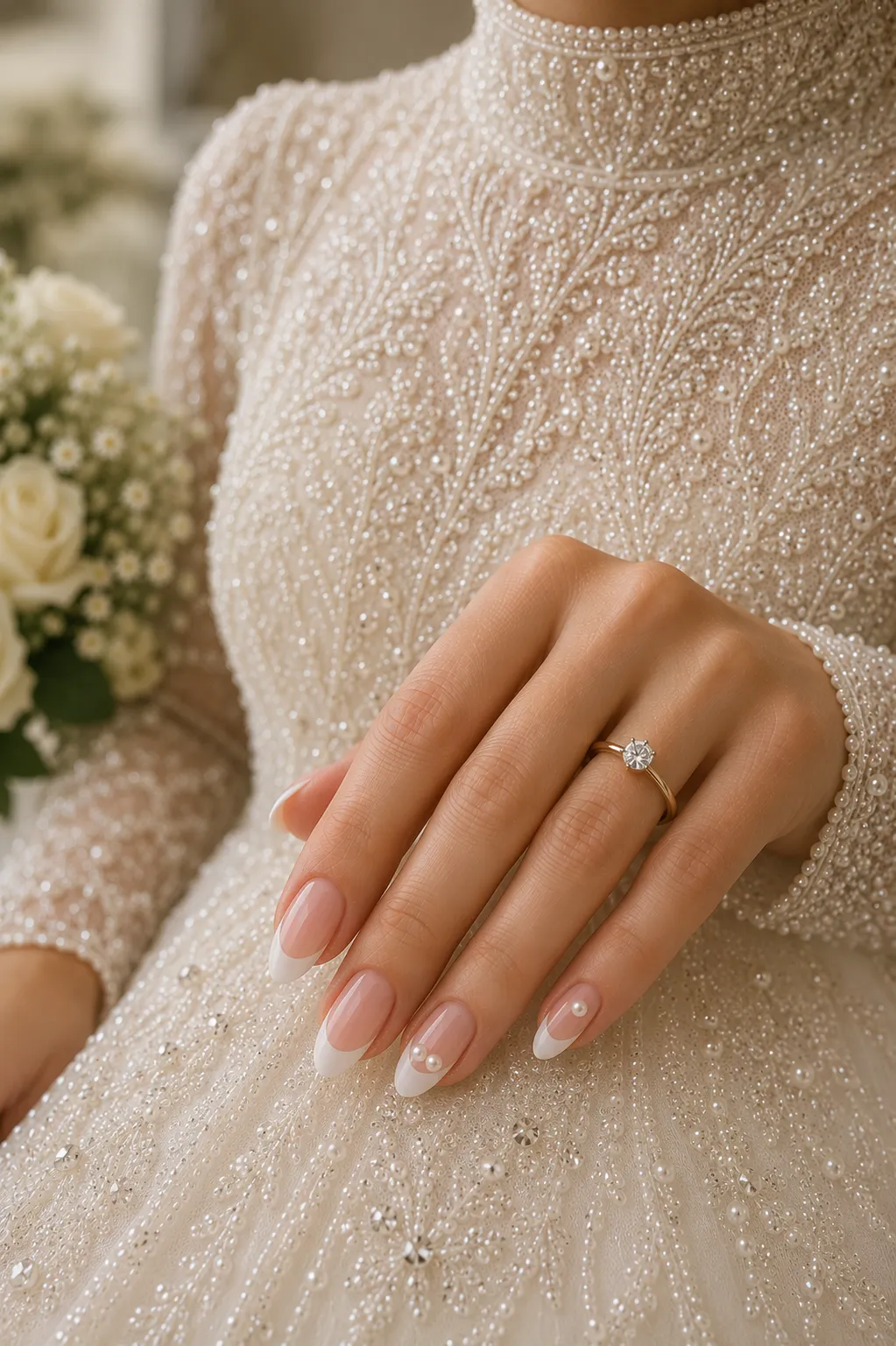
Heavily Beaded Gown
Keep the manicure simpler than the dress. Sparse pearls echo the beadwork without creating visual overload.
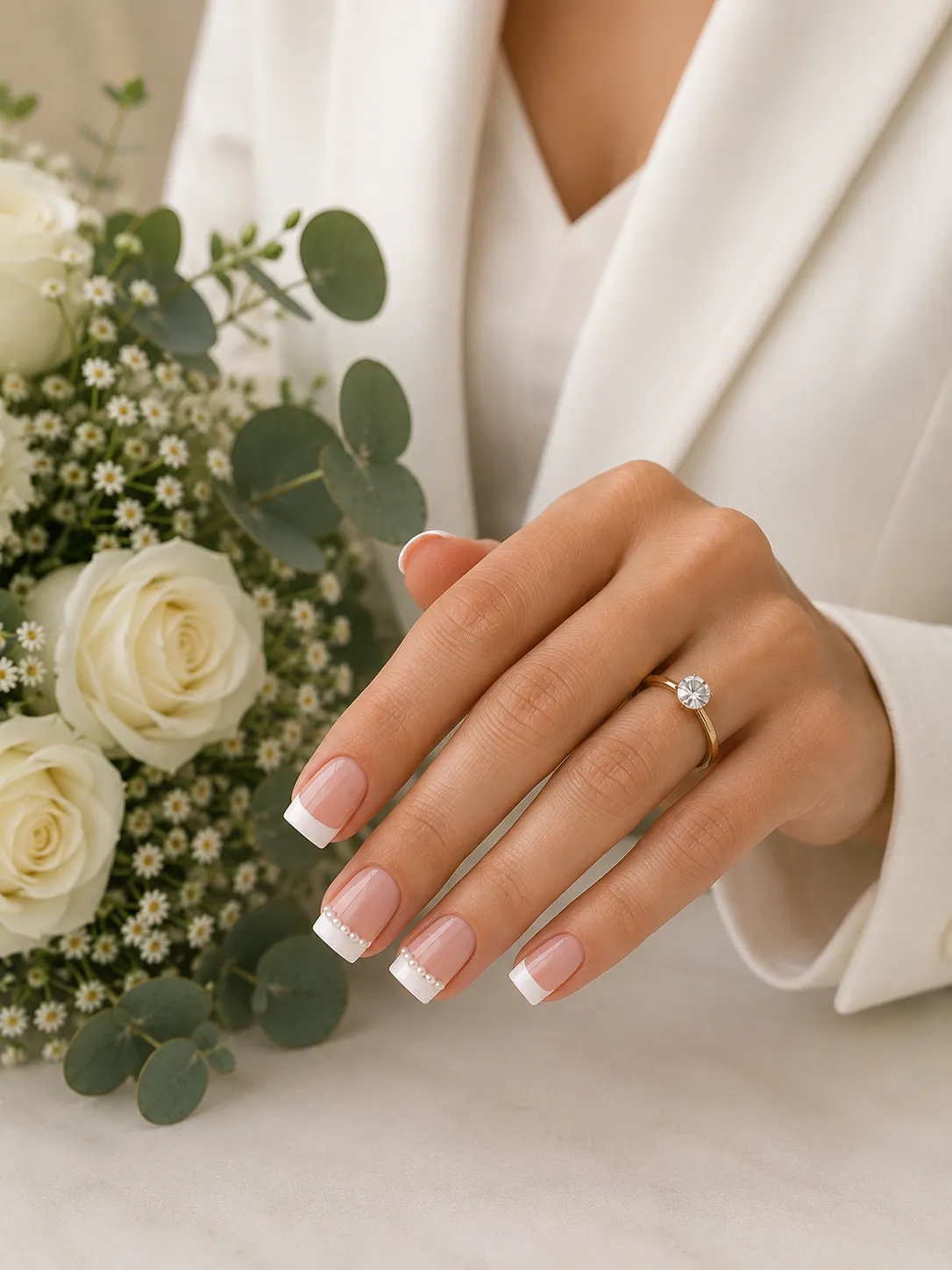
Modern Civil Ceremony
Short square or squoval nails with a precise micro-pearl line feel architectural and current.
Before the event, run the finished nails gently over a spare fabric sample or the inside seam of the outfit. Any rough edge that catches should be resealed by the technician before you leave.
Which Nail Systems Support Pearl and 3D Art?
The base must be stable enough to carry the embellishment without excessive flexing. The correct system depends on nail length, pearl weight, and how much art is concentrated on each nail.
| System | Best Use | Pearl Compatibility | Practical Note |
|---|---|---|---|
| Gel polish on natural nails | Sparse micro pearls | Good | Keep placement light and avoid heavy clusters on flexible nails. |
| BIAB / structured builder overlay | Small pearl lines and accents | Very good | Added structure supports light 3D work while preserving a natural profile. |
| Gel-X | Full pearl lines and moderate accents | Very good | Consistent extension shape gives the technician a smooth placement surface. |
| Hard gel | Heavier clusters and sculptural accents | Strong structural option | Rigid structure is useful when the design carries more height or weight. |
| Acrylic | Heavier 3D and long extensions | Strong structural option | Strong enough for dramatic designs, though removal and rebalance require professional care. |
How a Secure Pearl Application Is Built
This process is better explained as a structural sequence than with staged tool images. What matters is where the pearl sits, how the base is supported, and whether the edges are sealed without coating over the pearl’s luster.
Prepare the nail
Complete shaping, cuticle work, cleansing, and the chosen extension or overlay.
Create the French base
Apply the sheer base and white tip; cure the design completely.
Add placement gel
Place a controlled bead of gem gel or builder only where each pearl will sit.
Position the pearls
Set pearls with a wax picker and check spacing from multiple angles.
Flash cure
Secure sections briefly so the row cannot drift before the final cure.
Seal the perimeter
Reinforce the base and side edges without covering the top of the pearl.
How to Judge the Work Before You Leave
A pearl set can look impressive from a distance and still be structurally weak. Use this six-point inspection before the final hand oil and photographs.
Spacing
Pearls should follow a consistent rhythm unless the design is intentionally scattered.
Height
A full row should not contain one pearl sitting dramatically higher than the others.
Perimeter seal
The base of each pearl should feel secured, with no exposed sharp ridge.
Symmetry
Matching nails should relate to each other even when the design is not perfectly identical.
Top clarity
The pearl surface should remain glossy and dimensional—not buried beneath cloudy topcoat.
Comfort
No pearl should press painfully against the sidewall, cuticle, or neighboring finger.
Common Pearl French Mistakes
These problems are easier to understand as design and application diagnostics than through AI-generated damage simulations. Each one has a visible cause and a practical correction.
The decoration overwhelms the French tip and raises snagging risk.
Reduce the scale or reserve large pearls for one accent nail.
The set loses negative space and starts to resemble costume jewelry.
Alternate full pearl lines with simpler nails.
One side becomes crowded while the other looks unfinished.
Map the center and corners first, then fill the gaps evenly.
The natural luster disappears under a thick clear layer.
Seal around the perimeter rather than coating the dome.
Movement beneath the embellishment loosens the gel bond.
Use a more structured overlay or reduce the weight.
Raised pearls catch lace, tulle, knitwear, or fine hair.
Choose low-profile pearls and test for rough edges before the event.
How Pearl French Wears Over Time
Growth is not the only concern. Dimensional elements are exposed to impact, fabric, hair, product buildup, and water around their edges. A text timeline is more honest than generated damage images.
Check comfort
Nothing should feel sharp, loose, or painfully close to the sidewall.
Protect the edges
Avoid using the nails as tools and dry carefully around raised elements.
Inspect movement
Look for lifting gel, a rotating pearl, discoloration, or trapped debris.
Repair or remove
Do not pull off a loose pearl. Book a repair or professional removal.
A loose pearl is not a harmless cosmetic flaw. Movement can compromise the surrounding seal and allow debris to collect around the lifted area. Have it repaired or professionally removed rather than pressing it back repeatedly.
What Pearl and 3D French Tips Cost
Pricing varies by location, technician experience, base system, number of embellished nails, pearl quality, and appointment time. Treat the ranges below as planning guidance rather than fixed salon quotes.
These figures are editorial planning ranges used to show how price typically rises with service time, nail length, enhancement structure, pearl coverage, material quality, and design complexity. They are not fixed salon rates. Compare them with current quotes from salons in your own market before booking.
Is Pearl French Right for You?
Do you want the manicure for an event or frequent daily wear?
Choose the level of dimension based on your outfit and schedule.
Use micro pearls on one or two accent nails rather than a full sculptural set.
Will the nails contact lace, tulle, knitwear, fine hair, or gloves?
Use half pearls, sparse placement, and carefully sealed edges.
A fuller pearl line or small cluster becomes more practical.
Are your nails short or naturally flexible?
Keep embellishment light or add a structured overlay if appropriate.
Medium and long structured nails provide more room and support.
Use pearl dimension selectively.
The most wearable luxury set usually combines a clean French foundation, small pearls, controlled spacing, and one or two stronger accent nails.
What to Ask for at the Salon
Bring one reference image that shows the exact pearl scale and another that shows the preferred nail shape. Then use a specific request rather than simply asking for “3D pearl nails.”
“I want a sheer neutral base with a crisp French tip and low-profile ivory half pearls. Please use small pearls, keep the spacing consistent, reinforce the base and side edges with gel, and avoid covering the pearl surface with topcoat. I would like the heavier detail limited to my ring fingers.”
Choose natural gel, BIAB, Gel-X, hard gel, or acrylic based on length and art weight.
Ask whether the pearls are micro, small, or statement size.
Specify all ten nails, alternating nails, or accent nails only.
Request half pearls or flatback pearls when snagging is a concern.
Ask whether one missing pearl can be repaired during the first few days.
Do not assume raised art can be safely peeled or clipped off at home.
The Final Verdict
Pearl and 3D French tips are most successful when they preserve the discipline of the French manicure. A clean base, controlled tip, small pearl scale, stable structure, and deliberate spacing produce a manicure that feels like jewelry. Dense decoration, oversized pearls, and weak application make the same idea feel impractical. For most clients, the premium choice is not maximum embellishment—it is selective dimension executed precisely.
Frequently Asked Questions
What are pearl French tip nails?
Pearl French tip nails combine a French manicure with raised nail pearls, usually placed along the smile line, free edge, cuticle, or on selected accent nails. Flatback and half pearls are the most practical because they sit lower than full round beads.
Are pearl French tips the same as pearlescent or glazed French tips?
No. Pearl French tips usually refer to physical 3D pearl embellishments. Pearlescent or glazed French tips use reflective pigment, chrome powder, or shimmer to create a pearl-like finish without raised beads.
Can you get pearl French tips on short nails?
Yes. Short nails usually look best with micro pearls, a thin French edge, sparse placement, or one pearl accent nail. Large pearl clusters can crowd a short nail and add unnecessary height.
What nail shape is best for pearl French tips?
Almond and oval shapes create a soft bridal look, while square and coffin nails provide more surface area for straight or graphic pearl placement. Squoval works especially well for shorter, more practical sets.
How long do pearl French tip nails last?
The French manicure can last as long as its gel, builder-gel, Gel-X, hard-gel, or acrylic base, but the raised pearls are the most vulnerable part. Retention depends on nail preparation, pearl size, placement gel, perimeter sealing, and daily wear.
Do pearl nails catch on hair or clothing?
They can. Snagging becomes more likely with large pearls, exposed edges, dense clusters, lace, knitwear, and fine hair. Low-profile half pearls with smoothly reinforced edges are the safer choice for frequent wear.
How are pearls attached to nails?
For salon 3D nail art, pearls are typically positioned into a suitable gem gel or builder product and cured according to that product system. The technician then reinforces the pearl base and perimeter without burying the visible pearl surface under thick topcoat.
Are pearl French tip nails good for weddings?
Yes. Pearl French tips are especially suited to bridal styling because ivory pearls work naturally with satin, lace, beading, and pearl jewelry. For delicate fabrics, small flatback pearls and restrained placement reduce snagging risk.
Can pearl French tips be done on natural nails?
Yes. Healthy natural nails can support sparse micro pearls or a light pearl accent when the design remains low profile. Because natural nails flex more than rigid enhancements, larger clusters or heavier 3D work may benefit from a structured builder-gel overlay or extension, depending on nail length, flexibility, and the technician’s assessment.
Continue Exploring French Manicures
Compare the pearl look with related finishes, proportions, and nail shapes from the Manicure Aesthetics French manicure library.