
Baby Boomer French Tip Nails: 41 Best Styles, Tips & Trends
Discover the best ombré styles, bridal shades, nail shapes, and salon techniques in one visual guide.
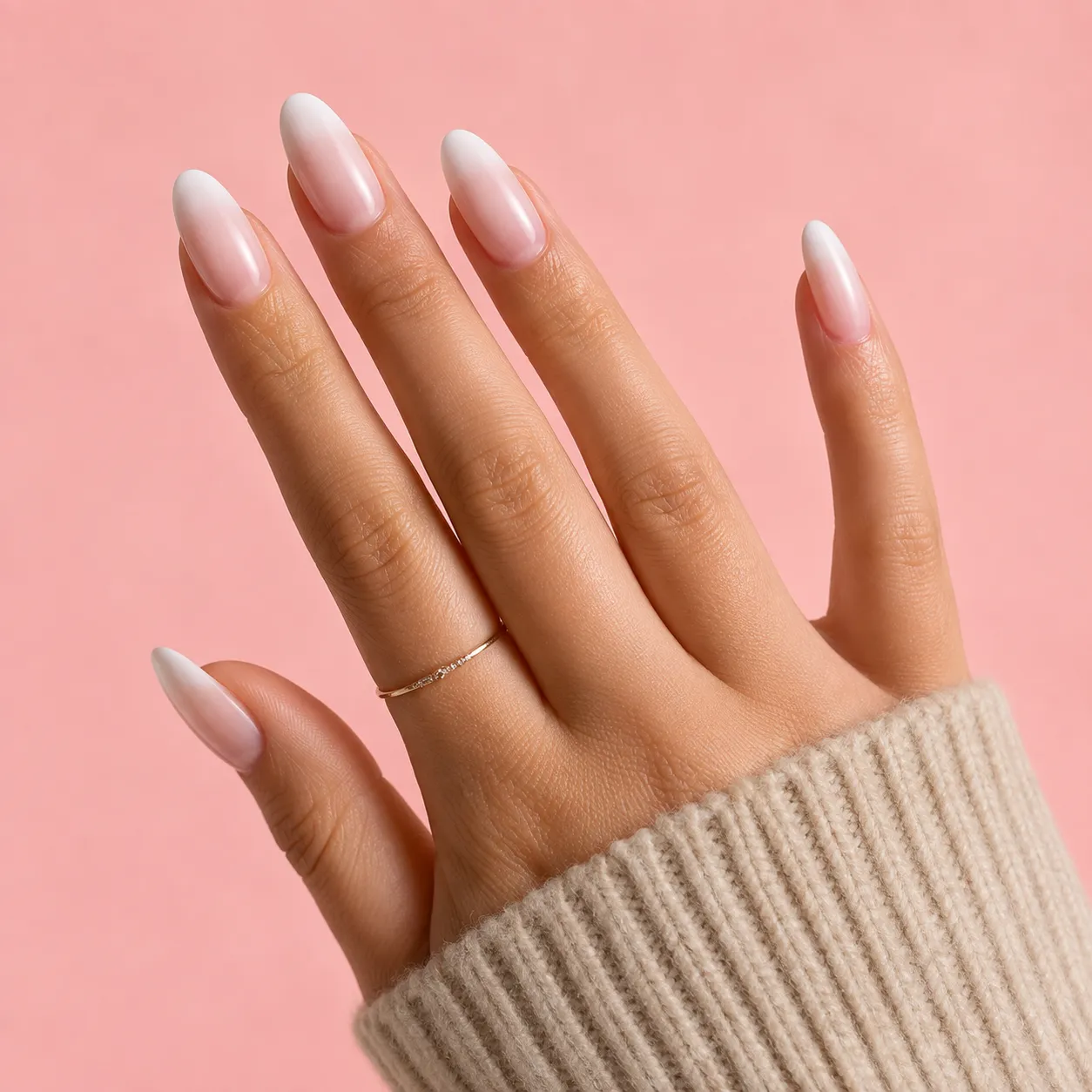
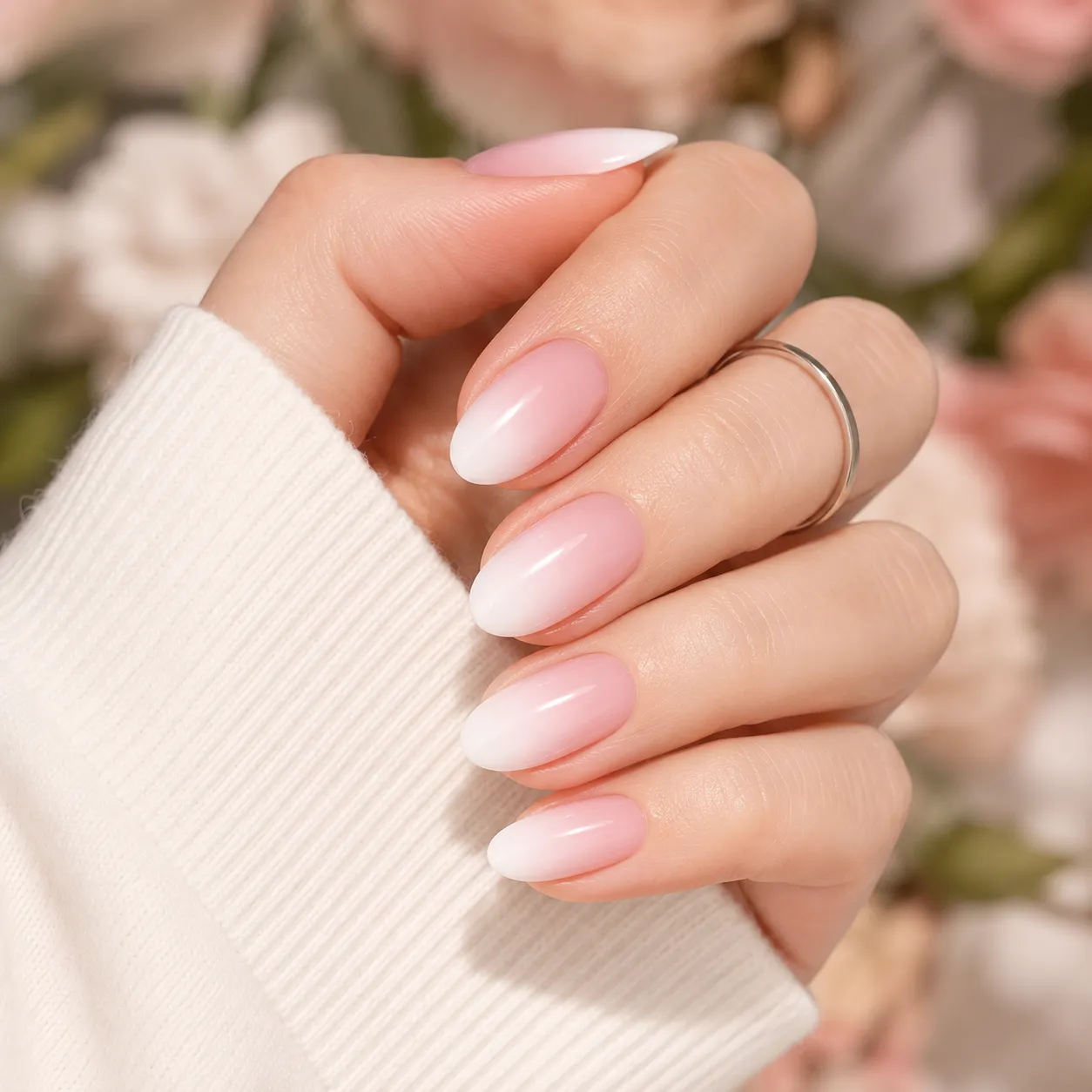
Baby Boomer French tip nails replace the painted smile line of a classic French manicure with a controlled fade: a pink, blush, or nude base dissolves gradually into a soft white free edge. The result can look bridal, minimal, editorial, or quietly luxurious depending on the undertone, shape, finish, and placement of the transition.
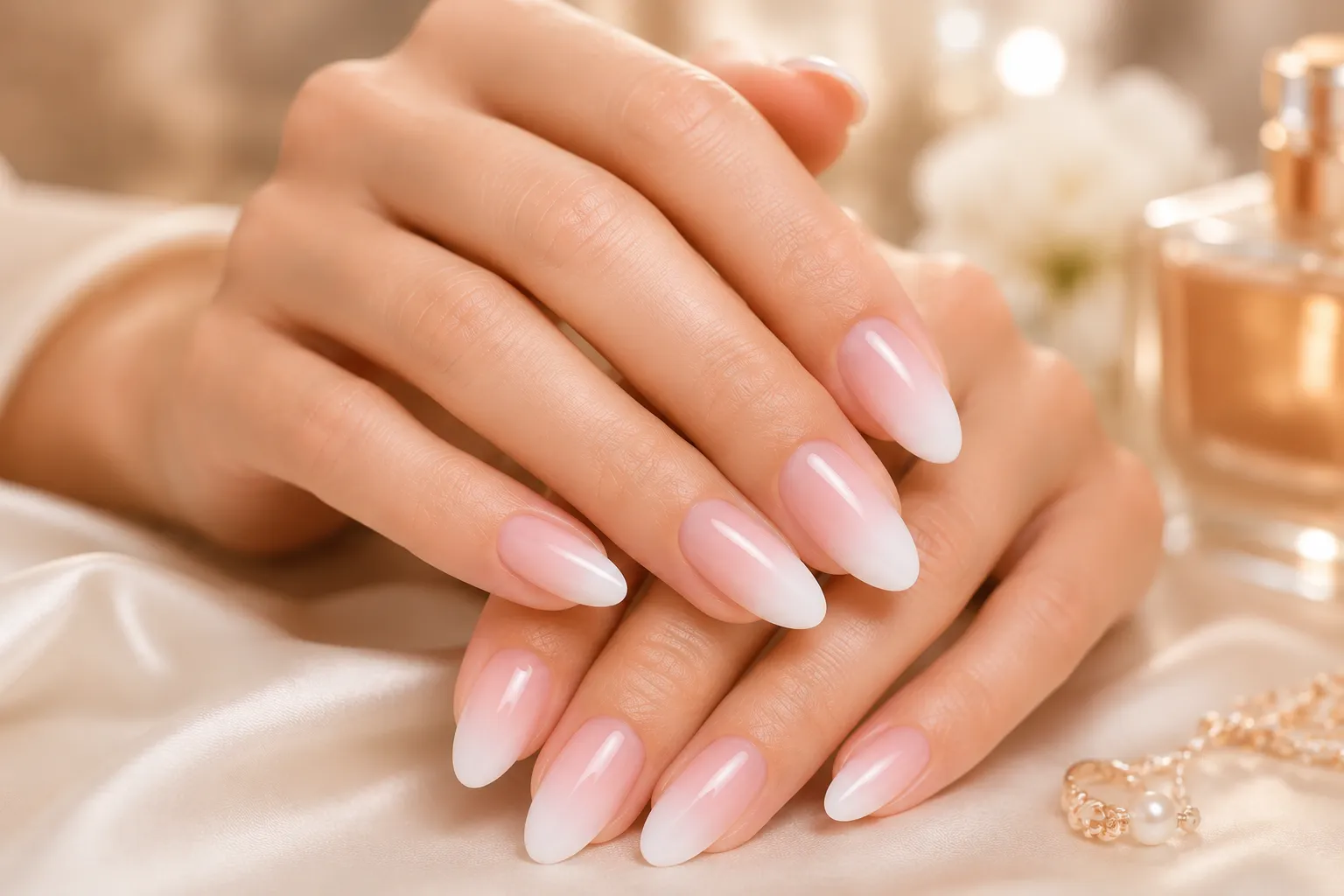
Baby Boomer at a Glance
Six details that define the look before you choose a shape, shade, or product system.
Signature
A pink or nude base dissolving into soft white—never a hard smile line.
Best canvas
Short-medium to long nails, with enough room for a visible transition.
Natural allies
Almond, oval, squoval, and soft square shapes.
Build options
Gel polish, BIAB, hard gel, acrylic, or Gel X.
Finish language
Gloss, milk, pearl, glaze, matte, or a restrained chrome veil.
Quality test
One balanced transition repeated consistently across all ten nails.
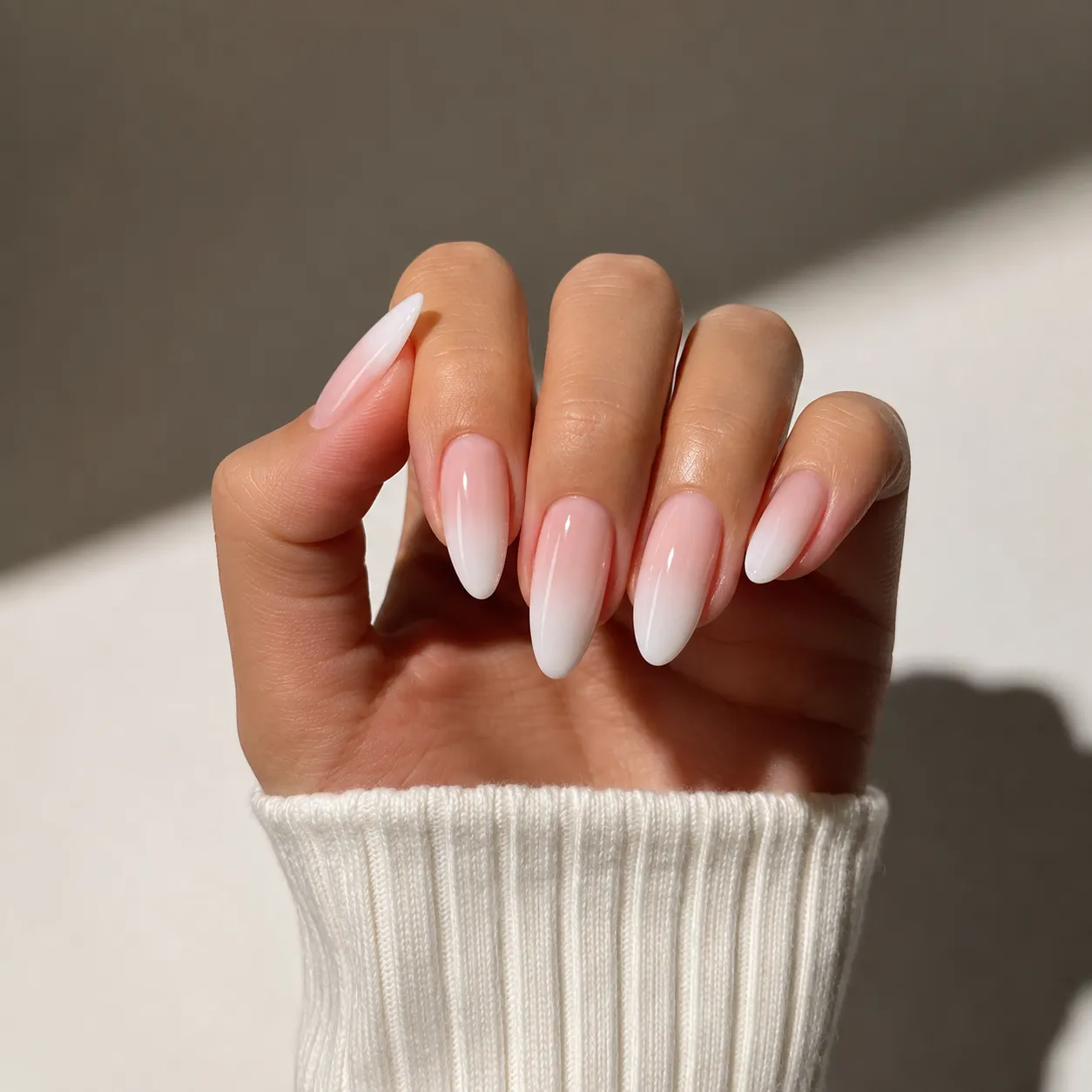
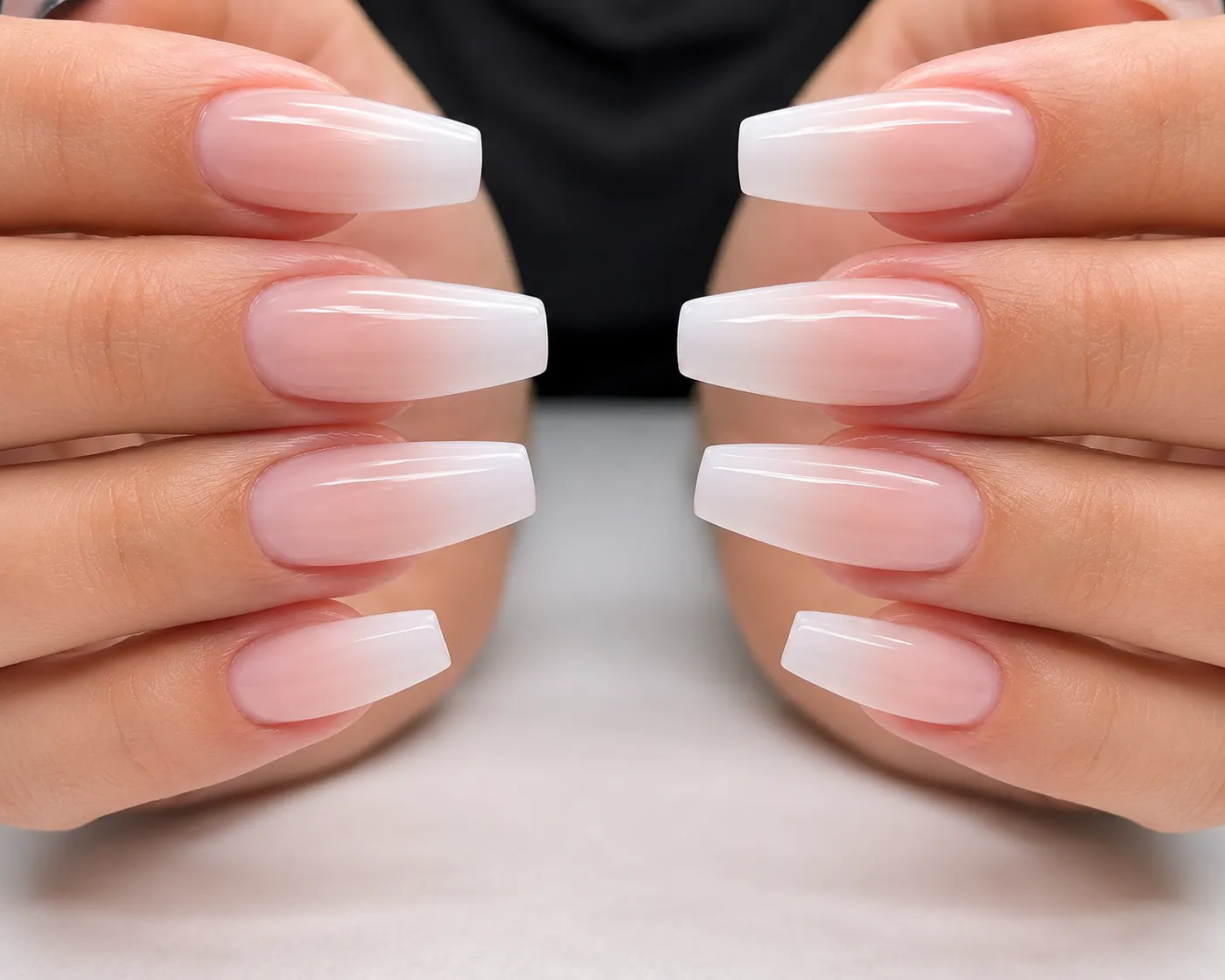
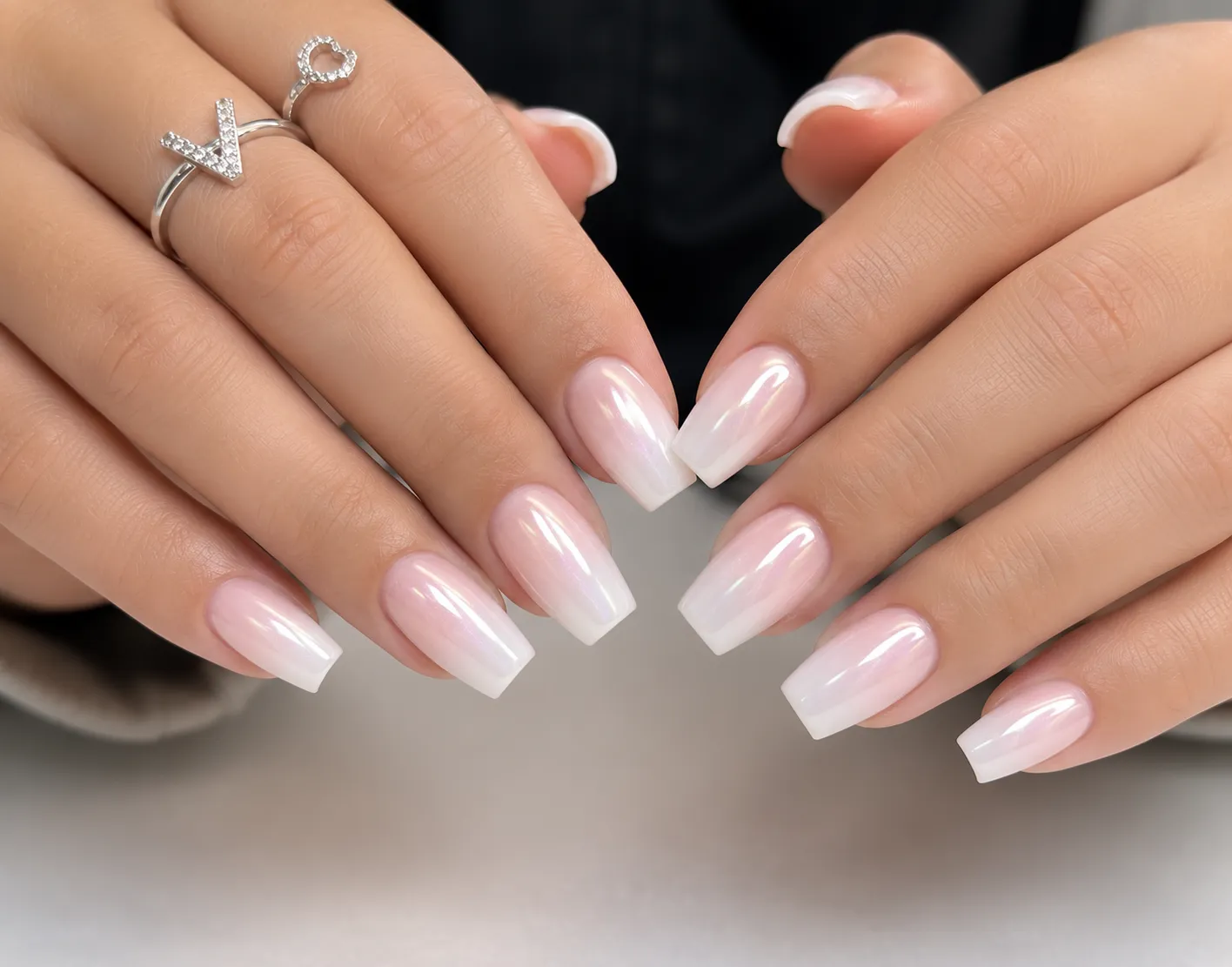
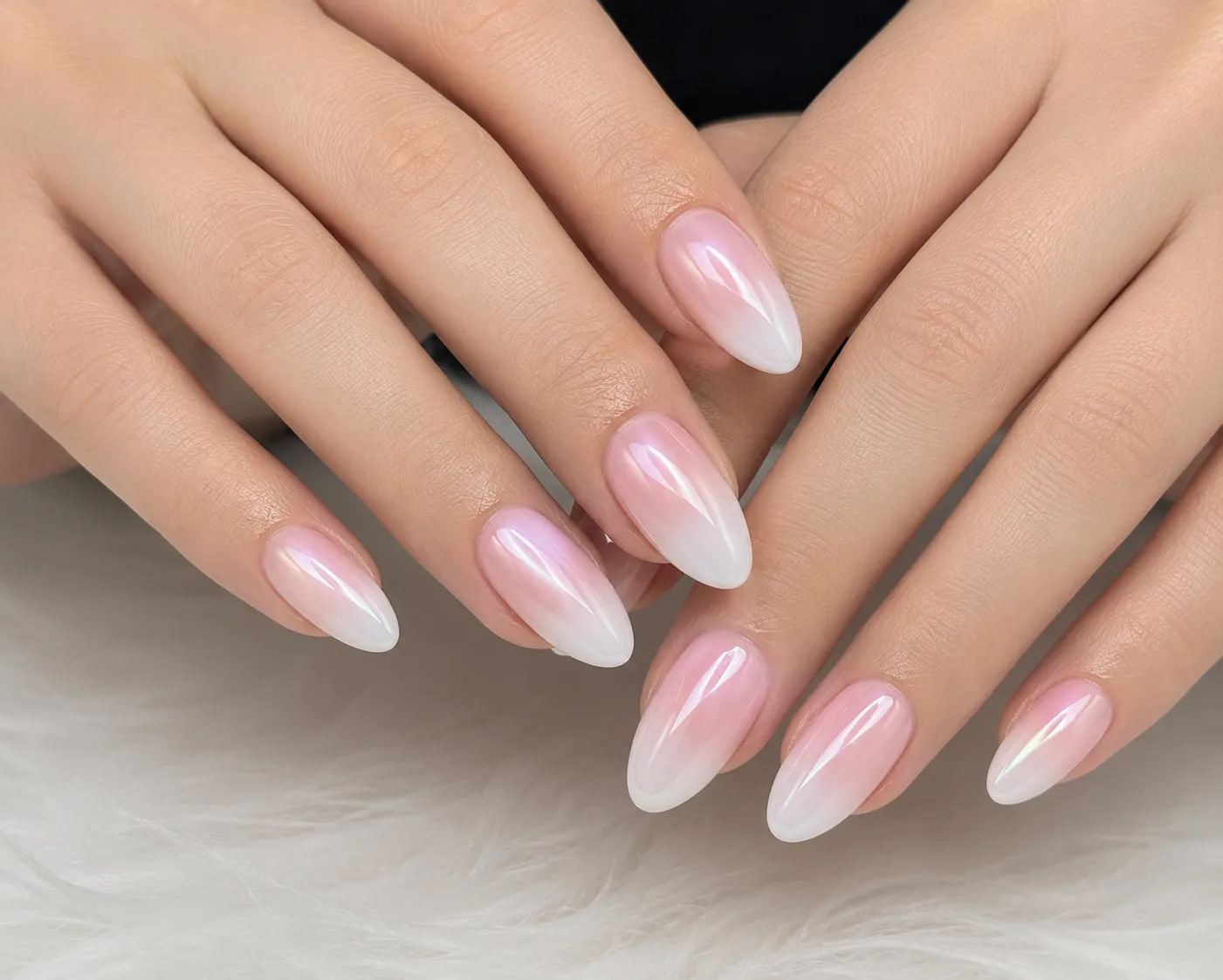
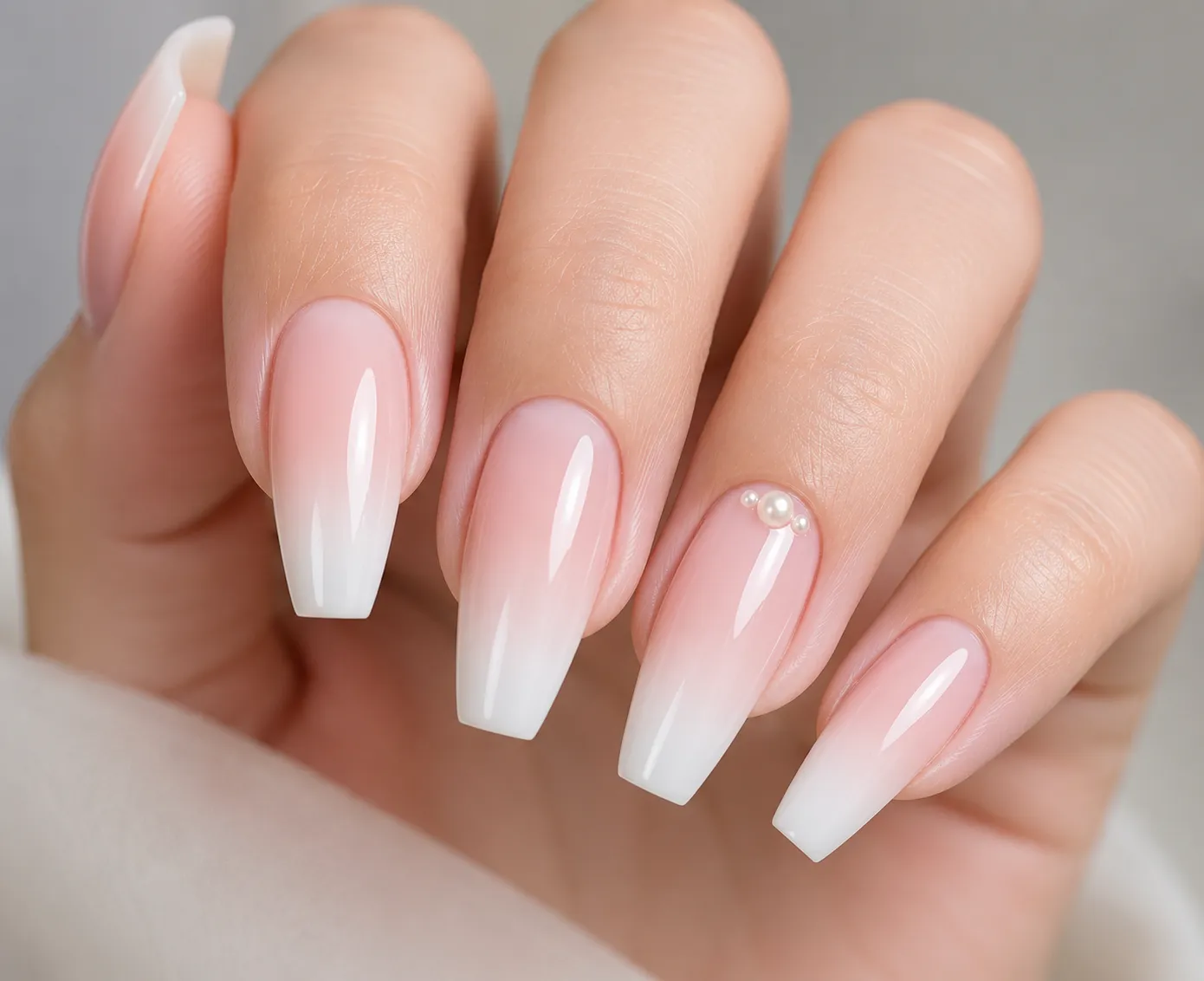
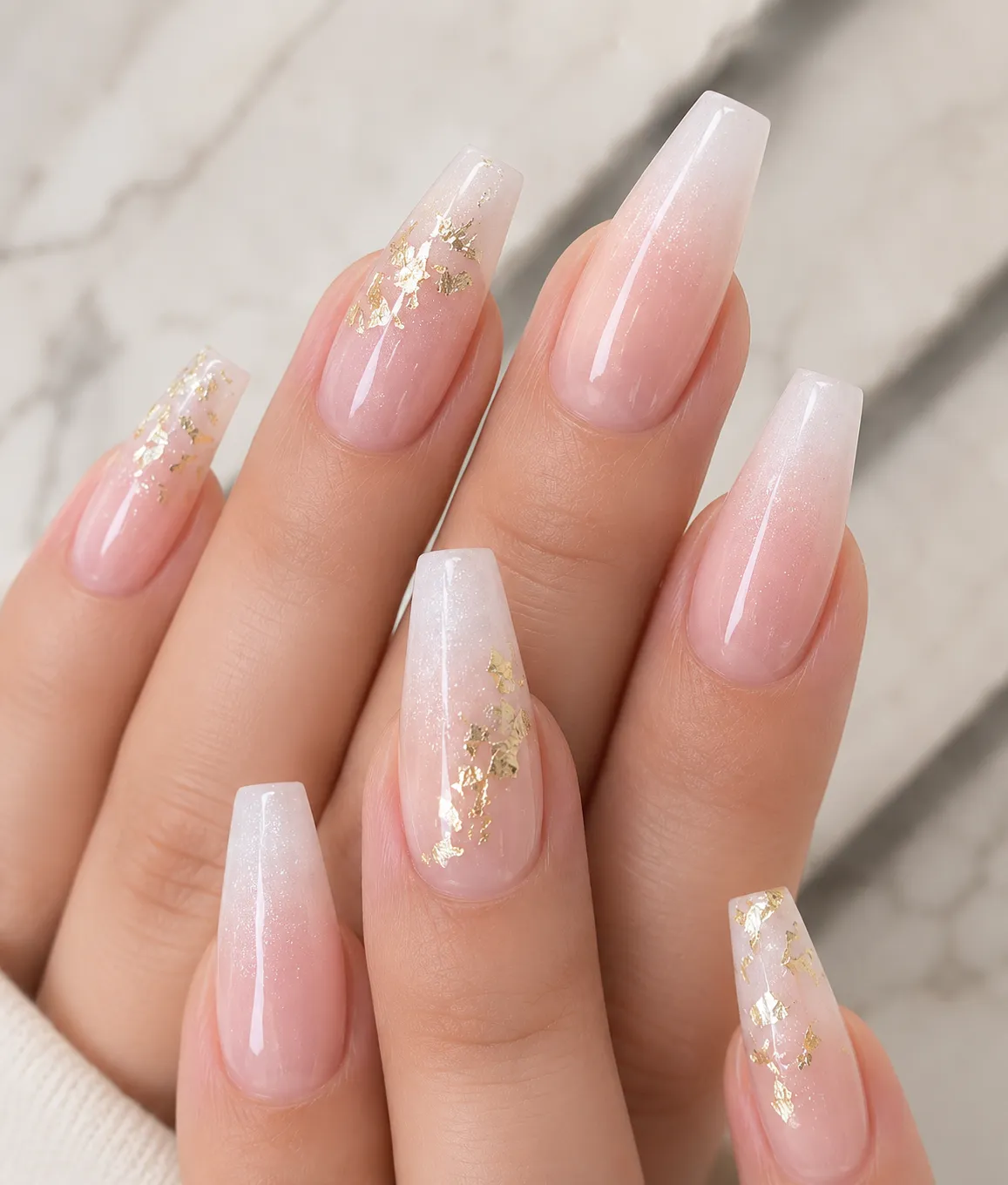
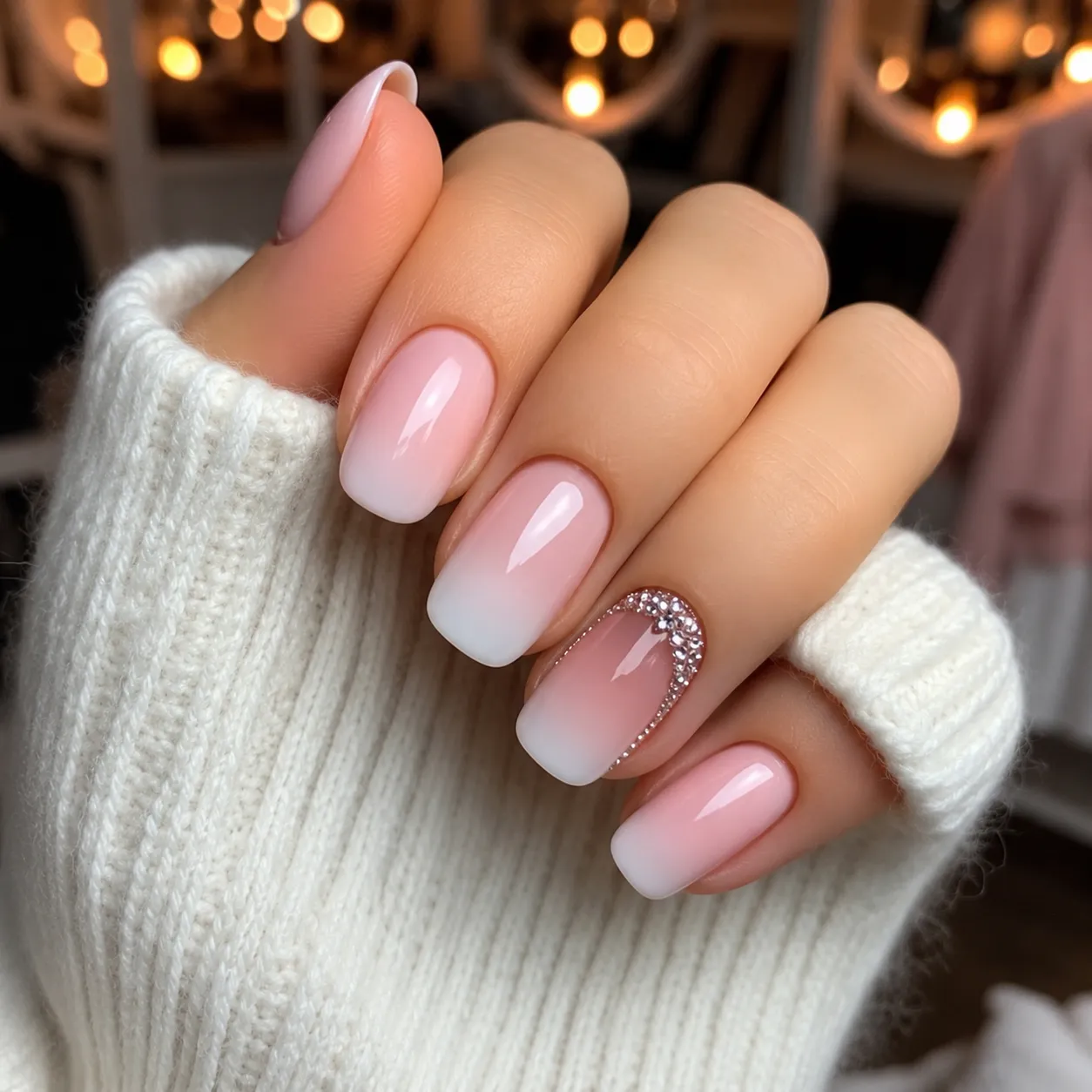
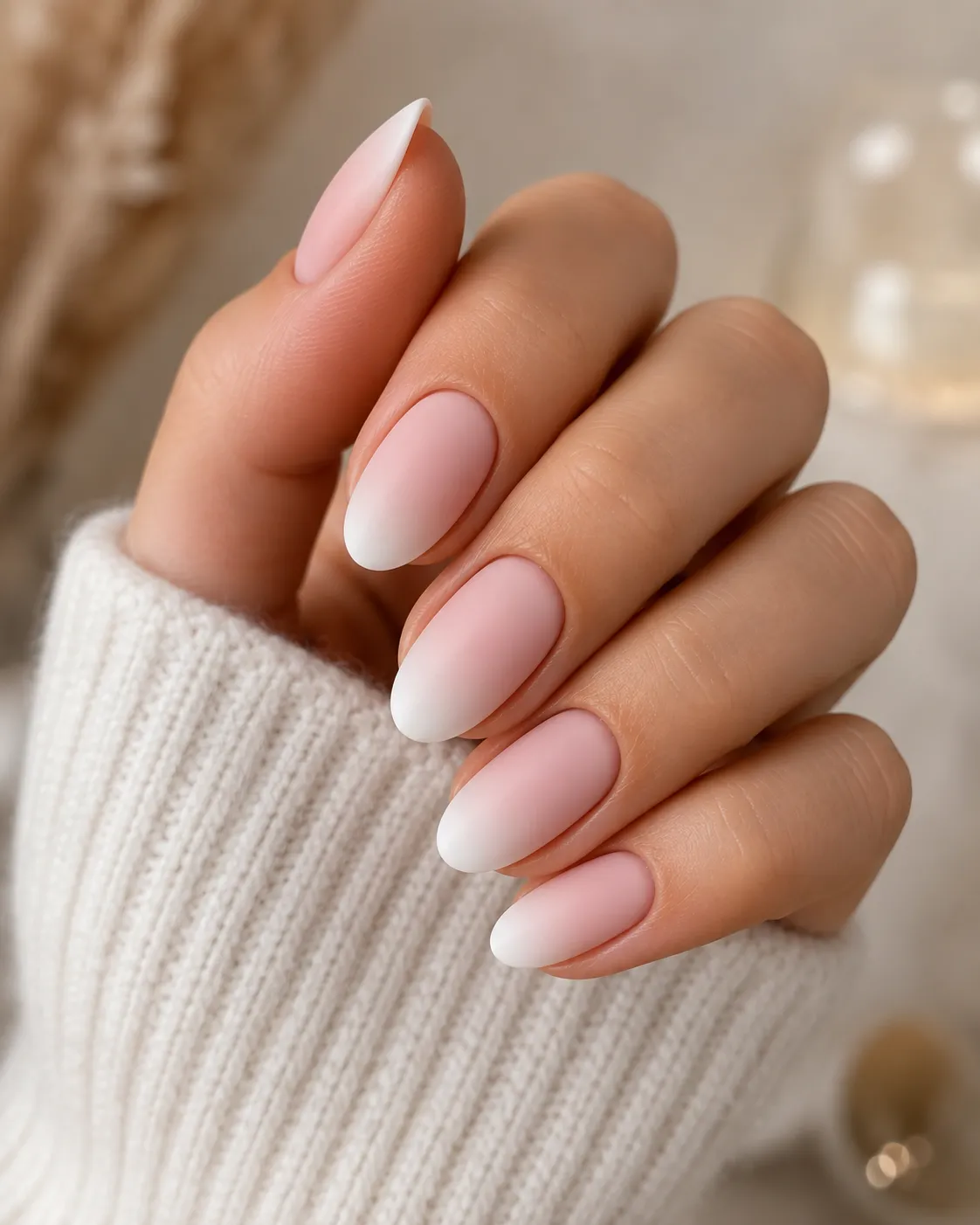
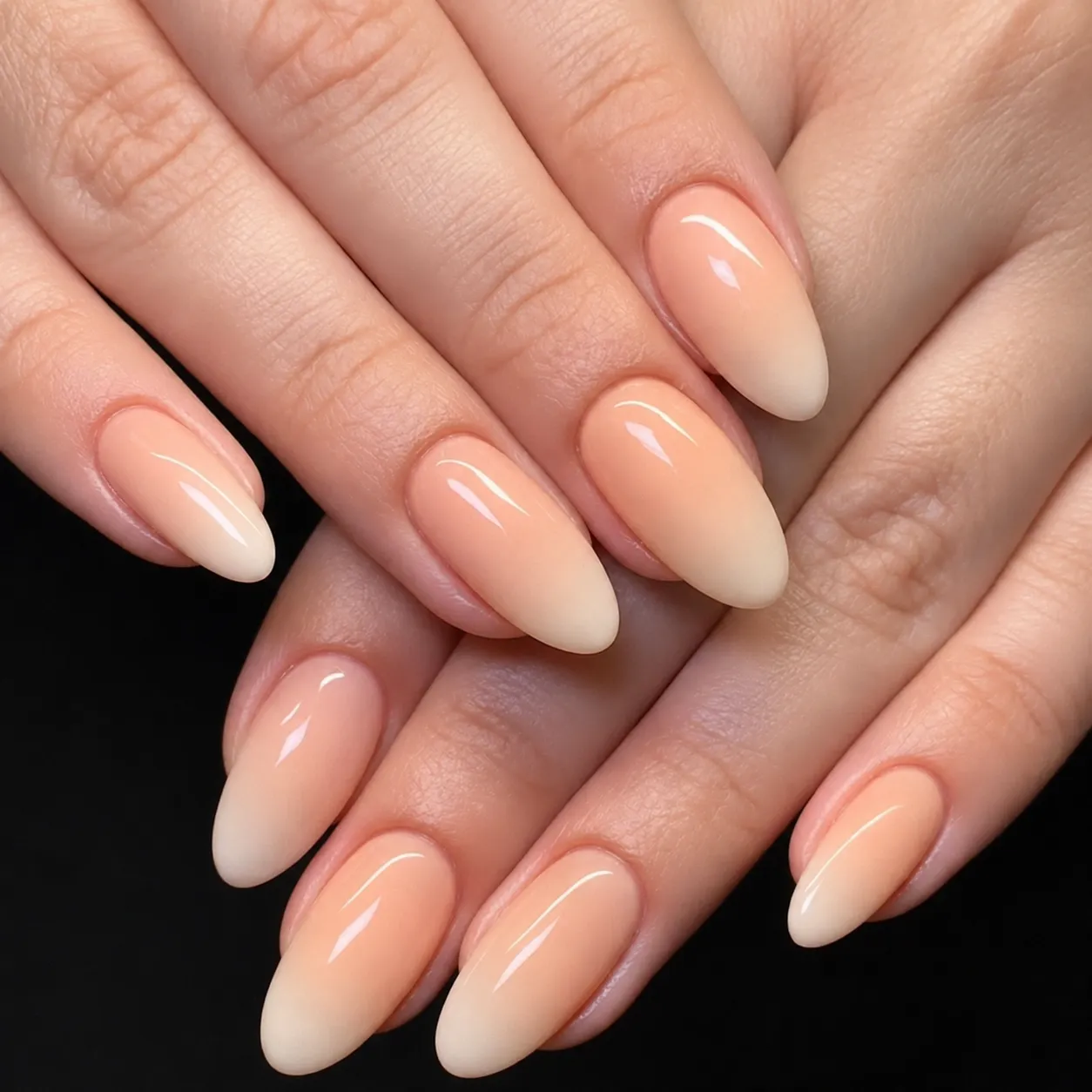
The classic glossy fade remains the reference point, but the base can support restrained art without losing its identity. The strongest variations preserve the gradient rather than covering it.
Choose Your Baby Boomer Look
What Makes a Baby Boomer Manicure Different?
A traditional French tip separates the nail bed and free edge with a visible line. A Baby Boomer manicure softens that structure into a gradient. The white still belongs toward the tip, and the pink or nude still belongs toward the cuticle, but the middle becomes a transition zone rather than a border.
That distinction matters. A successful Baby Boomer set should not look like a white tip blurred at the last moment. The fade must be planned across the full nail: base opacity, white placement, apex, length, and final topcoat all affect whether the result reads as seamless or streaky.
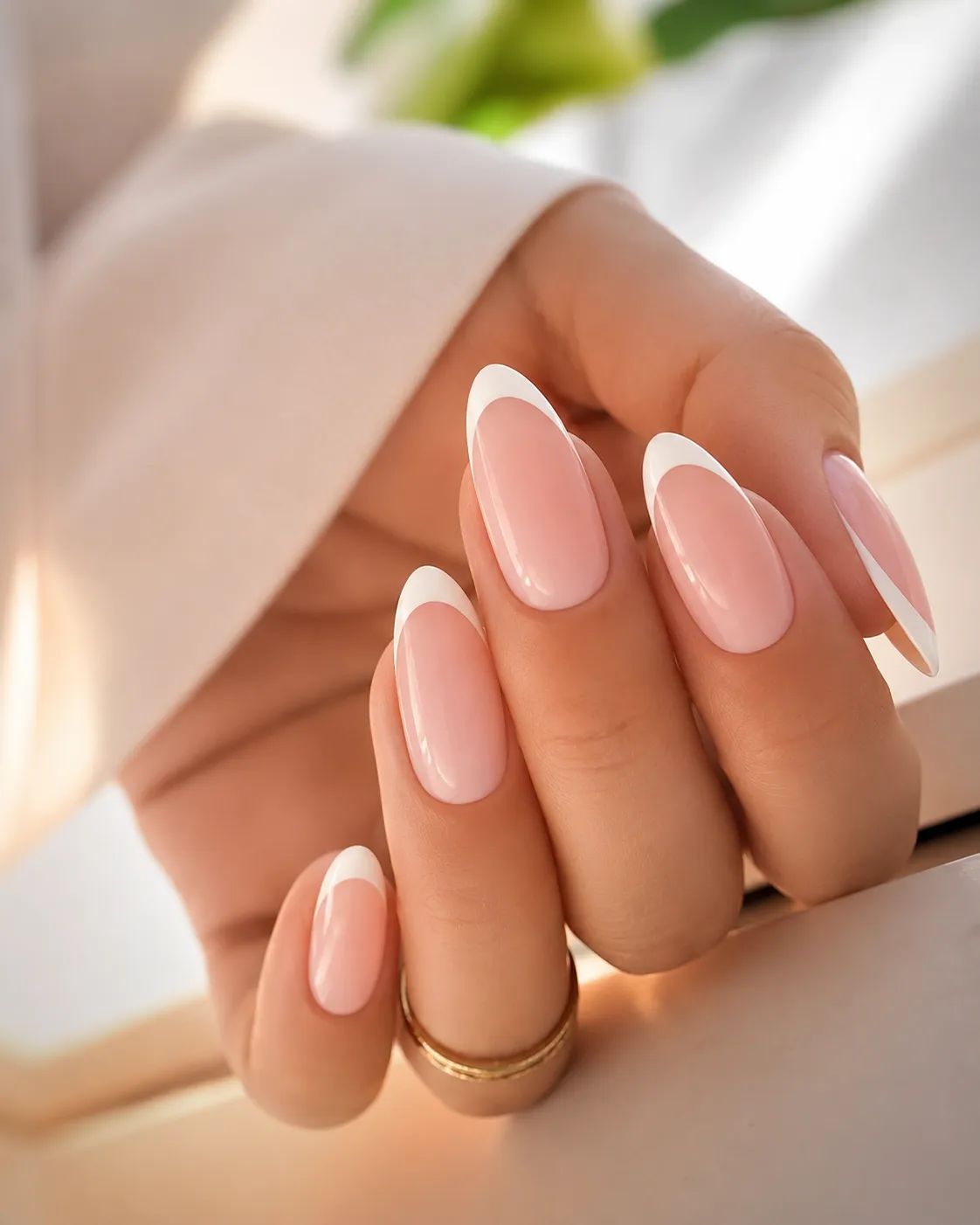
Classic French
A clearly defined white tip. Best when you want graphic contrast and a recognizable smile line.
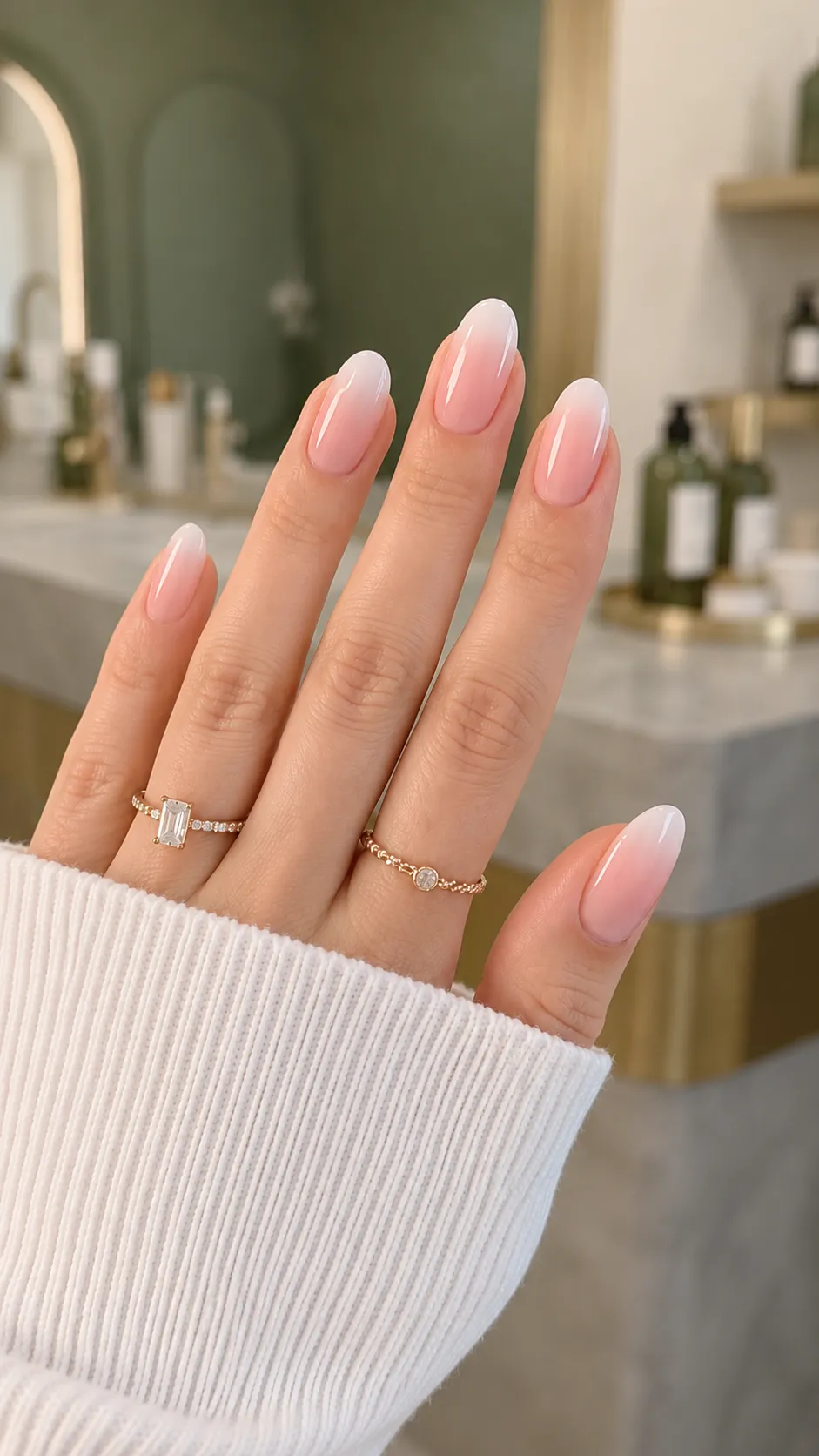
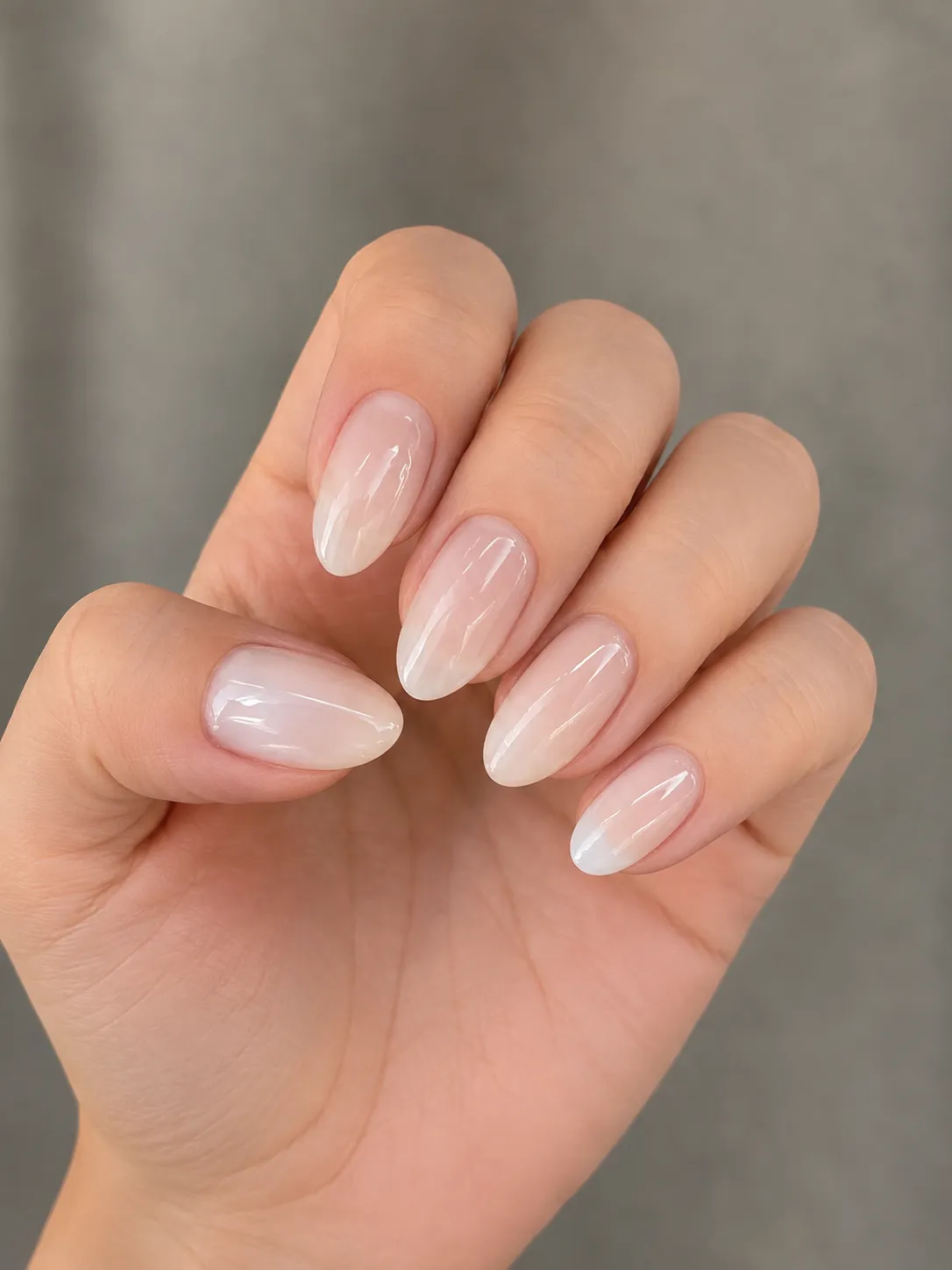
Baby Boomer
Pink-to-white placement remains, but the border is dissolved into a controlled ombré.
Milky Nails
One translucent veil across the nail rather than a pink base transitioning toward a white tip.
“Baby Boomer,” “French fade,” “pink-and-white ombré,” and “ombré French” are often used for closely related looks. Salon terminology is not perfectly standardized, so showing a reference image is more reliable than relying on the name alone.
The Anatomy of a Clean French Fade
The most useful way to judge this manicure is to stop looking at the nail as two colors. A strong set has five visual zones that merge without abrupt bands.
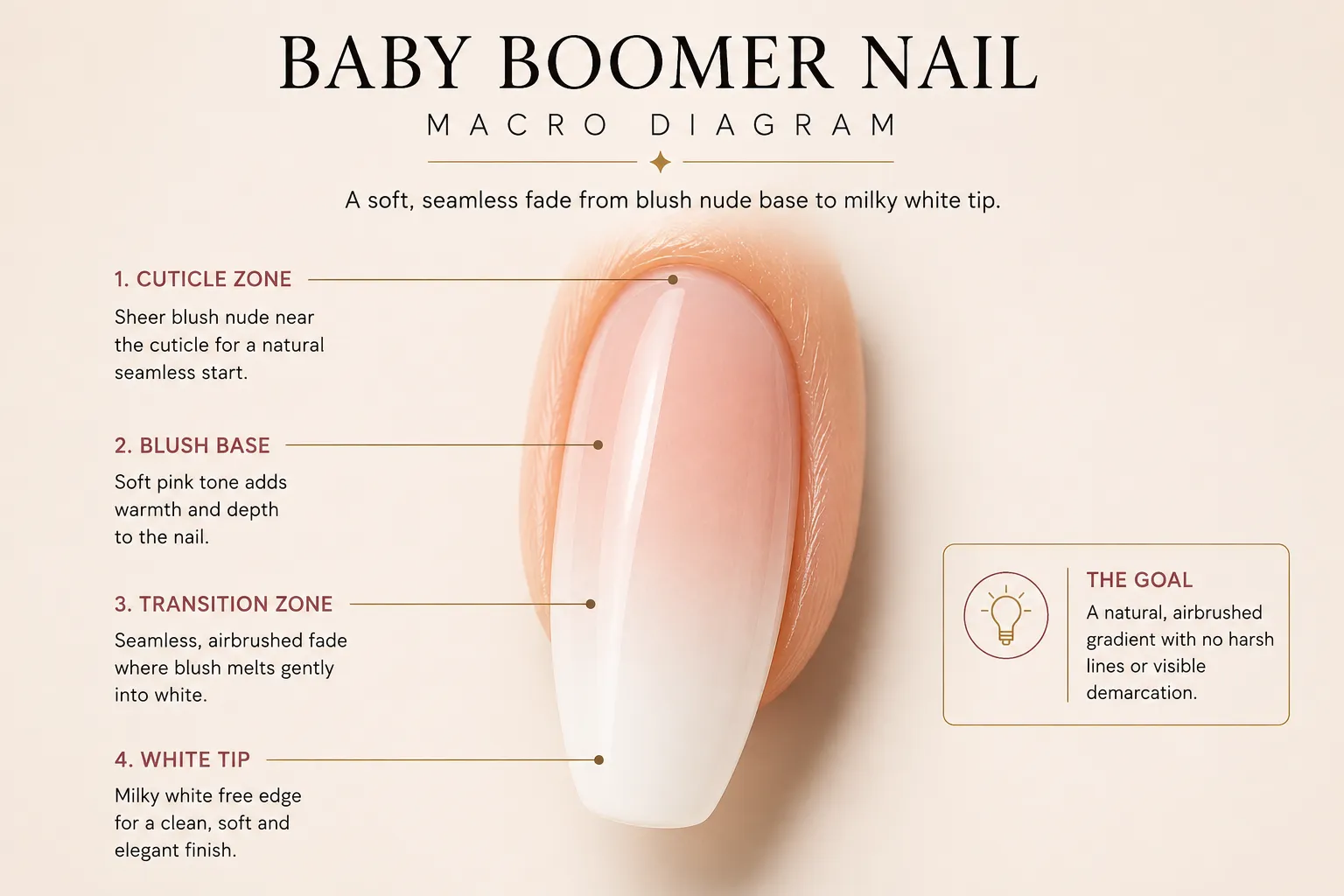
| Zone | What good work looks like | Common failure |
|---|---|---|
| Cuticle zone | Thin, neat product placement with a natural-looking base color | Flooding, bulk, or an opaque pink ring |
| Blush zone | Even pink or nude coverage that complements the skin | Patchiness or an undertone that turns grey, orange, or chalky |
| Transition | A gradual overlap with no obvious horizontal band | A visible stripe where pink stops and white begins |
| White concentration | Softest in the middle, strongest toward the free edge | White pushed too high, making the nail look short or cloudy |
| Free edge | Balanced opacity and equal placement across the set | Uneven white depth from finger to finger |
Does Baby Boomer Really Photograph Better?
A low-contrast gradient can appear softer in close-up photography than a sharply divided pink-and-white design, especially when the manicure, lighting, dress, and jewelry are all pale. But “better” is not universal. A crisp French tip may be preferable when the bride wants strong definition, while a Baby Boomer fade is better suited to a diffused, romantic visual direction.
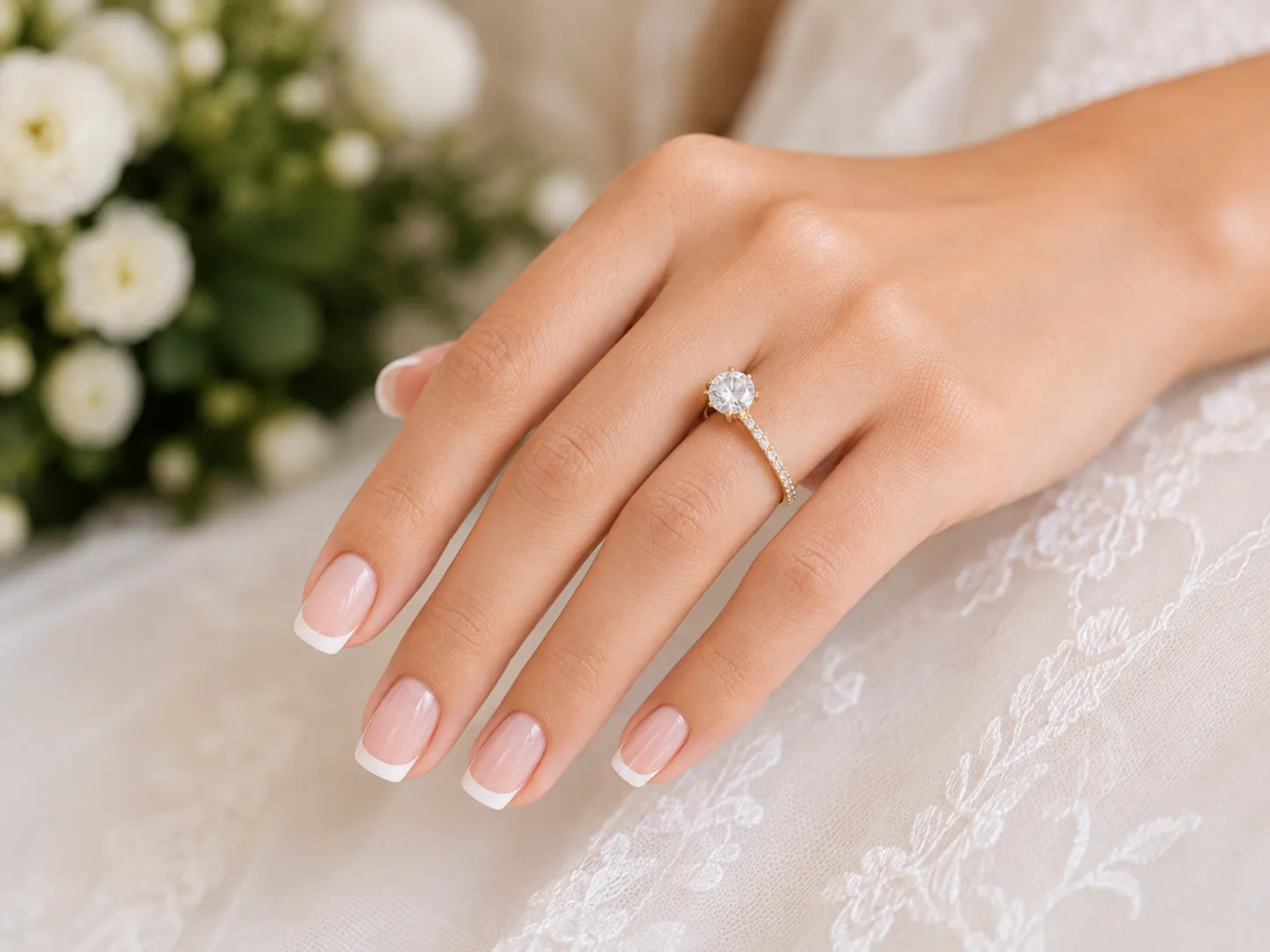
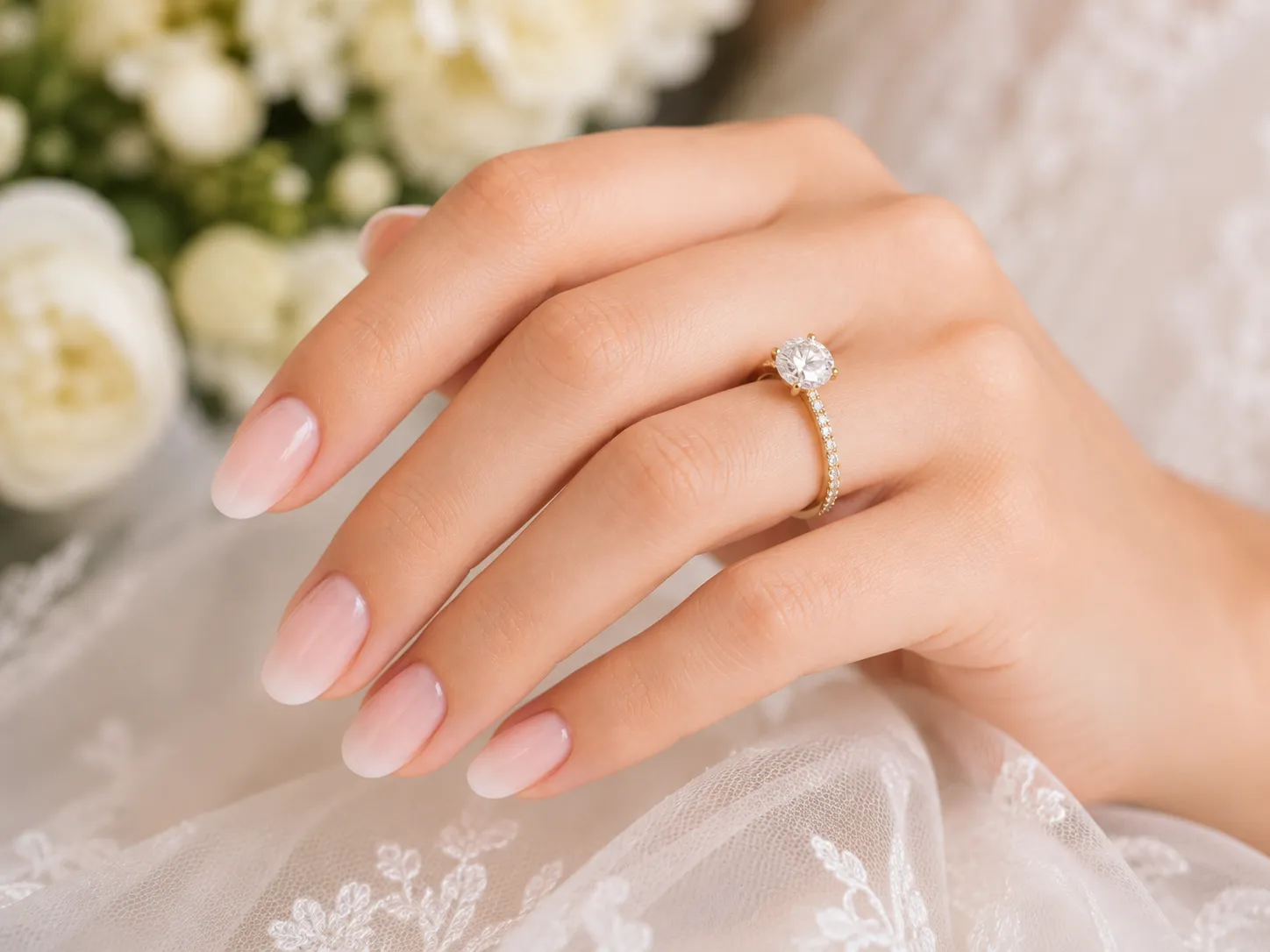
Choose the fade because it matches the visual language of the wedding—not because every bride is required to wear it.Manicure Aesthetics editorial principle
Bridal Shade Matching: Dress, Metal, and Undertone
“Pink and white” is not one fixed formula. The most refined bridal sets adjust the base and the white according to the dress, jewelry metal, and the client’s undertone. Bright optic white can look perfect beside a cool white dress but disconnected beside ivory, champagne, or antique lace.
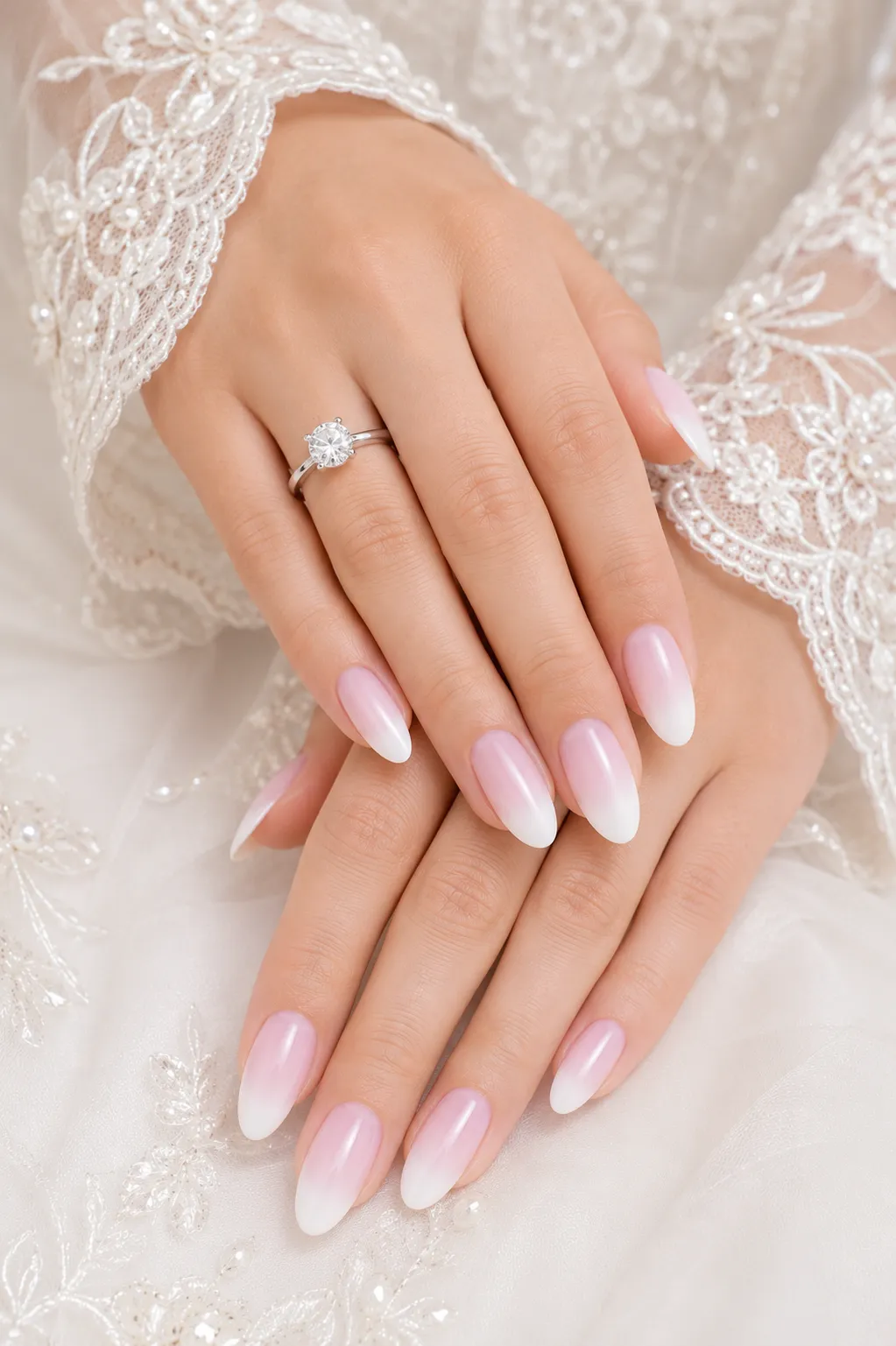
Cool Blush Fade
Use a rosy or neutral-pink base with a clean soft white. Avoid excessive peach or yellow warmth.
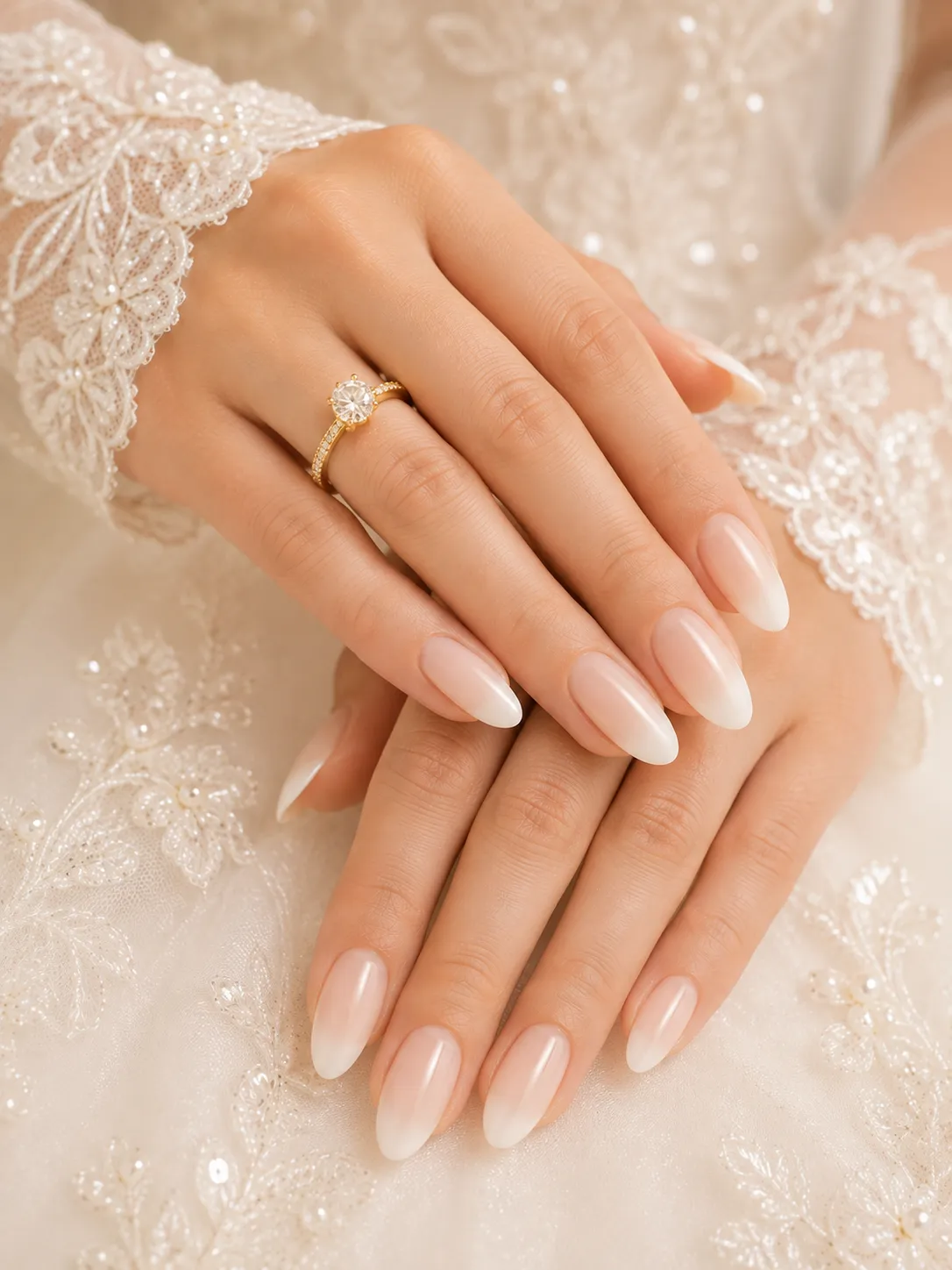
Warm Nude Fade
A beige-pink base and creamy white edge usually sit more naturally beside ivory fabric and warm metals.
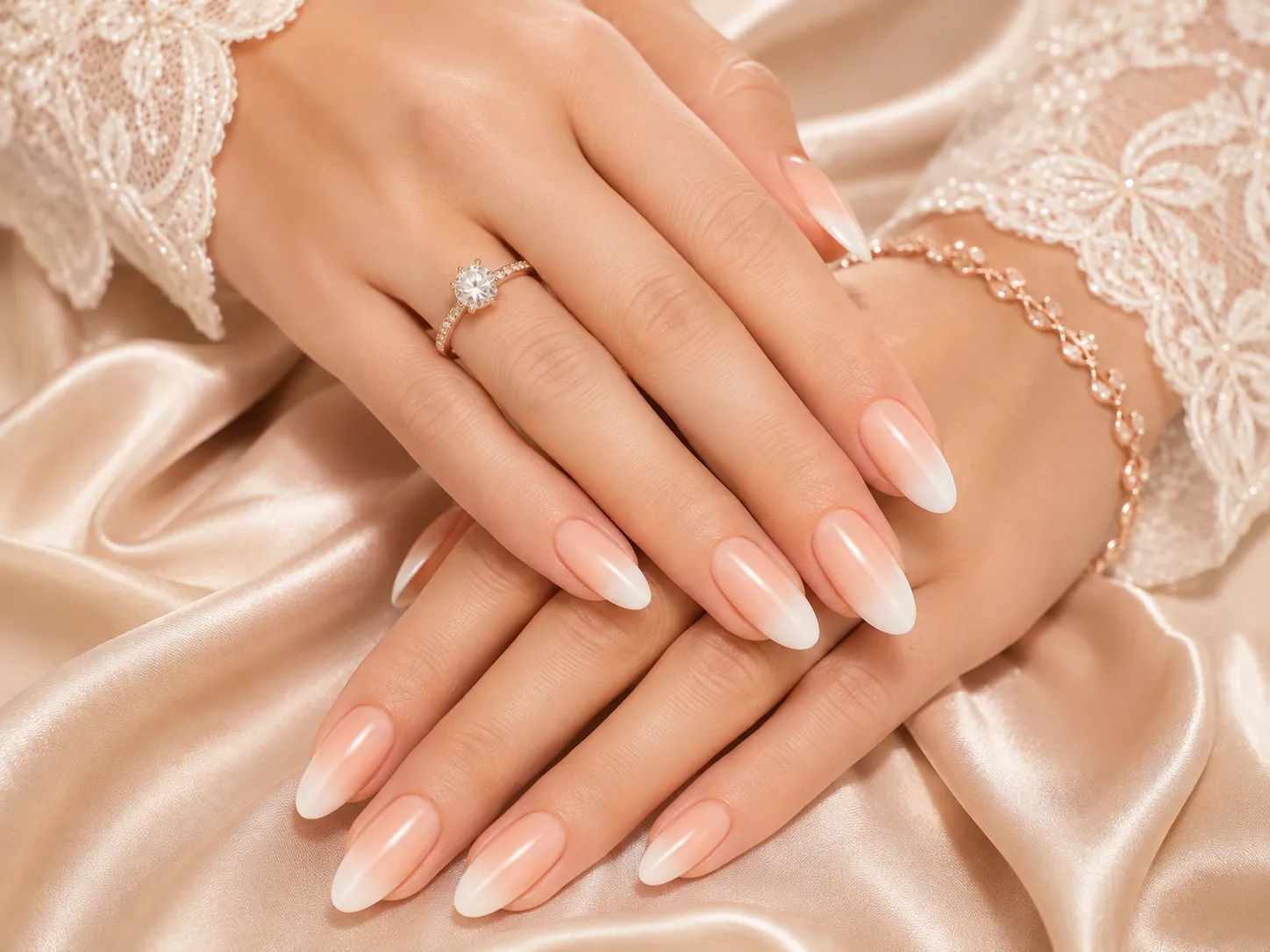
Peach-Blush Fade
Subtle peach warmth can harmonize with champagne satin without turning the manicure orange.
Four Skin-Tone Directions
The goal is not to “match” skin perfectly. It is to choose a base that looks intentional against the hand rather than ashy, overly pink, too beige, or disconnected.
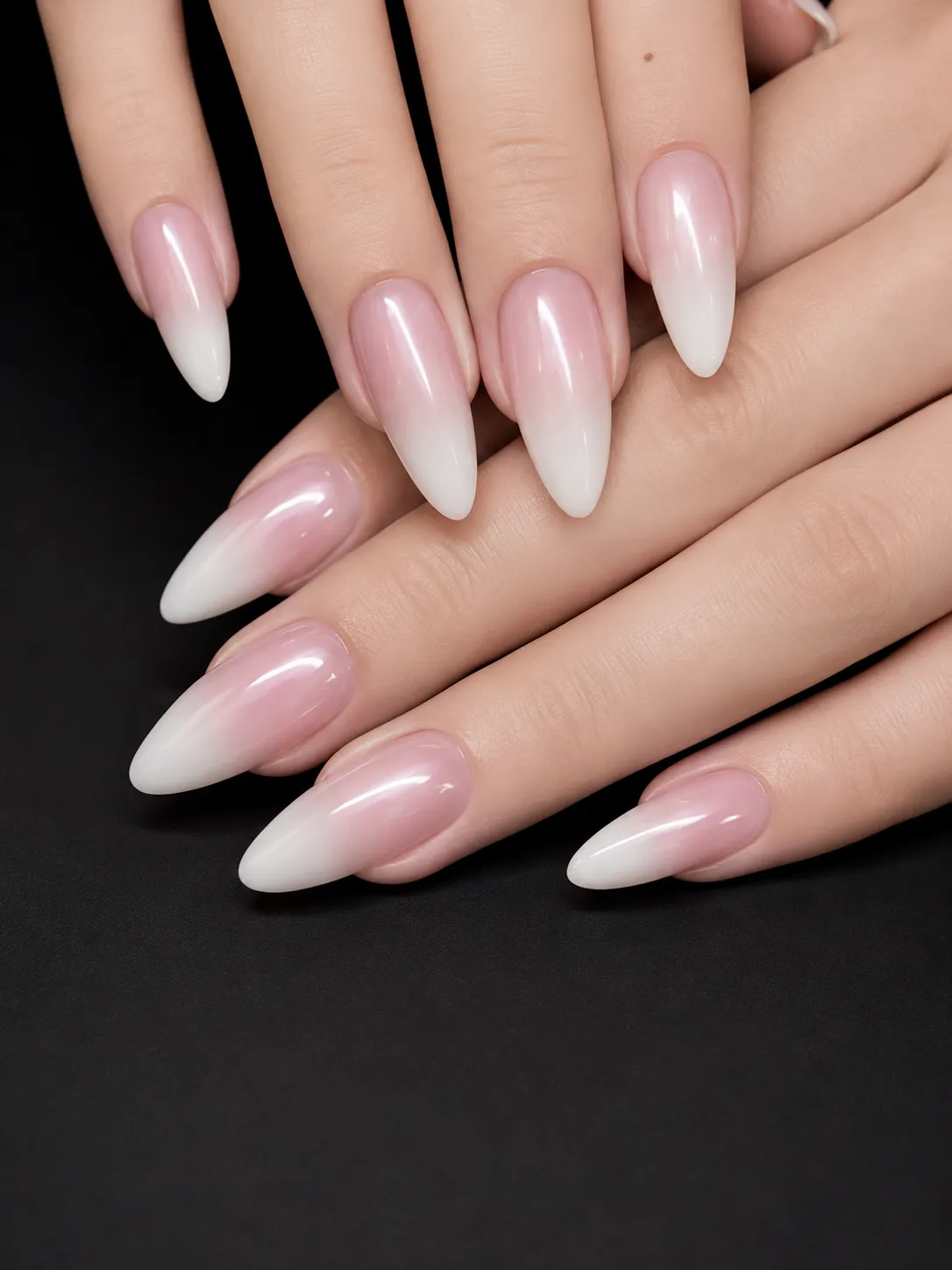
Rosy Translucent Base
Soft rose or neutral pink can prevent the white edge from looking overly stark.
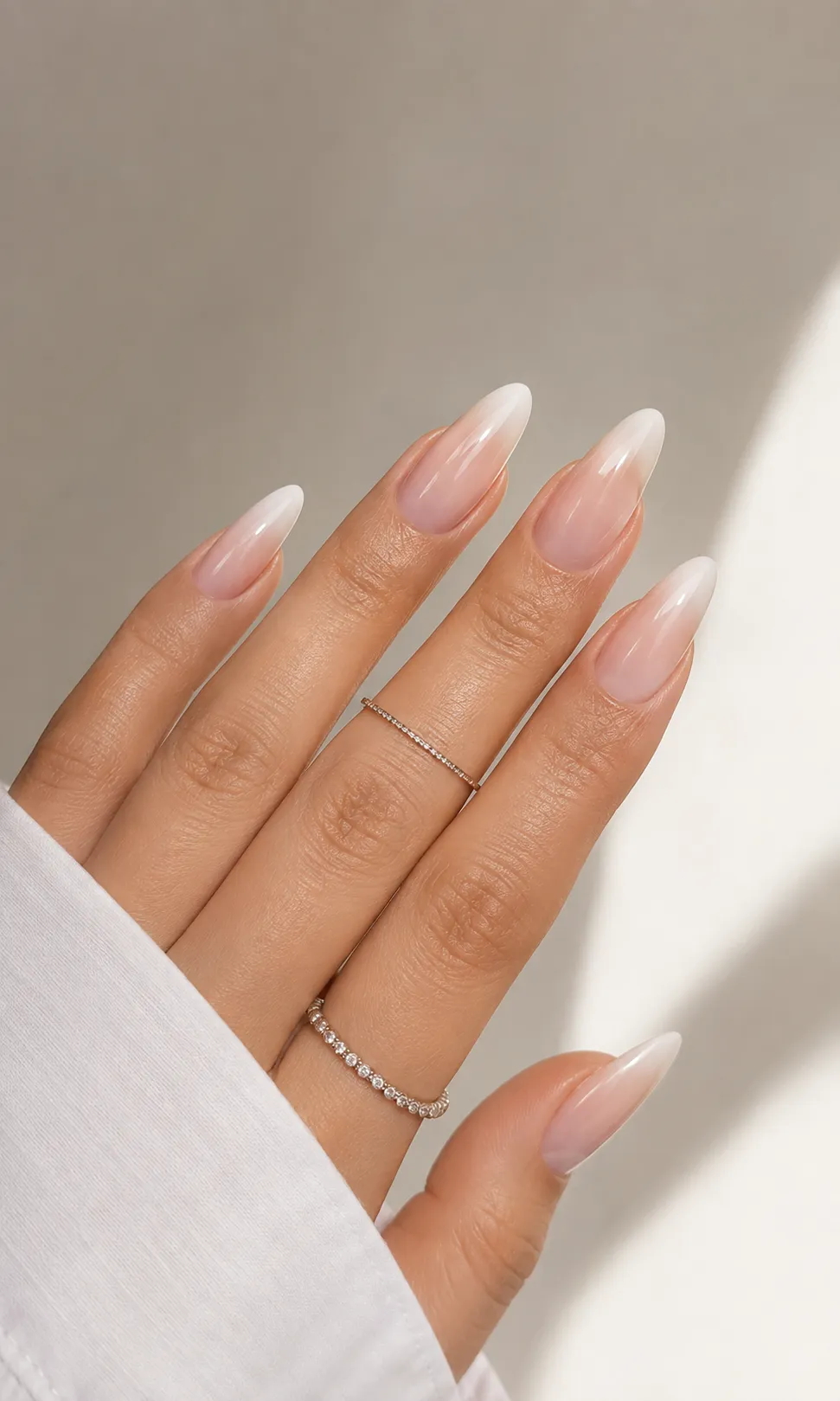
Balanced Blush-Beige
A neutral beige-pink base gives flexibility with both cool and warm white finishes.
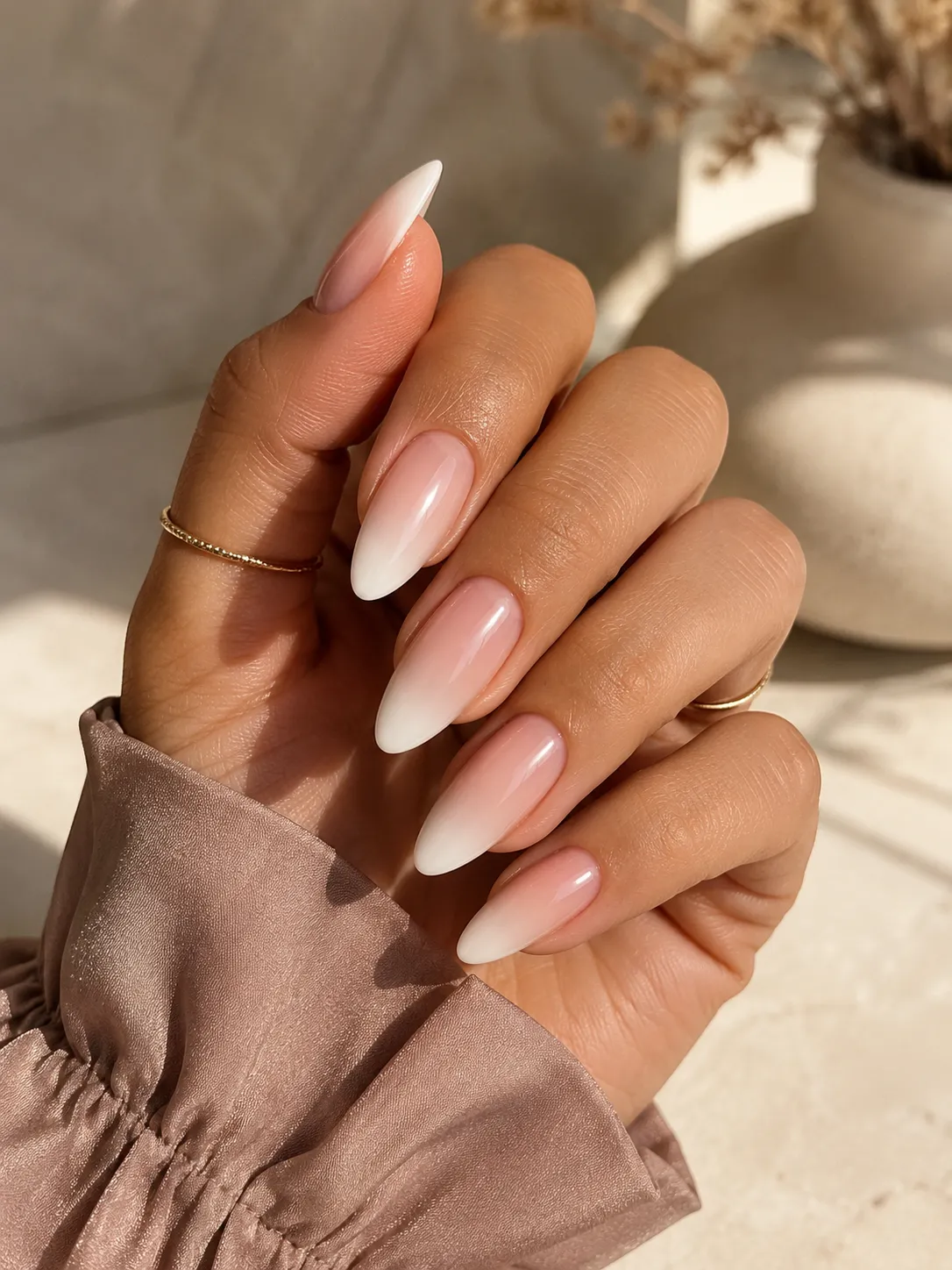
Warm Nude-Pink
A controlled warm base can look more harmonious than a blue-toned pink that turns grey.
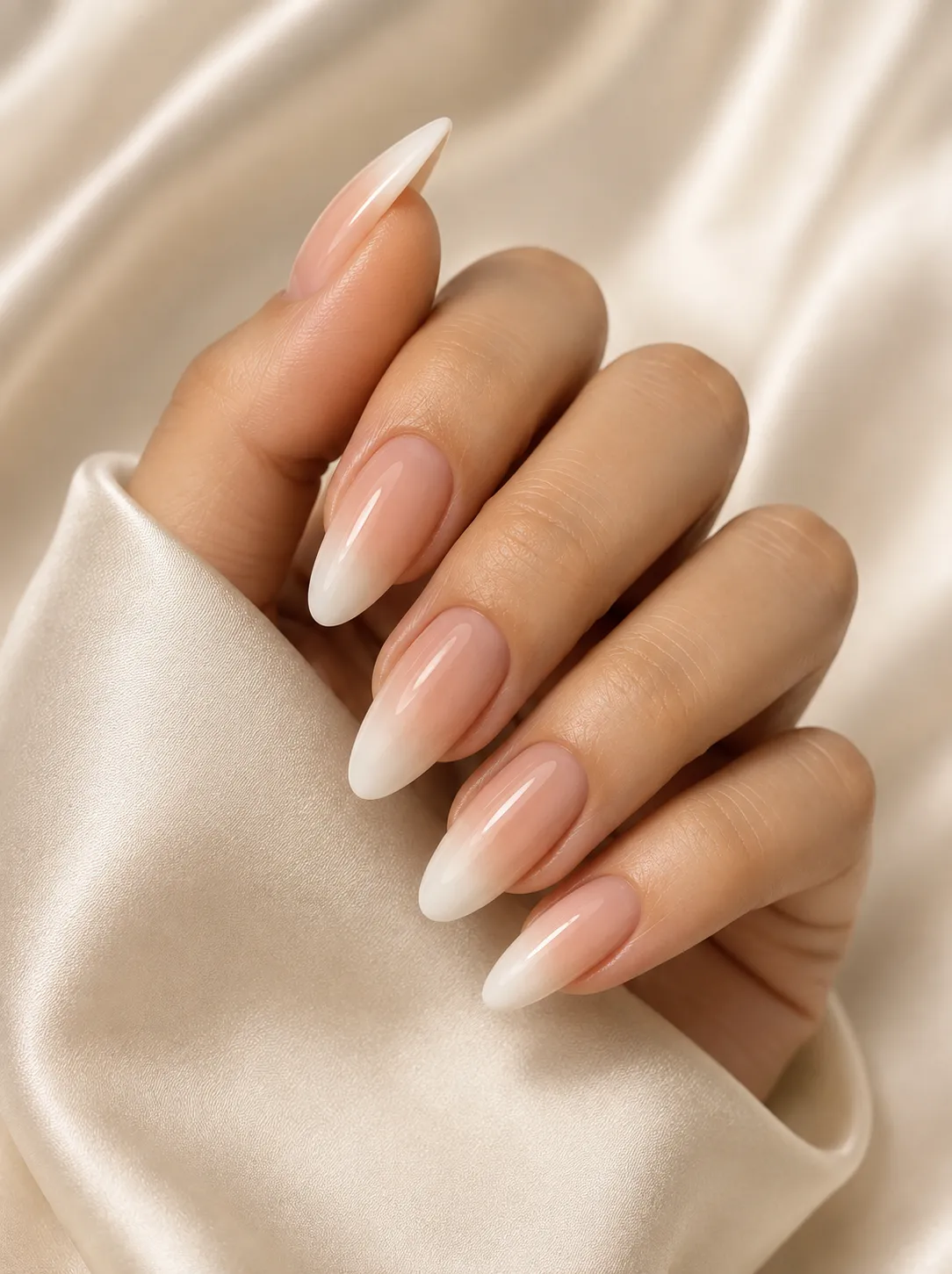
Rich Sheer Nude
A deeper translucent nude with soft ivory can preserve contrast without creating a chalky base.
Ask the technician to place two or three uncured base shades beside the skin before committing. The right base should brighten the hand while remaining translucent enough to preserve the fade.
Eight Nail Shapes, Eight Different Results
Baby Boomer nails are not limited to almond. Shape changes the proportion of pink, transition, and white, which changes the entire personality of the manicure.
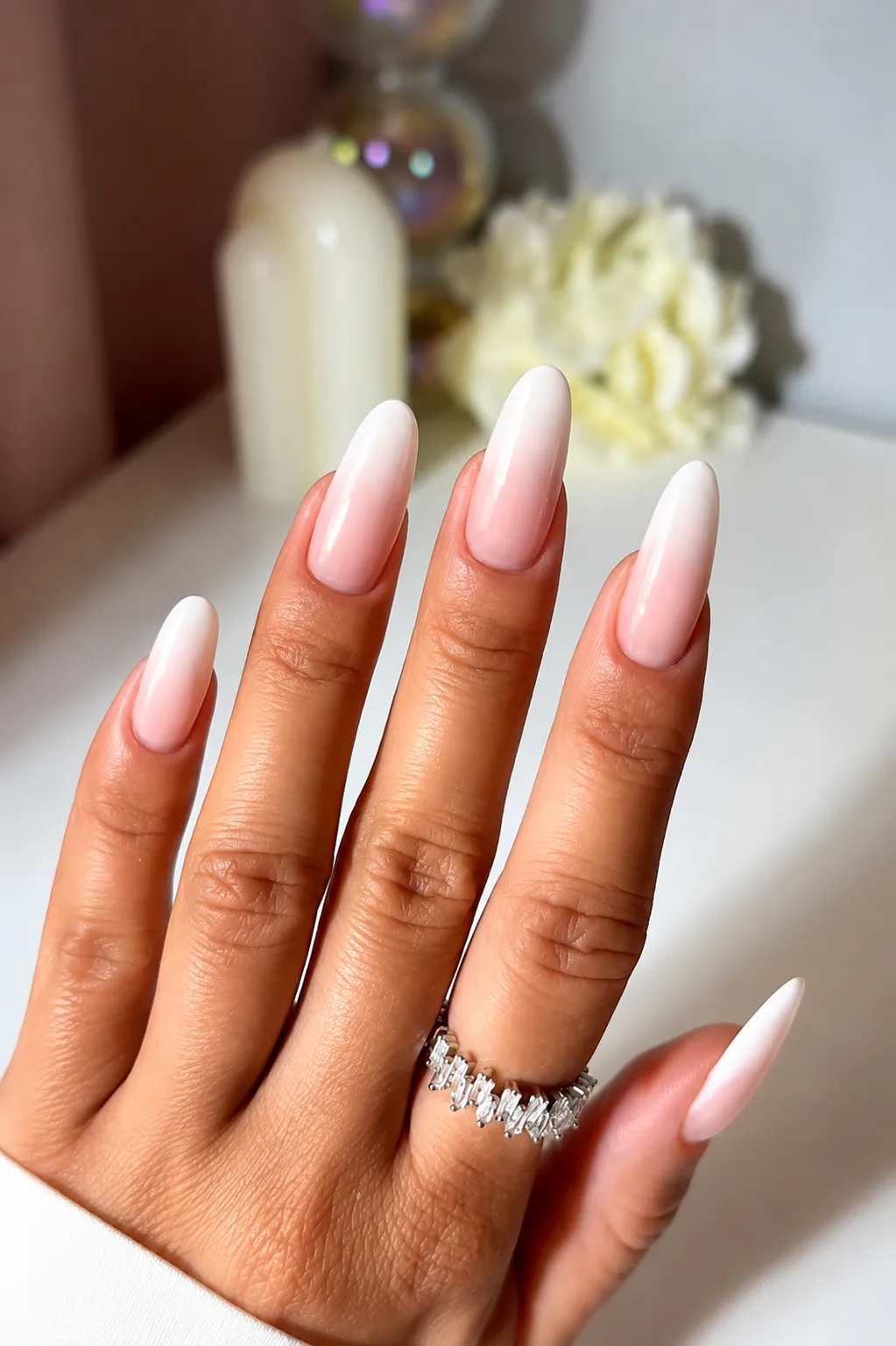
Almond
The taper naturally lengthens the gradient and creates the familiar soft bridal silhouette.
Explore almond French tips →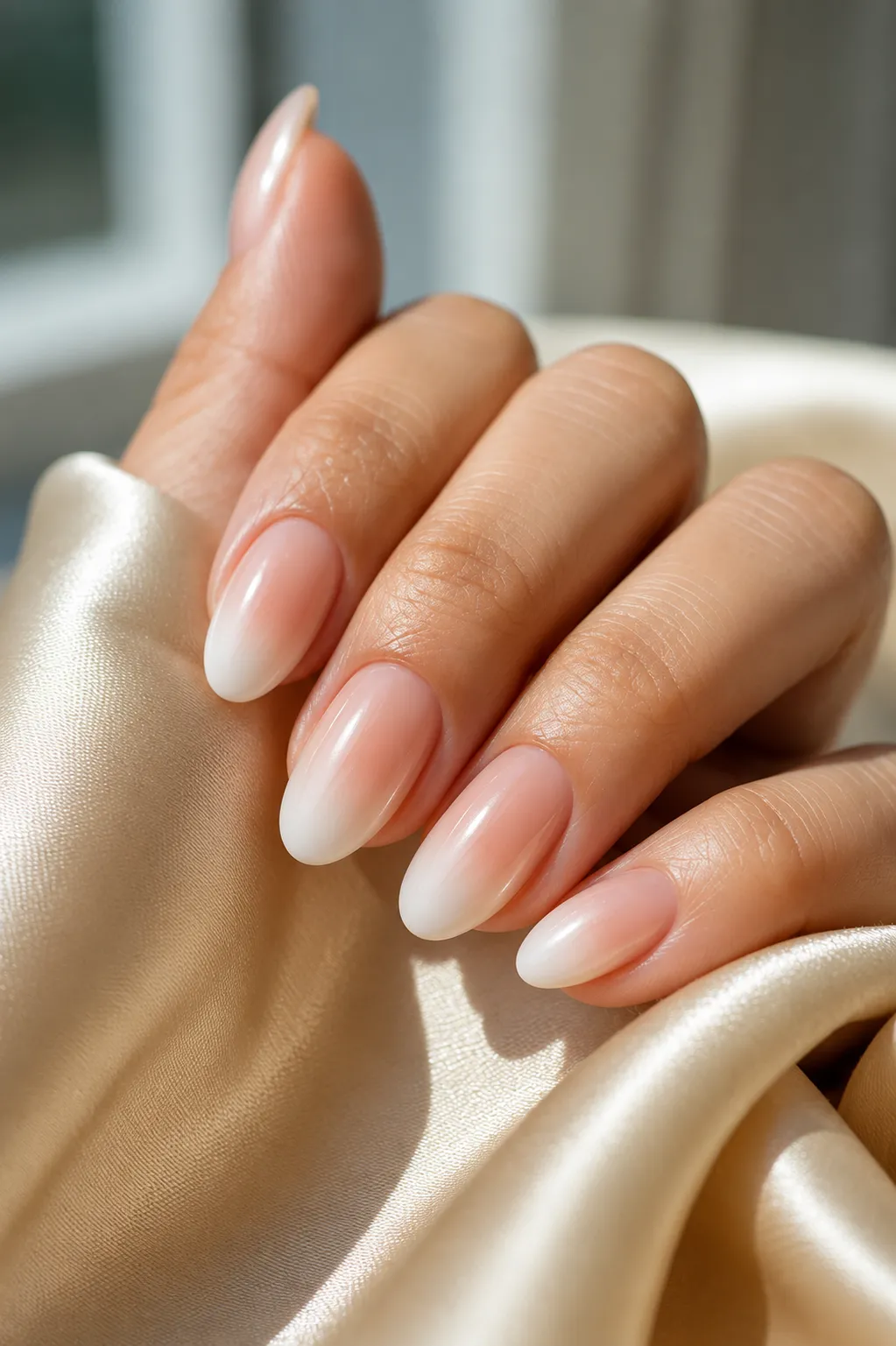
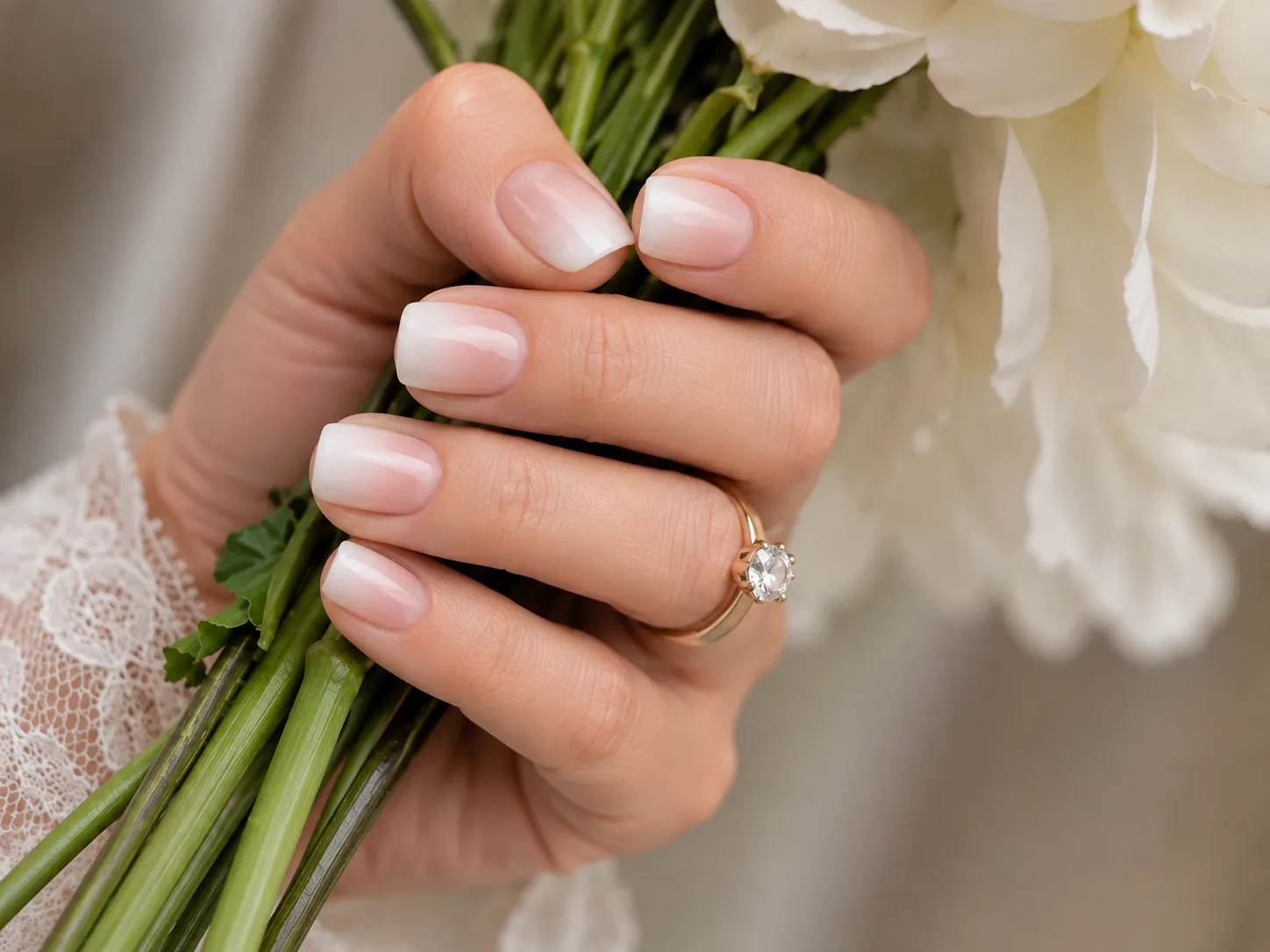
Oval
Rounded sides keep the transition soft without the stronger taper of almond.
Squoval
The broad nail plate gives the gradient room while the softened corners remain wearable.
See the squoval guide →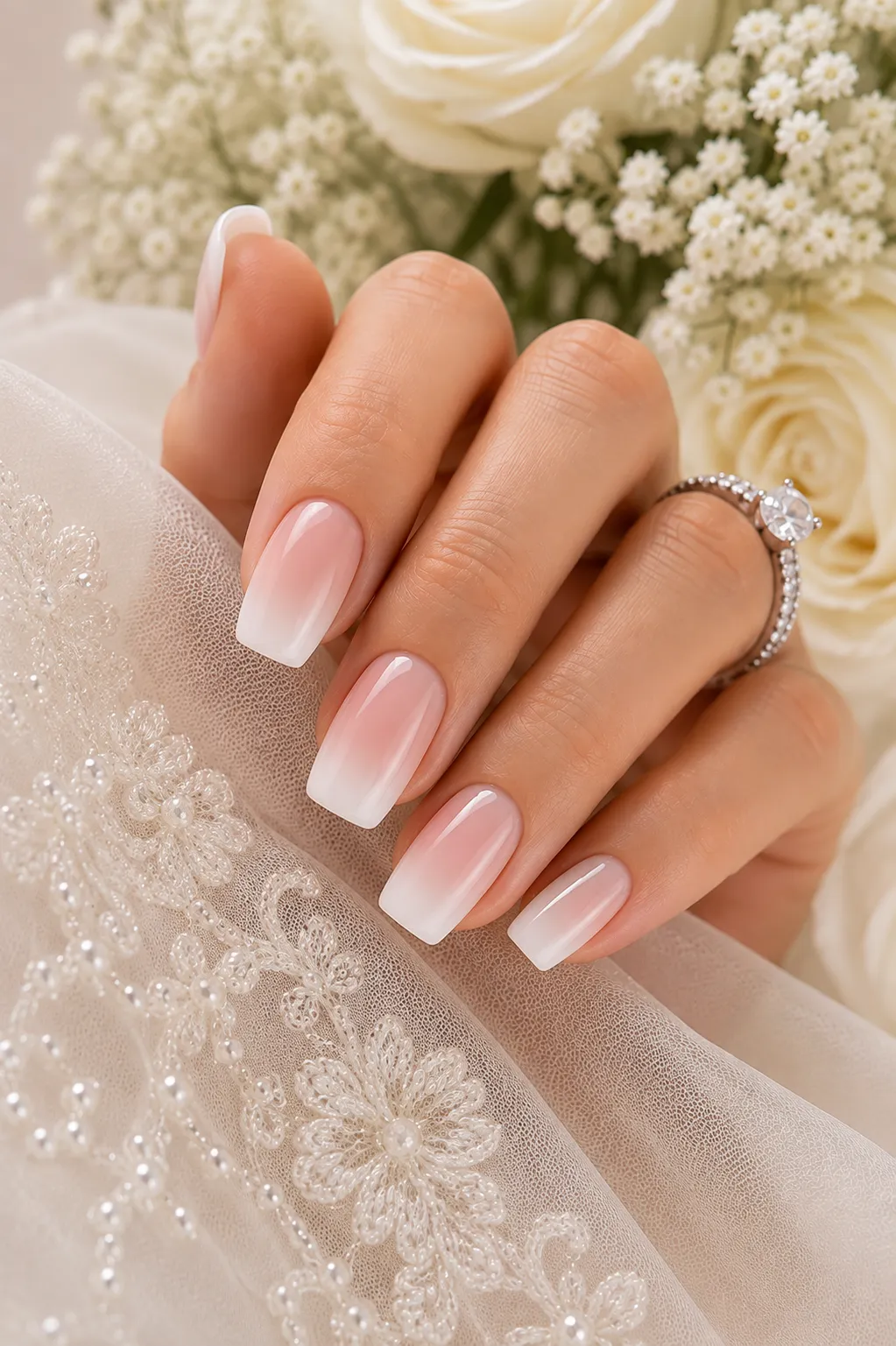
Soft Square
A flat free edge adds structure while rounded corners stop the look from becoming severe.
Compare square French tips →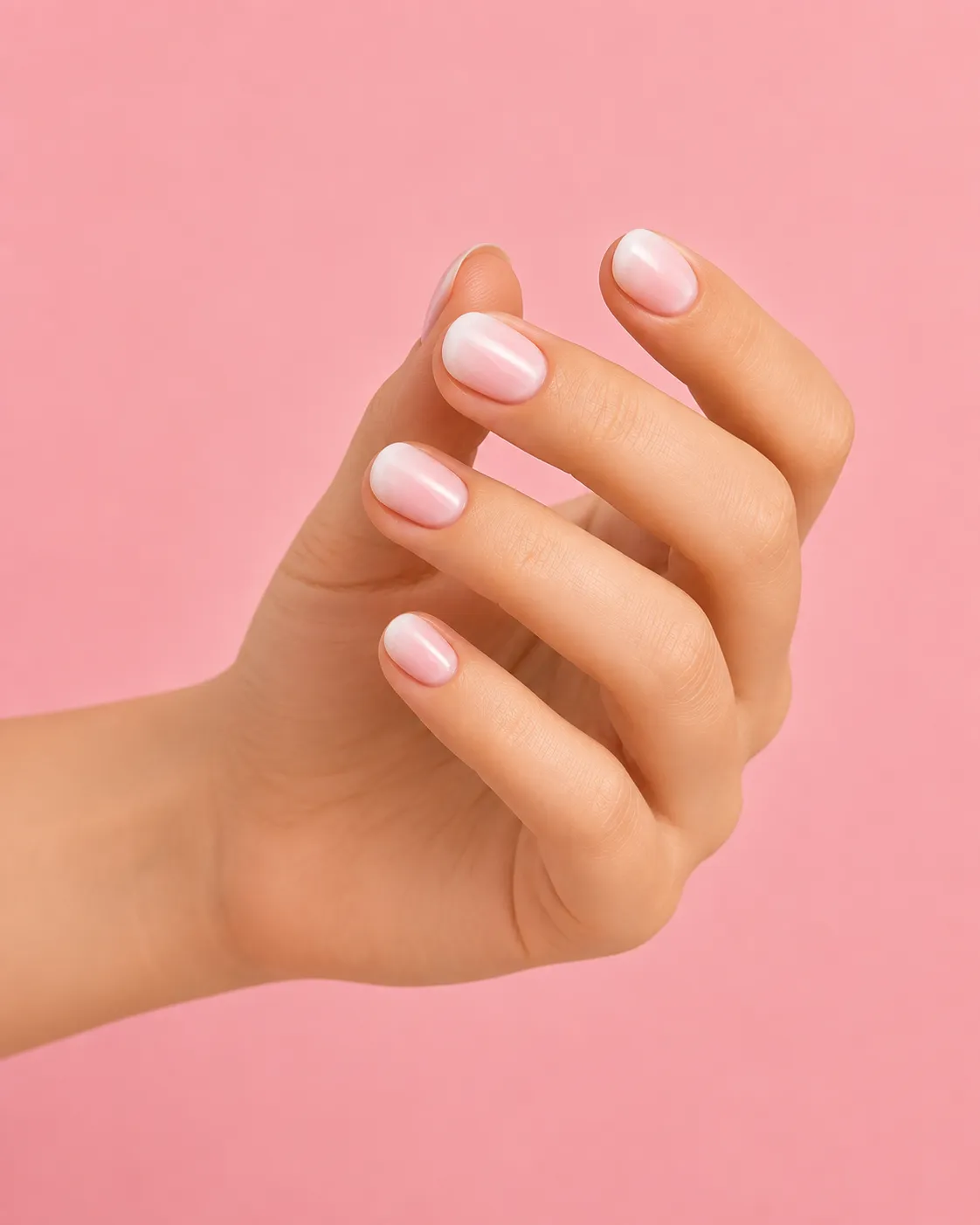
Round
Works best with a compressed, low-contrast fade rather than a large white section.
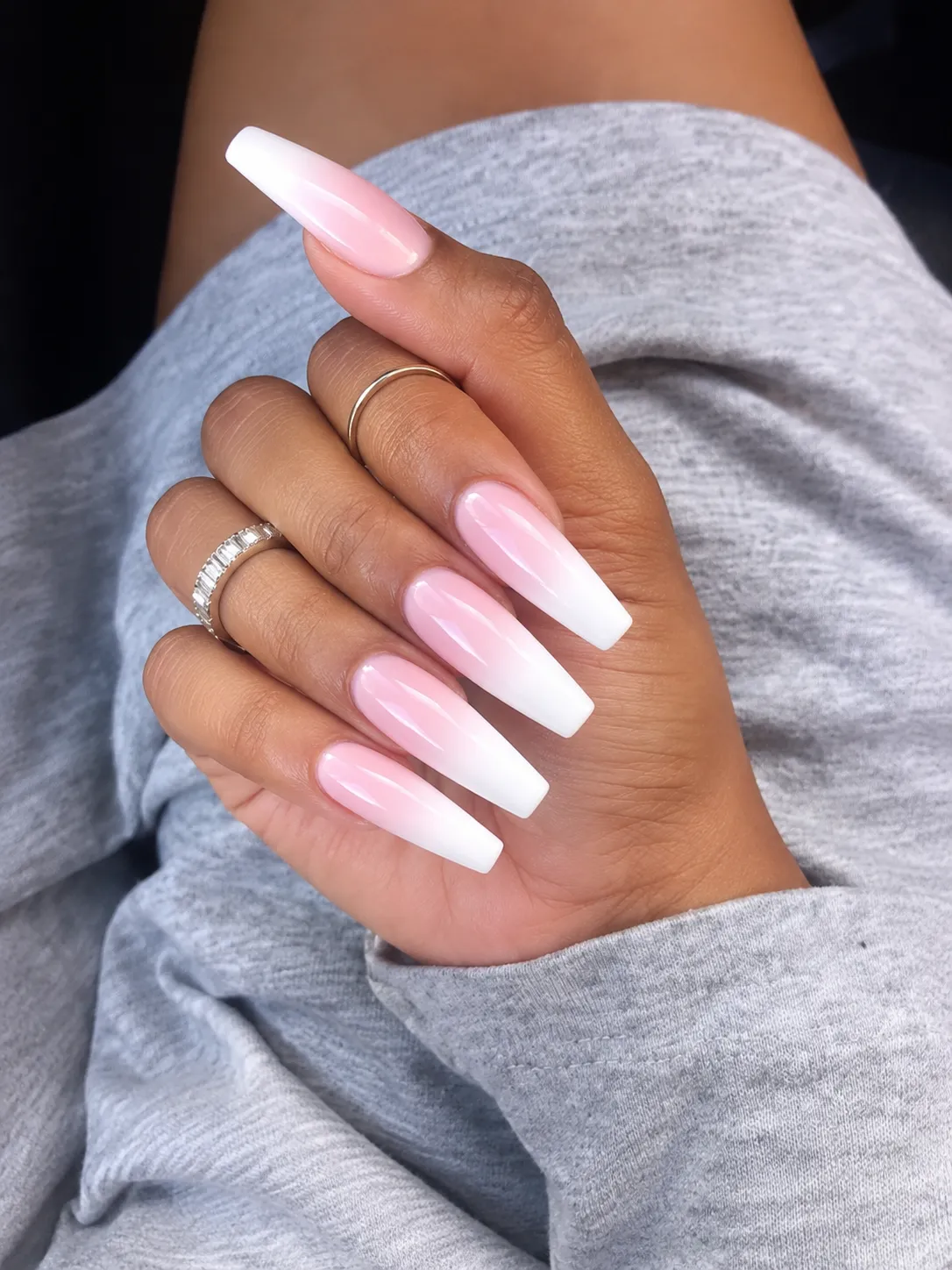
Coffin
The flat tip makes the gradient feel sharper and more fashion-led than romantic.
Compare coffin and stiletto →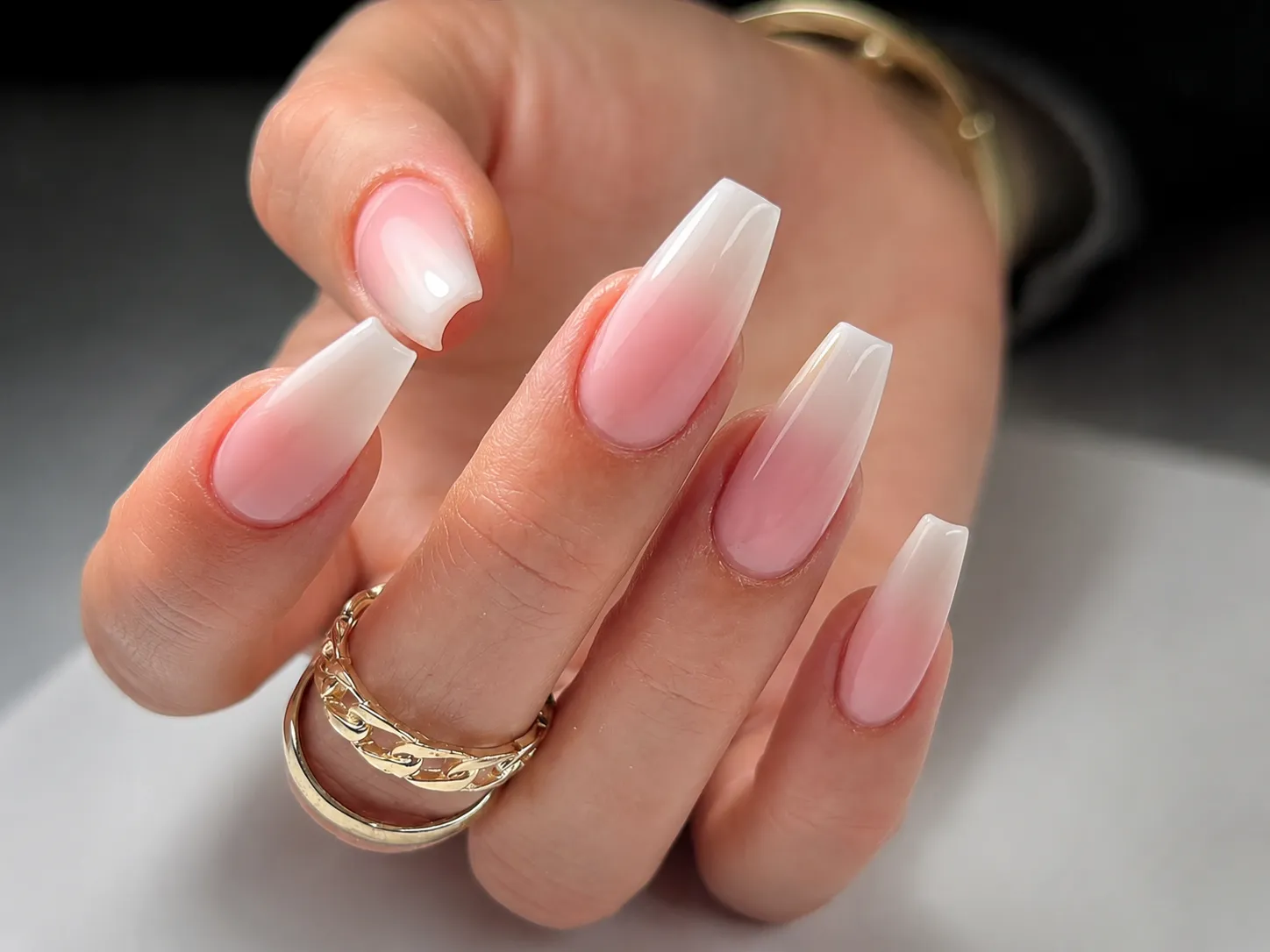
Ballerina
A narrower coffin profile creates a more delicate result while preserving the long fade.
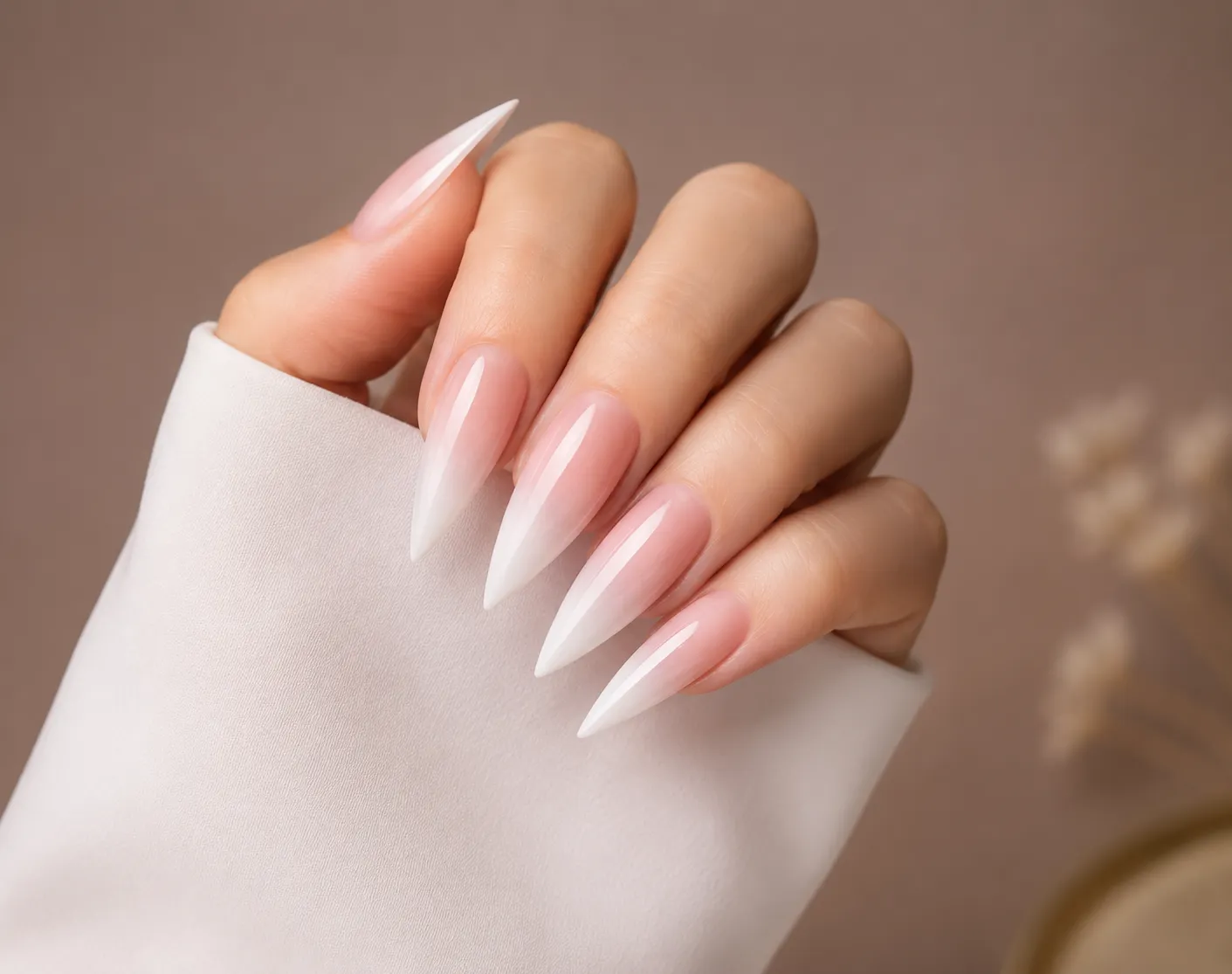
Stiletto
The point stretches the white concentration forward, turning a soft gradient into a statement shape.
Airbrush, Sponge, Brush, or Ombré Gel?
The application method affects texture and control, but the technician’s skill remains the decisive factor. Excellent work can be produced with several methods; poor control can make any method look uneven.
| Method | Strength | Watch for | Best fit |
|---|---|---|---|
| Airbrush | Very fine, even mist with controlled placement | Overspray, weak opacity, or poor color matching | Soft editorial and bridal fades |
| Sponge | Accessible and effective for layered gradients | Visible texture, patchiness, or bulky layers | Gel-polish services and DIY practice |
| Detail brush | Precise product control and hand-shaped blending | Streaks or a horizontal band | Technicians skilled in wet-on-wet blending |
| Ombré gel or acrylic | Gradient built directly into the structure | Excess thickness or inconsistent product ratios | Enhancements requiring strength and length |
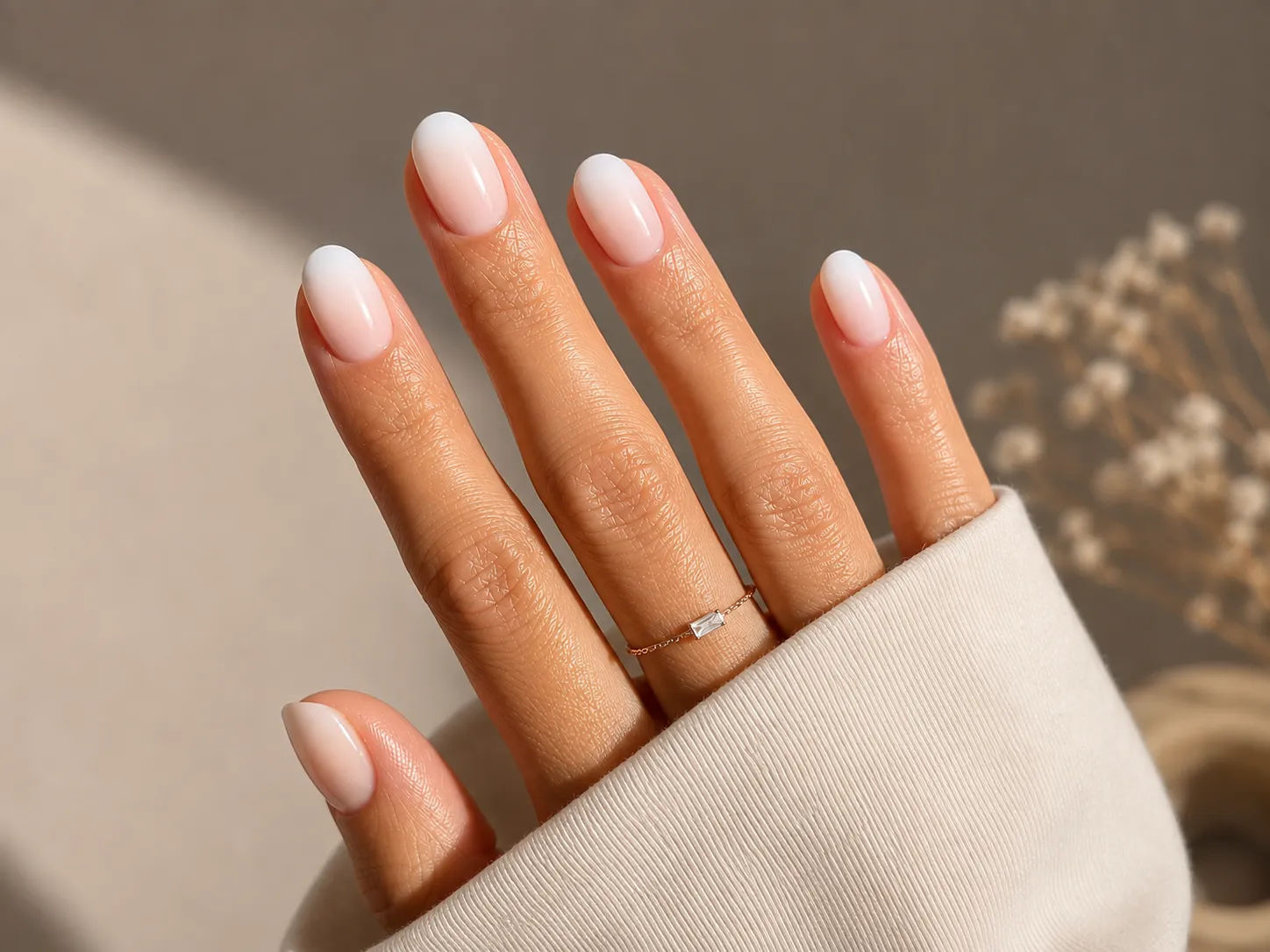
How to Tell Whether the Salon Work Is Actually Good
A glossy topcoat can disguise minor irregularities, so judge the set from several angles and under neutral light. These signs matter more than whether the salon used a fashionable product name.
The fade begins at a similar visual point across all fingers.
There is no obvious stripe where the pink stops and white starts.
The white strengthens gradually toward the tip rather than appearing as a cloudy block.
The blend reaches the sides without flooding skin or leaving bald patches.
Enhancement structure remains balanced and is not distorted by thick color layering.
The base looks intentional against the hand instead of grey, orange, or chalky.
The product is neat and refined near the new-growth zone.
The final white depth is proportionate across the set.
Gloss lines remain continuous instead of breaking over bumps or dips.
Glitter, chrome, or heavy art is not being used to conceal a weak blend.
Common Mistakes
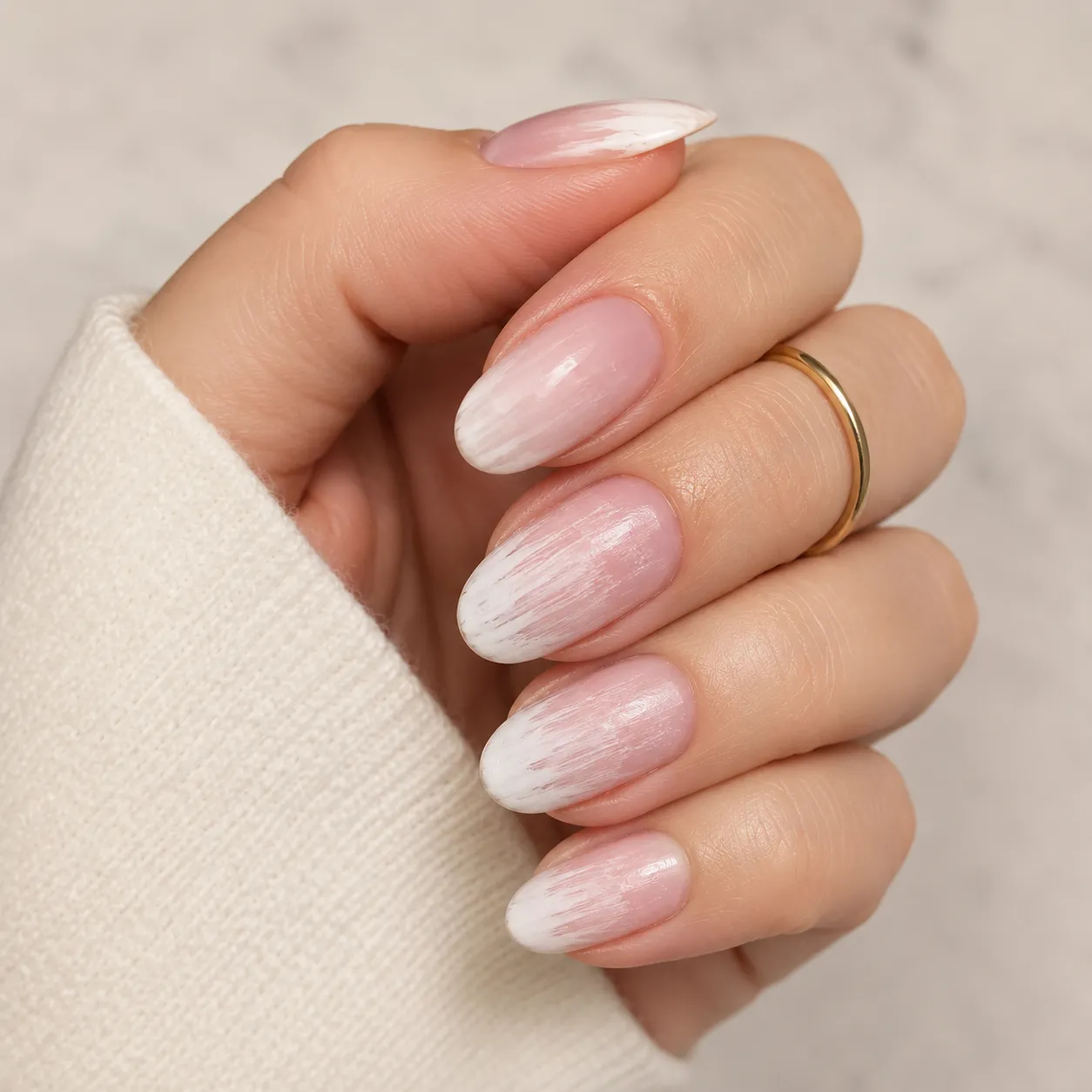
The White Band
The colors overlap too little, leaving a stripe rather than a fade.
Bulk at the Cuticle
Excess product makes regrowth more visible and can compromise the refined finish.
Yellowing
Product chemistry, staining, smoking, pigments, cleaners, and prolonged exposure can all affect clarity.
Short nails can wear Baby Boomer beautifully, but the fade must be compressed. When there is too little space, a micro-French tip or sheer milky overlay may create a cleaner result.
How It Wears Over Time
Because the base is usually translucent and low contrast, new growth may be less visually obvious than it is with an opaque color. That does not mean maintenance can be delayed indefinitely. Product lifting, stress, cracking, or imbalance still matters even when the color transition remains attractive.
Day 1
Cuticle area is tight, gloss is continuous, and the transition appears most saturated.
Around Week 2
The translucent base may disguise the gap, but cuticle care and product condition should still be checked.
Later Wear
Book maintenance according to growth and system condition—not only according to how visible the gap looks.
Visible lifting, cracking, imbalance, trapped moisture, tenderness, or a changed nail color matters more than whether the translucent base still disguises the growth gap.
Choosing the Product System
The fade is a design; BIAB, acrylic, hard gel, Gel X, and gel polish are product systems. Do not select a system because one method is trending. Select it according to natural-nail condition, desired length, required strength, removal preferences, and the technician’s proven skill.
| System | Useful when | Main limitation |
|---|---|---|
| Gel polish | Natural nails already have suitable length and strength | Offers limited structural correction |
| BIAB / builder gel | Natural nails need modest reinforcement and shape refinement | Not every formula or nail condition suits the same approach |
| Hard gel | More structure or controlled extension is required | Usually requires professional filing for maintenance or removal |
| Acrylic | Length, sculpting, and durable structure are priorities | Application and removal quality are highly technician-dependent |
| Gel X | A pre-shaped extension is preferred for consistent length and silhouette | Fit and application must suit the natural nail and desired architecture |
For a deeper system comparison, use the Gel X vs. acrylic vs. BIAB guide. For removal, follow the method appropriate to the actual product rather than assuming every glossy enhancement is soak-off gel.
Care Without Overcomplicating It
Apply cuticle oil regularly, wear gloves for prolonged wet work and strong cleaning products, avoid using nails as tools, and arrange professional assessment if lifting, cracking, unusual discoloration, pain, or separation appears. Surface staining and topcoat dullness should not be confused with structural failure.
Is Baby Boomer the Right French Manicure for You?
Do you want a visible French line?
A crisp or ultra-thin smile line gives stronger definition than an ombré fade.
Baby Boomer is designed for a seamless transition rather than a visible border.
Is your nail plate long enough for a gradual transition?
Medium or long nails can support a longer, softer transition.
Keep the white low and soft, or choose a micro-French or milky overlay.
Do you want understated or embellished?
Let the blending and shape carry the design.
Keep additions controlled so the fade remains readable.
Choose Baby Boomer when you want French structure without a painted boundary.
It works for bridal styling, everyday minimalism, short practical shapes, and long editorial enhancements—provided the shade, gradient length, and product system are adjusted deliberately.
What to Ask for at the Salon
“I want a Baby Boomer or French-fade manicure with a translucent [cool pink / neutral blush / warm nude] base, a soft [white / ivory] free edge, and no visible horizontal band. Keep the white concentrated low on the nail, make the transition consistent across all ten fingers, and finish it [high gloss / milky / pearl glazed]. Please show me the base shade against my skin before applying the full set.”
The Final Verdict
Baby Boomer French tip nails are not merely “blurred French tips.” At their best, they are carefully proportioned pink-and-white designs in which shade, structure, and transition are planned together. Almond and oval make the fade feel romantic; squoval and soft square make it practical; coffin and stiletto turn it editorial. Gloss keeps it classic, pearl makes it bridal, chrome makes it modern, and a milky veil makes it almost weightless.
The deciding factor is not whether the set was airbrushed or hand-painted. It is whether the gradient is balanced, the base suits the hand, the white remains controlled, and the product system supports the wearer’s actual nails.
Frequently Asked Questions
What are Baby Boomer French tip nails?
Baby Boomer nails blend a pink or nude base gradually into a soft white free edge. Unlike a classic French manicure, there is no sharply painted smile line.
Why are they called Baby Boomer nails?
The exact origin of the name is not well documented. It is commonly associated with the pink-and-white manicure style favored by older generations, but the naming history should be treated as salon folklore rather than a verified invention story.
Do Baby Boomer nails work on short nails?
Yes, provided there is enough visible nail plate to create a gradual transition. On very short nails, a shorter fade, soft micro-French, or sheer milky overlay may look cleaner.
Which shape is best for Baby Boomer nails?
Almond, oval, squoval, and soft square shapes usually complement the flowing gradient. Coffin and stiletto can also work, but they create a sharper editorial result rather than a soft bridal effect.
Is airbrush better than sponge blending?
Neither method is automatically better. Airbrush can create an extremely even mist, while sponge, brush, or ombré-gel methods can look equally refined in skilled hands. Technician control and product compatibility matter more than the tool alone.
Can Baby Boomer nails be done with BIAB, Gel X, acrylic, or hard gel?
Yes. The gradient can be created over several enhancement systems. The best choice depends on natural-nail condition, desired length, maintenance preferences, and the technician’s strongest system.
How long do Baby Boomer nails last?
Wear depends on the product system, preparation, nail growth, lifestyle, and aftercare. The gradient may visually disguise regrowth better than a high-contrast design, but lifting, cracking, or separation still requires timely maintenance.
Can I add chrome, pearls, or crystals?
Yes. Pearl powder, fine chrome, restrained crystals, gold foil, and delicate line art can all work over a Baby Boomer base. Keep the additions proportionate so the gradient remains visible.