
Yellow French Tip Nails: Gorgeous Ideas, Shades & Styles
A visual guide to choosing the right yellow shade, base, tip width, nail shape, finish, and design for a polished French manicure.
Yellow French tip nails replace the traditional white free edge with a yellow tip, but the result can look completely different depending on the shade, base, tip width, nail shape, and finish.Butter yellow can feel soft and creamy. Pastel yellow creates a lighter effect. Lemon yellow gives the French edge more contrast, while neon yellow turns it into the main feature.The useful part is that you do not have to choose all of those variables at once. Start with the mood you want, then adjust the yellow, base, and French-tip proportion around it.
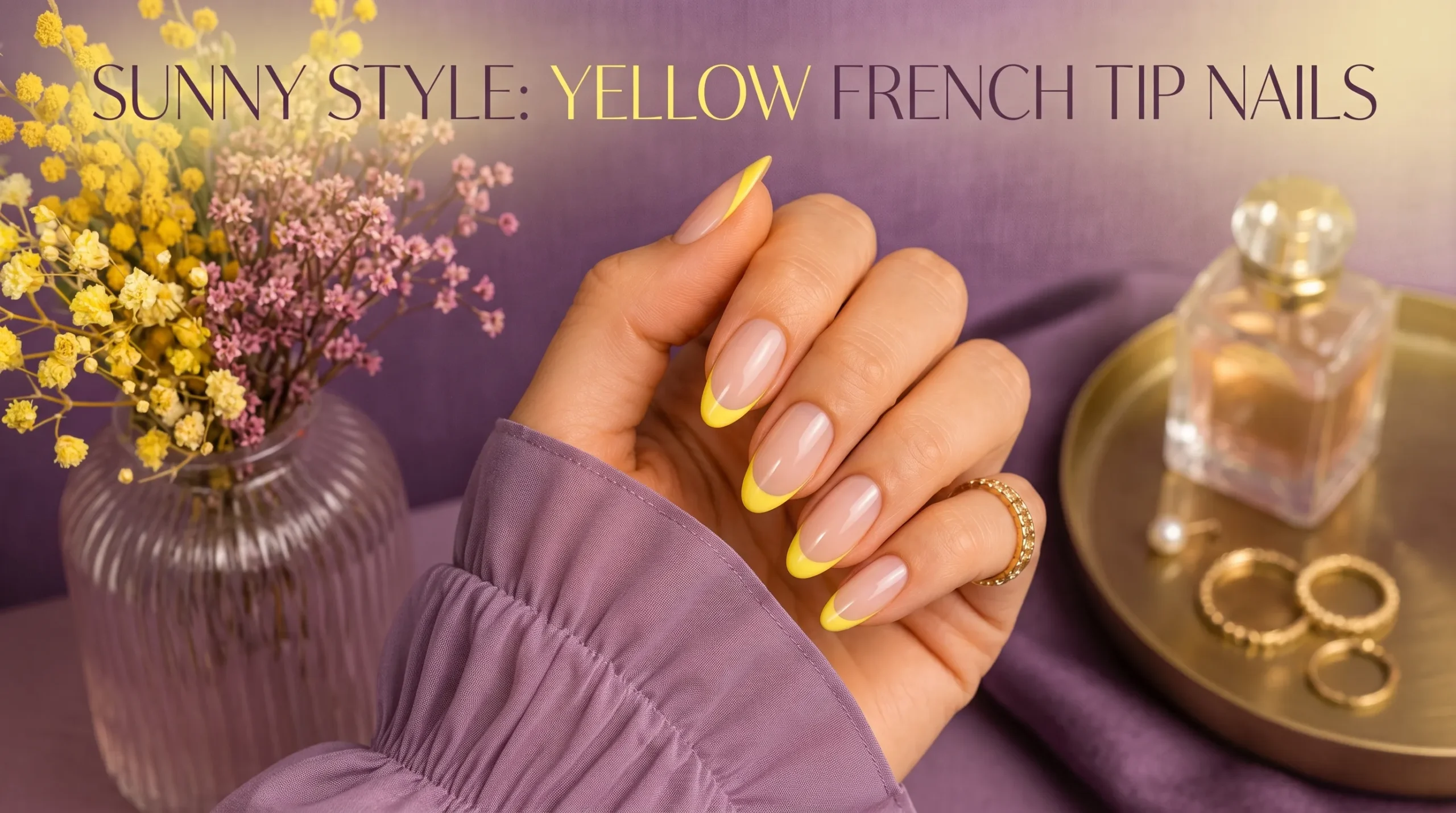
Yellow French Tips at a Glance
Six decisions determine whether the manicure looks soft, classic, graphic, playful, or statement-making.
Shade
Butter is creamy and understated; pastel is softer; lemon is brighter; neon is the strongest statement.
Base
A sheer, milky, or neutral base changes how much contrast the yellow creates.
Tip width
Micro and narrow tips keep yellow restrained; medium and wider tips make it more prominent.
Shape
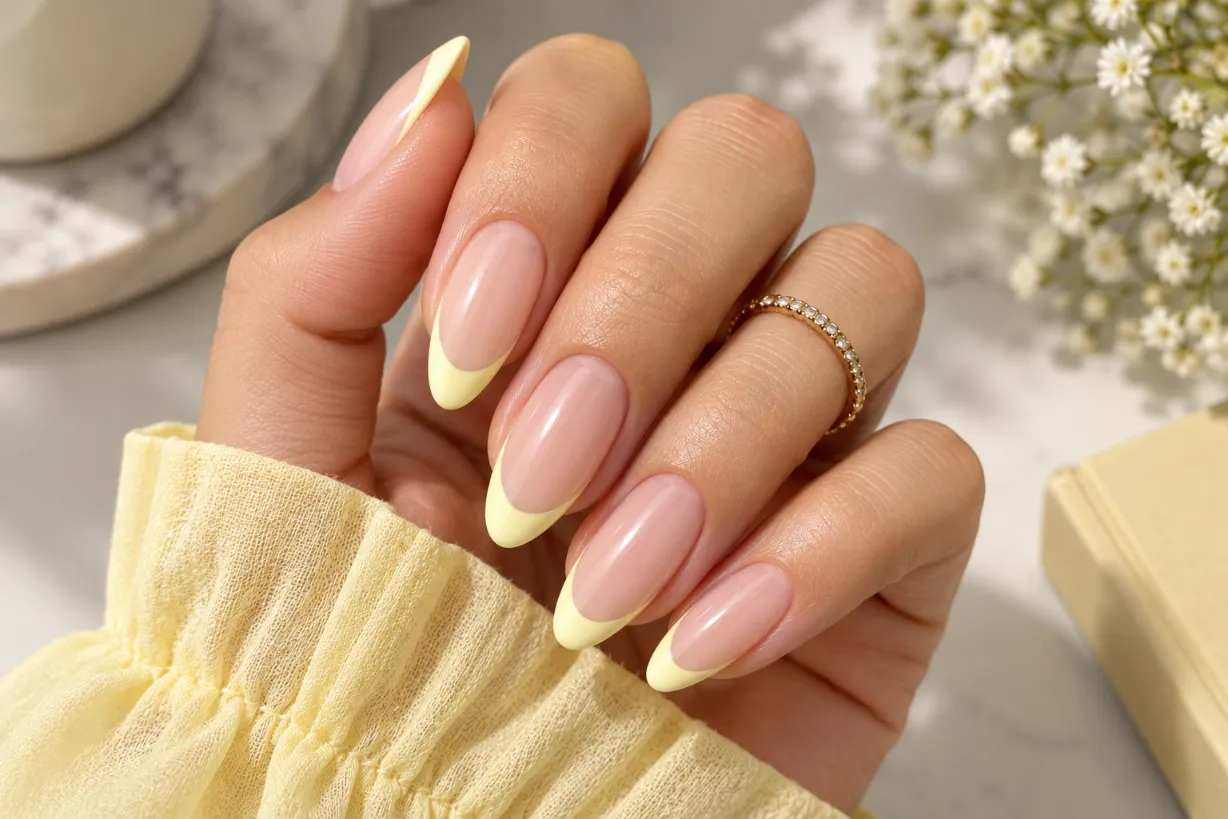
Almond, square, squoval, short nails, and coffin each change the way the yellow smile line reads.
Finish
Gloss keeps yellow crisp and saturated; matte and reflective finishes change its character.
Decoration
Flowers, swirls, double lines, and chevrons can add personality, but yellow already provides strong visual information.
Why Yellow French Tips Work So Well
A full yellow manicure puts the color across the entire nail. A French manicure concentrates it along the free edge, which makes yellow easier to control visually.That small area of color is enough to change the character of a neutral manicure without completely replacing the natural-looking base.
It also gives you several ways to adjust intensity. You can keep the yellow pale, make the smile line thinner, use a softer base, or simplify the finish. If you want more impact, you can move toward lemon or neon, increase the tip width, or introduce a graphic detail.
The best yellow French tip is not necessarily the brightest one. It is the one whose shade, proportion, and base work together.
Which Yellow Is Right for Your French Tips?
Yellow is unusually versatile because small changes in saturation and warmth produce noticeably different French manicures. These five directions cover most of the useful range without treating one shade as universally correct.
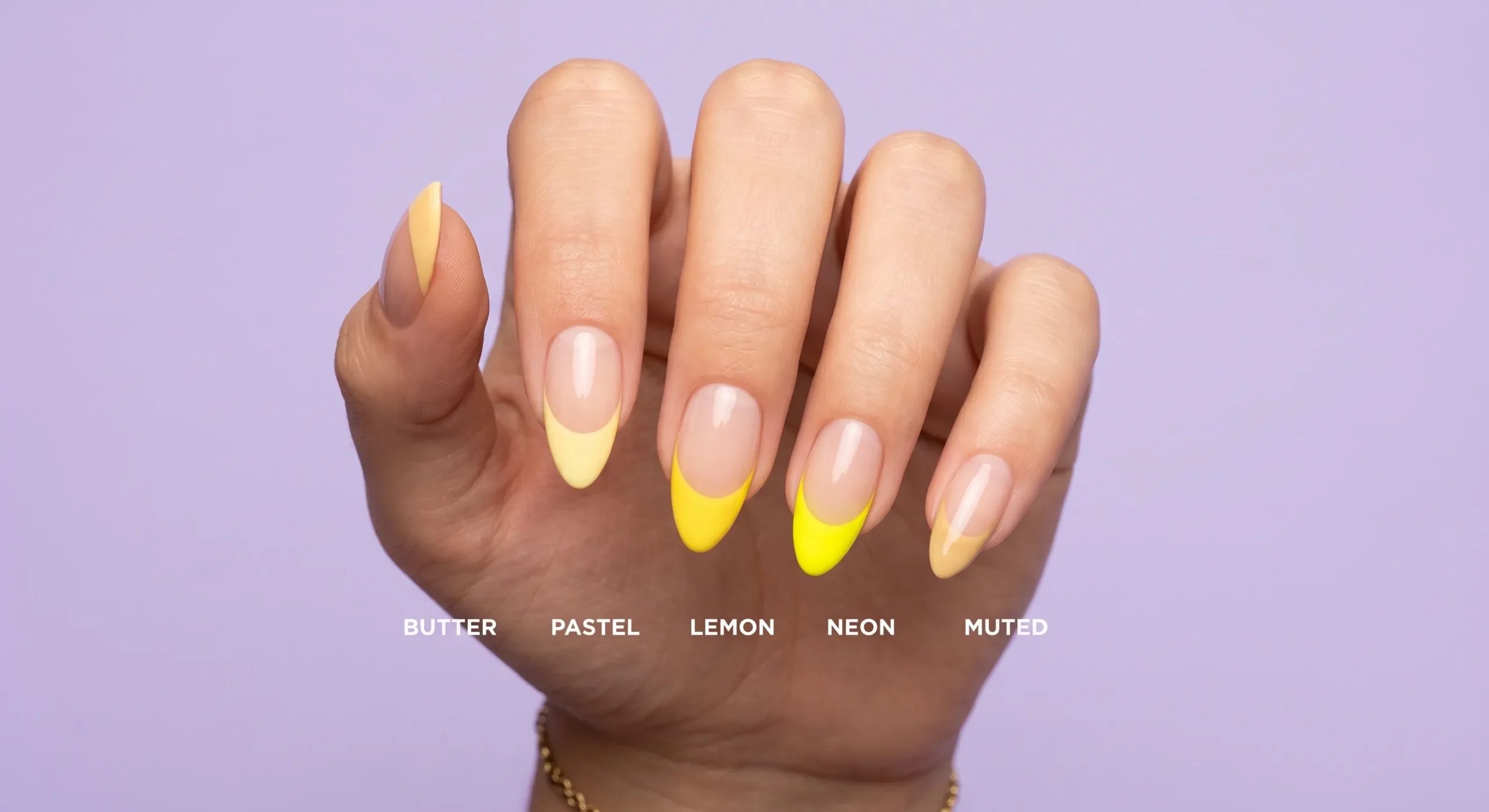
Butter Yellow
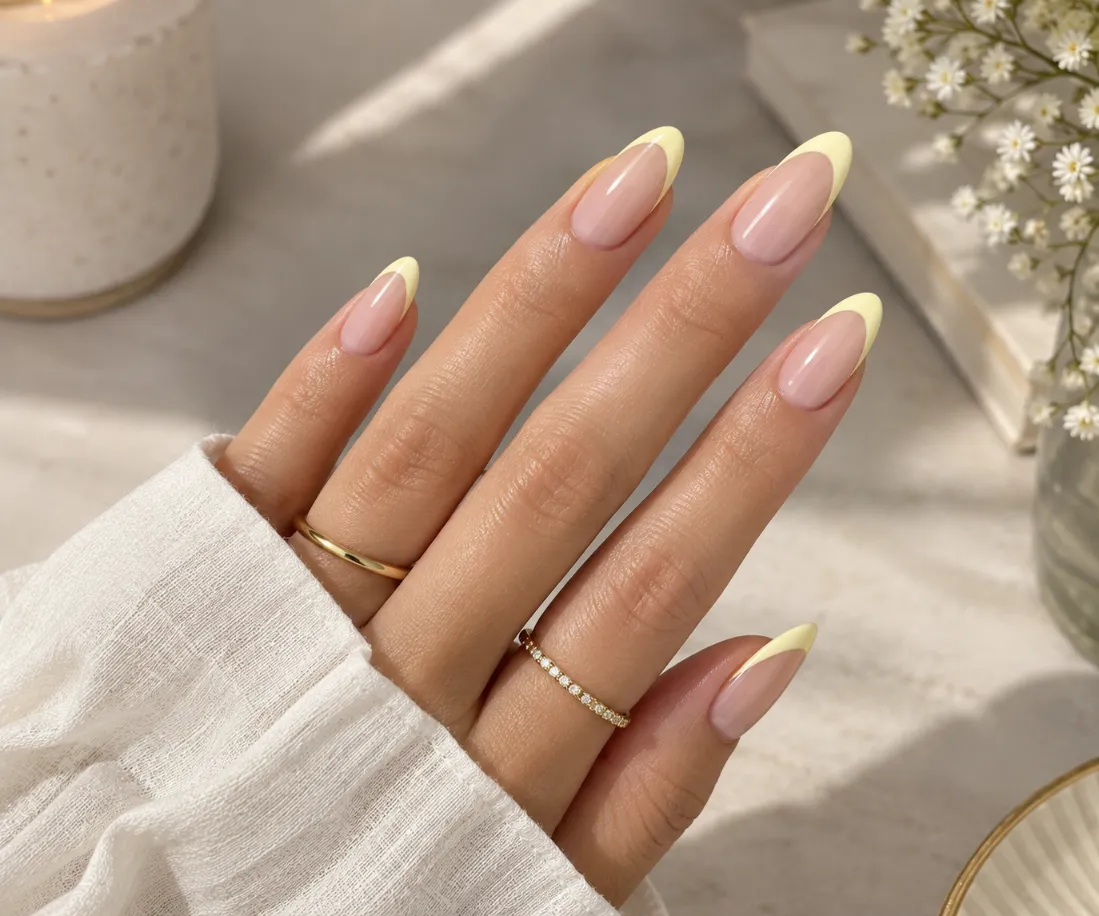
Butter yellow is the easiest choice when you want the manicure to feel warm and polished rather than loud. Its creamy quality works naturally with a classic French structure and a glossy finish.
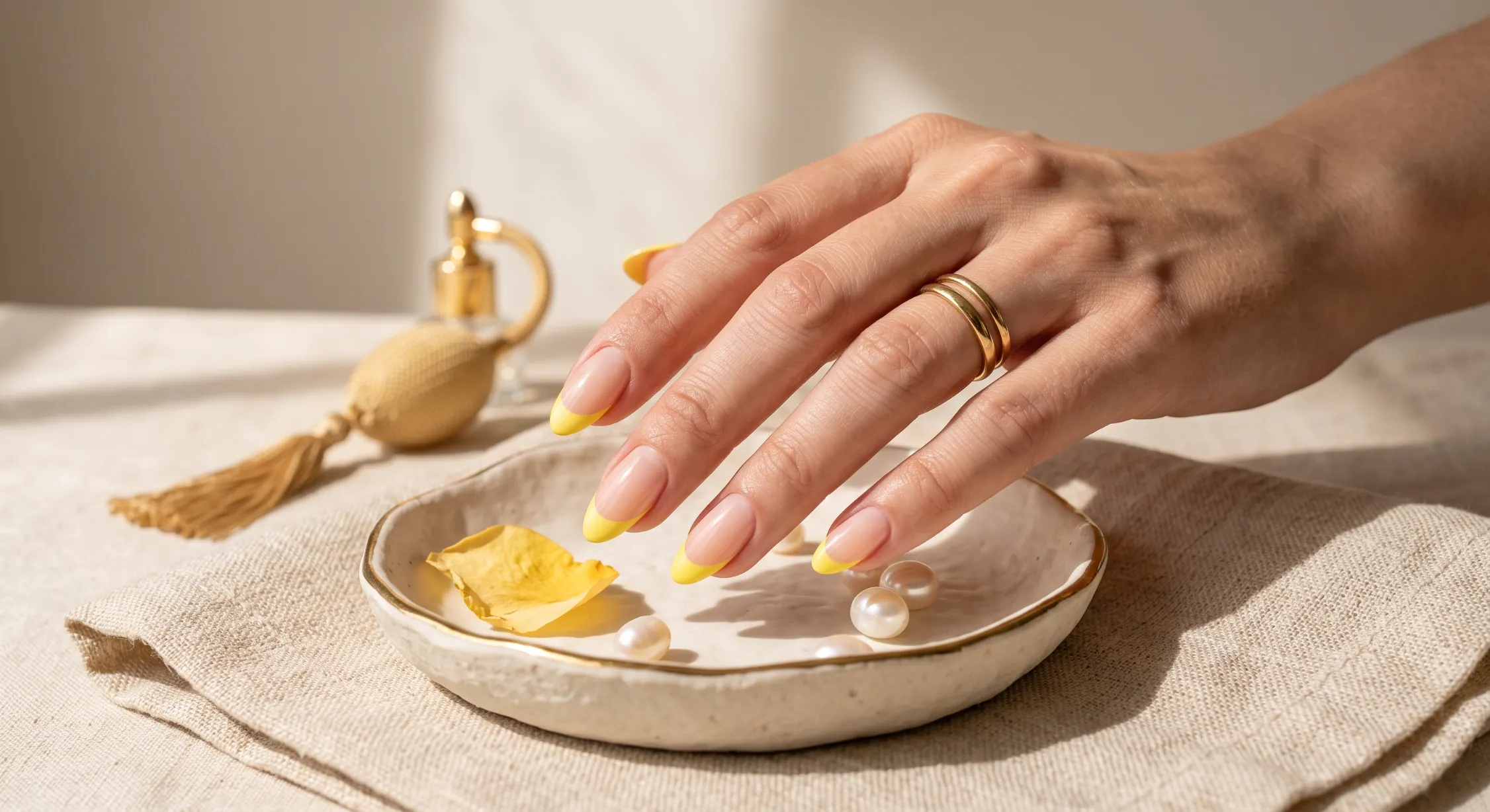
Pastel Yellow
Pastel yellow lowers the visual intensity without losing the identity of the color. It is useful when you want something delicate, airy, or softer than a traditional bright yellow.
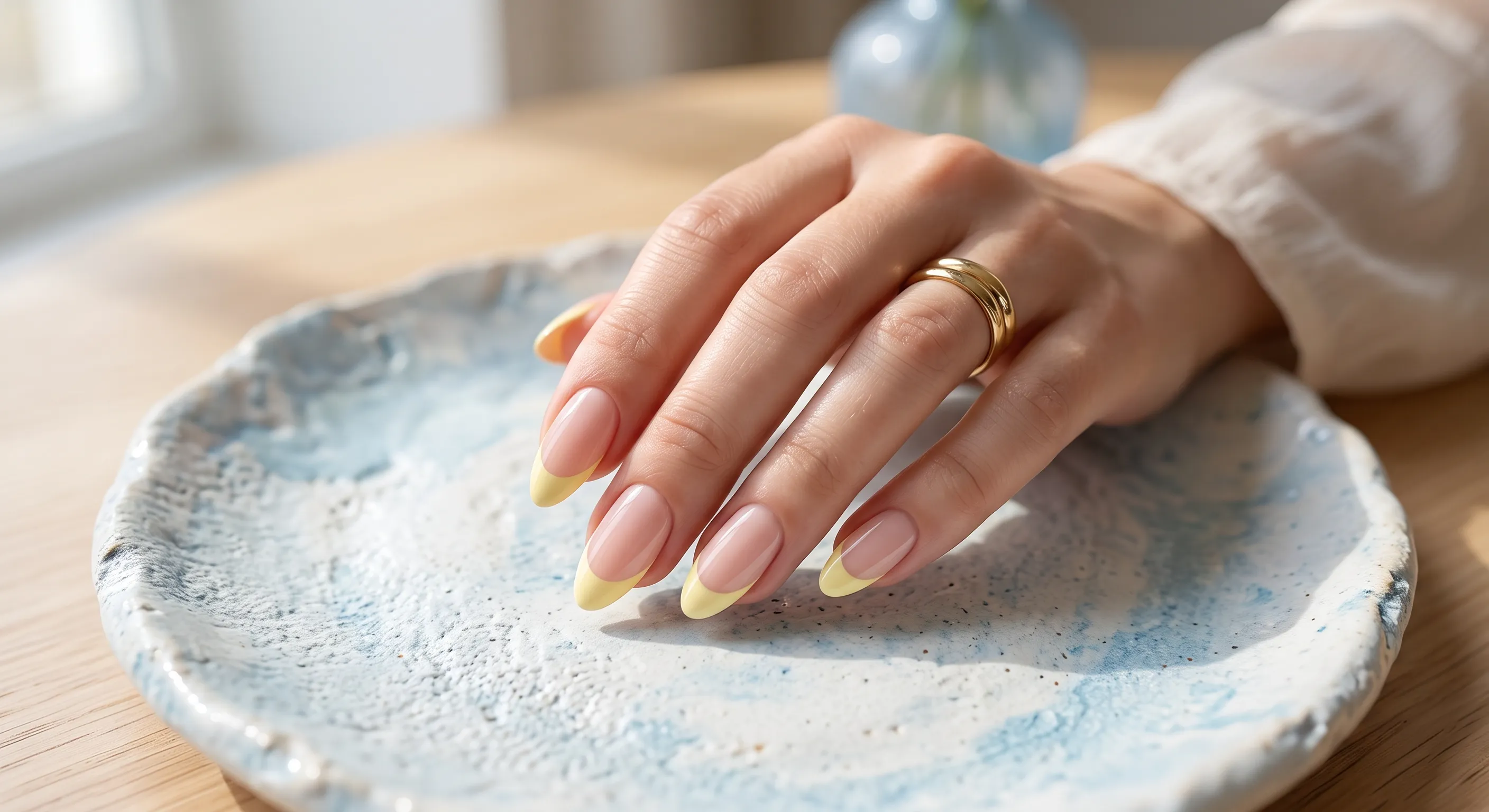
Lemon Yellow
Lemon yellow gives the manicure a clearer, cleaner color statement. It sits between soft butter tones and highly fluorescent yellow.
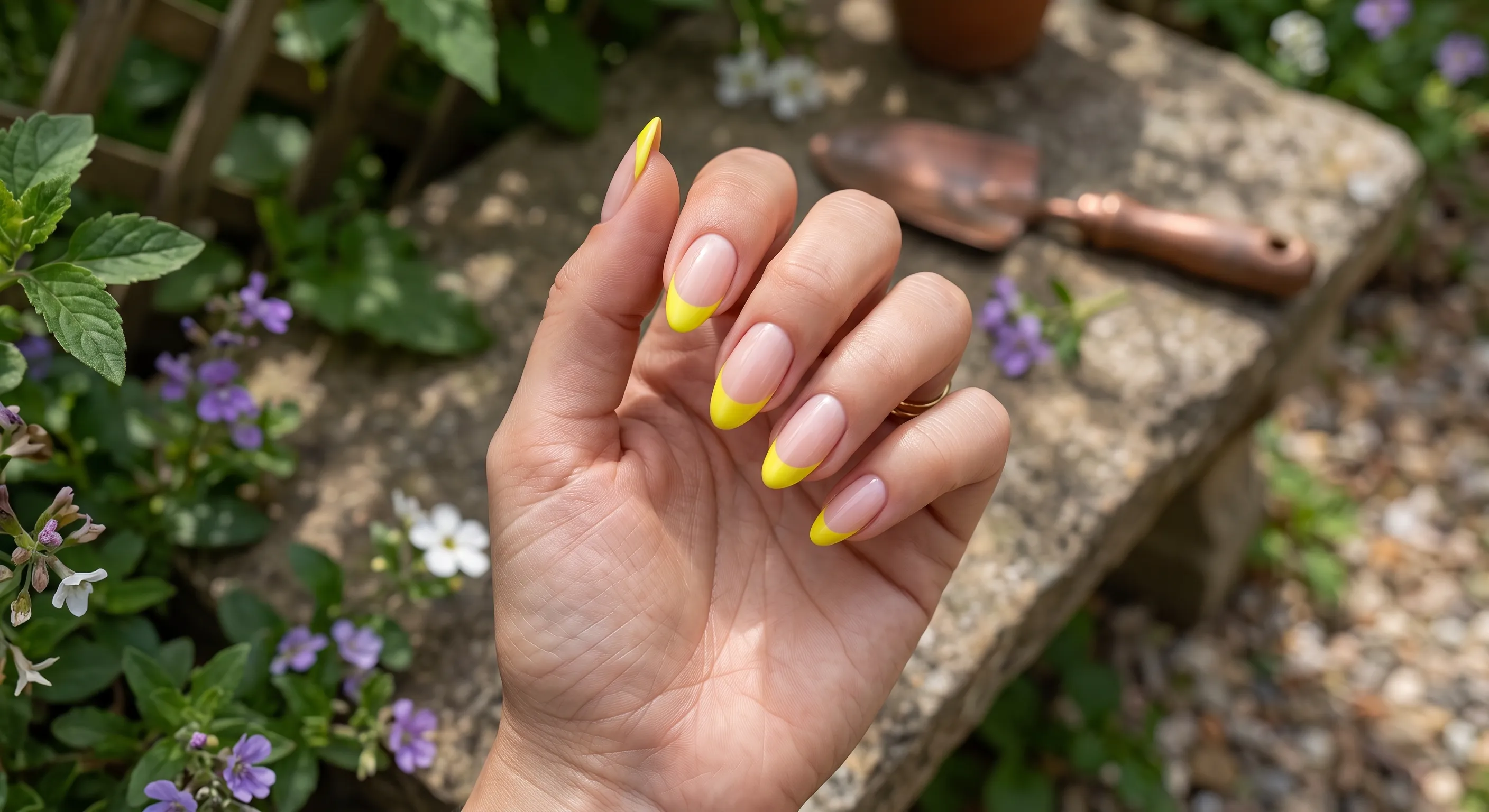
Neon Yellow
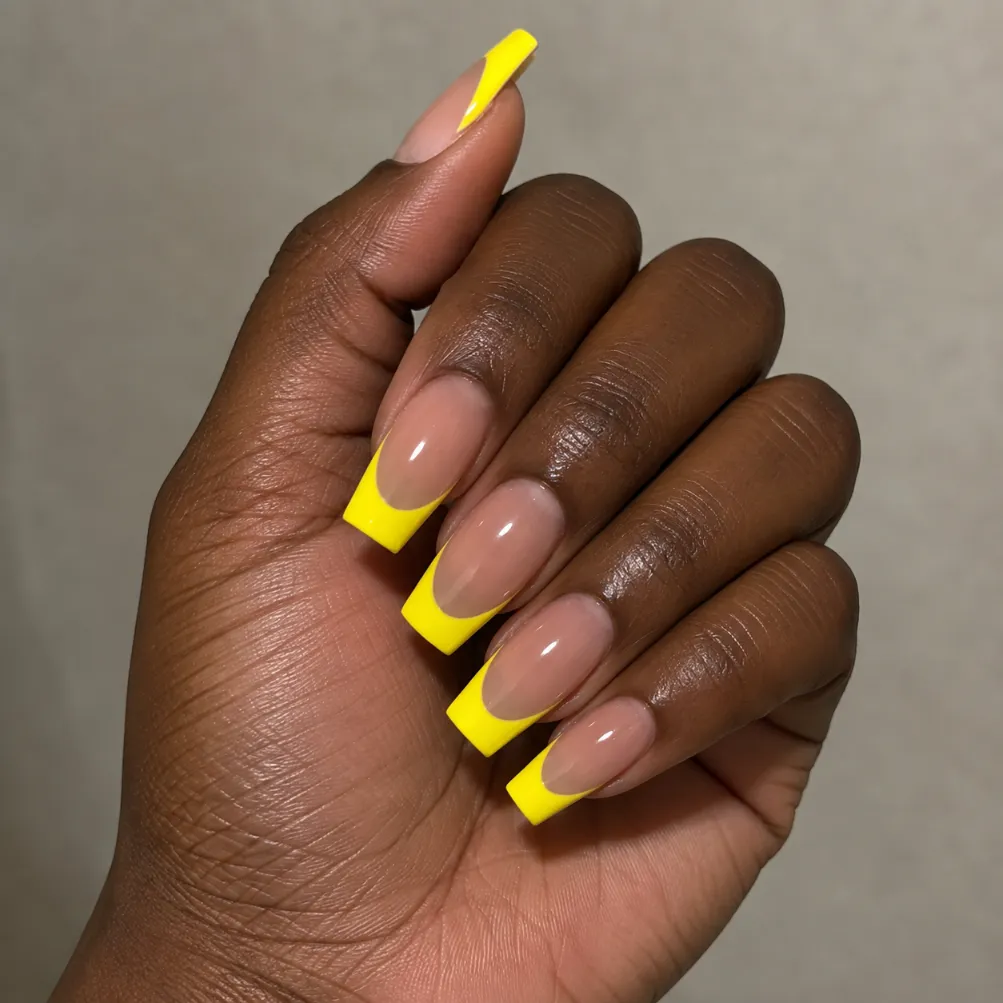
Neon yellow is the most attention-grabbing option. Because the color already has considerable visual weight, a clean smile line and restrained decoration usually work better than several competing details.
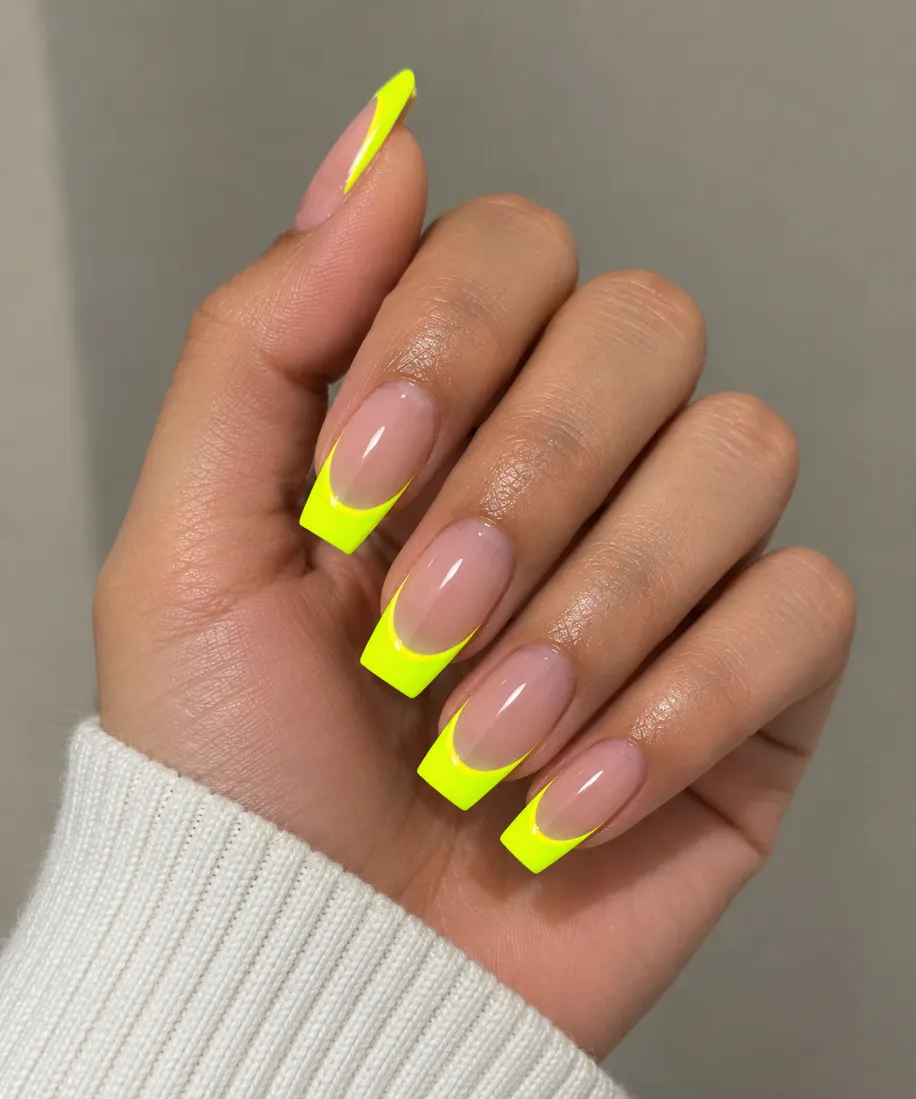
Muted Yellow
Muted yellow reduces saturation and gives the manicure a quieter, more editorial quality. It is useful if you like yellow but do not want maximum brightness.
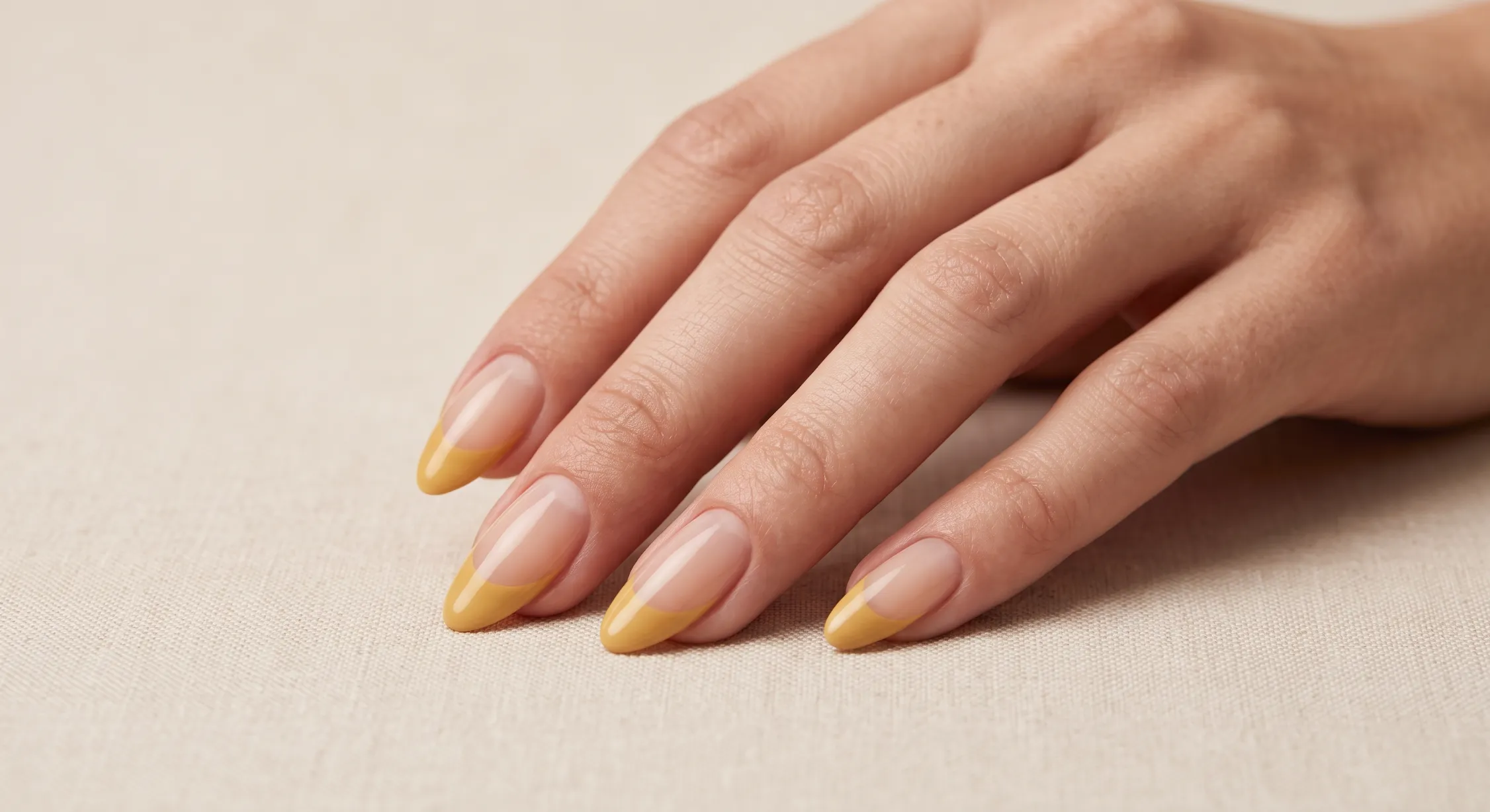
Yellow French Tip Inspiration Worth Saving
Once the shade is chosen, design becomes a question of how much visual information you want to add. These looks move from classic and restrained to more graphic variations, showing how the same French structure can change through shade, finish, shape, and decoration.
1. Classic Butter Yellow French Tips
Keep the base clean, the smile line balanced, and the yellow consistent from nail to nail. This is the strongest starting point if you want a refined colored French manicure.
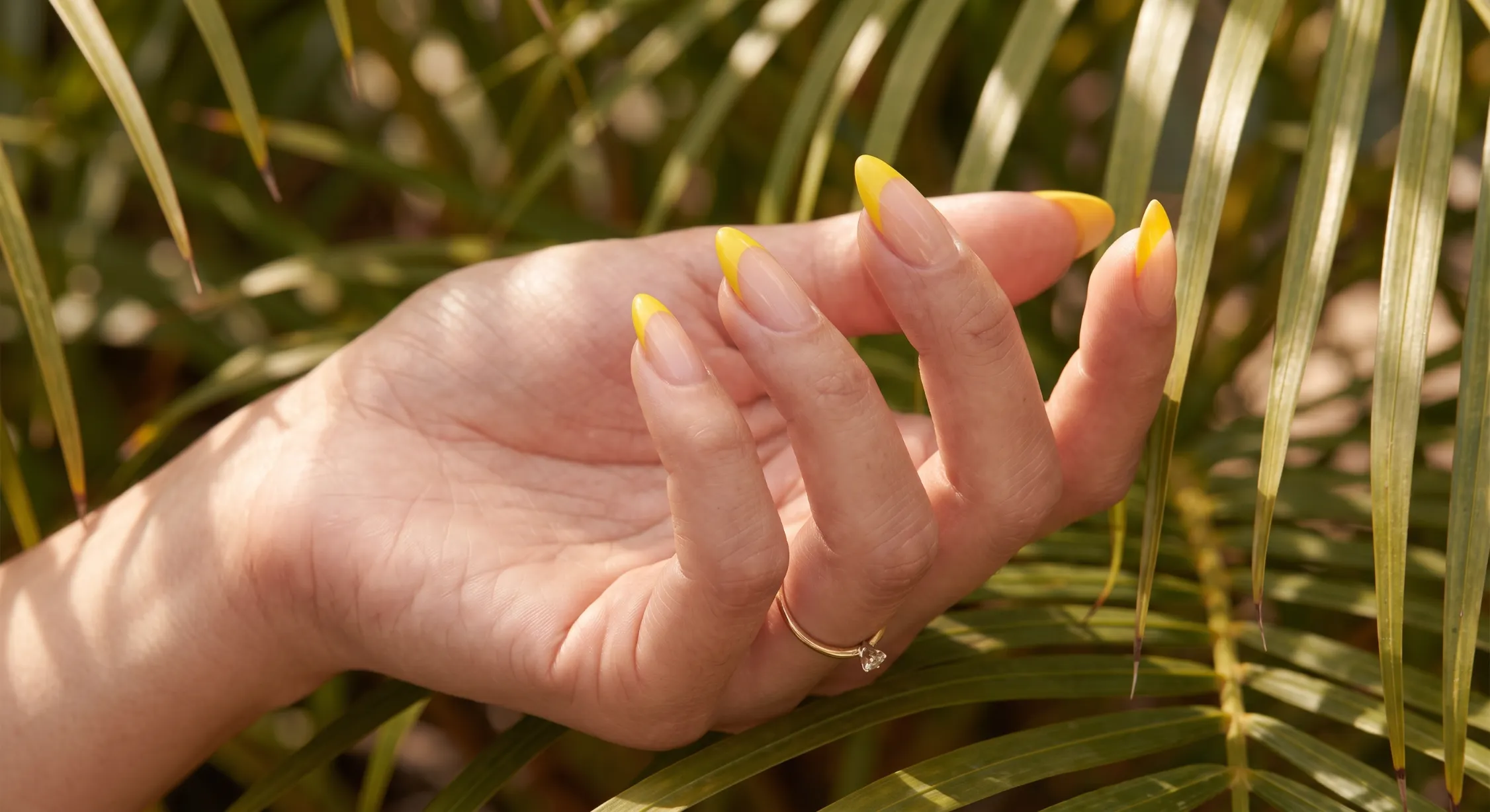
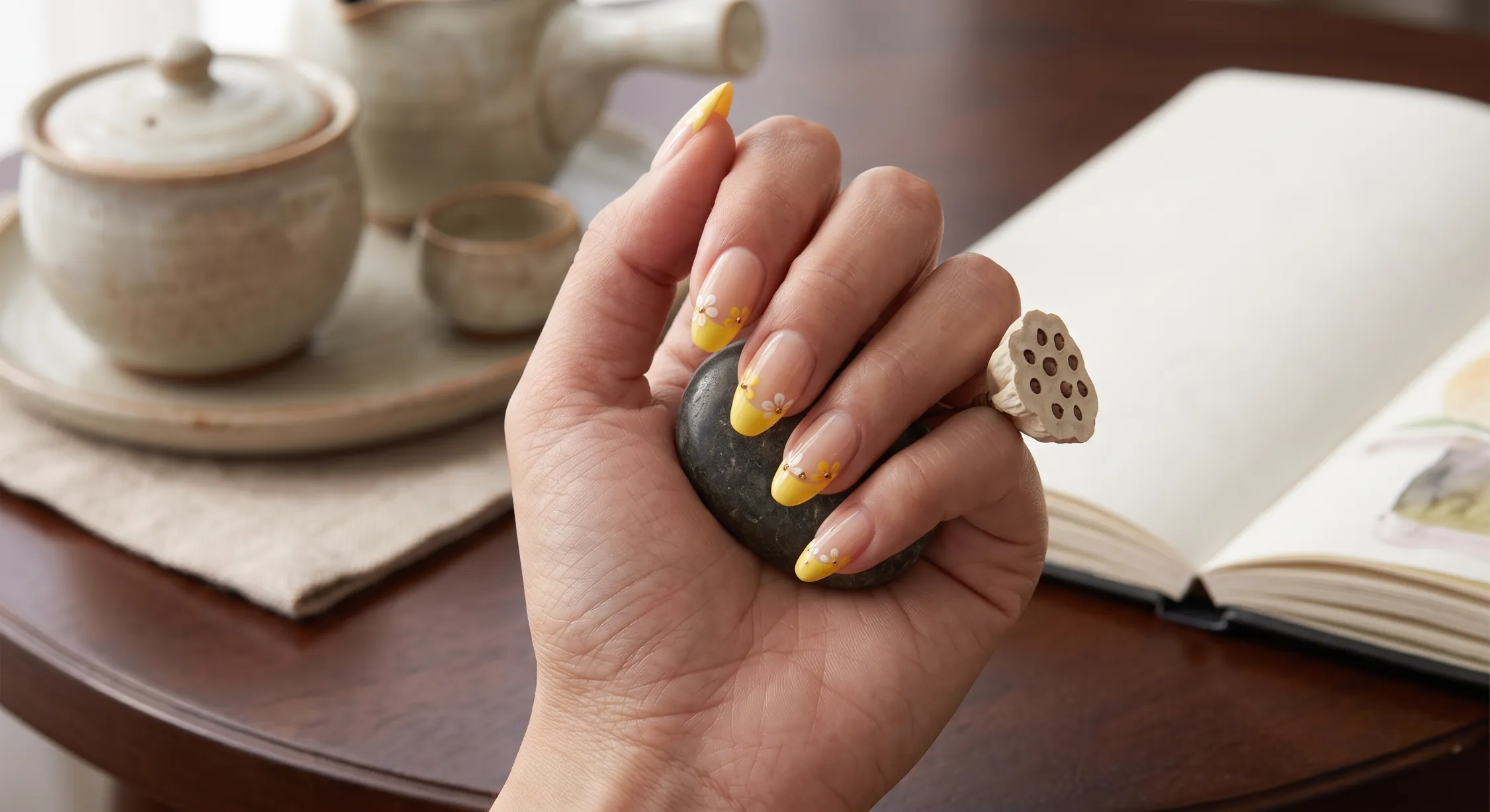
2. Pastel Yellow Flower French Tips
Small floral details soften pastel yellow without competing with the French edge. Keep the flowers secondary to the tip itself.
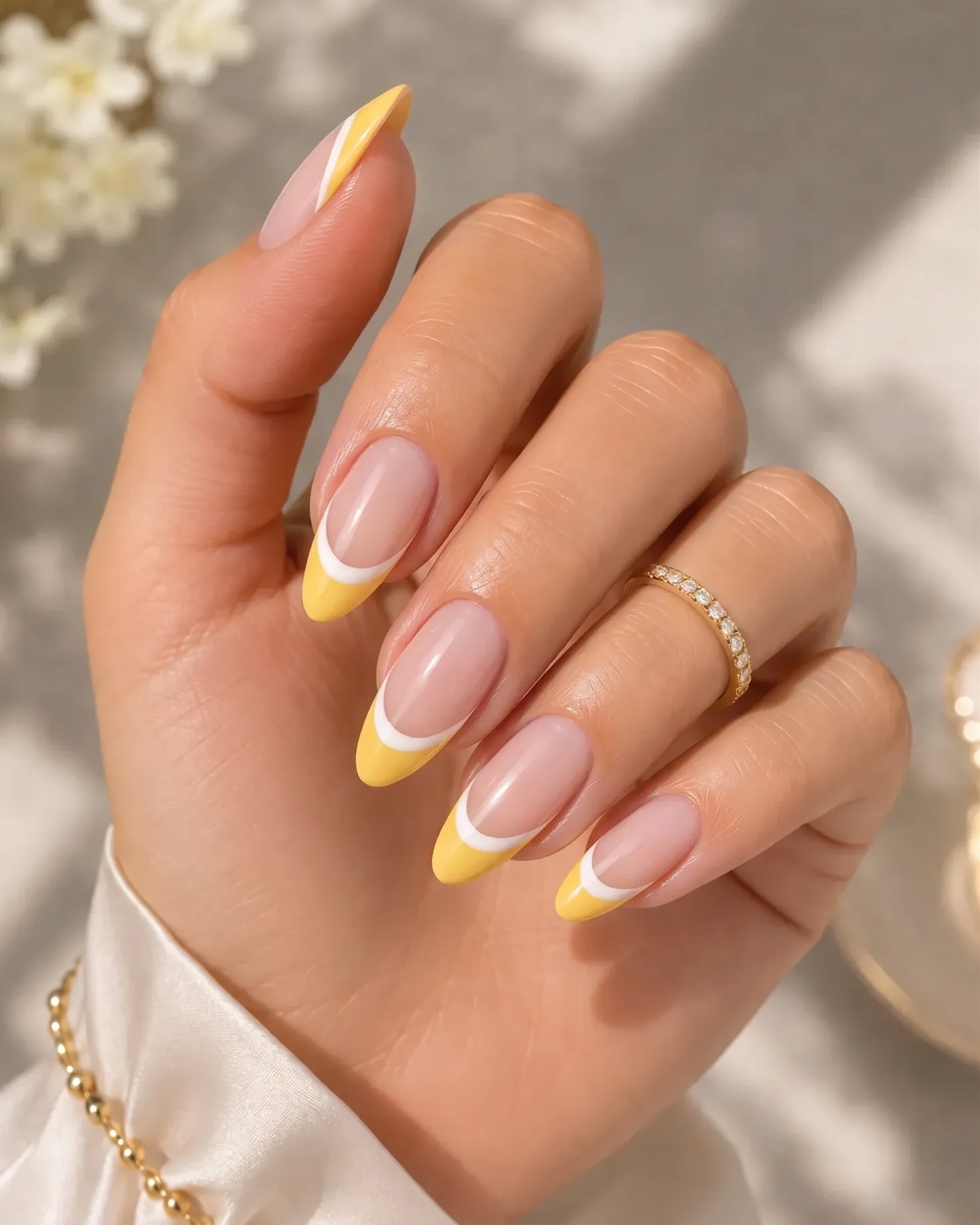
3. Yellow and White Double French Tips
A second white line gives the yellow a sharper boundary and creates more definition without filling the entire nail with artwork.
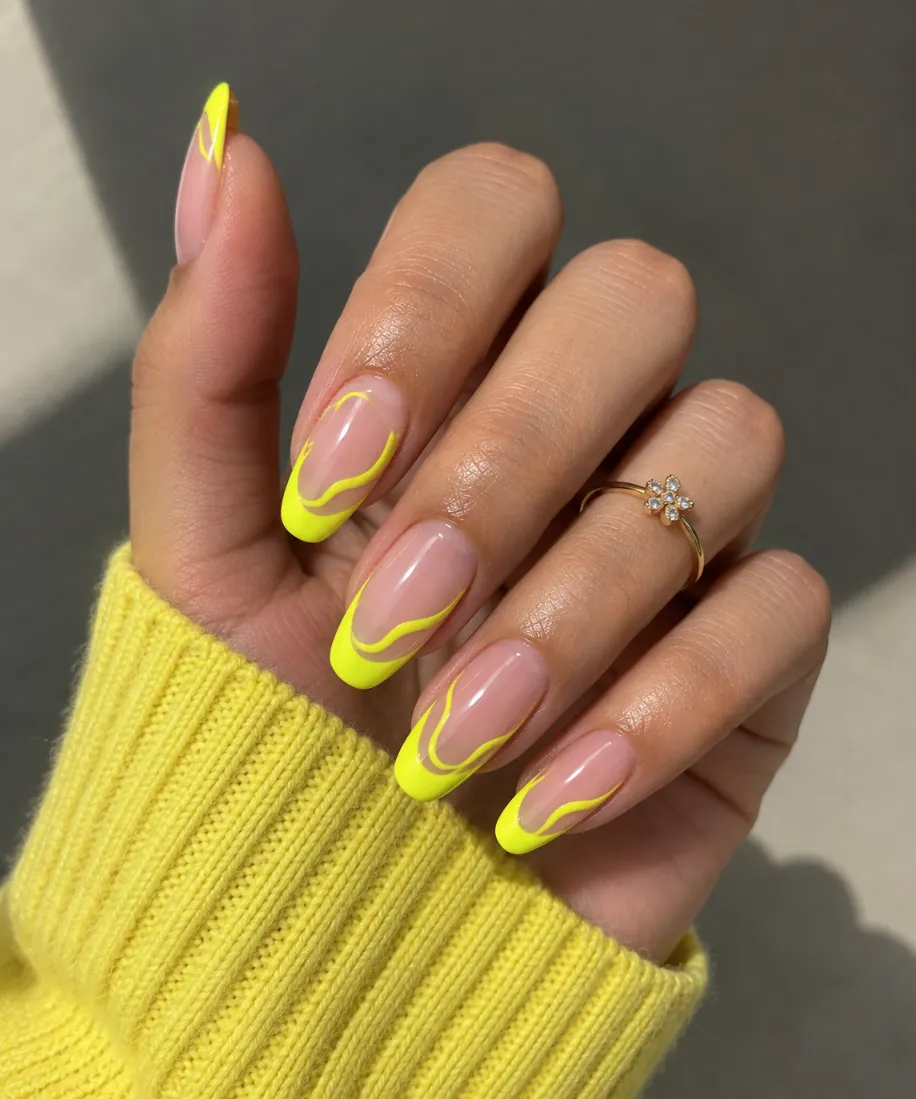
4. Yellow Swirl French Tips
Swirls add movement while keeping the yellow concentrated around the French area. The open base prevents the design from becoming visually heavy.
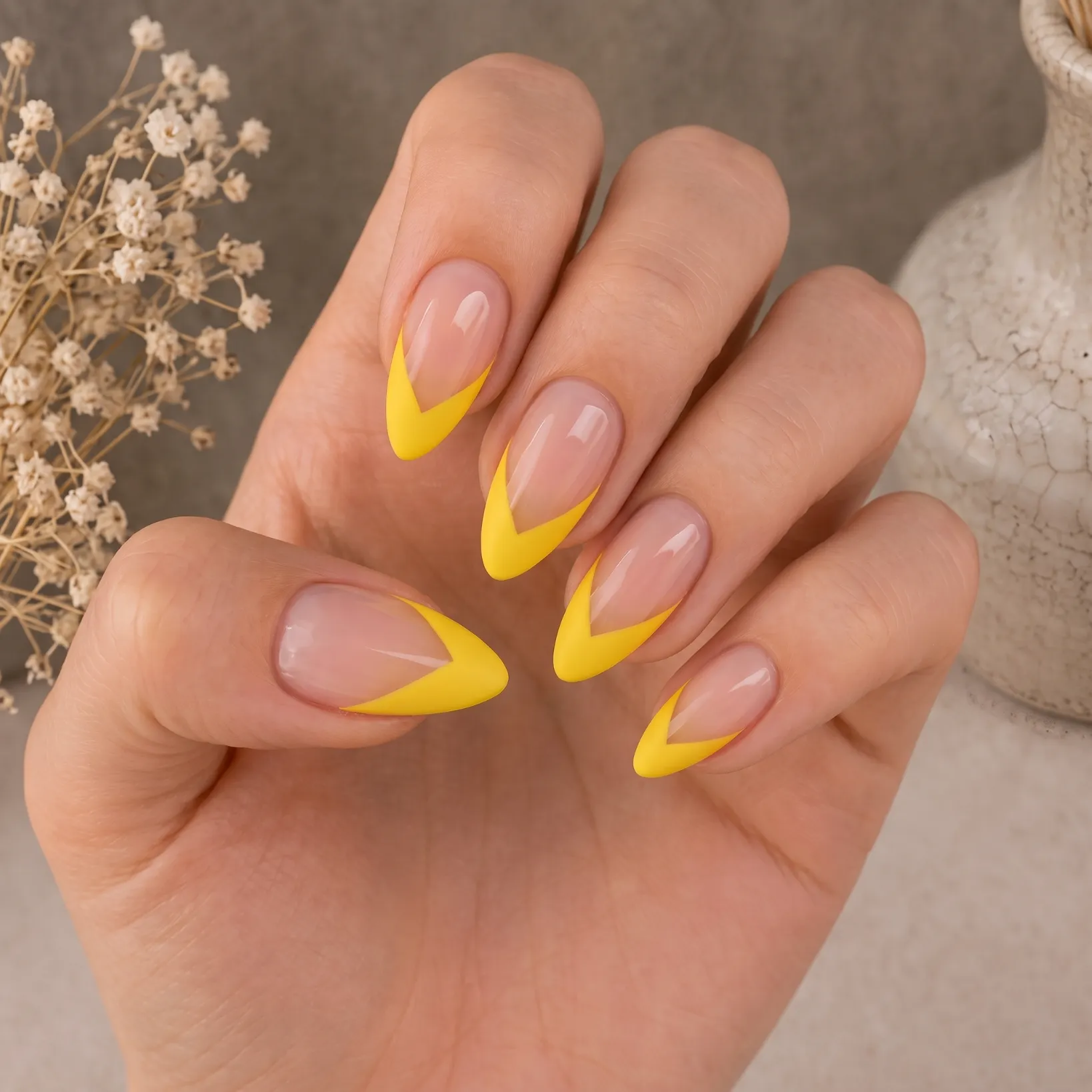
5. Yellow Chevron French Tips
Chevron tips replace the traditional curved smile line with a sharper pointed construction. They suit a more graphic interpretation of yellow French nails.
6. Lemon Yellow French Tips
Use a clear lemon yellow when you want the color to read immediately. Keep the base and decoration restrained so the brighter shade remains the focus.
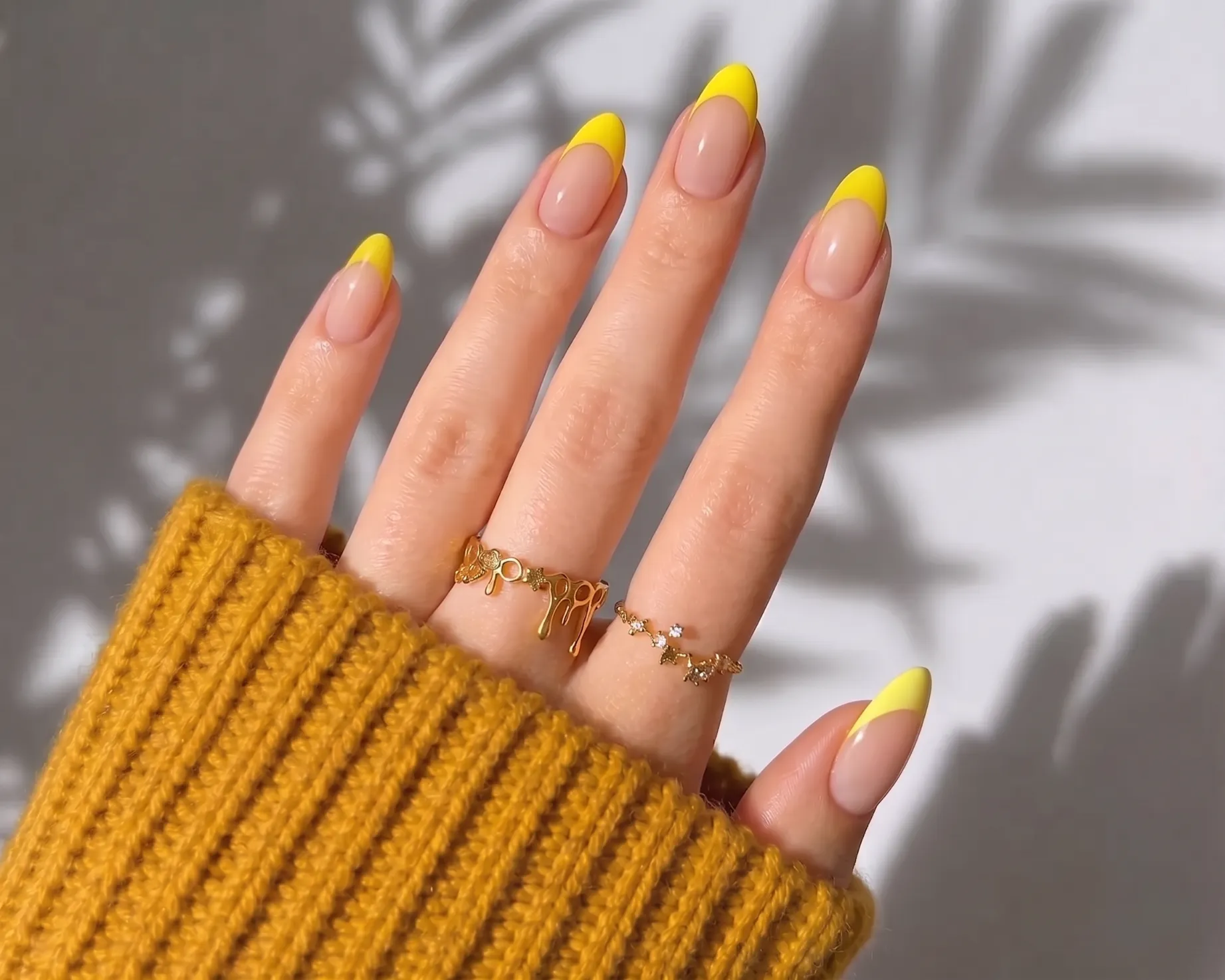
7. Yellow Micro French Tips
A micro yellow line keeps the color restrained and leaves more of the nail bed visible. It is particularly useful when working with shorter nails.
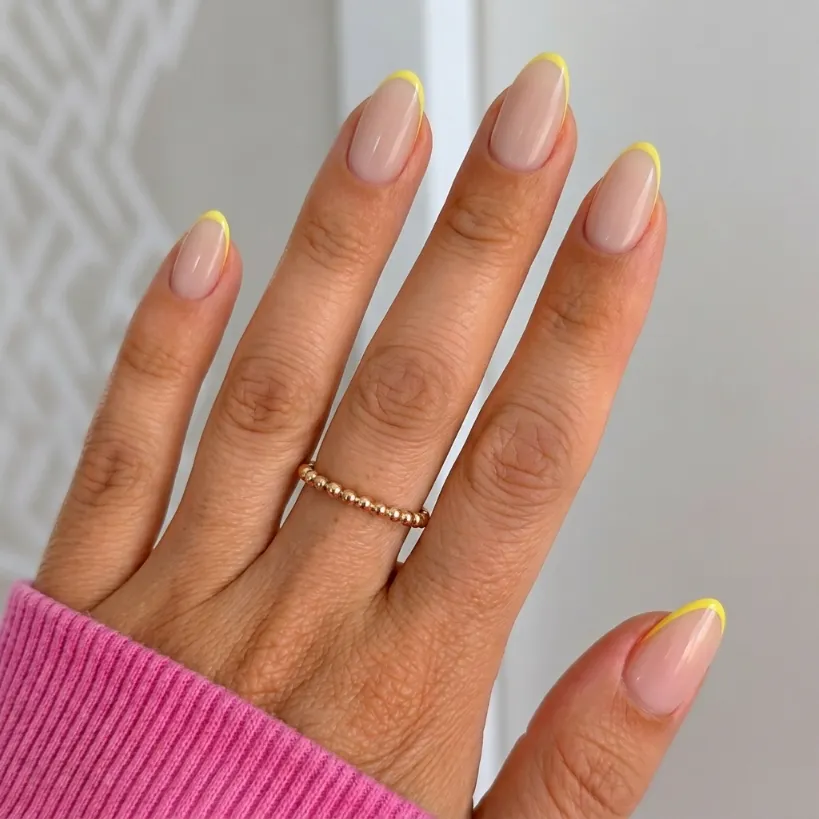
For the proportion itself, compare our micro French tip guide .
8. Yellow Reverse French
Instead of placing yellow along the free edge, a reverse French moves the colored crescent toward the cuticle. The effect is more graphic and works best when the base remains simple enough to make the placement obvious.
9. Soft Yellow Ombré French
A softly diffused yellow edge reduces the hard boundary of a traditional French tip. The yellow should still read as an intentional edge rather than disappearing into an indistinct wash.
10. Pearlescent Yellow French Tips
A subtle pearlescent finish can add light movement to yellow without changing the basic French construction. Keep the reflective layer light enough that the yellow remains identifiable.
If you want a stronger metallic effect, compare it with our chrome French tip guide .
11. Yellow Outline French Tips
A fine yellow outline rather than a fully filled tip creates a lighter graphic treatment. Consistent line weight matters more here than adding extra decoration.
12. Yellow Accent French Tip
If a complete set of bright yellow tips feels too strong, keep the French structure consistent and give one nail a slightly more decorative treatment. A single accent can provide enough variation without overwhelming the set.
How the Base Changes Yellow French Tips
The base underneath yellow is part of the color decision. A sheer nude lets the natural nail remain visually continuous. A milky base creates more separation and can help a pale yellow become easier to see. A more opaque base produces a cleaner graphic contrast but can also make a bright yellow feel stronger.
When choosing between bases, compare them under ordinary lighting rather than relying only on salon lighting. The relationship between the base and yellow can change considerably when the surrounding light changes.
How Bold Should a Yellow French Tip Be?
Tip width is one of the fastest ways to change the personality of a yellow French manicure without changing the shade.
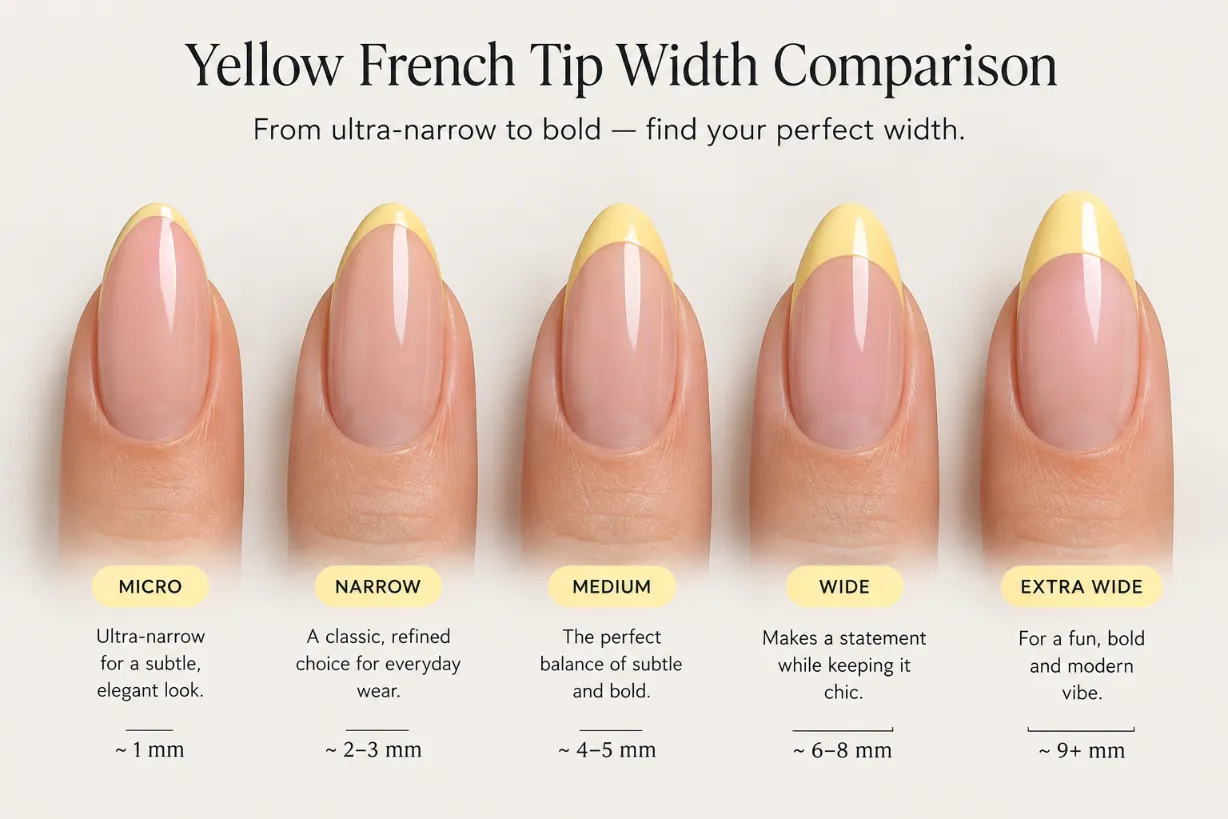
| Tip width | Visual effect | Best when |
|---|---|---|
| Micro | Fine and understated | You want yellow as a small accent |
| Narrow | Refined but clearly visible | You want a restrained colored French |
| Medium | Balanced and recognizable | You want the yellow to read immediately |
| Wide | Graphic and dominant | You want yellow to become the main feature |
Yellow French Tip Finishes
The finish changes the way light interacts with the yellow, so the same shade can feel quite different after the final layer.
| Finish | Visual character | Good for |
|---|---|---|
| Glossy | Smooth, saturated, and reflective | Classic everyday yellow French tips |
| Matte | Soft, low-reflection, more subdued | Modern or quieter yellow designs |
| Pearlescent | Light-reflective with subtle color movement | Decorative or luminous finishes |
| Chrome | Strong metallic reflection | Statement finishes rather than simple yellow tips |
Which Nail Shapes Work With Yellow French Tips?
Yellow French tips do not belong to one nail shape. What changes is how the smile line interacts with the silhouette of the nail.
Almond
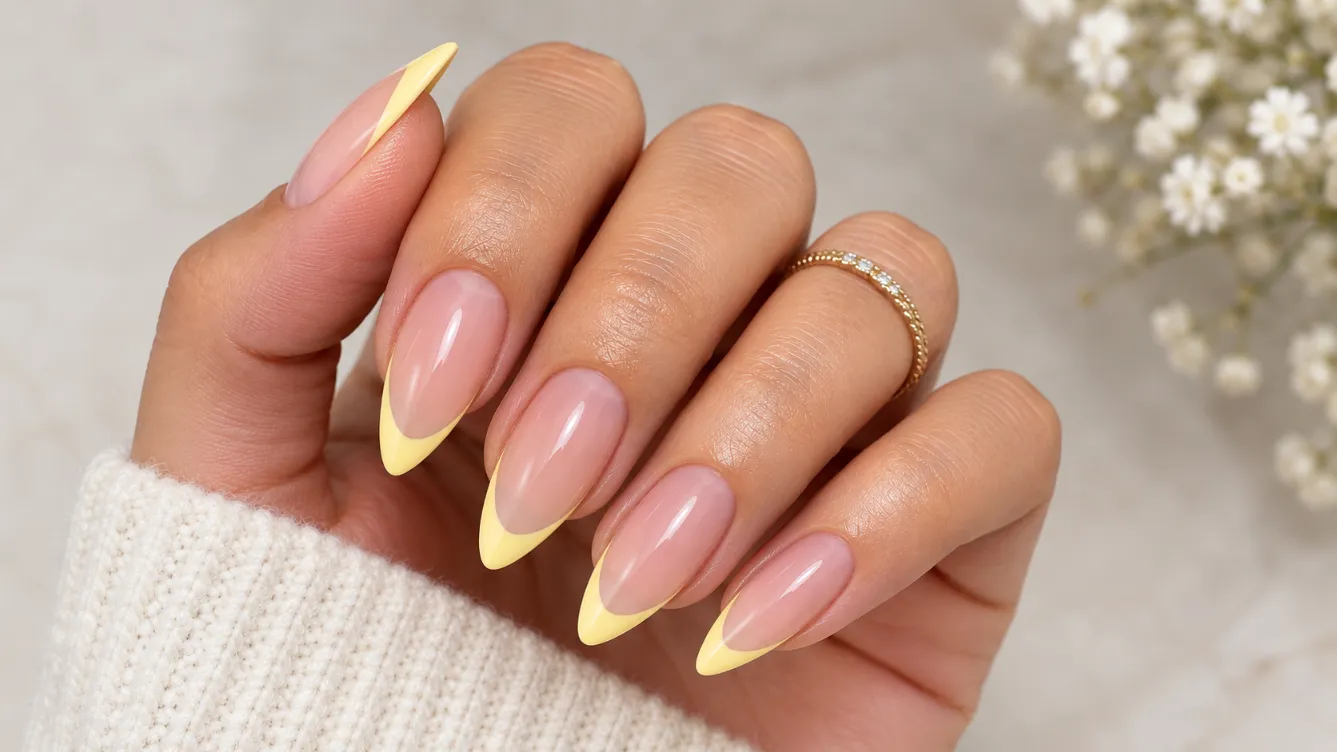
See the almond French tip guide for the shape-specific approach.
Square
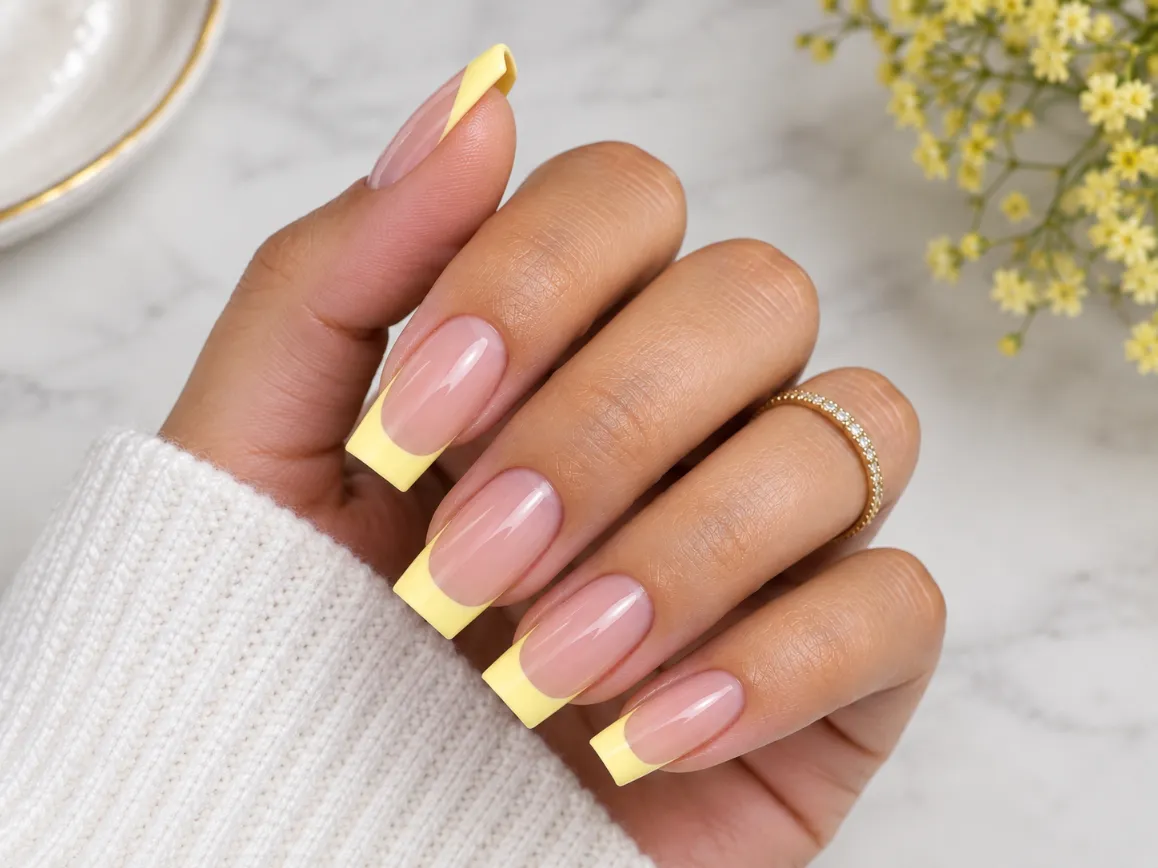
Compare the shape with our square French tip guide .
Squoval
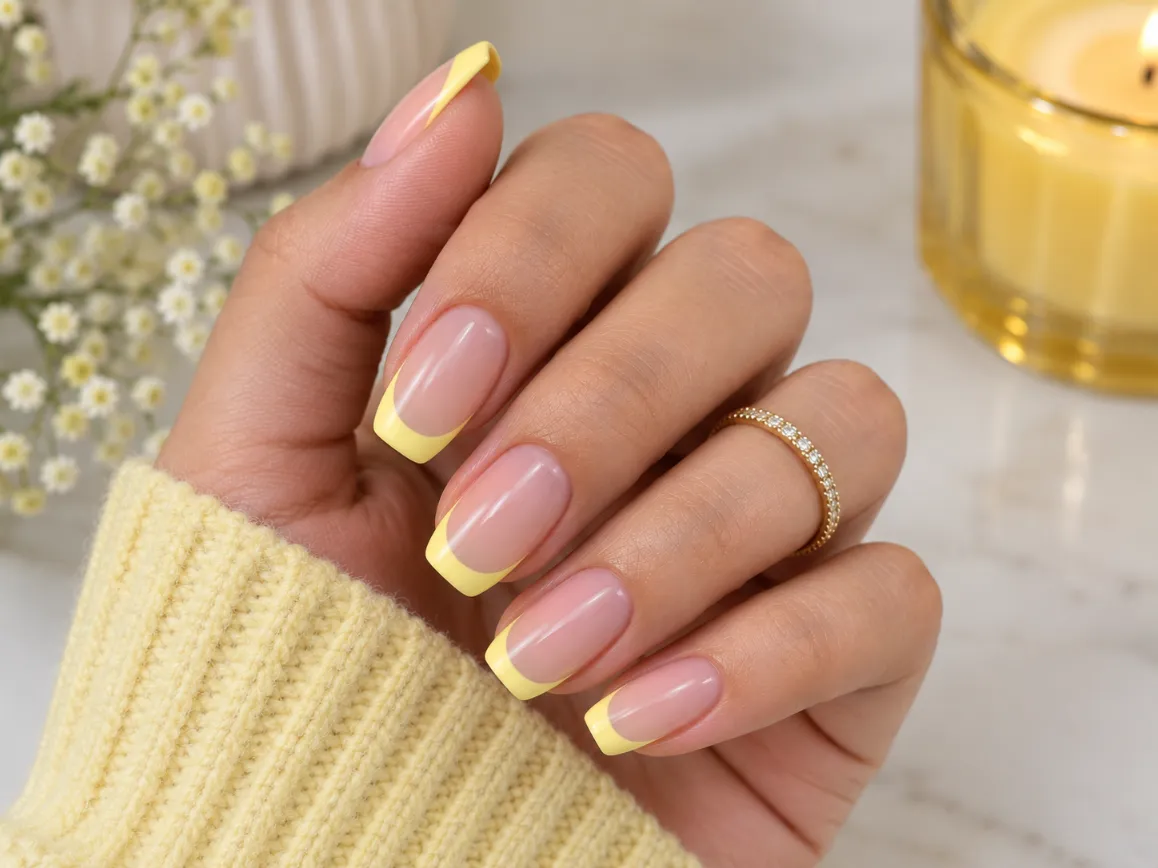
See our squoval French tip guide for more on the shape.
Coffin
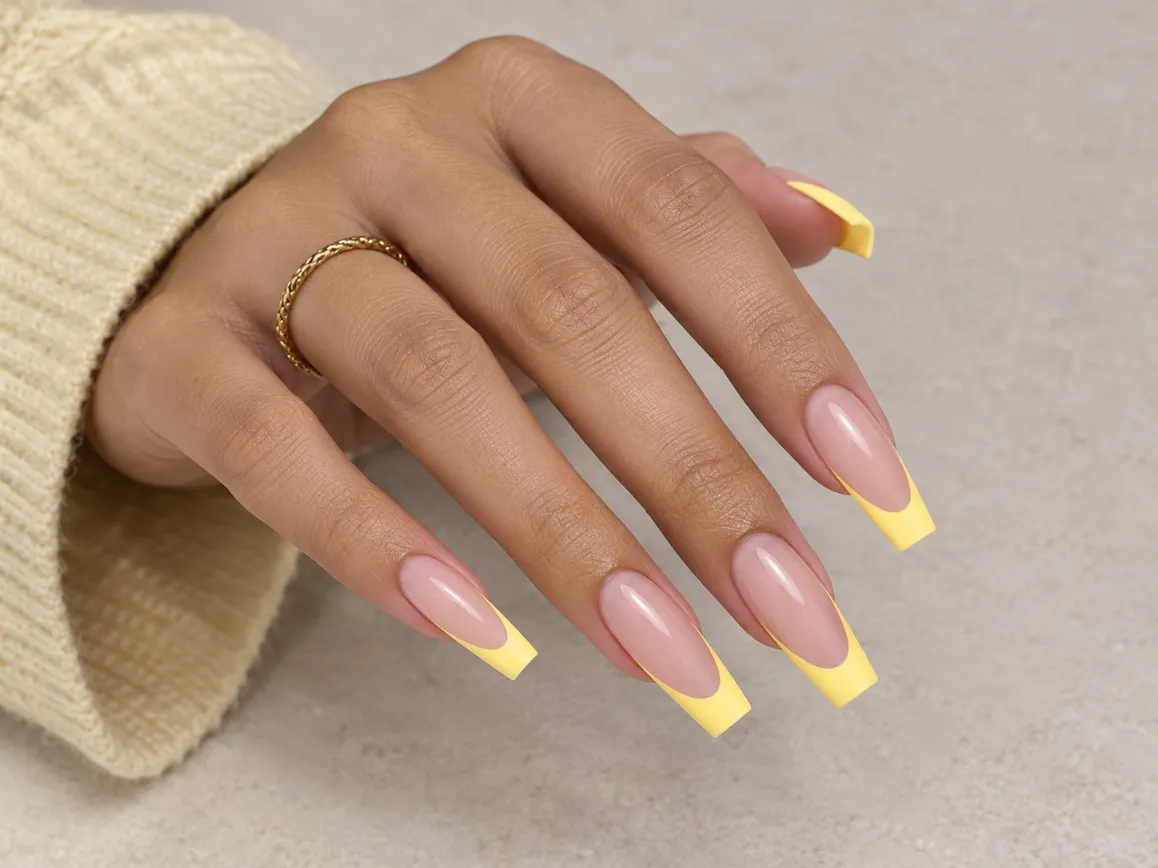
On shorter nails, a micro or narrow tip often keeps the yellow proportionate to the available surface.
How Yellow Changes Against Different Base Tones
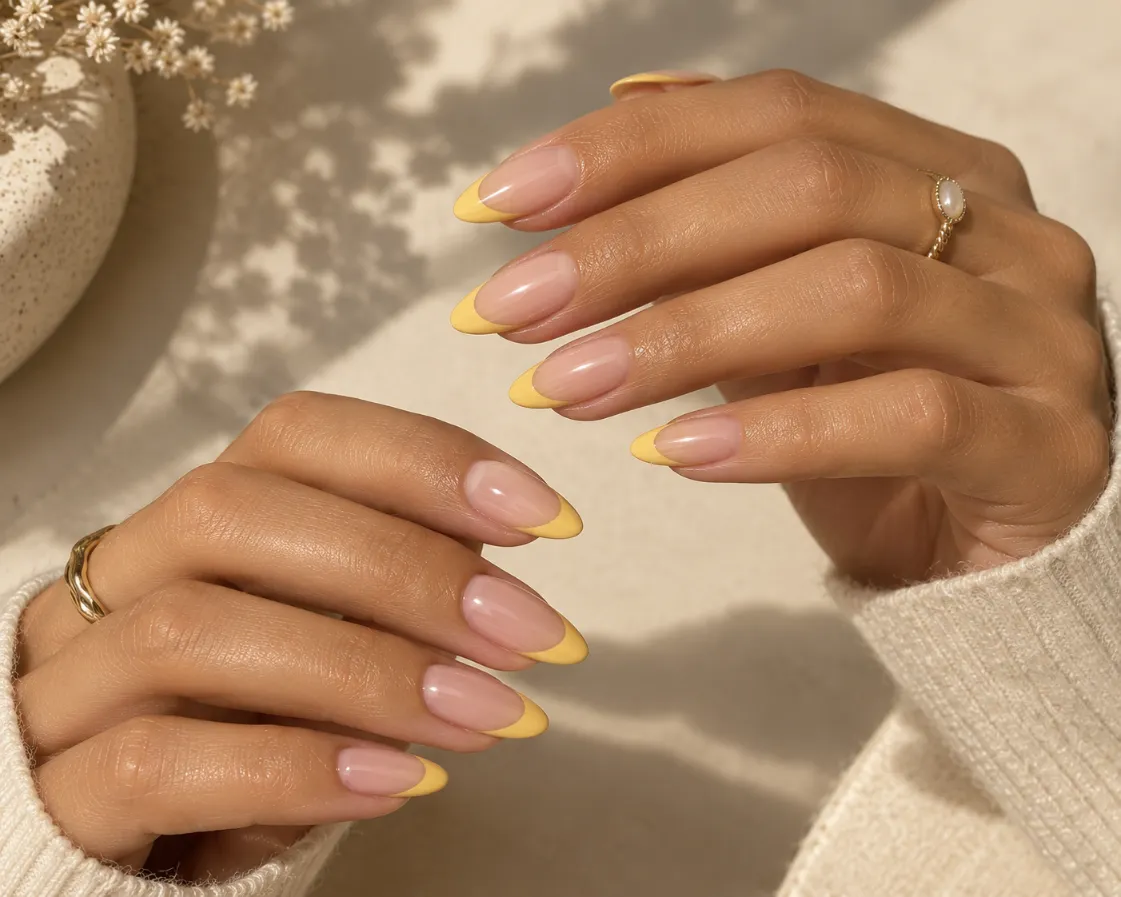
Yellow does not need to match a particular skin tone according to a rigid rule. A more useful approach is to consider the relationship between the yellow and the base underneath it.
A cooler-looking base can increase the apparent warmth of a yellow. A warmer-looking base can visually connect with golden or butter shades. A neutral sheer base allows the yellow itself to become the clearest color statement.
These are visual starting points rather than restrictions. Intentional contrast can be just as effective as close undertone harmony.
What Makes a Yellow French Tip Look Polished?
Yellow is visually unforgiving when application is uneven. A polished result depends less on adding decoration and more on controlling the small technical details.
| Area | Polished result | Common problem |
|---|---|---|
| Base | Even and appropriate to the intended contrast | Patchy or unexpectedly opaque |
| Smile line | Balanced and consistent across the set | Uneven depth or inconsistent curves |
| Yellow coverage | Consistent opacity and clean edges | Streaking, thin spots, or bulky product |
| Sidewalls | Clean with no product touching surrounding skin | Flooding or rough edges |
| Surface | Smooth and continuous | Ridges, bumps, or uneven topcoat |
Before finishing the manicure, look at the nails together rather than one at a time. The yellow should have consistent visual weight, the smile lines should feel related, and no single nail should look noticeably heavier because of excess product.
How to Apply Yellow French Tips at Home
The cleanest home application comes from treating the manicure as a sequence rather than trying to perfect the whole design in one pass.
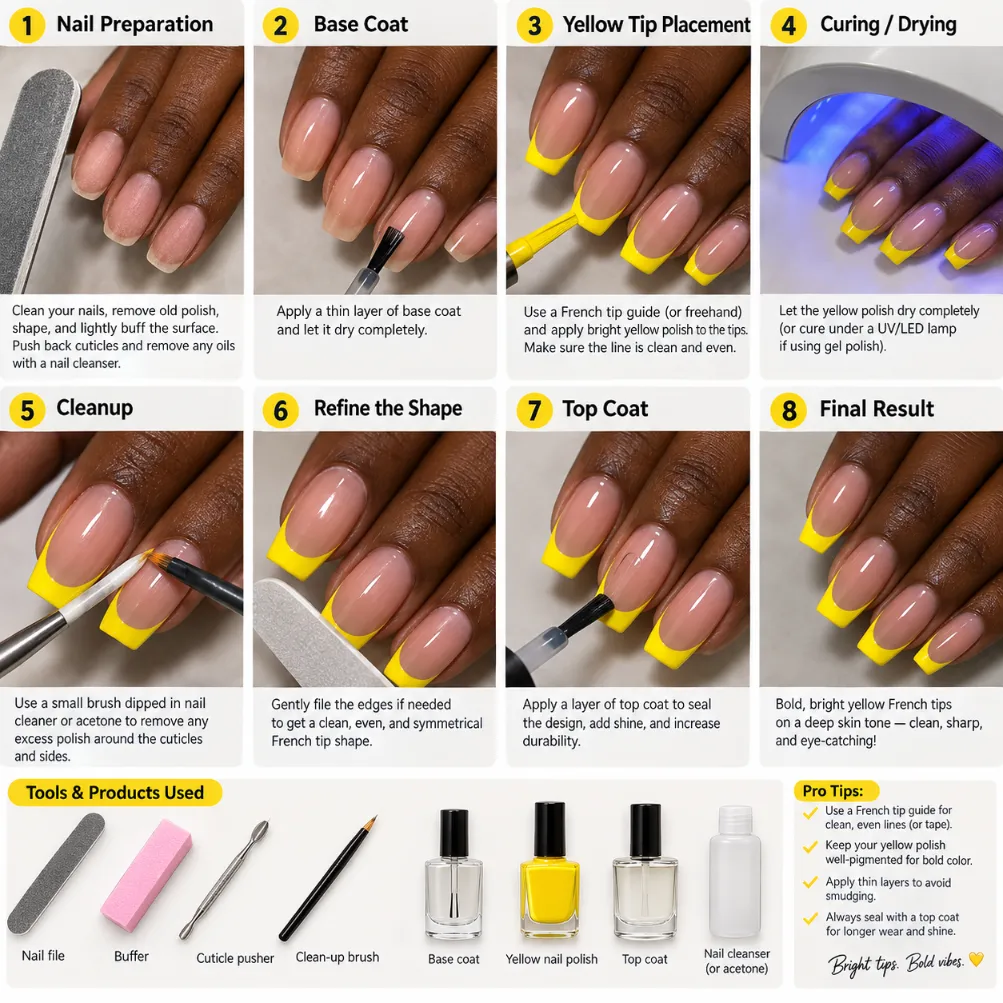
Prepare and shape the nail
Shape the free edge first and remove dust and surface residue before applying the base.
Apply the base
Use a thin, even base layer and follow the instructions for the polish or gel system you are using.
Place the yellow tip
Start with a controlled amount of yellow and establish the smile line before building unnecessary thickness.
Build opacity
Add thin layers when needed rather than relying on one thick coat to create coverage.
Clean the perimeter
Refine the smile line and remove unwanted product before the appropriate curing or finishing stage.
Seal the finish
Apply the appropriate topcoat and finish the free edge without flooding the sidewalls.
How to Get a Cleaner Smile Line
A good smile line is mainly about proportion and consistency. The curve does not have to look mechanically identical on every nail, but the set should feel balanced when viewed together.
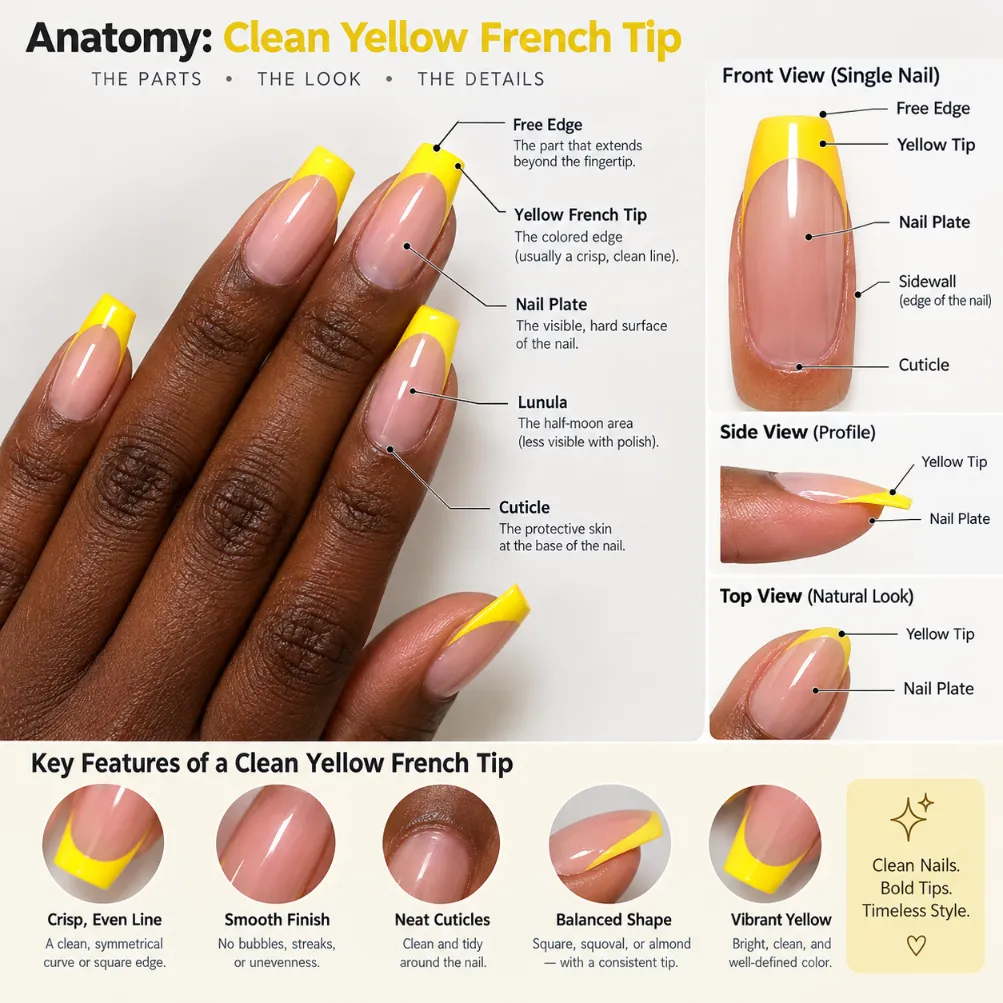
If one side of the smile line is deeper than the other, correct the structure before adding more color. Trying to hide an uneven line under additional product usually makes the finished edge heavier.
Regular Polish or Gel for Yellow French Tips?
Both systems can produce attractive yellow French tips. The practical difference is the application process, curing requirements, wear characteristics, and removal method.
| System | Best suited to | Advantage | Important consideration |
|---|---|---|---|
| Regular polish | DIY and shorter-term manicures | No curing lamp required | Drying time and tip cleanup |
| Gel polish | Longer-wear manicures | Controlled cured finish | Requires correct curing and removal |
| Builder systems | Structured or longer-wear sets | Can provide additional nail structure | More technical application |
If you are choosing the underlying enhancement system, compare Gel-X, acrylic, and BIAB before deciding which approach fits the manicure you want.
Common Yellow French Tip Mistakes
Most disappointing yellow French manicures are not caused by choosing the wrong yellow. They are usually caused by proportion, application, or an overloaded design.
| Mistake | Why it hurts the result | Better approach |
|---|---|---|
| Tip is too thick | The free edge can look bulky and visually heavy. | Build opacity with thinner controlled layers. |
| Smile lines vary too much | Bright yellow makes inconsistencies easier to notice. | Compare all nails before final finishing. |
| Base is too opaque | The manicure can become heavier than intended. | Choose the base according to the desired contrast. |
| Too much decoration | Extra details can compete with the yellow French edge. | Let one decorative element carry the accent. |
| Sidewalls are flooded | The manicure looks unfinished and product can touch surrounding skin. | Refine the perimeter before finishing. |
| Free edge is not properly sealed | Wear can become visible more quickly at the tip. | Finish according to the product system being used. |
A Note on Nail Health and Safe Removal
Do not pick, peel, or force product away from the natural nail simply because the manicure has started to lift. The correct removal process depends on the product system that was applied.
If you are unsure whether the manicure uses regular polish, gel, builder gel, or an extension system, identify the product before attempting removal.
Follow our safe French manicure removal guide for the appropriate approach.
Yellow French Tips by Season
Yellow can be adapted to different seasons without changing the entire manicure. The easiest variables to change are saturation, base, and decoration.
Spring: Pastel yellow, small flowers, soft bases, and delicate French lines.
Summer: Lemon and brighter yellows with glossy finishes and clean graphic details.
Autumn: Muted, golden, and warmer yellow directions that feel less overtly bright.
Winter: Creamy butter yellow or pale yellow paired with a clean neutral base.
Yellow French Tips for Different Occasions
You can make yellow feel more or less formal by changing saturation, tip width, and decoration rather than abandoning the color.
| Occasion | Yellow direction | Tip approach |
|---|---|---|
| Everyday | Butter, muted, or pastel | Narrow or medium |
| Work | Soft or muted yellow | Narrow with minimal decoration |
| Vacation | Lemon or brighter yellow | Medium or slightly stronger |
| Event | Butter, lemon, or soft pastel | Clean medium French |
| Statement look | Bright or neon | Medium to wide or graphic |
How to Keep Yellow French Tips Looking Clean
Bright colors can make normal wear more visible, so maintaining the surface matters as much as choosing the right yellow.
- Avoid using the nail tips as tools.
- Keep the free edge clean after washing.
- Maintain the appropriate topcoat for the system you are wearing.
- Do not pick at lifting product.
- Remove the manicure using the correct method for its product system.
What to Ask for at the Salon
Instead of asking only for “yellow French tips,” describe the shade, base, tip width, and finish separately. That gives the technician a much clearer picture of the intended result.
“I want yellow French tips with a [butter / pastel / lemon / neon / muted] yellow, a [sheer / milky / neutral] base, and a [micro / narrow / medium / wide] smile line. I want the yellow edge to stay clean and even, with a [glossy / matte / pearlescent] finish.”
How to Read Yellow French Tip Inspiration
When you save inspiration, look past the label attached to the image. “Butter yellow,” “micro French,” “floral French,” and similar descriptions can refer to different parts of the manicure.
The most useful reference image lets you identify the actual yellow shade, the base relationship, the tip width, and the shape. Those details are more useful at the salon than a broad trend name on its own.
Which Yellow French Tip Should You Choose?
If you are deciding between several combinations, start with the result you want rather than the exact color name.
| If you want… | Start with… | Then consider… |
|---|---|---|
| Subtle yellow | Butter, muted, or pastel yellow | Micro or narrow tip |
| Soft and delicate | Pastel yellow | Soft base and small floral detail |
| Classic colored French | Butter or lemon yellow | Medium glossy tip |
| Playful | Lemon or bright yellow | Swirls, flowers, double French, or chevron |
| Maximum impact | Neon yellow | Medium-to-wide clean tip |
| Short nails | Pastel, butter, or lemon | Micro or narrow French |
| Polished salon look | Butter or muted yellow | Neutral base and glossy finish |
Choosing Your Yellow French Tips
Yellow French tip nails work because they give you the personality of a colored manicure without requiring the entire nail to become yellow. The French structure keeps the color controlled, while the shade, proportion, shape, and finish determine how bold the result becomes.
Butter yellow is an easy refined starting point. Pastel yellow creates a softer effect. Lemon gives the French edge more presence, while neon makes it the statement. Micro and narrow tips keep the look restrained; wider tips make it more graphic.
The most important finishing principle is simple: the yellow should look intentional. Clean smile lines, consistent coverage, balanced proportions, clean sidewalls, and a smooth final surface will usually make more difference than adding another decorative element.
Frequently Asked Questions
What are yellow French tip nails?
Yellow French tip nails are a French manicure variation in which yellow replaces the traditional white free edge. The yellow can be butter, pastel, lemon, neon, muted, or another shade.
What is the best yellow for French tips?
There is no single best yellow for every manicure. Butter and muted yellow work well for softer looks, pastel yellow creates a delicate effect, lemon gives more contrast, and neon creates the strongest statement.
Are yellow French tips good for short nails?
Yes. Micro and narrow yellow French tips can work especially well on shorter nails because they keep the colored edge proportional to the available nail surface.
What nail shape looks best with yellow French tips?
Yellow French tips can work across many shapes. Almond creates a tapered flowing effect, square emphasizes the straight free edge, squoval softens the corners, and coffin provides more surface for a stronger graphic treatment.
Can yellow French tips be subtle?
Yes. Choose a butter, pastel, or muted yellow and combine it with a micro or narrow French edge over a natural-looking base.
Are yellow French tips better glossy or matte?
Glossy is the most straightforward finish because it keeps yellow smooth and saturated. Matte creates a softer, lower-reflection appearance. The better choice depends on the look you want.
Can I do yellow French tips at home?
Yes. Careful nail preparation, thin layers, controlled smile-line placement, cleanup, and appropriate finishing are the main factors in getting a cleaner result.
How do I keep yellow French tips looking clean?
Protect the free edge, avoid using the nails as tools, keep the surface clean, maintain the appropriate topcoat, and use the correct removal method rather than picking or peeling the product.
Can yellow French tips work for a formal event?
Yes. A softer yellow, restrained tip width, clean neutral base, and glossy finish can make yellow feel much more understated and formal.
Should yellow French tips match my skin tone exactly?
No. Skin tone can influence how a yellow and base appear together, but it should not be treated as a rigid matching rule. Intentional contrast can also be attractive.
About This Guide
Written and visually organized for readers who want to choose a yellow French manicure based on shade, proportion, shape, finish, and practical wear rather than trend labels alone.
Clara Bennett
Author at Manicure Aesthetics. Learn more about the site and editorial approach →